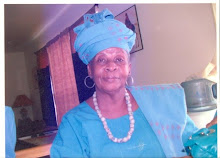
Making Cassava bread (Belize 2009)
Cassava bread (also known as Ereba) is a staple food in many tribal
villages in Central and South America. Making Ereba is a labour
intensive process I was happy to witness a in a small
Garifuna village of south Belize.
Cassava
is the root of perennials shrub that grows three to six feet tall and
has a large palmate leaves and greenish, yellow to greenish, purple male
or female flowers. While cassava was originally grown in a savannah
climate, it can also be grown in climates with heavy rainfall. This root
is classified as bitter or sweet depending upon the quantity of
cyanogenic glycoside (cyanide) present. The amount of cyanide present is
determined by climate and soil conditions but since the cyanide is a
toxin, cassava must be usually cooked before it is eaten.
Cassava produce more calories per unit of food than any other crop in
the world, except for the possibly sugar cane. For this reason, cassava
is a staple crop for close to 500 million people in Central America,
South America, Africa and Asia. One still needs to eat fruits,
vegetables and protein products as cassava lacks in vitamins, minerals,
and proteins. In Africa, however, this is not so much a problem as the
much needed vitamins and protein are obtained by eating cassava leaves
as vegetable.
While harvesting has been traditionally done by women, today it is
not uncommon for men to help with the harvesting of cassava. Once the
root is out of the ground, it must be handled with the utmost of care as
damage means a very short shelf life. Within 48 hours, cassava must be
prepared or temporarily preserved by encasing it in paraffin or wax,
peeling and freezing the cassava, strong it in a plastic bag, packed in
moist mulch. These measures can extend the shelf life to three or four
weeks allowing for exportation. Cassava bread has a much longer shelf
life than the cassava root and when it is not exposed to moisture can be
kept for several years.


Once the cassava has been transported back to the village outer
layer must peeled and then the root soaked in a tub of water. Grating
follows either by using a handmade grating board or more recently using
an electric grater. This handmade grater, called and "egi", is a wooden
board embedded with quartzite bits which protrude just enough to
pulverize the cassava root as it is passed over it. Historically, the
women sang "Eremwu Euu", a traditional grating song while accomplishing
this laborious task.


The flour contains cyanogenic glycoside that will need to be
drained. The flour is stuffed in a long, snake like woven basket called
"ruguma" which is then attached to a tree limb. The other end is
attached to a long weighted pole. While the weight of the flour and the
gravitational pull cause the toxic juice to come rushing out, the weight
of the men or women who sit on top of the pole make the task go faster.


The cyanogenic glycoside juice has various uses. It can be used as a
starch agent or when boiling and sweetened in the sun it can be used as
an antiseptic, to help preserve meat and to flavour foods. This
preservative is called "carareep". In addition, the fermented juice
makes intoxicating liquor.


Following the juice extractions, the flour is baked on a thick iron
"comal", heated with firewood. It takes approximately six big bags of
cassava roots to make approximately forty cassava bread. The size of the
bread will differ with the size of the comal.


Involving a traditional process and being used in rituals making
and consuming of cassava bread spiritually connects Garinagu
("Garifunas") with their past and ancestors. Being a natural resource
cassava gives the Garinagu strong sense of the land it comes from and
finally as it is a daily bread which requires a group effort to produce,
the process of preparation brings the Garinagu closer to each other.
Making cassava bread is a time for socialization. It is a time that
helps to unify the committee and it gives Garifuna women a strong sense
of purpose and accomplishment.


 Posts





 Cassava bread is one of the traditional African breads. It is certainly one you


 Fat
 Protein
 Carbs
 Alcohol
 Other


 Abeg I no understand!shey I'm carry d bread with flight go tanzania?