Posts
Posts




ALL-BLACK TOWNS
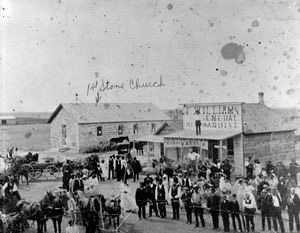
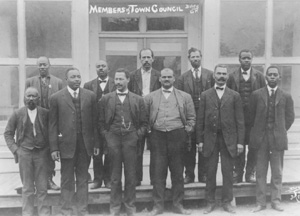 Town council, Boley, Oklahoma, ca. 1907–10
View larger African Americans left the South for the "promised land" of the West in ever-increasing numbers after the Civil War. Economic hardship, racial violence, and intolerance prompted this vast migration from states such as Mississippi, Louisiana, Tennessee, Texas, and Arkansas. With leadership from Pap Singleton and Henry Adams, the "Exodusters" settled mainly in Kansas in 1879–80, though the movement had began a few years earlier and lasted into the next decade. The opportunity to own land attracted many of these people to the Great Plains. Reports directed back to the South claimed that landownership was a simple and cheap prospect.
By 1881 African Americans emigrants had established twelve agricultural colonies in Kansas: Nicodemus, Hodgeman, Morton City, Dunlap, Kansas City–area Colony, Parsons, Wabaunsee, Summit Township, Topeka-area Colony, Burlington, Little Coney, and the Daniel Votaw Colony. Another settlement, the Singleton Colony, seems to have never really been a viable community. Many of the other colonies lasted only a few years. The town of Nicodemus, on the other hand, founded a few years before the large exodus, prospered into the twentieth century. African Americans also established colonies in Nebraska, including the town of Dewitty. They migrated to western New Mexico, too, creating settlements such as Blackdom and Dora. Oliver Toussaint Jackson established the settlement of Dearfield, Colorado, in 1910, one of the last African American Plains agricultural communities. Many African Americans dispersed elsewhere throughout the Plains; most worked the land like their white counterparts.
During a fifty-five-year period following the end of the Civil War, African Americans built more than fifty identifiable communities in Oklahoma. Some sprouted and quickly vanished; others still survive. Achieving freedom after the Civil War, former slaves of the Cherokees, Creeks, Seminoles, Chickasaws, and Choctaws also formed towns in Indian Territory. When the U.S. government allotted land to individual Native Americans, most Indian "freedman" chose land next to other African Americans. Their farming communities sheltered self-governed economic and social institutions, including businesses, schools, and churches. Enterprising businessmen set up every imaginable kind of business, including publishing concerns whose newspapers advertised in the South for settlers.
More African Americans settled in Oklahoma Territory with the land run of 1889, which ordered "free land" to non-Indians. E. P. McCabe, former state auditor of Kansas, helped found the all-black town of Langston. By means of the Langston City Herald, which his traveling agents circulated around the South, he and other leaders hoped to bring in large numbers of African Americans whose growing political power would secure their prosperity and safety. McCabe never accomplished his goal of creating an African American state. Nevertheless, dozens of black communities sprouted and flourished in the rich topsoil of the new territory and, after 1907, the new state.
In Oklahoma and Kansas, African Americans lived relatively free from the prejudices and brutality common in racially mixed communities of the Midwest and the South. Cohesive all-black settlements offered residents the security of depending on neighbors for financial assistance and the economic opportunity provided by access to open markets for their crops.
Marshalltown, North Fork Colored, Canadian Town, and Arkansas Colored existed as early as the 1860s in Indian Territory. Other Indian Territory towns that no longer exist include Sanders, Mabelle, Wiley, Homer, Huttonville, Lee, and Rentie. Among the Oklahoma Territory towns that no longer exist are Lincoln, Cimarron City, Bailey, Zion, Emanuel, Udora, and Douglas in old Oklahoma Territory. Surviving towns include Boley, Brooksville, Clearview, Grayson, Langston, Lima, Redbird, Rentiesville, Summit, Taft, Tatums, Tullahassee, and Vernon. Boley, the largest and most renowned of these was twice inspected by African American educator Booker T. Washington, who lauded the town in Outlook Magazine in 1908.
Immediately after statehood in 1907 the Oklahoma legislature passed Jim Crow laws, and many African Americans became disenchanted with the new state. A large contingent relocated to western Canada, forming colonies such as Amber Valley, Alberta, and Maidstone, Saskatchewan. Another exodus of African Americans from the United States occurred with the "Back to Africa" movements of the late nineteenth and early twentieth centuries. A large group of Oklahomans joined the illfated Chief Sam expedition to Africa. Other Plains African Americans migrated to colonies in Mexico.
The collapse of the American farm economy in the 1920s and the advent of the Great Depression in 1929 spelled the end for most all-black communities. The all-black towns were, for the most part, small agricultural centers that gave nearby African American farmers a market for their cotton and other crops. The Depression devastated these towns, and residents moved west or migrated to metropolises where jobs might be found. Black towns dwindled to only a few residents.
As population dwindled, so too did the tax base. In the 1930s many railroads failed, isolating small towns from regional and national markets. This spelled the end of many of the black towns. During the Depression, whites denied credit to African Americans, creating an almost impossible situation for black farmers and businessmen. Even Boley, one of the most successful towns, declared bankruptcy in 1939. Today, only a few all-black towns survive, but their legacy of economic and political freedom is well remembered.
Larry O'Dell
Oklahoma Historical Society
Crockett, Norman. The Black Towns. Lawrence: Regents
Press of Kansas, 1979.
Hamilton, Kenneth Marvin. Black
Towns and Profit: Promotion and Development in the
Trans-Appalachian West, 1877–1915. Urbana: University
of Illinois Press, 1991.
Taylor, Quintard. In Search of the
Racial Frontier: African Americans in the American West,
1528–1990. New York: W. W. Norton, 1998.
XML: egp.afam.006.xml
777 &&&&&&&&&&&&&&&&&&&&&&&&&&&&&&&&&&&&&&&&&&&&&&&&&
http://digital.library.okstate.edu/encyclopedia/entries/A/AL009.html


| Table of Contents | Search All Entries | Home |
ALL-BLACK TOWNS
The All-Black towns of Oklahoma represent a unique chapter in American history. Nowhere else, neither in the Deep South nor in the Far West, did so many African American men and women come together to create, occupy, and govern their own communities. From 1865 to 1920 African Americans created more than fifty identifiable towns and settlements, some of short duration and some still existing at the beginning of the twenty-first century.All-Black towns grew in Indian Territory after the Civil War when the former slaves of the Five Civilized Tribes settled together for mutual protection and economic security. When the United States government forced American Indians to accept individual land allotments, most Indian "freedmen" chose land next to other African Americans. They created cohesive, prosperous farming communities that could support businesses, schools, and churches, eventually forming towns. Entrepreneurs in these communities started every imaginable kind of business, including newspapers, and advertised throughout the South for settlers. Many African Americans migrated to Oklahoma, considering it a kind of "promise land."
When the Land Run of 1889 opened yet more "free" land to non-Indian settlement, African Americans from the Old South rushed to newly created Oklahoma. E. P. McCabe, a former state auditor of Kansas, helped found Langston and encouraged African Americans to settle in that All-Black town. To further his cause, McCabe established the Langston City Herald and circulated it, often by means of traveling agents, throughout the South. McCabe hoped that his tactics would create an African American political power block in Oklahoma Territory. Other African American leaders had a vision of an All-Black state. Although this dream was never realized, many All-Black communities sprouted and flourished in the rich topsoil of the new territory and, after 1907, the new state.
In these towns African Americans lived free from the prejudices and brutality found in other racially mixed communities of the Midwest and the South. African Americans in Oklahoma and Indian Territories would create their own communities for many reasons. Escape from discrimination and abuse would be a driving factor. All-Black settlements offered the advantage of being able to depend on neighbors for financial assistance and of having open markets for crops. Arthur Tolson, a pioneering historian of blacks in Oklahoma, asserts that many African Americans turned to "ideologies of economic advancement, self-help, and racial solidarity."
Marshalltown, North Fork Colored, Canadian Colored, and Arkansas Colored existed as early as the 1860s in Indian Territory. Other Indian Territory towns that no longer exist include Sanders, Mabelle, Wiley, Homer, Huttonville, Lee, and Rentie. Among the Oklahoma Territory towns no longer in existence are Lincoln, Cimarron City, Bailey, Zion, Emanuel, Udora, and Douglas. Towns that still survive are Boley, Brooksville, Clearview, Grayson, Langston, Lima, Red Bird, Rentiesville, Summit, Taft, Tatums, Tullahassee, and Vernon. The largest and most renowned of these was Boley. Booker T. Washington, nationally prominent African American educator, visited Boley twice and even submitted a positive article on the town to Outlook Magazine in 1908.
The passage of many Jim Crow laws by the Oklahoma Legislature immediately after statehood caused some African Americans to become disillusioned with the infant state. During this time Canada promoted settlement and, although the campaign focused on whites, a large contingent of African Americans relocated to that nation's western plains, forming colonies at Amber Valley, Alberta, and Maidstone, Saskatchewan. Another exodus from Oklahoma occurred with the "Back to Africa" movements of the early twentieth century. A large group of Oklahomans joined the ill-fated Chief Sam expedition to Africa. A number of other African Americans migrated to colonies in Mexico.
White distrust also limited the growth of these All-Black towns. As early as 1911 whites in Okfuskee County attempted to block further immigration and to force African Americans into mixed but racially segregated communities incapable of self-support. Several of these white farmers signed oaths pledging to "never rent, lease, or sell land in Okfuskee County to any person of Negro blood, or agent of theirs; unless the land be located more than one mile from a white or Indian resident." To further stem the black migration to eastern Oklahoma a similar oath was developed to prevent the hiring of "Negro labor."
Events of the 1920s and 1930s spelled the end for most black communities. The All-Black towns in Oklahoma were, for the most part, small agricultural centers that gave nearby African American farmers a market. Prosperity generally depended on cotton and other crops. The Great Depression devastated these towns, forcing residents to go west and north in search of jobs. These flights from Oklahoma caused a huge population decrease in black towns.
As people left, the tax base withered, putting the towns in financial jeopardy. In the 1930s many railroads failed, isolating small towns in Oklahoma from regional and national markets. As a result, many of the black towns could not survive. During lean years whites would not extend credit to African Americans, creating an almost impossible situation for black farmers and businessmen to overcome. Even one of the most successful towns, Boley, declared bankruptcy in 1939. Today, only thirteen All-Black towns still survive, but their legacy of economic and political freedom is well remembered.
SEE ALSO: AFRICAN AMERICANS, BOLEY, BROOKSVILLE, CLEARVIEW, FREEDMEN, LANGSTON, LINCOLN CITY, EDWARD McCABE, RED BIRD, RENTIESVILLE, SEGREGATION, SETTLEMENT PATTERNS, SUMMIT, TAFT, TATUMS, TULLAHASSEE, VERNON
BIBLIOGRAPHY: Black Dispatch (Oklahoma City), 8 March 1923. Norman Crockett, The Black Towns (Lawrence: University of Kansas Press, 1979). Norman Crockett, "Witness to History: Booker T. Washington Visits Boley," The Chronicles of Oklahoma 67 (Winter 1989-90). Kenneth Lewallan, "Chief Alfred Sam: Black Nationalism on the Great Plains, 1913-14," Journal of the West 16 (January 1977). Bruce Shepard, "North to the Promised Land: Black Migration to the Canadian Plains," The Chronicles of Oklahoma 66 (Fall 1988).
Larry O'Dell
© Oklahoma Historical Society
*********************************************************************************
Edward Preston McCabe emerged as the father of the Oklahoma all-black town movement. McCabe, a Republican, served as Kansas State Auditor in the State of Kansas from 1882 – 1886. He once lived in Nicodemus, Kansas, a seminal all-black town.
On April 22, 1889, McCabe joined 50,000 homesteaders in the Oklahoma Land Run. This was the opening of “Oklahoma Territory,” Indian Country land appropriated by the federal government for general settlement. On these acres of aspiration, McCabe hoped to germinate an all-black state.
In 1890, McCabe called on President Benjamin Harrison to press the case for an all-black state. McCabe believed that a self-governing, all-black enclave would offer his people the freedom and opportunity routinely denied them elsewhere in America. In the end, his entreaties failed.
McCabe soldiered on. He founded Langston, Oklahoma, on October 22, 1890, and established the McCabe Townsite Company and the Langston City Herald newspaper to promote its growth and development. McCabe developed recruiting bulletins and hired agents for his Oklahoma “boosterism” efforts.
McCabe drew throngs to unspoiled Oklahoma—“land of the red people” in the Choctaw language. These pioneers founded more than fifty all-black towns in Oklahoma.
Despite an auspicious beginning, the all-black town movement crested between 1890 and 1910. Oklahoma attained statehood in 1907 and, with it, roundly embraced “Jim Crow.” By 1910, the American economy had shifted from agricultural to industrial-based. These developments (i.e., the rise of racism; the demise of agrarianism) doomed many of these unique, historic oases. The few that remain serve as monuments to the human spirit.
Oklahoma’s pioneering black forefathers and foremothers planted the trees under whose shade we now sit. The value of their legacy to us—the likes of Boley, Clearview, Langston, Red Bird, Rentiesville, Taft, Tatums, Tullahassee—is inestimable. We owe them a tremendous debt of gratitude.
Oklahoma’s all-black towns, some still viable, others long gone, represent a significant aspect of the African-American struggle for freedom, justice, and equality. This rich history should be resurrected, reclaimed, and remembered.
Photo of Langston, Oklahoma by George Thomas


Posted 06.05.10
Prominently in Kansas,
and then principally in Oklahoma, towns founded by black trailblazers
swelled in the post-Reconstruction era. Black Southern migrants,
“Exodusters,” formed their own rural, frontier communities. They sought
economic opportunity, full citizenship rights, and self-governance:
socioeconomic uplift, sprinkled with a generous measure of hope.
In addition to black homesteaders, some persons of African ancestry
prospered because of Native American affiliations—through the bonds of
slavery, by blood, and in affinity relations. All-black colonies
populated by these “Natives” sprang up in Indian Territory, the eastern
portion of modern-day Oklahoma.Edward Preston McCabe emerged as the father of the Oklahoma all-black town movement. McCabe, a Republican, served as Kansas State Auditor in the State of Kansas from 1882 – 1886. He once lived in Nicodemus, Kansas, a seminal all-black town.
On April 22, 1889, McCabe joined 50,000 homesteaders in the Oklahoma Land Run. This was the opening of “Oklahoma Territory,” Indian Country land appropriated by the federal government for general settlement. On these acres of aspiration, McCabe hoped to germinate an all-black state.
In 1890, McCabe called on President Benjamin Harrison to press the case for an all-black state. McCabe believed that a self-governing, all-black enclave would offer his people the freedom and opportunity routinely denied them elsewhere in America. In the end, his entreaties failed.
McCabe soldiered on. He founded Langston, Oklahoma, on October 22, 1890, and established the McCabe Townsite Company and the Langston City Herald newspaper to promote its growth and development. McCabe developed recruiting bulletins and hired agents for his Oklahoma “boosterism” efforts.
McCabe drew throngs to unspoiled Oklahoma—“land of the red people” in the Choctaw language. These pioneers founded more than fifty all-black towns in Oklahoma.
Despite an auspicious beginning, the all-black town movement crested between 1890 and 1910. Oklahoma attained statehood in 1907 and, with it, roundly embraced “Jim Crow.” By 1910, the American economy had shifted from agricultural to industrial-based. These developments (i.e., the rise of racism; the demise of agrarianism) doomed many of these unique, historic oases. The few that remain serve as monuments to the human spirit.
Oklahoma’s pioneering black forefathers and foremothers planted the trees under whose shade we now sit. The value of their legacy to us—the likes of Boley, Clearview, Langston, Red Bird, Rentiesville, Taft, Tatums, Tullahassee—is inestimable. We owe them a tremendous debt of gratitude.
Oklahoma’s all-black towns, some still viable, others long gone, represent a significant aspect of the African-American struggle for freedom, justice, and equality. This rich history should be resurrected, reclaimed, and remembered.
Photo of Langston, Oklahoma by George Thomas
Related
Articles + Videos + AudioBrowse a Category
Comment
Showing 2 comments
-
 Carlos Moreno
 -
 Van Eden
Magazine | Okiecentric
%%%%%%%%%%%%%%%%%%%%%%%%%%%%%%%%%%%%%%%%%%%%%%%%%%%%%
http://www.inmotionaame.org/migrations/topic.cfm;jsessionid=f8303138861360587242614?migration=6&topic=5&bhcp=1
http://www.nytimes.com/2004/02/08/travel/towns-born-of-struggleandhope.html?pagewanted=all&src=p

|
||||
|
||||
 view larger image

Western History Collections, University of Oklahoma Libraries [Frank Phillips Collection, #975]
|
|
 |
|
| Black Indian Woman | |
|
|
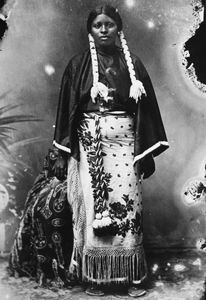
| By 1900, African Americans outnumbered the Native American population in areas that had been set aside as Indian Territory by the federal government. One Native American newspaper commented on the irony of whites stealing "land from the Indians only to have negroes take it from them." African Americans and American Indians often intermarried and formed a mixed population. | |
|
|
|
|||||||||||||||||||||||||||||||||||||||||||||||||||||||||||||||||||||||||||||||||||||||||||||||||||||||||||||||||||||||||||||||||||||||||||||||||||||||||||||||||||||||||||||||||||||||||||||||||||||
|
 |
|||||||||||||||||||||||||||||||||||||||||||||||||||||||||||||||||||||||||||||||||||||||||||||||||||||||||||||||||||||||||||||||||||||||||||||||||||||||||||||||||||||||||||||||||||||||||||||||||||||
|
||||||||||||||||||||||||||||||||||||||||||||||||||||||||||||||||||||||||||||||||||||||||||||||||||||||||||||||||||||||||||||||||||||||||||||||||||||||||||||||||||||||||||||||||||||||||||||||||||||||
|
||||||||||||||||||||||||||||||||||||||||||||||||||||||||||||||||||||||||||||||||||||||||||||||||||||||||||||||||||||||||||||||||||||||||||||||||||||||||||||||||||||||||||||||||||||||||||||||||||||||
|
|
| ||||||||||||||||||||||||||||||||||||||||||||||||||||||||||||||||||||||||||||||||||||||||||||||||||||||||||||||||||||||||||||||||||||||||||||||||||||||||||||||||||||||||||||||||||||||||||||||||||||





Towns Born of Struggle and Hope
THE
post-Civil War South was a brutal and oppressive place for
African-Americans. In a mass exodus, many left the region, compelled
northward by floridly worded advertisements for new all-black
settlements. One promoter described the town of Langston, Okla., as
''Fertile as ever was moistened by nature's falling tears or kissed by
heaven's sunshine.''
The advertisements worked. After the Civil War, there were some 50 all-black towns founded in the Oklahoma Territories (Oklahoma became a state in 1907). The initial settlers were Indian freedmen slaves who had been freed by their Indian masters -- but later freed slaves from the Deep South joined them in a quest to prove that blacks could not only govern themselves but also prosper economically if given the chance.
And they did. Many of the towns were quite successful, but they were eventually undone by factors including the Depression, Jim Crow laws, intimidation by whites and urbanization. Today, 13 of those original towns still exist in Oklahoma, and they all still have all-black or overwhelmingly black populations.
The advertisements worked. After the Civil War, there were some 50 all-black towns founded in the Oklahoma Territories (Oklahoma became a state in 1907). The initial settlers were Indian freedmen slaves who had been freed by their Indian masters -- but later freed slaves from the Deep South joined them in a quest to prove that blacks could not only govern themselves but also prosper economically if given the chance.
And they did. Many of the towns were quite successful, but they were eventually undone by factors including the Depression, Jim Crow laws, intimidation by whites and urbanization. Today, 13 of those original towns still exist in Oklahoma, and they all still have all-black or overwhelmingly black populations.
When
my parents moved to Oklahoma six years ago, I became a casual student
of the state's history. After stumbling upon this unknown chapter of
American history, I set out to visit some of these towns last year. It
was the centennial of two of three of the most viable remaining
all-black towns, more than enough of a reason to hit the road.
The best way to visit the towns is through formal tours, which are organized by several groups. The most prominent organizer is Cassandra Gaines, director of multicultural tourism for the city of Muskogee. She has been taking tourists to the all-black towns since 1997, and her success has led to consulting jobs with other states interested in developing African-American heritage tourism. Her groups travel by bus; an expert lectures on board, and local historians meet and guide them.
Logistically, joining a formal tour did not work for me, so Ms. Gaines helped me set up a solo trip to Langston (founded 1890), Boley and Rentiesville (both 1903). On a bumpy early-morning flight from Chicago to Tulsa, I flipped through my dog-eared copy of Hannibal Johnson's ''Acres of Aspiration'' (Eakin Press, 2002), a terrific survey of Oklahoma's all-black towns. I rented a car and headed toward Langston, site of Langston University.
The two-hour drive took me down rural highways that crossed Chicken Creek, Polecat Creek and Wild Horse Creek. Cattle grazed lazily next to tiny rusting oil wells that pumped with even less vigor. The school, founded in 1897, was named for John Mercer Langston, the first black member of Congress from Virginia, who served from 1890 and 1891. Sitting on a hill, its red brick buildings are an abrupt change from the pastureland.
Ms. Gaines arranged for me to get a tour from the university's historian in residence, Currie Ballard. In the 1890's, Langston was a vibrant place, with several grocery stores, a blacksmith, two physicians and a drugstore. Today, the school, a historically black university, is essentially the town; its 2,500 students account for most of its population.
The campus is spacious and immaculate. Mr. Ballard, a fount of knowledge about the town, first took me by the chapel. A pretty, white building, it opened 1996 and is a replica of the little Presbyterian church where the school's first classes were held. From there, we walked to the Melvin B. Tolson Black Heritage Center. A well-known African-American modernist poet, Tolson (1898-1966) taught at Langston, was the town's mayor from 1954 to 1960 and was named poet laureate of Liberia in 1947.
Officials at Langston University say that the Tolson Center is Oklahoma's sole site devoted to African and African-American studies. In addition to numerous pieces of African art donated by alumni, there are also many items related to Tolson, including his glasses, his Remington Quiet-Riter and a photo of him signing books at a ceremony at the White House in 1965.
When we left the Tolson Center, Mr. Ballard pointed out a proposed spot for the Oklahoma Museum of African-American History, scheduled to open in 2007, the state's centennial. He explained that the museum, which is being financed with state funds and private donations, will focus on issues including the state's civil rights struggles and black entrepreneurism in Oklahoma. He said the museum would not focus on the Tulsa race riots of 1921 and the rise of Tulsa's prominent, all-black Greenwood district (also known as the Black Wall Street) because the Greenwood Cultural Center in Tulsa already featured extensive exhibits on those issues.
From there, we drove to Langston Lake. About a mile outside campus, it is a serene, tree-lined spot with covered picnic tables and barbecue facilities. Tours use it as a dining and relaxation area.
My final stop in Langston was the Indian Meridian. The tall, white monument was erected in 1922; it stands outside town on a dirt road. Mr. Ballard explained that it signified not only the former demarcation between Oklahoma and Indian territory, but also that it was the state's surveying center. ''Think about it,'' he said. ''The center of this state is in an all-black town.''
I headed south and then east on the hour drive to Boley, once the crown jewel of the all-black towns. Just before you cross Boley's city line, you'll see a rather disconcerting road sign: ''Hitchhikers May Be Escaped Inmates.'' It signifies the presence of the minimum-security John Lilley Correctional Center, which, including inmates and employees, accounts for about 500 of its 950 residents.
There was a time when Boley was a thriving place with more than 50 businesses, including a bank, an ice plant, five hotels, five groceries and even two photo studios. The African-American statesman and educator Booker T. Washington visited in 1904 and called it ''the most enterprising, and in many ways the most interesting of the Negro towns in the United States.''
When I arrived in April, the pretty, mostly red brick downtown was anything but hopping, but every Memorial Day weekend it is packed when some 35,000 people attend Boley's annual all-black rodeo. Dating to 1909, the event takes place on the edge of town at the 40-acre Boley Rodeo Grounds, which has recently been renovated.
Boley is a quiet, charming place now, and its primary businesses are the prison and Smokaroma, which makes of industrial barbeque cookers. The founder of the company, Maurice Lee Sr., often cooks up barbeque for visiting tourists, and he treated me to some amazing ribs in the 1918 Boley Community Center.
Boley is one of the few all-black towns with a formal museum dedicated to its history. The small collection is in a 1908 home that was named a national historic landmark in 1975. The town is expanding the facility. Displays include historic photos, bricks made by the Boley Brick Company in 1912, soda bottles from the Boley Carbonated Works and an advertisement for the 1921 ''baffling western mystery,'' ''The Crimson Skull.'' According to the ad, the film was ''produced in the all colored city of Boley, Oklahoma,'' with an ''all-colored cast'' and ''30 colored cowboys.''
Before leaving town, I checked out Boley's other compelling, albeit macabre, attraction. On Nov. 23, 1932, a trio of bandits from Pretty Boy Floyd's outfit tried to rob the Farmers and Merchants Bank. In the ensuing shootout, Boley's mayor and two of the gunmen were killed. The original marble cages are still inside the bank, which has been closed for years, and visitors can still see bullet holes in the walls. During the rodeo and tours, it's a popular stop.
A convenient place to stay while touring the towns is Muskogee, and I drove there from Boley and checked into a motel. The next morning I rose early, and after a hearty breakfast at the Speedway Grille (''The Best Little Burger and Chili House in Muskogee''), I headed south down Highway 69 for the short drive to Rentiesville.
On the outskirts of town, a sign heralds Rentiesville's favorite son: ''Dr. John Hope Franklin Homeplace. Rentiesville, OK. Population 66.'' A noted historian, and writer and chairman of the advisory board of Bill Clinton's Initiative on Race from 1997 to 1999, Dr. Franklin was born in Rentiesville in 1915 and moved to Tulsa a decade later.
One of the town's other famous citizens still lives there. Rentiesville has no real downtown anymore, but toward the end of the bumpy main road is the D.C. Minner Down Home Blues Club. A veteran blues guitar ace and member of the Oklahoma Music Hall of Fame, Mr. Minner and his bass-playing wife, Selby, have been holding their Dusk 'til Dawn Blues Festival there every Labor Day weekend for 13 years. The three-day affair attracts some 7,000 fans.
Mr. Minner's club is basically a rambling old country juke joint, with a scattering of mismatched tables and dinette chairs and aging pictures of blues artists lining the walls. When people visit on tours, he and his wife open the club and play a set.
Mr. Minner was born on this spot in 1935 and moved back in 1985. Now getting too old to tour, he hopes to expand the place and add a museum. Mr. Minner said the all-black towns should be preserved as an inspiration to black people. ''This is one of the few places where this history is still left,'' he said.
Actually, there is another place nearby where black history is well preserved. Just down the road from Minner's house is the site of the Battle of Honey Springs, also called the Gettysburg of the West. The battle, which took place July 17, 1863, involved the First Kansas Colored Volunteer Infantry and was the first time black troops figured prominently in a major Civil War conflict. Some of those black soldiers went on to help found Rentiesville.
Honey Springs Battlefield, administered by the Oklahoma Historical Society, is a beautiful, sprawling place, with well-marked trails, an information center and monthly reenactments of Civil War life; every three years there is a re-enactment there using black troops. At the last one, about 11,000 people visited.
The next is scheduled for September 2005. At one end of the park stands a tall pink granite monument dedicated to those black soldiers. It reads in part, ''At the Battle of Honey Springs, the 1st Kansas Colored Volunteers wrote a stirring page in American history becoming one of the first black units of the Civil War to play a key role in a Union victory.''
Standing alone in that battlefield at the end of my trip, I tried to come to terms with what I had seen. Like most Americans, I had had no idea these all-black towns had ever existed. The trip was fascinating and the people I met were full of hope for the future, but the dominant theme was struggle -- a struggle to escape the Deep South and to found the towns, and now a struggle to save them.
Where blacks fought and lived
Tours and Information
For information on Cassandra Gaines's tours call (888) 687-6137, extension 25. One-day tours cost $75 a person and include breakfast, lunch and dinner.
The Tulsa City-County Library offers a bus tour of the historic all-black towns on June 12. Tickets are $25. For more information call (918) 596-7205.
The Battle of Honey Springs Historic Site is at 1863 Honey Springs Battlefield Road; (918) 473-5572; see www.ok-history.mus.ok.us/mus-sites/masnum02.htm. The visitor center is open 9 a.m. to 4:30 p.m.; open to 1 p.m. Sunday. The access road to the six interpretive trails is open 8 to 5. Closed Monday.
The Boley Historical Museum can be visited by appointment; call (918) 667-3711.
For information on Langston University, visit www.lunet.edu.
Events
Boley's annual all-black rodeo takes place May 29 and 30 this year, starting at 8 p.m. Admission is $7. Information, (580) 320-0031.
Clearview, another of the remaining all-black towns, also holds a yearly all-black rodeo the first weekend in August; it is Aug. 7 and 8 this year. Information, (918) 583-4096.
D.C. Minner's Dusk 'til Dawn Blues Festival takes place Sept. 3 to 5. Information: www.dcminnerblues.com.
On March 20, the Oklahoma Historical Society will sponsor a Civil War Candlelight Tour at the Honey Springs Battlefield with tours every 15 minutes from 7 p.m. to 8:45 p.m.; $3. Reservations, (918) 473-5572.
The best way to visit the towns is through formal tours, which are organized by several groups. The most prominent organizer is Cassandra Gaines, director of multicultural tourism for the city of Muskogee. She has been taking tourists to the all-black towns since 1997, and her success has led to consulting jobs with other states interested in developing African-American heritage tourism. Her groups travel by bus; an expert lectures on board, and local historians meet and guide them.
Logistically, joining a formal tour did not work for me, so Ms. Gaines helped me set up a solo trip to Langston (founded 1890), Boley and Rentiesville (both 1903). On a bumpy early-morning flight from Chicago to Tulsa, I flipped through my dog-eared copy of Hannibal Johnson's ''Acres of Aspiration'' (Eakin Press, 2002), a terrific survey of Oklahoma's all-black towns. I rented a car and headed toward Langston, site of Langston University.
The two-hour drive took me down rural highways that crossed Chicken Creek, Polecat Creek and Wild Horse Creek. Cattle grazed lazily next to tiny rusting oil wells that pumped with even less vigor. The school, founded in 1897, was named for John Mercer Langston, the first black member of Congress from Virginia, who served from 1890 and 1891. Sitting on a hill, its red brick buildings are an abrupt change from the pastureland.
Ms. Gaines arranged for me to get a tour from the university's historian in residence, Currie Ballard. In the 1890's, Langston was a vibrant place, with several grocery stores, a blacksmith, two physicians and a drugstore. Today, the school, a historically black university, is essentially the town; its 2,500 students account for most of its population.
The campus is spacious and immaculate. Mr. Ballard, a fount of knowledge about the town, first took me by the chapel. A pretty, white building, it opened 1996 and is a replica of the little Presbyterian church where the school's first classes were held. From there, we walked to the Melvin B. Tolson Black Heritage Center. A well-known African-American modernist poet, Tolson (1898-1966) taught at Langston, was the town's mayor from 1954 to 1960 and was named poet laureate of Liberia in 1947.
Officials at Langston University say that the Tolson Center is Oklahoma's sole site devoted to African and African-American studies. In addition to numerous pieces of African art donated by alumni, there are also many items related to Tolson, including his glasses, his Remington Quiet-Riter and a photo of him signing books at a ceremony at the White House in 1965.
When we left the Tolson Center, Mr. Ballard pointed out a proposed spot for the Oklahoma Museum of African-American History, scheduled to open in 2007, the state's centennial. He explained that the museum, which is being financed with state funds and private donations, will focus on issues including the state's civil rights struggles and black entrepreneurism in Oklahoma. He said the museum would not focus on the Tulsa race riots of 1921 and the rise of Tulsa's prominent, all-black Greenwood district (also known as the Black Wall Street) because the Greenwood Cultural Center in Tulsa already featured extensive exhibits on those issues.
From there, we drove to Langston Lake. About a mile outside campus, it is a serene, tree-lined spot with covered picnic tables and barbecue facilities. Tours use it as a dining and relaxation area.
My final stop in Langston was the Indian Meridian. The tall, white monument was erected in 1922; it stands outside town on a dirt road. Mr. Ballard explained that it signified not only the former demarcation between Oklahoma and Indian territory, but also that it was the state's surveying center. ''Think about it,'' he said. ''The center of this state is in an all-black town.''
I headed south and then east on the hour drive to Boley, once the crown jewel of the all-black towns. Just before you cross Boley's city line, you'll see a rather disconcerting road sign: ''Hitchhikers May Be Escaped Inmates.'' It signifies the presence of the minimum-security John Lilley Correctional Center, which, including inmates and employees, accounts for about 500 of its 950 residents.
There was a time when Boley was a thriving place with more than 50 businesses, including a bank, an ice plant, five hotels, five groceries and even two photo studios. The African-American statesman and educator Booker T. Washington visited in 1904 and called it ''the most enterprising, and in many ways the most interesting of the Negro towns in the United States.''
When I arrived in April, the pretty, mostly red brick downtown was anything but hopping, but every Memorial Day weekend it is packed when some 35,000 people attend Boley's annual all-black rodeo. Dating to 1909, the event takes place on the edge of town at the 40-acre Boley Rodeo Grounds, which has recently been renovated.
Boley is a quiet, charming place now, and its primary businesses are the prison and Smokaroma, which makes of industrial barbeque cookers. The founder of the company, Maurice Lee Sr., often cooks up barbeque for visiting tourists, and he treated me to some amazing ribs in the 1918 Boley Community Center.
Boley is one of the few all-black towns with a formal museum dedicated to its history. The small collection is in a 1908 home that was named a national historic landmark in 1975. The town is expanding the facility. Displays include historic photos, bricks made by the Boley Brick Company in 1912, soda bottles from the Boley Carbonated Works and an advertisement for the 1921 ''baffling western mystery,'' ''The Crimson Skull.'' According to the ad, the film was ''produced in the all colored city of Boley, Oklahoma,'' with an ''all-colored cast'' and ''30 colored cowboys.''
Before leaving town, I checked out Boley's other compelling, albeit macabre, attraction. On Nov. 23, 1932, a trio of bandits from Pretty Boy Floyd's outfit tried to rob the Farmers and Merchants Bank. In the ensuing shootout, Boley's mayor and two of the gunmen were killed. The original marble cages are still inside the bank, which has been closed for years, and visitors can still see bullet holes in the walls. During the rodeo and tours, it's a popular stop.
A convenient place to stay while touring the towns is Muskogee, and I drove there from Boley and checked into a motel. The next morning I rose early, and after a hearty breakfast at the Speedway Grille (''The Best Little Burger and Chili House in Muskogee''), I headed south down Highway 69 for the short drive to Rentiesville.
On the outskirts of town, a sign heralds Rentiesville's favorite son: ''Dr. John Hope Franklin Homeplace. Rentiesville, OK. Population 66.'' A noted historian, and writer and chairman of the advisory board of Bill Clinton's Initiative on Race from 1997 to 1999, Dr. Franklin was born in Rentiesville in 1915 and moved to Tulsa a decade later.
One of the town's other famous citizens still lives there. Rentiesville has no real downtown anymore, but toward the end of the bumpy main road is the D.C. Minner Down Home Blues Club. A veteran blues guitar ace and member of the Oklahoma Music Hall of Fame, Mr. Minner and his bass-playing wife, Selby, have been holding their Dusk 'til Dawn Blues Festival there every Labor Day weekend for 13 years. The three-day affair attracts some 7,000 fans.
Mr. Minner's club is basically a rambling old country juke joint, with a scattering of mismatched tables and dinette chairs and aging pictures of blues artists lining the walls. When people visit on tours, he and his wife open the club and play a set.
Mr. Minner was born on this spot in 1935 and moved back in 1985. Now getting too old to tour, he hopes to expand the place and add a museum. Mr. Minner said the all-black towns should be preserved as an inspiration to black people. ''This is one of the few places where this history is still left,'' he said.
Actually, there is another place nearby where black history is well preserved. Just down the road from Minner's house is the site of the Battle of Honey Springs, also called the Gettysburg of the West. The battle, which took place July 17, 1863, involved the First Kansas Colored Volunteer Infantry and was the first time black troops figured prominently in a major Civil War conflict. Some of those black soldiers went on to help found Rentiesville.
Honey Springs Battlefield, administered by the Oklahoma Historical Society, is a beautiful, sprawling place, with well-marked trails, an information center and monthly reenactments of Civil War life; every three years there is a re-enactment there using black troops. At the last one, about 11,000 people visited.
The next is scheduled for September 2005. At one end of the park stands a tall pink granite monument dedicated to those black soldiers. It reads in part, ''At the Battle of Honey Springs, the 1st Kansas Colored Volunteers wrote a stirring page in American history becoming one of the first black units of the Civil War to play a key role in a Union victory.''
Standing alone in that battlefield at the end of my trip, I tried to come to terms with what I had seen. Like most Americans, I had had no idea these all-black towns had ever existed. The trip was fascinating and the people I met were full of hope for the future, but the dominant theme was struggle -- a struggle to escape the Deep South and to found the towns, and now a struggle to save them.
Where blacks fought and lived
Tours and Information
For information on Cassandra Gaines's tours call (888) 687-6137, extension 25. One-day tours cost $75 a person and include breakfast, lunch and dinner.
The Tulsa City-County Library offers a bus tour of the historic all-black towns on June 12. Tickets are $25. For more information call (918) 596-7205.
The Battle of Honey Springs Historic Site is at 1863 Honey Springs Battlefield Road; (918) 473-5572; see www.ok-history.mus.ok.us/mus-sites/masnum02.htm. The visitor center is open 9 a.m. to 4:30 p.m.; open to 1 p.m. Sunday. The access road to the six interpretive trails is open 8 to 5. Closed Monday.
The Boley Historical Museum can be visited by appointment; call (918) 667-3711.
For information on Langston University, visit www.lunet.edu.
Events
Boley's annual all-black rodeo takes place May 29 and 30 this year, starting at 8 p.m. Admission is $7. Information, (580) 320-0031.
Clearview, another of the remaining all-black towns, also holds a yearly all-black rodeo the first weekend in August; it is Aug. 7 and 8 this year. Information, (918) 583-4096.
D.C. Minner's Dusk 'til Dawn Blues Festival takes place Sept. 3 to 5. Information: www.dcminnerblues.com.
On March 20, the Oklahoma Historical Society will sponsor a Civil War Candlelight Tour at the Honey Springs Battlefield with tours every 15 minutes from 7 p.m. to 8:45 p.m.; $3. Reservations, (918) 473-5572.
JOHN D. THOMAS is editor of Playboy.com and a contributing editor of Playboy magazine
*********************************************************************************.
| MIGRATION TO KANSAS- | |||||||||||||||||||||||||||||||||||||||||||||||||||||||||||||||||||
|
|||||||||||||||||||||||||||||||||||||||||||||||||||||||||||||||||||
|
|||||||||||||||||||||||||||||||||||||||||||||||||||||||||||||||||||
|
|
| |||||||||||||||||||||||||||||||||||||||||||||||||||||||||||||||||
88000000000000000000
informat0000000000000000000000000000000000000000000000000000000000000000000000000000000000000000000000000
|
|||||
|
|||||
|
|
Kansas State Historical Society, Copy and Reuse Restrictions Apply
|
|
|
|
| Reverend Daniel Hickman | |
|
|
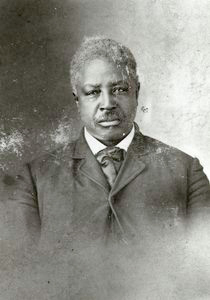
| African Americans tended to migrate to the West in a predictable pattern. Sometimes, entire towns relocated together, encouraged to move by homestead associations or promoters. Of the six African Americans who organized the Nicodemus Town Company, five were natives of Kentucky. President W.H. Smith hailed from Tennessee. Reverend Daniel Hickman led one of the first groups of settlers from Kentucky to Nicodemus. | |
|
|
|
Prominently in Kansas,
and then principally in Oklahoma, towns founded by black trailblazers
swelled in the post-Reconstruction era. Black Southern migrants,
“Exodusters,” formed their own rural, frontier communities. They sought
economic opportunity, full citizenship rights, and self-governance:
socioeconomic uplift, sprinkled with a generous measure of hope.
In addition to black homesteaders, some persons of African ancestry
prospered because of Native American affiliations—through the bonds of
slavery, by blood, and in affinity relations. All-black colonies
populated by these “Natives” sprang up in Indian Territory, the eastern
portion of modern-day Oklahoma.Edward Preston McCabe emerged as the father of the Oklahoma all-black town movement. McCabe, a Republican, served as Kansas State Auditor in the State of Kansas from 1882 – 1886. He once lived in Nicodemus, Kansas, a seminal all-black town.
On April 22, 1889, McCabe joined 50,000 homesteaders in the Oklahoma Land Run. This was the opening of “Oklahoma Territory,” Indian Country land appropriated by the federal government for general settlement. On these acres of aspiration, McCabe hoped to germinate an all-black state.
In 1890, McCabe called on President Benjamin Harrison to press the case for an all-black state. McCabe believed that a self-governing, all-black enclave would offer his people the freedom and opportunity routinely denied them elsewhere in America. In the end, his entreaties failed.
McCabe soldiered on. He founded Langston, Oklahoma, on October 22, 1890, and established the McCabe Townsite Company and the Langston City Herald newspaper to promote its growth and development. McCabe developed recruiting bulletins and hired agents for his Oklahoma “boosterism” efforts.
McCabe drew throngs to unspoiled Oklahoma—“land of the red people” in the Choctaw language. These pioneers founded more than fifty all-black towns in Oklahoma.
Despite an auspicious beginning, the all-black town movement crested between 1890 and 1910. Oklahoma attained statehood in 1907 and, with it, roundly embraced “Jim Crow.” By 1910, the American economy had shifted from agricultural to industrial-based. These developments (i.e., the rise of racism; the demise of agrarianism) doomed many of these unique, historic oases. The few that remain serve as monuments to the human spirit.
Oklahoma’s pioneering black forefathers and foremothers planted the trees under whose shade we now sit. The value of their legacy to us—the likes of Boley, Clearview, Langston, Red Bird, Rentiesville, Taft, Tatums, Tullahassee—is inestimable. We owe them a tremendous debt of gratitude.
Oklahoma’s all-black towns, some still viable, others long gone, represent a significant aspect of the African-American struggle for freedom, justice, and equality. This rich history should be resurrected, reclaimed, and remembered.
Photo of Langston, Oklahoma by George Thomas
Related
Articles + Videos + AudioDISCOVER > general
general > american
- American Airlines and Tulsa's Vision (2) for a Future in Aerospace
- Oklahoma Makes the Grade in Indian Education
- 2013 African-American High School History Bowl
- Paul Harvey Makes a Comeback
- Hello, My Name Is...
- Everybody's All-American
- The Okie Weekly Reader, All Shook Up Edition
- Oklahoma to Advance Drone Technology
- The Okie Weekly Reader, Wild Horse Chase Edition
- Peeling in the Years
- A Portis Reader
- Oklahoma Indians are Idle No More
- Article
- Video
- Audio
- Photo

Comment
777777777777777777777777777777777777777777777777777777777777777777777777777777777777777
|
||||
|
||||
|
|||
Kansas State Historical Society, Copy and Reuse Restrictions Apply
|
|||
|
|||
| Benjamin "Pap" Singleton | |||
|
|||
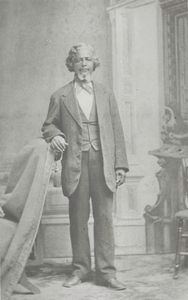
| Benjamin "Pap" Singleton (1809-92) was born a slave in Nashville, Tennessee and lived as a fugitive in Detroit. After the Civil War, he returned to Tennessee to establish an independent black society. However, racist laws and practices inhibited African Americans from purchasing land within the state. Therefore, working with W. A. Sizemore, Columbus Johnson, and several other former slaves, Singleton promoted the migration of African Americans to Kansas. From 1877 to 1879, he and his associates led several hundred migrants. | |||
|
|||
| 7777777777777777777777777777777777777777777777777777777777777777777777777777777777777777777777777777777777777777777777777777 |
|
||||
|
||||
|
|
Kansas State Historical Society, Copy and Reuse Restrictions Apply
|
|
|
|
| David City Colony | |
|
|
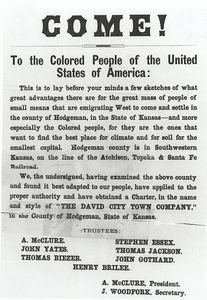
| African Americans were attracted to Kansas because of its abolitionist roots, and they were eligible to settle there under the terms of the 1862 Homestead Act. The largest number of black settlers came to Kansas from Kentucky and Tennessee between 1877 and 1880. They became known as Exodusters. Several black settlements sprang up in Kansas. Among them were Singleton - from the name of the Exodusters' leader - in Cherokee County, Morton City in Edwards County, Hodgeman Colony and David City Colony in Hodgeman County, and Dunlap in Morris County. | |
|
|
|
|
||||
|
||||
|
|
Kansas State Historical Society, Copy and Reuse Restrictions Apply
|
|
|
|
| David City Colony | |
|
|
| African Americans were attracted to Kansas because of its abolitionist roots, and they were eligible to settle there under the terms of the 1862 Homestead Act. The largest number of black settlers came to Kansas from Kentucky and Tennessee between 1877 and 1880. They became known as Exodusters. Several black settlements sprang up in Kansas. Among them were Singleton - from the name of the Exodusters' leader - in Cherokee County, Morton City in Edwards County, Hodgeman Colony and David City Colony in Hodgeman County, and Dunlap in Morris County. | |
|
|
|
&&&&&&&&&&&&&&&&&&&&&&&&&&&&&&&&&&&&&&&&&&&
|
|||||
|
|||||
|
||||||||||||||||||||||||||||||||||||||||
Library of Congress, Prints and Photographs Division [HABS, KANS,33-NICO,1-6]
|
||||||||||||||||||||||||||||||||||||||||
|
||||||||||||||||||||||||||||||||||||||||
| Early Homestead in Nicodemus | ||||||||||||||||||||||||||||||||||||||||
|
||||||||||||||||||||||||||||||||||||||||
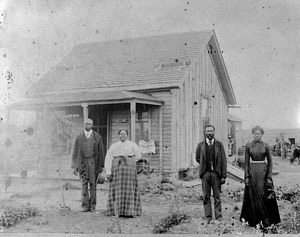
| During the Civil War, the African-American population of Kansas increased from just 627 in 1861 to over 12,000 in 1865. Some white Kansans expressed concern. Richard Cordley, a white abolitionist, dismissed their fears: "The negroes are not coming. They are here. They will stay here. They are American born. They have been here for more than two hundred and fifty years.... It is not for us to say whether they will be our neighbors or not.... It is only for us to say what sort of neighbors they shall be, and whether we will fulfill our neighborly obligations" Richard Cordley, Pioneer Days in Kansas (New York: The Pilgrim Press, 1903). | ||||||||||||||||||||||||||||||||||||||||
|
||||||||||||||||||||||||||||||||||||||||
666666666666666666666666666666666666666666666666666666666666666666666666666666 |
| |||||||||||||||||||||||||||||||||||||||