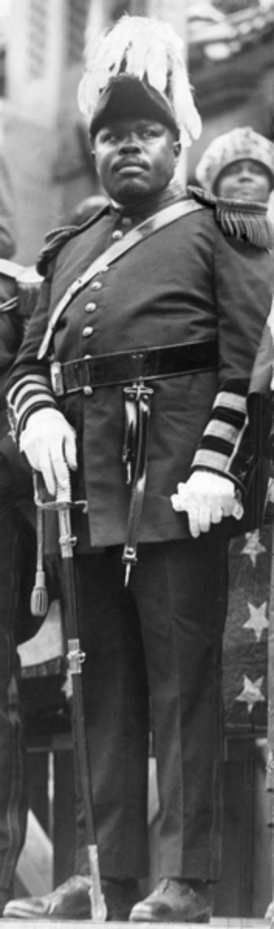
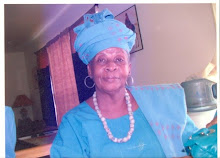
“Speak, Garvey, Speak!”A Follower Recalls a Garvey Rally
The Jamaican-born Marcus Garvey, a brilliant
orator and black nationalist leader, turned his Universal Negro
Improvement Association (UNIA) into the most important black
organization in the United States in the early 1920s. Garvey’s speeches
often drew huge audiences, and stories of Garvey’s stubborn resistance
in the face of white hostility proliferated among his supporters. In an
oral history interview, devotee Audley Moore remembered the Jamaican’s
defiant behavior at a rally in New Orleans caused “the [white] police
[to] file out . . . like little puppy dogs with their tails behind
them.” She proudly recalled the crowd intimidating the police by raising
their guns and chanting “speak, Garvey, speak.”
Listen to Audio:
<="" embed="" height="16" width="200">
Queen Mother Audley Moore: They
didn’t want Garvey to speak in New Orleans. We had a delegation to go
to the mayor, and the next night, they allowed him to come. And we all
was armed. Everybody had bags of ammunition, too. So when Garvey came
in, we applauded, and the police were lined man to man along the line of
each bench. So Mr. Garvey said, “My friends, I want to apologize for
not speaking to you last night. But the reason I didn’t was because the
mayor of the city of New Orleans committed himself to act as a stooge
for the police department to prevent me from speaking.” And the police
jumped up and said, “I’ll run you in.”When he did this, everybody jumped
up on the benches and pulled out their guns and just held the guns up
in the air and said, “Speak, Garvey, speak.”And Garvey said, “As I was
saying,” and he went on and repeated what he had said before, and the
police filed out the hall like little puppy dogs with their tails behind
them. So that was radical enough. I had two guns with me, one in my
bosom and one in my pocketbook, little 38 specials.
Source: Interview done by the Oral History of the American Left, Tamiment Library, NYU for the public radio program
Grandma Was An Activist, producers Charlie Potter and Beth Friend.
&&&&&&&&&&&&&&&&&&&&&&&&&&&&&&&&&&&&&&&&&&&&&&
THE VIEWS OF AFRICAN SOCIALIST ABOUT GARVEY-
Marcus Garvey Lives! Legacy Carried Forward by the ASI
 Today,
August 17, is the birthday of Marcus Garvey, one of the most important
anti-imperialist leaders of the last 150 years. In celebration I am
reposting the following article from the August 2006 issue of The Burning Spear Newspaper, the organ of the African People’s Socialist Party.
Today,
August 17, is the birthday of Marcus Garvey, one of the most important
anti-imperialist leaders of the last 150 years. In celebration I am
reposting the following article from the August 2006 issue of The Burning Spear Newspaper, the organ of the African People’s Socialist Party.
Each August, growing numbers of
Africans around the world celebrate the birth of Marcus Mosiah Garvey
who was born on August 17, 1887 in St. Ann’s Bay, Saint Ann, Jamaica.
The celebration of Garvey’s birth date is
due to the fact that since the attack on Africa that led to the
capture, dispersal and enslavement of millions of Africans and the
colonization and balkanization of Africa, no African has been more
instrumental in creating the vision of a free and liberated Africa and
African people. No African has been more successful in setting the
example for organized resistance that would result in the liberation and
unification of Africa and African people everywhere.
Garvey, more than anyone, contributed to
the ideas advancing the existence of African people as a dispersed
nation to be liberated from imperialism and served by our own
all-African government in Africa.
In 1914, Garvey organized the Universal
Negro Improvement Association in Jamaica. At the time, the UNIA was
conceived as a fraternal reform association that would work for the
upliftment of African people through the creation of educational
institutions and industrial opportunities. However, it was only after
his location to Harlem in 1916 that the organization began to achieve
rapid growth.
By 1920, there were more than a thousand
UNIA branches and divisions around the world. In August of 1920 at its
first convention, held in Madison Square Garden in New York, more than
25,000 Africans from Africa and virtually everywhere else Africans had
been forcibly dispersed, came together in a month-long display of unity
and organization never before witnessed by Africans or anyone else.
The UNIA, which would become the
Universal Negro Improvement Association and African Communities League,
was comprised of members and followers who were mostly working class.
This was one of the most important reasons for its strength, estimated
at being from 6 to 11 million members and followers, and also one of the
reasons it was greatly feared and hated by various imperialist
governments and significant sectors of African middle class leadership,
most of which saw assimilation into U.S. imperialist society as the only
way to achieve their aspirations.
Garvey Makes Incredible Accomplishment in Building Steamship Line
In 1919, the UNIA founded the Black Star
Line Steamship Corporation. This was one of several ventures that
included the Universal Printing House, the Negro Factories Corporation,
and the Negro World Newspaper, printed in three languages.
Marcus Garvey built a single internationl
economic capacity for African people in the eraly 1900s that has not
yet been duplicated. This was on of the many aspect of Garvey’s work to
consolidate a single African nation.
All of these were among the efforts to
create an economy around which the oppressed and dispersed African
nation would be organized. Central to these efforts was the Black Star
Line that was to initiate trade between Africans worldwide.
The Black Star Line venture failed
because of a number of factors including inexperience on the part of
Garvey and the UNIA. And, while the ineptitude of Garvey and the UNIA is
something all his detractors, then and now, love to expound on as being
the reason for the failure of the Black Star Line, this explanation
overlooks the fact that this was not the primary reason for its failure.
It also overlooks the significance of the creation of the Black Star
Line.
The fact is that Garvey and the UNIA
built a steam ship line in 1919 when almost the whole African world
lived under white colonial domination, the exceptions being the nominal
independence of Liberia and Ethiopia. Additionally, this was only a
little more than 50 years after the formal emancipation of enslaved
Africans in the U.S. and during the year that was the bloodiest in
post-emancipation America in terms of anti-African terror launched by
whites in the U.S.
Clearly, this was not a sign of ineptitude. If anything, it was miraculous.
Also, the hostility of the U.S. and white
society to African economic advancement during the period is revealed
in the fact that only two years after the launching of the Black Star
Line, the Black Wall Street in Tulsa, Oklahoma was attacked and bombed,
destroying it. Today no one claims that the destruction in Tulsa was due
to the ineptitude of the African business people there.
No. Ineptitude was not the primary factor
in the failure of the Black Star Line. The most critical factor in its
failure was the active opposition and sabotage by the U.S. government,
the white left, and the African petty bourgeoisie. The Communist Party
USA worked tirelessly to undermine Garvey while the NAACP and W.E.B. Du
Bois actively sought the support of the U.S. attorney general to acquire
a ship that could be used to destroy the Black Star Line.
Along with the white left and African
petty bourgeois active opposition, the Bureau of Investigation
(precursor to the FBI), launched its own vicious campaign to rid the
imperialist world of Marcus Garvey and the UNIA. In 1922, Garvey would
be indicted by the U.S. government on contrived charges of using the
mail to defraud through sale of the Black Star Line stock.
Though the charge was politically
motivated and facilitated by agents who worked within the Black Star
Line for the U.S. government, Garvey was tried and imprisoned in 1925.
He spent two years in prison before being released and deported to
Jamaica.
The movement that Garvey led would never
be the same after his imprisonment and deportation. Agents and
opportunists within the organization and enemies without were finally
able to render the UNIA ineffective. Garvey, from his location in
Jamaica and separated from the connections and membership in the U.S. —
which was then becoming a major imperialist center — was unable to
effectively defend the organization. On June 10, 1940, Marcus Mosiah
Garvey died in relative obscurity in London, England.
Garvey Initiated Process of Creating a United, Liberated Africa that Influenced Other Oppressed Peoples’ Struggles
However, the legacy of Marcus Garvey
lives today. And it should, despite the barrage of slander that had been
unleashed against him when alive and despite the efforts by U.S. and
European imperialists and African petty bourgeois liberals to erase him
from history.
Garvey was not only the man who moved
toward constructing a unifying national economy and a vision for African
liberation, unification and redemption. He was also voted by oppressed
Africans from around the world as the provisional president of Africa
when Africa suffered under the book of direct white power colonialism.
Garvey began creating all the
organizations and symbols of State power to be exercised by an
independent African people. He initiated a process in Liberia, where he
bought land and sent a construction expedition there that would create a
beachhead from which the struggle to free Africa could be launched.
The great meetings of the Garvey movement
at its Liberty Halls, especially in New York, would become of major
interest to all imperialists. Not only were Africans from throughout the
world, especially seamen, constantly visiting these meetings, but also
other oppressed people and their developing leaders, such as Vietnam’s
Ho Chi Minh who regularly attended Garvey meetings.
The Negro World also became a major
irritant to imperialists. During the period of the resistance to U.S.
imperialism in Nicaragua during the 1920s, the Negro World became a
means through which followers of the anti-imperialist Nicaraguan
revolutionary leader Augusto Sandino would communicate and advance their
ideas.
On August 13, 1920, the UNIA adopted the
Declaration of Rights of The Negro Peoples of the World. The
significance of this declaration resonates today, some 86 years later.
Among the complaints laid out in the declaration is Point 3 which
declares, “That European nations have parceled out among them and taken
possession of nearly all of the continent of Africa, and the natives are
compelled to surrender their lands to aliens and are treated in most
instances like slaves.”
Among the rights advanced by the
declaration is this one that declares, “that Negroes, wheresoever they
form a community among themselves should be given the right to elect
their own representatives to represent them in Legislatures, courts of
law, or such institutions as may exercise control over that particular
community…
“…We believe that the Negro should adopt
every means to protect himself against barbarous practices inflicted
upon him because of color…
“…We believe in the freedom of Africa for the Negro people of the world…
“…We strongly condemn the cupidity of
those nations of the world who, by open aggression or secret schemes,
have seized the territories and inexhaustible natural wealth of Africa,
and we place on record our most solemn determination to reclaim the
treasures and possession of the vast continent of our forefathers…
“…We believe in the self-determination of all peoples…
“…We demand complete control of our social institutions without interference by any alien race or races…
“…That the colors, Red, Black and Green, be the colors of the Negro race…
“…We proclaim the 31st day of August of each year to be an international holiday to be observed by all Negroes…
“…We want all men to know that we shall
maintain and contend for the freedom and equality of every man, woman
and child of our race, with our lives, our fortunes and our sacred
honor…”
These select quotes from the extensive
declaration helps us to understand the significance of the vision and
the organizational efforts of the movement founded and led by Marcus
Garvey. They also help to explain why the legacy of Garvey is eternal.
Political Movement of Pan Africanism Born in Opposition to Garvey
Today, with the crisis-ridden imperial
white power groaning in response to the efforts of the oppressed peoples
of the world to free ourselves from its domination, more and more of
the African middle class or petty bourgeoisie are also looking toward
Africa and some form of African unity.
In many ways, this is similar to the time
of Garvey when for a time the imperialists were engaged in the first
imperialist war to divide the world among themselves and oppressed
peoples everywhere were attempting to forge their own path to freedom
from colonial domination.
The power of the Garvey legacy has
resulted in an effort by some, especially petty bourgeois African
liberals, to lump Garvey and Du Bois together as founding fathers of
practical, political, Pan Africanism. Nothing could be further from the
truth.
Garvey was not a Pan Africanist. In fact,
Pan Africanism, as a political movement, was formed by Du Bois and the
National Association for the Advancement of Colored People (NAACP). It
was founded in opposition to the Garvey movement and as part of the
overall imperialist-led struggle that led to its demise.
Both Du Bois and Garvey were always clear
that they were opponents. In a June 20, 1921 letter to the New York Age
and quoted in Volume III of the Marcus Garvey Papers edited by Robert
Hill, Du Bois writes, “Bishop Smith mingles the Pan African Congress and
the Garvey movement as practically one idea. This is a grave mistake.
The Pan African Congress has nothing to do with any ‘Africa for the
Africa[ns]’ movement. The object of the Pan African Congress is simply
to bring representatives of the various people of African descent into
knowledge and common acquaintanceship, so that out of such conferences
general policies and actions can be evolved…
“Many colored persons know this, but have
been restrained by the Garvey movement. Mr. Garvey’s African program
has been dangerous, ill-considered[,] impracticable, and for that reason
the Pan African Congress has not invited him to participate. On the
other hand we must be generous enough to give Mr. Garvey the credit of
having foreseen the necessity of union in business and social uplift
between all the African people. He is not the man to carry this out
because he lacks poise and business ability…”
Garvey, quoted in the same book on page
583, introduced this resolution during his opening address at the August
1921 UNIA convention:
“Be it resolved: That we, the duly
elected representatives of the Negro peoples of the world, from North
America, South America, Central America, West Indies, Asia, Europe,
Australia and Africa, assembled in open conclave on this day of August,
1921, at the 12th Regiment Armory, New York City, United States of
America…do hereby place on record our repudiation of a Pan African
Congress to be held in London, England…
“Our repudiation of this Congress, as
representatives of the Negro peoples of the world, is based on the fact
that W.E.B. Du Bois, secretary of the so-called Pan African Congress,
and those associated with him, are not representatives of the struggling
peoples of the world, and that the men who have called the said
Congress have not consulted with the Negro peoples of the world of their
intention, and have received no mandate from the said people to call a
Congress in their name…
“That we believe the motives of the
Congress are to undermine the true feeling and sentiment of the Negro
race for complete freedom in their own spheres, and for a higher social
order among themselves, as against a desire among a certain class of
Negroes for social contact, comradeship and companionship with the white
race…”
There is no confusion here, by either Du
Bois or Garvey. Moreover, a careful reading of the statements from both
men will reveal the class bias of each.
Du Bois, with his concern for Garvey’s
lack of poise and his begrudging and cynical praise for Garvey’s
recognition for “union in business,” speaks volumes of his class
sympathies as does Garvey’s complaint that Du Bois and his cohorts “are
not representatives of the struggling peoples of the world.”
The imprisonment and deportation of
Garvey were necessary for the development of the Pan Africanist movement
which, up to then, was simply a gathering of a handful of African
intellectuals, some of whom, like Blaise Diagne in France, actually
worked for imperialist governments.
With Garvey’s forced removal from the
scene, many people joined the Pan Africanist movement out of confusion
while some others, like Garvey’s wife Amy Jaques Garvey, joined in 1945
in an effort to advance the work of her late husband.
Garvey’s Work Continues on in the Work to Build the African Socialist International
We, of the African People’s Socialist
Party, are African Internationalists, followers of Garvey who continue
to develop his ideas to make them consistent with the times in which we
live.
Our opposition to Pan Africanism is not
opposition to the literal translation of the words, which simply mean
“all-African.” Our opposition is to what Pan Africanism is as a
political expression.
People like Du Bois, and later George
Padmore, created Pan Africanism as something petty bourgeoisie in
outlook, pacifist and parliamentarian in tactics and strategy,
anti-communist and neocolonialist in worldview.
However, for most people, Pan Africanism
is whatever its advocates want it to be. It is not a theory, so much as
it is a belief in the solidarity of African people worldwide, without
regard for issues of class or practical program to liberate and unite
Africa and African people in a revolutionary struggle against
imperialism.
There have been many brilliant, heroic
Pan Africanists. They include giants like Kwame Nkrumah, Patrice
Lumumba, Walter Rodney and Mangaliso Sobukwe. However, most of the
difficulties and disasters that destroyed these courageous leaders and
their movements, Rodney being a possible exception, came as a result of
their adherence to the Pan African values that came from Du Bois and
Padmore.
We believe that the efforts to build the
African Socialist International, a single organization of African
revolutionaries committed to the struggle to liberate and unite Africa
and African people under the leadership of the African working class and
to create a socialist United States of Africa is Garveyism in the era
of imperialism in crisis.
For the African People’s Socialist Party
the celebration of the legacy of Garvey means that we should live like
him and fight to accomplish his vision in our lifetime. We call on all
others who would be like Garvey and who go beyond the annual process of
paying homage to a deceased Garvey, to join us in building the ASI, our
greatest testimony to the fact that Garvey lives!
**********************************************************************************
FROM columbia.edu
Marcus Garvey
Thought by many blacks to be another Moses, Marcus Garvey rose from
humble beginnings in Jamaica, West Indies, to become the number one
advocate of the “Back to Africa movement.”
He left school at sixteen and went to work as an apprentice printer, organizing the printing workers in Kingston, Jamaica.
In
1917, he came to America and founded the Universal Negro Improvement
Association (UNIA), whose major goal was to create a strong Negro Nation
in Africa. By 1920, the UNIA claimed more than 1 million members. In
August of that year, their International Convention was held in New York
City, where 25,000 people gathered to hear Garvey speak.
In
1923, Garvey was charged with and found guilty of using the mail service
to defraud in connection with his fundraising to buy ships for the
return to Africa. While imprisoned he wrote his famous “First Message to
the Negroes of the World from Atlanta Prison,” where he said: “Look to
me in the whirlwind or the storm, look for me all around you, for, with
God’s grace I shall come and bring with me countless millions of black
slaves who have died in America and the West Indies and the millions in
Africa to aid you in the fight for liberty, freedom and life.”
Garvey
died in 1940 in London, England. He was named Jamaica’s first national
hero and buried in the National Heroes Park in Jamaica.
This entry contributed by Curriculum Concepts International
Related Media
Video

|
Columbia University Professor of History Kenneth Jackson talks about Marcus Garvey Park, and the man for whom it was named.
|

|
Kellie Jones, Columbia University Professor of Art History and Archeology, describes New York's Marcus Garvey Park.
|
Images

|
The Marcus Garvey Memorial
Park interrupts Fifth Avenue between 120th and 124th Streets. Its
70-foot hill offers a view of the site of Garvey’s Liberty Hall on West
138th Street.
|

|
A black nationalist, Marcus
Garvey immigrated to Harlem in 1916. There he established Liberty Hall
as headquarters for a movement that would grow to almost 2 million
members.
|
|
This envelope calls for joining and contributing to the Universal Negro Improvement Association.
|
|
A 1924 UNIA flyer announces "Biggest Negro Convention in the History of the World: Program for Big Conclave Outlined."
|
99(((((((((((((((((((((((((((((((((((((((((((((((((((((((((((((((((((((((((((((((((((((((((((((((((((((((((((((((((((((((
http://minglecity.com/group/knowledgeisking/forum/topic/show?id=2322904%3ATopic%3A14847509
A people without the knowledge of their past history, origin and culture is like a tree without roots.
Marcus Garvey
Marcus Mosiah Garvey, Jr., ONH (17 August 1887 – 10 June 1940), was a
publisher, journalist, entrepreneur, Black Nationalist, Pan-Africanist,
and orator. Marcus Garvey was founder of the Universal Negro Improvement
Association and African Communities League (UNIA-ACL).
Prior to the twentieth century, leaders such as Prince Hall, Martin
Delany, Edward Wilmot Blyden, and Henry Highland Garnet advocated the
involvement of the African diaspora in African affairs. Garvey was
unique in advancing a Pan-African philosophy to inspire a global mass
movement focusing on Africa known as Garveyism. Promoted by the UNIA as a
movement of African Redemption, Garveyism would eventually inspire
others, ranging from the Nation of Islam, to the Rastafari movement
(which proclaims Garvey as a prophet). The intention of the movement was
for those of African ancestry to "redeem" Africa and for the European
colonial powers to leave it. His essential ideas about Africa were
stated in an editorial in the Negro World titled “African
Fundamentalism” where he wrote:
“ Our union must know no clime, boundary, or nationality… let us hold together under all climes and in every country… ”
God and Nature first made us what we are, and then out of our own
created genius we make ourselves what we want to be. Follow always that
great law. Let the sky and God be our limit and Eternity our
measurement.
Marcus Garvey
Early years
Garvey was born in St. Ann's Bay, Jamaica, on 17 August 1887, to Marcus
Mosiah Garvey, Sr., a mason, and Sarah Jane Richards, a domestic worker
and farmer. Of eleven siblings, only Marcus and his sister Indiana
reached maturity. Garvey's father was known to have a large library, and
it was from his father that Marcus gained his love for reading.
Sometime in the year 1900, Garvey entered into an apprenticeship with
his uncle, Alfred Burrowes. Like Garvey Sr., Burrowes had an extensive
library, of which young Garvey made good use.When he was about fourteen,
Garvey left St. Ann's Bay for Kingston, where he found employment as a
compositor in the printing house of P. A. Benjamin, Limited. He was a
master printer and foreman at Benjamin when, in November 1907, he was
elected vice-president of the Kingston Union. However, he was fired when
he joined a strike by printers in late 1908. Having been blacklisted
for his stance in the strike, he later found work at the Government
Printing Office. In 1909, his newspaper The Watchman began publication,
but it only lasted for three issues.
In 1910 Garvey left Jamaica and began traveling throughout the Central
American region. He lived in Costa Rica for several months, where he
worked as a time-keeper on a banana plantation. He began work as editor
for a daily newspaper titled La Nacionale in 1911. Later that year, he
moved to Colón, Panama, where he edited a biweekly newspaper before
returning to Jamaica in 1912.
After years of working on the Caribbean, Garvey left Jamaica to live in
London from 1912 to 1914, where he attended Birkbeck College, worked for
the African Times and Orient Review, published by Dusé Mohamed Ali, and
sometimes spoke at Hyde Park's Speakers' Corner.
I have no desire to take all black people back to Africa; there are
blacks who are no good here and will likewise be no good there.
Marcus Garvey
Founding and Projects of the UNIA-ACL
During his travels, Garvey became convinced that uniting Blacks was the
only way to improve their condition. Towards that end, he departed
England on 14 June 1914 aboard the S.S. Trent, reaching Jamaica on 15
July 1914. He founded the Universal Negro Improvement Association (UNIA)
in August 1914 as a means of uniting all of Africa and its diaspora
into "one grand racial hierarchy." Amy Ashwood, who would later be
Garvey's first wife, was among the founders. As the group's first
President-General, Garvey's goal was "to unite all people of African
ancestry of the world to one great body to establish a country and
absolute government of their own."
Following much reflection the following day and night about what he
learned, he named the organization the Universal Negro Improvement
Association and African Communities (Imperial) League."
After corresponding with Booker T. Washington, Garvey arrived in the
U.S. on 23 March 1916 aboard the S.S. Tallac to give a lecture tour and
to raise funds to establish a school in Jamaica modeled after
Washington's Tuskegee Institute. Garvey visited Tuskegee, and afterward,
visited with a number of Black leaders. After moving to New York, he
found work as a printer by day. He was influenced by Hubert Harrison. At
night he would speak on street corners, much like he did in London's
Hyde Park. It was then that Garvey perceived a leadership vacuum among
people of African ancestry. On 9 May 1916, he held his first public
lecture in New York City at St Mark's Church in-the-Bowery and undertook
a 38-state speaking tour.
In May 1917, Garvey and thirteen others formed the first UNIA division
outside Jamaica and began advancing ideas to promote social, political,
and economic freedom for Blacks. On 2 July, the East St. Louis riots
broke out. On July 8, Garvey delivered an address, titled "The
Conspiracy of the East St. Louis Riots," at Lafayette Hall in Harlem.
During the speech, he declared the riot was "one of the bloodiest
outrages against mankind." By October, rancor within the UNIA had begun
to set in. A split occurred in the Harlem division, with Garvey enlisted
to become its leader; although he technically held the same position in
Jamaica.
Garvey next set about the business of developing a program to improve
the conditions of those of African ancestry "at home and abroad" under
UNIA auspices. On 17 August 1918, publication of the widely distributed
Negro World newspaper began. Garvey worked as an editor without pay
until November 1920. By June 1919 the membership of the organization had
grown to over two million.
On 27 June 1919, the Black Star Line of Delaware, was incorporated by
the members of the UNIA with Garvey as President. By September, it
obtained its first ship. Much fanfare surrounded the inspection of the
S.S. Yarmouth and its rechristening as the S.S. Frederick Douglass on 14
September 1919. Such a rapid accomplishment garnered attention from
many.
One person who noticed was Edwin P. Kilroe, Assistant District Attorney
in the District Attorney's office of the County of New York. Kilroe
began an investigation into the activities of the UNIA, without finding
any evidence of wrongdoing or mismanagement. After being called to
Kilroe's office numerous times, Garvey wrote an editorial on Kilroe's
activities for the Negro World. Garvey was arrested and indicted for
criminal libel in relation to the article, but charges were dismissed
after Garvey published a retraction.
While in his Harlem office at 56 West 156th Street on 14 October 1919,
Garvey received a visit from George Tyler, who told him that Kilroe "had
sent him" to get Garvey. Tyler then pulled a .38-caliber revolver and
fired four shots, wounding Garvey in the right leg and scalp. Garvey was
taken to the hospital and Tyler arrested. The next day, it was let out
that Tyler had committed suicide by leaping from the third tier of the
Harlem jail as he was being taken to his arraignment.
By August 1920, the UNIA claimed four million members. That month, the
International Convention of the UNIA was held. With delegates from all
over the world in attendance, over 25,000 people filled Madison Square
Garden on 1 August to hear Garvey speak.
Another of Garvey's ventures was the Negro Factories Corporation. His
plan called for creating the infrastructure to manufacture every
marketable commodity in every big U.S. industrial center, as well as in
Central America, the West Indies, and Africa. Related endeavors included
a grocery chain, restaurant, publishing house, and other businesses.
Convinced that Blacks should have a permanent homeland in Africa, Garvey sought to develop Liberia.
The Liberia program, launched in 1920, was intended to build colleges,
universities, industrial plants, and railroads as part of an industrial
base from which to operate. However, it was abandoned in the mid-1920s
after much opposition from European powers with interests in Liberia. In
response to suggestions that he wanted to take all Americans of African
ancestry back to Africa, he wrote, "We do not want all the Negroes in
Africa. Some are no good here, and naturally will be no good there."
Garvey has been credited with creating the biggest movement of people of
African descent. This movement that took place in the 1920s is said to
have had more participation from people of African descent than the
Civil Rights Movement. In essence the UNIA was the largest Pan-African
movement.
Our success educationally, industrially and politically is based upon
the protection of a nation founded by ourselves. And the nation can be
nowhere else but in Africa.
Marcus Garvey
Charge of mail fraud
In a memorandum dated 11 October 1919, J. Edgar Hoover, special
assistant to the Attorney General, and head of the General Intelligence
Division (or "anti-radical division") of The Bureau of Investigation or
BOI (after 1935, the Federal Bureau of Investigation), wrote a
memorandum to Special Agent Ridgely regarding Marcus Garvey. In the
memo, Hoover wrote that:
“ Unfortunately, however, he [Garvey] has not as yet violated any
federal law whereby he could be proceeded against on the grounds of
being an undesirable alien, from the point of view of deportation. ”
Sometime around November 1919 an investigation by the BOI was begun into
the activities of Garvey and the UNIA. Toward this end, the BOI hired
James Edward Amos, Arthur Lowell Brent, Thomas Leon Jefferson, James
Wormley Jones, and Earl E. Titus as its first five African-American
agents. Although initial efforts by the BOI were to find grounds upon
which to deport Garvey as "an undesirable alien", a charge of mail fraud
was brought against Garvey in connection with stock sales of the Black
Star Line after the U.S. Post Office and the Attorney General joined the
investigation.
The accusation centered on the fact that the corporation had not yet
purchased a ship with the name "Phyllis Wheatley".[clarification needed]
Although one was pictured with that name emblazoned on its bow on one
of the company's stock brochures, it had not actually been purchased by
the BSL and still had the name "Orion". The prosecution produced as
evidence a single empty envelope which it claimed contained the
brochure. During the trial, a man by the name of Benny Dancy testified
that he didn't remember what was in the envelope, although he regularly
received brochures from the Black Star Line. Another witness for the
prosecution, Schuyler Cargill, perjured himself after admitting[ to
having been told to mention certain dates in his testimony by Chief
Prosecutor Maxwell S. Mattuck. Furthermore, he admitted that he could
not remember the names of any coworkers in the office, including the
timekeeper who punched employees' time cards. Ultimately, he
acknowledged being told to lie by Postal Inspector F.E. Shea. He said
Shea told him to state that he mailed letters containing the purportedly
fraudulent brochures. The Black Star Line did own and operate several
ships over the course of its history and was in the process of
negotiating for the disputed ship at the time the charges were brought.
Assistant District Attorney, Leo H. Healy, who was, before he became a
District Attorney, attorney for Harris McGill and Co., the sellers of
the first ship, the S. S. Yarmouth, to the Black Star Line Inc. was also
a key witness for the government during the trial.
Of the four Black Star Line officers charged in connection with the
enterprise, only Garvey was found guilty of using the mail service to
defraud. His supporters called the trial fraudulent. While there were
serious accounting irregularities within the Black Star Line and the
claims he used to sell Black Star Line stock could be considered
misleading, Garvey's supporters still contest that the prosecution was a
politically motivated miscarriage of justice, given the above-mentioned
false statement testimony and Hoover's explicit regret that Garvey had
committed no crimes.
When the trial ended on 23 June 1923, Garvey had been sentenced to five
years in prison. He initially spent three months in the Tombs Jail
awaiting approval of bail. While on bail, he continued to maintain his
innocence, travel, speak and organize the UNIA. After numerous attempts
at appeal were unsuccessful, he was taken into custody and began serving
his sentence at the Atlanta Federal Penitentiary on 8 February 1925.
Two days later, he penned his well known "First Message to the Negroes
of the World From Atlanta Prison" wherein he makes his famous
proclamation:
“ Look for me in the whirlwind or the storm, look for me all around you,
for, with God's grace, I shall come and bring with me countless
millions of black slaves who have died in America and the West Indies
and the millions in Africa to aid you in the fight for Liberty, Freedom
and Life. ”
Professor Judith Stein has stated, “his politics were on trial.”
Garvey's sentence was eventually commuted by President Calvin Coolidge.
Upon his release in November 1927, Garvey was deported via New Orleans
to Jamaica, where a large crowd met him at Orrett's Wharf in Kingston. A
huge procession and band converged on UNIA headquarters.
The Black skin is not a badge of shame, but rather a glorious symbol of national greatness.
Marcus Garvey
Criticism
While W. E. B. Du Bois expressed the Black Star Line was “original and
promising,” he also said: “Marcus Garvey is, without doubt, the most
dangerous enemy of the Negro race in America and in the world. He is
either a lunatic or a traitor.”Du Bois feared that Garvey's activities
would undermine his efforts toward black rights.
Garvey suspected Du Bois was prejudiced against him because he was a
Caribbean native with darker skin. Du Bois once described Marcus Garvey
as "a little, fat black man; ugly, but with intelligent eyes and a big
head." Garvey called Du Bois “purely and simply a white man's n*****"
and "a little Dutch, a little French, a little Negro … a mulatto … a
monstrosity.” This led to an acrimonious relationship between Garvey and
the NAACP. Garvey accused Du Bois of paying conspirators to sabotage
the Black Star Line to destroy his reputation.
At the National Conference of the Universal Negro Improvement
Association in 1921 a Los Angeles delegate Noah Thompson spoke on the
floor complaining on the lack of transparency in the group's financial
accounts. When accounts were prepared Thompson highlighted several
sections with what he felt were irregularities.
Garvey recognized the influence of the Ku Klux Klan, and in early 1922,
he went to Atlanta, Georgia for a conference with KKK imperial giant
Edward Young Clarke.
According to Garvey, “I regard the Klan, the Anglo-Saxon clubs and White
American societies, as far as the Negro is concerned, as better friends
of the race than all other groups of hypocritical whites put together. I
like honesty and fair play. You may call me a Klansman if you will,
but, potentially, every white man is a Klansman, as far as the Negro in
competition with whites socially, economically and politically is
concerned, and there is no use lying.”[27] Leo H. Healy publicly accused
Garvey of being a member of the Ku Klux Klan in his testimony during
the mail fraud trial.
After Garvey's entente with the Ku Klux Klan, a number of African
American leaders appealed to U.S. Attorney General Harry M. Daugherty to
have Garvey incarcerated.
Although historians tend to side with Du Bois, Theodore Vincent's "Black
Power and the Garvey Movement" contends that, "Cronon and most other
scholars dealing with Garvey have misunderstood their subject, and have
written off as unimportant a man who founded a most significant movement
for black freedom." This book is devoted to dispelling "militant"
criticism of Garvey from people like W. E. B. Du Bois.
There shall be no solution to this race problem until you, yourselves, strike the blow for liberty.
Marcus Garvey
Later years
1928, Garvey travelled to Geneva to present the Petition of the Negro
Race. This petition outlined the worldwide abuse of Africans to the
League of Nations. In September 1929, he founded the People's Political
Party (PPP), Jamaica's first modern political party, which focused on
workers' rights, education, and aid to the poor.
Also in 1929, Garvey was elected councilor for the Allman Town Division
of the Kingston and St. Andrew Corporation (KSAC). However, he lost his
seat because of having to serve a prison sentence for contempt of court.
But, in 1930, Garvey was re-elected, unopposed, along with two other
PPP candidates.
In April 1931, Garvey launched the Edelweiss Amusement Company. He set
the company up to help artists earn their livelihood from their craft.
Several Jamaican entertainers — Kidd Harold, Ernest Cupidon, Bim &
Bam, and Ranny Williams — went on to become popular after receiving
initial exposure that the company gave them.
In 1935, Garvey left Jamaica for London. He lived and worked in London
until his death in 1940. During these last five years, Garvey remained
active and in touch with events in war-torn Ethiopia (then known as
Abyssinia) and in the West Indies. In 1937, he wrote the poem Ras Nasibu
Of Ogaden[29] in honor of Ethiopian Army Commander (Ras) Nasibu
Emmanual. In 1938, he gave evidence before the West Indian Royal
Commission on conditions there. Also in 1938 he set up the School of
African Philosophy in Toronto to train UNIA leaders. He continued to
work on the magazine The Black Man.
In 1937, a group of Garvey's American supporters called the Peace
Movement of Ethiopia openly collaborated with Mississippi Senator
Theodore Bilbo in the promotion of a repatriation scheme introduced in
the US Congress as the Greater Liberia Act. In the Senate, Bilbo was a
supporter of Franklin Roosevelt's New Deal. Bilbo was an outspoken
supporter of segregation and white supremacy and, attracted by the ideas
of Black separatists like Garvey, Bilbo proposed an amendment to the
federal work-relief bill on 6 June 1938, proposing to deport 12 million
black Americans to Liberia at federal expense to relieve
unemployment.[30] He took the time to write a book titled Take Your
Choice, Separation or Mongrelization, advocating the idea. Garvey
praised him in return, saying that Bilbo had "done wonderfully well for
the Negro".[31]
During this period, Evangeline Rondon Paterson the grandmother of the
current (55th) Governor of New York, David Paterson served as his
secretary.
Marcus Garvey
Death
n 10 June 1940, Garvey died after two strokes, putatively after reading a
mistaken, and negative, obituary of himself in the Chicago Defender
which stated, in part, that Garvey died "broke, alone and unpopular".
Because of travel conditions during World War II, he was interred at
Kensal Green Cemetery in London. Rumours claimed that Garvey was in fact
poisoned on a boat on which he was travelling and that was where and
how he actually died.
In 1964, his remains were exhumed and taken to Jamaica. On 15 November
1964, the government of Jamaica, having proclaimed him Jamaica's first
national hero, re-interred him at a shrine in National Heroes Park.
The flag of the Universal Negro Improvement Association (UNIA)


 Posts
Posts





 Na u biko!


 ]
]