THE CTA COURSE ON WEB 2.0-AT UNIVERSITY OF IBADAN,NIGERIA
I HAVE LEARNED SO MUCH SINCE YESTERDAY. I HAVE LEARNED ABOUT THE IMPORTANCE OF USING SOCIAL NETWORKS TO INCREASE MY ACTIONS ON DEVELOPMENT. WE HAVE SEEN FACEBOOK,G-MAIL. WE HAVE LEARNED TO SET UP A BLOG AT BLOGGER.COM. WE HAVE LEARNED TO BE SOCIAL RESPONSIBLE AND NOW PRINT PERSONAL,PRIVATE MATTERS ABOUT OTHER PEOPLES LIVES ON THE WEB THAT MAY MAKE THEM UNHAPPY,EVEN TO THE EXTEND OF KILLING THEMSELVES.THE TECHNICAL ASPECTS OF THE NET WERE EXPLAINED.
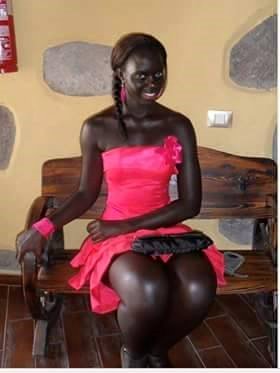
WE MUST HAVE A BLACK STANDARD OF BEAUTY BASED ON THE BLACK SKINNED BLACKEST WOMAN
Tuesday, October 05, 2010
Monday, October 04, 2010
BLACK VIRGINITY!- A VIRTUOUS YORUBA GIRL TELLS US WHY WE SHOULD KEEP OUR BLACK VIRGINITY!
from Punch Newspaper aug. 28,2010 page 24
KEEP YOUR VIGINITY AND GAIN SELF ESTEEM BY OLUWASEYE IGE
You never know the value of what you have until you lose it,so an old Yoruba proverb says.THE same goes for the current trend of giving away one's purity amonst the youth. While the Nigerian society focuses more on the woman and demands of her a higher standard or morality,there is nothing wrong in a man toeing the same line and keeping himself for marriage.
Nowadays a young man who has not ditched his virginity as a rite of passage before 16 is queer. Those who are still virgins after 18 often cannot boldly declare their status before their friends for fear of ridicule. They see themselves as outcasts and do not think that they are better off than their reckless peers who may be one day faced with a teenage pregnancy.
The dangers of a reckless life are endless. So many have contracted veneral diseases,aids,hiv, and others have had to pay for abortions that ended badly. But not one would tell you the nightmares they have been living. Instead you are regaled with tales of what you are missing!
The same situation is applicable to girls. You are not a big girl until you have given yourself away to some teen age boyfriend,possibly an undeserving young man who you might not have granted an audience were you older and wiser. Unfortunately so many young girls are falling for this ruse and they believe the only road to popularity is rolling with the guys.
The surest thing you can get by being careless with your body is disrespect from the very boys whom you gave yourself to! Preserving one's virginity takes a lot of discipline,self control and fortitude ,virtues that would be demanded of you when you are married.
Contrary to what your friends say,being a virgin is perfectly normal. You will not fall sick because you did not have sex before 21. You will not even get sick if you do not have sex before 35 !
Self-esteem is a thing of the mind. If you feel good about yourself no one can put you down.
Pregnant teens,troubled teens and reckless teens are those that become depressed adults. These depressed adults eventually become a nuisance to society.
Do not join you friends to experiment with sex. It is like walking on red hot coal. Your legs will get burnt. You are saved the trouble of teenage pregnancy and the dangers of abortion So many have lost their wombs and would remain childless for life. RETAIN YOUR VIRGINITY AND RETAIN YOUR DIGNITY! It is not something you give away in the heat of an infatuation. It is something to be saved for a worthy life partner!
KEEP YOUR VIGINITY AND GAIN SELF ESTEEM BY OLUWASEYE IGE
You never know the value of what you have until you lose it,so an old Yoruba proverb says.THE same goes for the current trend of giving away one's purity amonst the youth. While the Nigerian society focuses more on the woman and demands of her a higher standard or morality,there is nothing wrong in a man toeing the same line and keeping himself for marriage.
![]() |
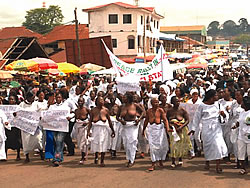
| SOUTH AFRICAN CULTURE HAS UPDATED THEIR TRADITIONAL RITES TO PROMOTE VIRGINITY AND THESE BLACK GIRLS ARE CELEBRATING THEIR VIRGINITY! |
Nowadays a young man who has not ditched his virginity as a rite of passage before 16 is queer. Those who are still virgins after 18 often cannot boldly declare their status before their friends for fear of ridicule. They see themselves as outcasts and do not think that they are better off than their reckless peers who may be one day faced with a teenage pregnancy.
The dangers of a reckless life are endless. So many have contracted veneral diseases,aids,hiv, and others have had to pay for abortions that ended badly. But not one would tell you the nightmares they have been living. Instead you are regaled with tales of what you are missing!
The same situation is applicable to girls. You are not a big girl until you have given yourself away to some teen age boyfriend,possibly an undeserving young man who you might not have granted an audience were you older and wiser. Unfortunately so many young girls are falling for this ruse and they believe the only road to popularity is rolling with the guys.
The surest thing you can get by being careless with your body is disrespect from the very boys whom you gave yourself to! Preserving one's virginity takes a lot of discipline,self control and fortitude ,virtues that would be demanded of you when you are married.
Contrary to what your friends say,being a virgin is perfectly normal. You will not fall sick because you did not have sex before 21. You will not even get sick if you do not have sex before 35 !
Self-esteem is a thing of the mind. If you feel good about yourself no one can put you down.
Pregnant teens,troubled teens and reckless teens are those that become depressed adults. These depressed adults eventually become a nuisance to society.
Do not join you friends to experiment with sex. It is like walking on red hot coal. Your legs will get burnt. You are saved the trouble of teenage pregnancy and the dangers of abortion So many have lost their wombs and would remain childless for life. RETAIN YOUR VIRGINITY AND RETAIN YOUR DIGNITY! It is not something you give away in the heat of an infatuation. It is something to be saved for a worthy life partner!
BLACK VIRGINITY! -LET'S GO BACK TO IT AND SAVE BLACK GIRLS FROM SHAME AND UNHAPPINESS!
FROM true-love-relationship-advice.com
Virgin Girl - Keep Your Virginity, Gain Self Esteem
A virgin girl may not appreciate what she has. Some girls actually loose their virginity because of peer pressure. They give away their virginity just to fit in, just to belong.
Here's some great news.
Contrary to what your friends say, being a virgin girl is perfectly normal. You're perfectly normal as a virgin. You won't fall ill because you didn't have sex before twenty one. You won't even get sick if you don't have sex before thirty five.
Another thing. You don't have to play along with your friends to do evil in other to feel great about yourself. You don't have to belong to a certain circle of friends to be important.
You can achieve what you want to achieve and be anything you want to be without having to follow the wrong crowd. Self-esteem is a thing of the mind. If you feel good about yourself no one can put you down.
This is important because many young girls have veered into sexual misconduct simply to please their friends or to be rated as mature by friends.
Some other college girls have been lured to sexual misbehavior because they fear they may get sick if they do not have sex before they are twenty.
This may all sound silly and irrational to you. But ignorance breeds fear.
To compound matters, many parents do not feel comfortable discussing sexual matters with their children. When children ask questions relating to sexuality, many parents skim over the subject or dodge it outright.
That doesn't help your children.
Since parents often fail to carry out their responsibility to their children, these innocent children turn to their peers for answers. And the answers they get are often distorted and far from the truth.
The result?
Pregnant teens, troubled teens, and reckless teens that become depressed adults. These depressed adults eventually become a nuisance to society.
You young woman reading this, I have this simple advice for you.
Do not join your friends to experiment with sex. It is like walking on red hot coal. Your legs will get burnt.
If you are a virgin girl, maintain your virginity. Your virginity is a source of pride to your parents. And when you get married as a virgin girl, your husband will be extremely proud of you.
Remaining a virgin girl until you marry establishes your marriage on sound footing of trust. Your husband knows he can trust you because you have self-discipline and love of righteousness.
It takes self-discipline, self-control, and love of God to stay morally upright in this decadent generation. When you are able to do that and maintain your virginity straight to marriage you gain self-esteem as a woman of substance.
Besides, you save yourself the trauma your wayward schoolmates experience. You save yourself the pain of teen pregnancy and fatherless baby. And you save yourself the pain of a wasted life.
Your friends are wrong when they say virginity is archaic and dark age morality.
Remaining a virgin girl is a thing of pride. As a virgin you can hold your head high anywhere you go. You have no need of shame.
You have self-confidence, self-esteem, poise and a feeling of fulfillment.
Wouldn't you rather remain an innocent virgin girl and enjoy such honor than be tossed about because your stomach is bulging with pregnancy for a baby who has no father?
Yeah. I know you will do the right thing.
However, there are certain mistakes that young people your age make that undermine their decision to remain a virgin girl.
Young girls tend to be avid readers of romance stories.
Romance stories tend to create sexual passion and often cause their readers especially women to fantasize about life with Mr. Perfect.
These girls feel the passion in the stories and wish for a life just like that in the stories. The romance in the romance novels results in a buildup of sexual fantasy in many girls. A regular dose of sexual fantasy eventually results in a desire for the real thing.
Then what?
Your guess is as good as mine.
Yes, romance novels make interesting reading. But many teach values that derail youths by creating desires that lead them astray.
Do you really want to remain a virgin girl?
Then stay clear of material that arouse your sexual desires. If you don't, you will have trouble maintaining your virginity and self-esteem.
Make the right choice. It's your life.
Virgin Girl - Keep Your Virginity, Gain Self Esteem
A virgin girl may not appreciate what she has. Some girls actually loose their virginity because of peer pressure. They give away their virginity just to fit in, just to belong.
Here's some great news.
Contrary to what your friends say, being a virgin girl is perfectly normal. You're perfectly normal as a virgin. You won't fall ill because you didn't have sex before twenty one. You won't even get sick if you don't have sex before thirty five.
Another thing. You don't have to play along with your friends to do evil in other to feel great about yourself. You don't have to belong to a certain circle of friends to be important.
You can achieve what you want to achieve and be anything you want to be without having to follow the wrong crowd. Self-esteem is a thing of the mind. If you feel good about yourself no one can put you down.
This is important because many young girls have veered into sexual misconduct simply to please their friends or to be rated as mature by friends.
Some other college girls have been lured to sexual misbehavior because they fear they may get sick if they do not have sex before they are twenty.
This may all sound silly and irrational to you. But ignorance breeds fear.
To compound matters, many parents do not feel comfortable discussing sexual matters with their children. When children ask questions relating to sexuality, many parents skim over the subject or dodge it outright.
That doesn't help your children.
Since parents often fail to carry out their responsibility to their children, these innocent children turn to their peers for answers. And the answers they get are often distorted and far from the truth.
The result?
Pregnant teens, troubled teens, and reckless teens that become depressed adults. These depressed adults eventually become a nuisance to society.
You young woman reading this, I have this simple advice for you.
Do not join your friends to experiment with sex. It is like walking on red hot coal. Your legs will get burnt.
If you are a virgin girl, maintain your virginity. Your virginity is a source of pride to your parents. And when you get married as a virgin girl, your husband will be extremely proud of you.
Remaining a virgin girl until you marry establishes your marriage on sound footing of trust. Your husband knows he can trust you because you have self-discipline and love of righteousness.
It takes self-discipline, self-control, and love of God to stay morally upright in this decadent generation. When you are able to do that and maintain your virginity straight to marriage you gain self-esteem as a woman of substance.
Besides, you save yourself the trauma your wayward schoolmates experience. You save yourself the pain of teen pregnancy and fatherless baby. And you save yourself the pain of a wasted life.
Your friends are wrong when they say virginity is archaic and dark age morality.
Remaining a virgin girl is a thing of pride. As a virgin you can hold your head high anywhere you go. You have no need of shame.
You have self-confidence, self-esteem, poise and a feeling of fulfillment.
Wouldn't you rather remain an innocent virgin girl and enjoy such honor than be tossed about because your stomach is bulging with pregnancy for a baby who has no father?
Yeah. I know you will do the right thing.
However, there are certain mistakes that young people your age make that undermine their decision to remain a virgin girl.
Young girls tend to be avid readers of romance stories.
Romance stories tend to create sexual passion and often cause their readers especially women to fantasize about life with Mr. Perfect.
These girls feel the passion in the stories and wish for a life just like that in the stories. The romance in the romance novels results in a buildup of sexual fantasy in many girls. A regular dose of sexual fantasy eventually results in a desire for the real thing.
Then what?
Your guess is as good as mine.
Yes, romance novels make interesting reading. But many teach values that derail youths by creating desires that lead them astray.
Do you really want to remain a virgin girl?
Then stay clear of material that arouse your sexual desires. If you don't, you will have trouble maintaining your virginity and self-esteem.
Make the right choice. It's your life.
Thursday, September 30, 2010
YORUBA CULTURE-A NEW BOOK ON ISSUES FACING THE CULTURE/RELIGION-INCLUDES MY ESSAY "THE DEATH OF YORUBA LANGUAGE?"
Perspectives of Yorubaland: Compendium of Writings about Yoruba Arts and Culture
By Rotimi Ogunjobihttp://books.google.co.ke/books?id=ucT_v1jawmUC&pg=PA96&lpg=PA96&dq=yeye+akilimali+funua+olade&source=bl&ots=WGQLY1K2KR&sig=HXeNMVUY62ibjy4q7uJhrDU8YUw&hl=en&ei=IlGkTJDWGIH_8Aak0oT_AQ&sa=X&oi=book_result&ct=result&resnum=3&ved=0CAoQ6AEwAjha#v=onepage&q=yeye%20akilimali%20funua%20olade&f=false
Tuesday, September 28, 2010
YORUBA BLACK WOMEN'S POWER-THE BLA
FROM tribune.com.ng
FROM TRIBUNE NEWSPAPER
The politicisation of the female breasts
| Print | E-mail
Written by KEHINDE OYETIMI
Sunday, 12 September 2010
The employment of the female breasts and sexuality in Nigerian politics has shown that nothing is too sacred to be involved. The erstwhile cultural implication of the female anatomy is beginning to lose its relevance as it has been railroaded into the mainstream of Nigerian politics. KEHINDE OYETIMI writes.
FROM time immemorial and of all the unique structures that make up the anatomical configuration of the female, nothing seems to arrogate much attention to itself than the exterior twin organs of the female chest – otherwise referred to as the breasts. Unlike in males, which of course are just a couple of buttons attached to the chest, the breasts of the woman have always been objects of much interest, whether overtly or covertly. Apparently, the breasts of the woman are secondary sexual organs, but the peculiar curve and arch of the breasts, their sensitivity to contact or touch, their role in the suckling engagement of infants, lend ever-abiding credence to both their artistic beauty and functionality.
In virtually all societies, the body of the woman is an object of interest, while it is a taboo to give an explicit detailing of the female anatomy, in other climes, the female body is worshipped. In pristine societies (settings that were not yet tainted with the vagaries of modernity), the female was held in awe and typified in utter sacrosanctity. African culture and so many others usually do not openly place much discourse on the female breast. Many cultures whose historico-cultural progress could not be documented hold varying but unique perspectives on the body of the woman – especially the female breasts. Any attempt towards the interpretation, perception and understanding of the placement of importance on the female breasts would naturally yield both cultural and conventional elucidation.
The Amazonian women, as captured by Greek historians, are depicted as a collection of a nation of female warriors. In world history, nothing more captures this unique gathering of women-warriors.
Records show the Amazonian women-warriors with their left breasts usually exposed, while the right ones were covered. This, of course, was done for the purpose of warfare. It was believed that in warfare, the left should be exposed so as to aid the handling of the arrow when shooting with the bow.
In pristine African milieus, women typified fertility. The female body commanded cosmic energy and it was therefore a taboo to misrepresent the body of the woman. In fact, of all the chambers of the female body, none assumed such spiritual connotations than the breasts. It was an act of utmost sacrilege for the female body to be exposed in near or total nudity. The breasts of the woman in African cultural settings were instruments, not just for the sexual gratification of the invasion of the male character, but had far reaching cosmic influence on monarchs. Monarchs who have lost their political and social relevance were cursed with the exposure of the female breasts, in protest. The breasts of such women were weapons of social and political change. Two very sacrosanct parts of the female anatomy in traditional African societies were the breasts and the vagina, the exposure of which attracted a curse to the male viewers. The deliberate exposure of the female body was the height of a man’s or monarch’s undoing.
Mordecai Sunday Ibrahim, President, Southern Kaduna Youth Vanguard, stated that “As far as I am concerned, it is an indecent act. A woman for whatever reason is not supposed to expose the sensitive parts of her body in the name of asking for change. We witnessed this in the 30s and the 50s, but of course in the 21st century we can see that these things are affecting the morals of our children. We should begin to think of better ways of pushing our case. What is wrong with hunger strike? What is wrong with carrying placards? Exposing the breasts is not decent. Neither Christianity nor Islam advocate this nonsense. Anywhere culture goes against your faith, you should drop culture. If we want to go into that then we should go on to wearing bante which my grandfather was wearing.”
Dr (Mrs) Gloria Olushola Adedoja, Department of Teacher Education, University of Ibadan, found no basis for the practice since other avenues are available. “I am not sure if that cultural implication of exposing the female breasts for change is still there. But in those days, it was there. Exposing the breasts is not the only way by which women can champion their causes. Women can make their reactions known by saying them in the dailies, writing notices to the people that are in charge. Even there could be the use of dialogue. Grievances can be made known through different fora. I doubt if such acts are relevant in our societies because people do not really recognise them. Now some of them could even be paid to do so but in those days it was not like that. When women came out like that, in those days, it meant that it was an issue that men could no longer handle,” she advised.
Dr Sola Olorunyomi, of the Institute of African Studies, University of Ibadan, saw a modern relevance of the practice. “When such interventions are made, they must not be used flippantly. I don’t necessary think that it has been misused. The Ekiti incidence was a show of the miscarriage of justice. There was really need for some kind of response by the people. Roads and infrastructure would come only when governance is good. Governance is foundational. If there is one thing people should response to, it is actually governance. I think it still holds some relevance,” he opined.
Unfortunately, in modern times, female breasts have been commoditised and commercialised. The media have constantly used the woman in the sale of goods which have no immediate relevance to her. Yet unfortunate is the fact that there is a gradual shift in the politicisation of the feminine power of the woman. Nigerian politics has invaded the sacrosanctity of the female energy housed in the female body. Threats using the female sexuality have become the norm in the Nigerian political space.
A bit of the horrendous act was demonstrated last year in Ekiti State during the electioneering engagements that almost marred the peace of the state. Women with tired, sagging and flabby mammalian glands came out in their droves carrying placards. The sickening aspect was the sensuous irrelevance of such breasts in display. What must have helped the Amazonian women in warfare, that Nigerian women must quickly adopt, was the distraction that their exposed left breasts caused their male opponents. Of course, what would be more disarming to a warring man than the incapacitating influence engineered by visual contact with the undulating, sensuous movement of youthful, firm breasts? The recent threat in the contemporary documentation of such incidents was the “No Jonathan, No sex” campaign of the Organisation of African Women in Diaspora, which was reported last month. The politicisation of the feminine sexuality is of course beginning to lose its power of suasion and social relevance. The same appeal to such sexuality was witnessed at the beginning of this month in Cross Rivers State when a group of aged women from Erei, Biase local government area stormed Calabar half dressed protesting what they collectively termed the “disenfranchisement and illegal arrest of their sons.” It would not be farther before the nation witnesses the use of the female breasts in electioneering, since it has been nationally inaugurated by the campaign for a Jonathan presidency in 2011.
In 2002, a group of women threatened to bare it all in the Niger Delta in protest against the incessant abuse of their environment by oil producing firms. Speaking, Terisa Turner, an anthropologist, argued that by exposing the breasts and the vagina, “The women are saying: We all came into the world through the vagina. By exposing the vagina, the women indicate that we hereby take back the life we gave you. It is about bringing forth life and denying life through social ostracism, which is a kind of social execution. Men who are exposed are viewed as dead.” If the baring of the female genitalia would do the nation good, perhaps it would now. There are more pressing demands now within the Nigerian socio-political landscape now than ever before. One wonders if the only negotiating tool possessed by the female gender is couched in her sexuality.
FROM TRIBUNE NEWSPAPERThe politicisation of the female breasts
| Print | E-mail
Written by KEHINDE OYETIMI
Sunday, 12 September 2010
The employment of the female breasts and sexuality in Nigerian politics has shown that nothing is too sacred to be involved. The erstwhile cultural implication of the female anatomy is beginning to lose its relevance as it has been railroaded into the mainstream of Nigerian politics. KEHINDE OYETIMI writes.
FROM time immemorial and of all the unique structures that make up the anatomical configuration of the female, nothing seems to arrogate much attention to itself than the exterior twin organs of the female chest – otherwise referred to as the breasts. Unlike in males, which of course are just a couple of buttons attached to the chest, the breasts of the woman have always been objects of much interest, whether overtly or covertly. Apparently, the breasts of the woman are secondary sexual organs, but the peculiar curve and arch of the breasts, their sensitivity to contact or touch, their role in the suckling engagement of infants, lend ever-abiding credence to both their artistic beauty and functionality.
In virtually all societies, the body of the woman is an object of interest, while it is a taboo to give an explicit detailing of the female anatomy, in other climes, the female body is worshipped. In pristine societies (settings that were not yet tainted with the vagaries of modernity), the female was held in awe and typified in utter sacrosanctity. African culture and so many others usually do not openly place much discourse on the female breast. Many cultures whose historico-cultural progress could not be documented hold varying but unique perspectives on the body of the woman – especially the female breasts. Any attempt towards the interpretation, perception and understanding of the placement of importance on the female breasts would naturally yield both cultural and conventional elucidation.
The Amazonian women, as captured by Greek historians, are depicted as a collection of a nation of female warriors. In world history, nothing more captures this unique gathering of women-warriors.
Records show the Amazonian women-warriors with their left breasts usually exposed, while the right ones were covered. This, of course, was done for the purpose of warfare. It was believed that in warfare, the left should be exposed so as to aid the handling of the arrow when shooting with the bow.
In pristine African milieus, women typified fertility. The female body commanded cosmic energy and it was therefore a taboo to misrepresent the body of the woman. In fact, of all the chambers of the female body, none assumed such spiritual connotations than the breasts. It was an act of utmost sacrilege for the female body to be exposed in near or total nudity. The breasts of the woman in African cultural settings were instruments, not just for the sexual gratification of the invasion of the male character, but had far reaching cosmic influence on monarchs. Monarchs who have lost their political and social relevance were cursed with the exposure of the female breasts, in protest. The breasts of such women were weapons of social and political change. Two very sacrosanct parts of the female anatomy in traditional African societies were the breasts and the vagina, the exposure of which attracted a curse to the male viewers. The deliberate exposure of the female body was the height of a man’s or monarch’s undoing.
Mordecai Sunday Ibrahim, President, Southern Kaduna Youth Vanguard, stated that “As far as I am concerned, it is an indecent act. A woman for whatever reason is not supposed to expose the sensitive parts of her body in the name of asking for change. We witnessed this in the 30s and the 50s, but of course in the 21st century we can see that these things are affecting the morals of our children. We should begin to think of better ways of pushing our case. What is wrong with hunger strike? What is wrong with carrying placards? Exposing the breasts is not decent. Neither Christianity nor Islam advocate this nonsense. Anywhere culture goes against your faith, you should drop culture. If we want to go into that then we should go on to wearing bante which my grandfather was wearing.”
Dr (Mrs) Gloria Olushola Adedoja, Department of Teacher Education, University of Ibadan, found no basis for the practice since other avenues are available. “I am not sure if that cultural implication of exposing the female breasts for change is still there. But in those days, it was there. Exposing the breasts is not the only way by which women can champion their causes. Women can make their reactions known by saying them in the dailies, writing notices to the people that are in charge. Even there could be the use of dialogue. Grievances can be made known through different fora. I doubt if such acts are relevant in our societies because people do not really recognise them. Now some of them could even be paid to do so but in those days it was not like that. When women came out like that, in those days, it meant that it was an issue that men could no longer handle,” she advised.
Dr Sola Olorunyomi, of the Institute of African Studies, University of Ibadan, saw a modern relevance of the practice. “When such interventions are made, they must not be used flippantly. I don’t necessary think that it has been misused. The Ekiti incidence was a show of the miscarriage of justice. There was really need for some kind of response by the people. Roads and infrastructure would come only when governance is good. Governance is foundational. If there is one thing people should response to, it is actually governance. I think it still holds some relevance,” he opined.
Unfortunately, in modern times, female breasts have been commoditised and commercialised. The media have constantly used the woman in the sale of goods which have no immediate relevance to her. Yet unfortunate is the fact that there is a gradual shift in the politicisation of the feminine power of the woman. Nigerian politics has invaded the sacrosanctity of the female energy housed in the female body. Threats using the female sexuality have become the norm in the Nigerian political space.
A bit of the horrendous act was demonstrated last year in Ekiti State during the electioneering engagements that almost marred the peace of the state. Women with tired, sagging and flabby mammalian glands came out in their droves carrying placards. The sickening aspect was the sensuous irrelevance of such breasts in display. What must have helped the Amazonian women in warfare, that Nigerian women must quickly adopt, was the distraction that their exposed left breasts caused their male opponents. Of course, what would be more disarming to a warring man than the incapacitating influence engineered by visual contact with the undulating, sensuous movement of youthful, firm breasts? The recent threat in the contemporary documentation of such incidents was the “No Jonathan, No sex” campaign of the Organisation of African Women in Diaspora, which was reported last month. The politicisation of the feminine sexuality is of course beginning to lose its power of suasion and social relevance. The same appeal to such sexuality was witnessed at the beginning of this month in Cross Rivers State when a group of aged women from Erei, Biase local government area stormed Calabar half dressed protesting what they collectively termed the “disenfranchisement and illegal arrest of their sons.” It would not be farther before the nation witnesses the use of the female breasts in electioneering, since it has been nationally inaugurated by the campaign for a Jonathan presidency in 2011.
In 2002, a group of women threatened to bare it all in the Niger Delta in protest against the incessant abuse of their environment by oil producing firms. Speaking, Terisa Turner, an anthropologist, argued that by exposing the breasts and the vagina, “The women are saying: We all came into the world through the vagina. By exposing the vagina, the women indicate that we hereby take back the life we gave you. It is about bringing forth life and denying life through social ostracism, which is a kind of social execution. Men who are exposed are viewed as dead.” If the baring of the female genitalia would do the nation good, perhaps it would now. There are more pressing demands now within the Nigerian socio-political landscape now than ever before. One wonders if the only negotiating tool possessed by the female gender is couched in her sexuality.
Tags: African Americans, BLACK MEN, BLACK WOMEN, BLACK PEOPLE, BLACK CHILDREN, Black woman, BLACK POWER!, YORUBA, YORUBA WOMEN, AFRICA, BLACK WOMEN POWER, BLACK BREAST POWER, POWER, POLITICS
This entry was posted on September 28, 2010 at 2:58 pm and is filed under AFRICA, BACK TO AFRICA:REALITY, BLACK CULTURE, BLACK LEADERS, BLACK MEN, BLACK PEOPLE, BLACK RELIGION, BLACK WOMEN, BLACK YOUTH, BLACKS IN AMERIKKKA!, NIGERIA, PROBLEMS AND SOLUTIONS!, THE BLACK RACE, YORUBA. You can follow any responses to this entry through the RSS 2.0 feed. You can leave a response, or trackback from your own site.
Monday, September 27, 2010
MUHAMMAD ALI TELLS IT LIKE IT BLACK IS!--INTERVIEW IN READER'S DIGEST 2001
Face to Face with Muhammad Ali
Muhammud Ali may no longer float or sting, but make no mistake: He's all in there, and his words still pack a punch.
Interview by Howard Bingham
From Reader's DigestAdvertisement
The date was set: Muhammad Ali would talk to Reader's Digest on the morning of September 11 at his home, an 88-acre farm in Berrien Springs, Mich. But when the hour arrived, the world was turned upside down. Ali agreed the interview should go on, but for several hours the room was mostly quiet as the terrible events unfolded. He stared silently at the big-screen television while the World Trade Center buckled, and crumbled. And then Ali began to talk.
His Parkinson's and his age -- he turns 60 on January 17 -- have turned him into a slow-motion version of his former self. Make no mistake, though: Muhammad Ali is in there. All of him. Son of a sign painter and his Baptist wife, heavyweight champ, poet and wit, black rights advocate, draft resister, philanthropist, father, and now grandfather six times over, the roles and causes Ali embraced remain a part of him, and from up close you can see and hear them all.
You can feel his warmth as well. At one point Asaad Ali, ten, the youngest of his nine children, peeked into the room. The round-faced, smiling boy stopped short, waiting to be acknowledged. Ali turned his head, his expression frozen, and slowly, wordlessly, unfolded his body to create an opening. Asaad ran to him, filled the space, hugged his dad, and his father hugged him back.
As images of Osama bin Laden began flashing across television, a transformation of sorts began for Ali. The man who started life as Cassius Clay, and then announced his conversion to Islam in 1964, suddenly became only the second most recognizable Muslim face in the world.
Reader's Digest had come to Ali's home to discuss the new film based on his life. Scheduled to open December 25, Ali stars Will Smith, who, after bulking up and getting a '60s haircut, bears an uncanny resemblance to the champ in his prime. The interview covered the movie, September 11, Islam and much more, in part because of the presence of Howard Bingham, 62, a Los Angeles-based photographer who met the fighter in 1962. Bingham has long been considered one of Ali's closest confidants, and unlike many people, he has not taken advantage of Ali -- financially or otherwise. He is not on Ali's payroll, nor does he follow Islam. The two men banter like brothers, and move easily through the events of a long shared history. With Bingham in the room, Ali was able to be completely himself.
Bingham: Tell us your reaction to the attacks this morning.
Ali: Killing like that can never be justified. It's unbelievable. I could never support hurting innocent men, women and children. Islam is a religion of peace. It does not promote terrorism or killing people.
Bingham: Muslims are supposed to be responsible for this. How does that make you feel?
Ali: People say a Muslim caused this destruction. I am angry that the world sees a certain group of Islam followers who caused this destruction, but they are not real Muslims. They are racist fanatics who call themselves Muslims, permitting this murder of thousands.
Bingham: When you became a Muslim, the religion was perceived as anti-white. Has that changed?
Ali: The real Islam comes from Mecca. All people are God's people. The devil can be any color.
Bingham: Do you know some black devils?
Ali: A lot of them.
Bingham: Has it become easier to be a Muslim in America?
Ali: Yes. When I first accepted the religion, you'd say you were Muslim, people thought that's funny. Now there's not half the trouble.
Bingham: How do you feel about different religions?
Ali: Rivers, ponds, lakes and streams. They have different names, but all contain water. Religions have different names but all contain truth.
Bingham: What does your faith mean to you?
Ali: [It] means [a] ticket to heaven. One day we're all going to die, and God's going to judge us, [our] good and bad deeds. [If the] bad outweighs the good, you go to hell; if the good outweighs the bad, you go to heaven. [I'm] thinking about the judgment day and how you treat people wherever you go. Help somebody through charity, because when you do, it's been recorded.
I go to parties, [see] good-looking girls. [I] take a box of matches with me. [I] see a girl I want to flirt with, which is a sin, so I [light] my matches, [touches his finger] oooh, hell hurts worse than this. Buy a box of matches and carry them with you. Put [one] on your finger and see how long you can hold it. Just imagine that's going to be hell. Hell's hotter, and for eternity.
Bingham: A movie's been made about you. Does that surprise you?
Ali: No. It's about the third movie made of me!
Bingham: But don't you have any kind of emotional feelings -- it makes you feel good, makes you feel ... ?
Ali: [It's] good to know people still want to read about me, people still want to hear about me. After so many years, from 1960 until now, it's good to know that I'm still popular.
Bingham: What do you think of Will Smith?
Ali: I think he's a great actor. And for this role, he's the best one to do it because he looks like me a little bit and acts like me, sounds like me.
Bingham: Out of his look and your look, which one is better-looking?
Ali: Some will say him; some people say me.
Bingham: So what do you say?
Ali: I say me!
Bingham: What was your best fight ever?
Ali: The [fight against] famous Joe Frazier in Manila.
Bingham: Which loss hurt most?
Ali: Amos Johnson in the Pan Am trials in 1959.
Bingham: Did you ever win a fight that you thought you'd lost?
Ali: No.
Bingham: Did you ever lose a fight you thought you'd won?
Ali: No.
Bingham: Should boxing be banned like so many people advocate?
Ali: They said it should be banned because it's too brutal. Football is brutal, [and] wrestling. Motor-car racing. The reason they think it's bad is black people control it.
Bingham: Knowing what you know now, would you go back and change anything?
Ali: In boxing [I would] do everything the same, wouldn't change nothing.
Bingham: What about taunting Joe Frazier?
Ali: Joe Frazier, [I'd do] everything the same, wouldn't change nothing.
Bingham: Resisting the draft?
Ali: I know I'd do that the same.
Bingham: All those years back you were a kid who believed in himself enough to tell everyone that one day you would become champion of the world. Where did your confidence come from?
Ali: I had it in my heart. I believed in myself, and I had confidence. I knew how to do it and [had] natural talent, and I pursued it.
Bingham: Now, after you were older, who influenced your life and the beliefs that you have?
Ali: After I started boxing, Sugar Ray Robinson. And my idol was a man named Elijah Muhammad. [His] Islamic teaching is what made me so confident.
Bingham: What people have inspired you -- or who is the most unforgettable character you've ever met?
Ali: Malcolm X. He said courageous things, wasn't afraid of nothing. [He was a] good speaker about black people and their condition and treatment by whites.
Bingham: Your wife, Lonnie, Asaad's mother ... you've been with her longer than any of your first three wives. What does she mean to you?
Ali: Everything.
Bingham: You've said that some people are chosen to spread a message and that you were chosen to spread the word of Allah. What exactly do you mean by that?
Ali: For an example, black people called themselves Negroes for a hundred years, and now they say Afro Americans. But that started after they heard Elijah Muhammad. They didn't accept all Elijah said, but the part about Afro Americans [they did]. Chinese have Chinese names, Cubans have Cuban names, Germans after Germany, Indians after India -- all people by the name of their country. There's no country called Negro.
When I heard that, it shocked me. We have our names for Chinese. Castro-here comes [a] Cuban. But here come Jones of Washington, he doesn't know who he is. He got slave names. Negroes named George Washington. So we took -- we have -- slave names. Muhammad Ali is Muslim.
Bingham: What does Muhammad Ali mean?
Ali: [Muhammad means] worthy of praise and praiseworthy, and Ali means the most high. Clay means dirt. When I heard that, then everything [came together]. We're taught to love white, hate black. The color black meant getting put out, you are being blackballed. Black was bad. There's blackmail. They made angel cake white and devil's food cake chocolate. Think about that, angel-food white and devil's-food chocolate. [The] ugly duckling is the black duckling. Black magic ...
I mean, black is good. In business you want it black. Blackberry juice-the blacker the berry, the sweeter the juice. The rich dirt is black. Black ain't bad. The greatest ballplayers are black. The greatest football players are black.
Bingham: Everything but boxers, huh?
Ali: [The] greatest boxers are black.
Bingham: What were your thoughts when you lit the Olympic flame in Atlanta?
Ali: [It] show[ed] that people in the past didn't hold it against me because here I am rejecting the Vietnam War, joining [the] Islamic religion, and then, of all people, raising the flag. They were thinking of me to light the Olympic flame, so that was a good thing.
Bingham: Do athletes have a responsibility to become role models for people?
Ali: They don't have to, but it's good if they do because then the kids look up to them and want to be like them. It's good to be an example for them in the way they live.
Bingham: Are you a role model that people look up to?
Ali: I've been told so.
Bingham: Why?
Ali: Because I'm pretty, daring, bold, courageous!
Bingham: If there was one thing that you could make happen in this world, what would it be?
Ali: Find a cure for cancer.
Bingham: What disease do you have?
Ali: Parkinson's.
Bingham: Do you think that your Parkinson's was caused by boxing?
Ali: Not all people [with Parkinson's] box. Janet Reno, Michael J. Fox fight, right?
Bingham: Have you ever asked yourself "Why me?" in struggling against your Parkinson's?
Ali: I never ask "Why me?" for no condition. There's so much good, [I've] been so blessed. God tries you. Some things are good. Some things are bad. All of them are trials.
Bingham: How would you like to be remembered?
Ali: He took a few cups of love, one teaspoon of patience, one tablespoon of generosity, one pint of kindness, and stirred it up well and served it to each and every deserving person.
His Parkinson's and his age -- he turns 60 on January 17 -- have turned him into a slow-motion version of his former self. Make no mistake, though: Muhammad Ali is in there. All of him. Son of a sign painter and his Baptist wife, heavyweight champ, poet and wit, black rights advocate, draft resister, philanthropist, father, and now grandfather six times over, the roles and causes Ali embraced remain a part of him, and from up close you can see and hear them all.
You can feel his warmth as well. At one point Asaad Ali, ten, the youngest of his nine children, peeked into the room. The round-faced, smiling boy stopped short, waiting to be acknowledged. Ali turned his head, his expression frozen, and slowly, wordlessly, unfolded his body to create an opening. Asaad ran to him, filled the space, hugged his dad, and his father hugged him back.
As images of Osama bin Laden began flashing across television, a transformation of sorts began for Ali. The man who started life as Cassius Clay, and then announced his conversion to Islam in 1964, suddenly became only the second most recognizable Muslim face in the world.
Reader's Digest had come to Ali's home to discuss the new film based on his life. Scheduled to open December 25, Ali stars Will Smith, who, after bulking up and getting a '60s haircut, bears an uncanny resemblance to the champ in his prime. The interview covered the movie, September 11, Islam and much more, in part because of the presence of Howard Bingham, 62, a Los Angeles-based photographer who met the fighter in 1962. Bingham has long been considered one of Ali's closest confidants, and unlike many people, he has not taken advantage of Ali -- financially or otherwise. He is not on Ali's payroll, nor does he follow Islam. The two men banter like brothers, and move easily through the events of a long shared history. With Bingham in the room, Ali was able to be completely himself.
Bingham: Tell us your reaction to the attacks this morning.
Ali: Killing like that can never be justified. It's unbelievable. I could never support hurting innocent men, women and children. Islam is a religion of peace. It does not promote terrorism or killing people.
Bingham: Muslims are supposed to be responsible for this. How does that make you feel?
Ali: People say a Muslim caused this destruction. I am angry that the world sees a certain group of Islam followers who caused this destruction, but they are not real Muslims. They are racist fanatics who call themselves Muslims, permitting this murder of thousands.
Bingham: When you became a Muslim, the religion was perceived as anti-white. Has that changed?
Ali: The real Islam comes from Mecca. All people are God's people. The devil can be any color.
Bingham: Do you know some black devils?
Ali: A lot of them.
Bingham: Has it become easier to be a Muslim in America?
Ali: Yes. When I first accepted the religion, you'd say you were Muslim, people thought that's funny. Now there's not half the trouble.
Bingham: How do you feel about different religions?
Ali: Rivers, ponds, lakes and streams. They have different names, but all contain water. Religions have different names but all contain truth.
Bingham: What does your faith mean to you?
Ali: [It] means [a] ticket to heaven. One day we're all going to die, and God's going to judge us, [our] good and bad deeds. [If the] bad outweighs the good, you go to hell; if the good outweighs the bad, you go to heaven. [I'm] thinking about the judgment day and how you treat people wherever you go. Help somebody through charity, because when you do, it's been recorded.
I go to parties, [see] good-looking girls. [I] take a box of matches with me. [I] see a girl I want to flirt with, which is a sin, so I [light] my matches, [touches his finger] oooh, hell hurts worse than this. Buy a box of matches and carry them with you. Put [one] on your finger and see how long you can hold it. Just imagine that's going to be hell. Hell's hotter, and for eternity.
Bingham: A movie's been made about you. Does that surprise you?
Ali: No. It's about the third movie made of me!
Bingham: But don't you have any kind of emotional feelings -- it makes you feel good, makes you feel ... ?
Ali: [It's] good to know people still want to read about me, people still want to hear about me. After so many years, from 1960 until now, it's good to know that I'm still popular.
Bingham: What do you think of Will Smith?
Ali: I think he's a great actor. And for this role, he's the best one to do it because he looks like me a little bit and acts like me, sounds like me.
Bingham: Out of his look and your look, which one is better-looking?
Ali: Some will say him; some people say me.
Bingham: So what do you say?
Ali: I say me!
Bingham: What was your best fight ever?
Ali: The [fight against] famous Joe Frazier in Manila.
Bingham: Which loss hurt most?
Ali: Amos Johnson in the Pan Am trials in 1959.
Bingham: Did you ever win a fight that you thought you'd lost?
Ali: No.
Bingham: Did you ever lose a fight you thought you'd won?
Ali: No.
Bingham: Should boxing be banned like so many people advocate?
Ali: They said it should be banned because it's too brutal. Football is brutal, [and] wrestling. Motor-car racing. The reason they think it's bad is black people control it.
Bingham: Knowing what you know now, would you go back and change anything?
Ali: In boxing [I would] do everything the same, wouldn't change nothing.
Bingham: What about taunting Joe Frazier?
Ali: Joe Frazier, [I'd do] everything the same, wouldn't change nothing.
Bingham: Resisting the draft?
Ali: I know I'd do that the same.
Bingham: All those years back you were a kid who believed in himself enough to tell everyone that one day you would become champion of the world. Where did your confidence come from?
Ali: I had it in my heart. I believed in myself, and I had confidence. I knew how to do it and [had] natural talent, and I pursued it.
Bingham: Now, after you were older, who influenced your life and the beliefs that you have?
Ali: After I started boxing, Sugar Ray Robinson. And my idol was a man named Elijah Muhammad. [His] Islamic teaching is what made me so confident.
Bingham: What people have inspired you -- or who is the most unforgettable character you've ever met?
Ali: Malcolm X. He said courageous things, wasn't afraid of nothing. [He was a] good speaker about black people and their condition and treatment by whites.
Bingham: Your wife, Lonnie, Asaad's mother ... you've been with her longer than any of your first three wives. What does she mean to you?
Ali: Everything.
Bingham: You've said that some people are chosen to spread a message and that you were chosen to spread the word of Allah. What exactly do you mean by that?
Ali: For an example, black people called themselves Negroes for a hundred years, and now they say Afro Americans. But that started after they heard Elijah Muhammad. They didn't accept all Elijah said, but the part about Afro Americans [they did]. Chinese have Chinese names, Cubans have Cuban names, Germans after Germany, Indians after India -- all people by the name of their country. There's no country called Negro.
When I heard that, it shocked me. We have our names for Chinese. Castro-here comes [a] Cuban. But here come Jones of Washington, he doesn't know who he is. He got slave names. Negroes named George Washington. So we took -- we have -- slave names. Muhammad Ali is Muslim.
Bingham: What does Muhammad Ali mean?
Ali: [Muhammad means] worthy of praise and praiseworthy, and Ali means the most high. Clay means dirt. When I heard that, then everything [came together]. We're taught to love white, hate black. The color black meant getting put out, you are being blackballed. Black was bad. There's blackmail. They made angel cake white and devil's food cake chocolate. Think about that, angel-food white and devil's-food chocolate. [The] ugly duckling is the black duckling. Black magic ...
I mean, black is good. In business you want it black. Blackberry juice-the blacker the berry, the sweeter the juice. The rich dirt is black. Black ain't bad. The greatest ballplayers are black. The greatest football players are black.
Bingham: Everything but boxers, huh?
Ali: [The] greatest boxers are black.
Bingham: What were your thoughts when you lit the Olympic flame in Atlanta?
Ali: [It] show[ed] that people in the past didn't hold it against me because here I am rejecting the Vietnam War, joining [the] Islamic religion, and then, of all people, raising the flag. They were thinking of me to light the Olympic flame, so that was a good thing.
Bingham: Do athletes have a responsibility to become role models for people?
Ali: They don't have to, but it's good if they do because then the kids look up to them and want to be like them. It's good to be an example for them in the way they live.
Bingham: Are you a role model that people look up to?
Ali: I've been told so.
Bingham: Why?
Ali: Because I'm pretty, daring, bold, courageous!
Bingham: If there was one thing that you could make happen in this world, what would it be?
Ali: Find a cure for cancer.
Bingham: What disease do you have?
Ali: Parkinson's.
Bingham: Do you think that your Parkinson's was caused by boxing?
Ali: Not all people [with Parkinson's] box. Janet Reno, Michael J. Fox fight, right?
Bingham: Have you ever asked yourself "Why me?" in struggling against your Parkinson's?
Ali: I never ask "Why me?" for no condition. There's so much good, [I've] been so blessed. God tries you. Some things are good. Some things are bad. All of them are trials.
Bingham: How would you like to be remembered?
Ali: He took a few cups of love, one teaspoon of patience, one tablespoon of generosity, one pint of kindness, and stirred it up well and served it to each and every deserving person.
From Reader's Digest - December 2001
Subscribe to:
Posts (Atom)