"THE BLACKER THE BERRY THE SWEETER THE JUICE/
I SAY THE DARKER THE FLESH,THEN THE DEEPER THE ROOTS!"
TUPAC SAYS

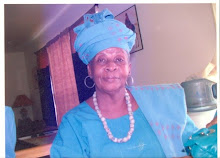
BLACK SKINNED BEAUTY SUPREME!

BLACK SKINNED BEAUTY SUPREME!

"BLACK IS BEAUTIFUL" -NEW YORK CITY STREET SAYING

"BLACK IS BEAUTIFUL!
BROWN IS HIP,
PUERTO RICAN IS OKAY
BUT white AIN'T S___T!"

BLACK SKINNED BEAUTY OOO!

BLACK SKINNED BEAUTY OOO!

BLACK SKINNED BEAUTY OOO!

BLACK SKINNED BEAUTY OOO!

BLACK SKINNED BEAUTY SUPREME

BLACK SKINNED BEAUTY SUPREME
BLACK SKINNED BEAUTY SUPREME!

BLACK SKINNED BEAUTY SUPREME

BLACK SKINNED BEAUTY SUPREME

BLACK SKINNED BEAUTY

BLACK SKINNED BEAUTY

Search This Blog

Pages

WE MUST HAVE A BLACK STANDARD OF BEAUTY BASED ON THE BLACK SKINNED BLACKEST WOMAN

Sunday, September 22, 2019

YORUBA Lecture On Promotion of Our Heritage

September 20, 2019 •

Lecture: Developing Our Cultural Heritage For Sustainable Domestic & Foreign Tourism Patronage, By Dare Babarinsa

Mikail Mumuni

DEVELOPING OUR CULTURAL HERITAGE FOR SUSTAINABLE DOMESTIC AND FOREIGN TOURISM PATRONAGE
By Dare Babarinsa Chairman, Gaskia Media Limited
I am happy to be back home in Ile-Ife today. For me, Ife is not just the home of the Yoruba, it is especially my home. In 1969, I was admitted into the Ife Anglican Grammar School, Ondo Road, Ile-Ife, where I spent four and half years until I wrote my School Certificate Examination in June 1973.
Therefore, Ile-Ife is my roots. I was one of the young students who lined the streets of Iremo when President Leopold Senghor, the poet-President of Senegal, visited Ife when he was honoured with a doctorate degree by the University of Ife (now Obafemi Awolowo University) in 1971. Senghor was accompanied on that trip by his host, General Yakubu Gowon. I later joined thousands of people who trooped to this palace when the august visitor was received by our father, Oba Adesoji TadeniawoAderemi, then the Ooni.
In his speech at the University on that day, President Senghor referred to Ile-Ife as the “land of the First Dawn.”Indeed, our ancestors believe that the world began in Ile-Ife where humanity first took form. At the dawn of all beginnings, Oduduwa came from heaven, accompanied by the 401 deities of the Yoruba pantheon, armed with the soil of heaven and a celestial cock. He poured the soil on the unsettled elements of early creation and with the help of the cock who spread the soil, the continents took form. Since then, Ile-Ife is Ile, home while other towns are ode, abroad, like you have Ode Ondo, Ijebu-Ode, Ode Irele and Ode Oyo.
The prospect presented by our cultural heritage as a tourism product shows that not less than 50% of global tourist travel, Nigeria inclusive, is in search of new experience, leisure, knowledge, understanding and entertainment to historical, archaeological, museums or heritage sites in places outside the usual places of residence.
The portfolio of our cultural heritage in terms of sites and festival is not in short supply in Nigeria from the Eyo festivals in Lagos to the grandeur of the Ooni Palace, Calabash carving and Alaafin Palace in Oyo, EkpoMasqurade in Akwa Ibom, Igue Festival in Edo, Mmanwu festival in Enugu, Durba in Kaduna, kano City walls, Agungun Fish Festival Sokoto, Tiv anger Weavers in Plateau and Ushafa Pottery Center in Abuja, our own Ojude Oba and Osun Osogbo Festivals and our various museums, just to mention a few across the Country.
All of this deepens tourism and delivers a process of giving our rich and deep routed culture abounding untapped commercial value. This is not in the least leaving out our cultural affinity, food, cultural safaris and our palaces. Yoruba are principally in the South Western part of Nigeria below the River Niger to the North and the same river to the East. In the South, the land is boarded by the Atlantic Ocean. Perhaps there are as many Yoruba living outside Yorubaland as those who are living in Nigeria. Millions of our people call Northern Nigeria their home.
Nigeria is a country endowed with a lot of cultural heritages sourced from its multicultural communities. Globally the importance of heritages to countries and even in developing nations like Nigeria cannot be over-emphasized. This is due to its economic, historical, tourist, aesthetic, educational and research significances. Heritages are cherished characteristic features of a society passed down from generation to generation through conscious preservation.
Heritages refer to the riches of extinct and extant societies which are of historic, educational, recreational, and economic importance, preserved and handed over from one generation to another. Put differently, heritages are significant endowments emanating from man and nature.
Following from the above, heritages could be categorized into two, based on their sources namely: ecological/natural heritages and cultural heritages. Ecological or natural heritages emanate from nature and environment. Ecological heritages can be defined as the relatively undisturbed or uncontaminated natural areas with its wild plants (flora) and animals (fauna) and its geomorphic features (caves, rivers, lakes, hills, mountains, cataracts) conserved for the specific objectives of studying, admiring, and enjoying the scenery which it affords. In Ile- Ife, we have many of such and kudos must be given to Kabiyesi AROLE ODUDUWA ‘OLOFIN ADINMULA, OONI ADEYEYE ENITAN OGUNWUSI, OJAJA II, OONI OF IFE for works done to renovate many of these in his domain. We have OpaOranmiyan, Moremi Statute, Ile Aje etc.
Nigeria is endowed with ‘about 29 game reserves, 1129 forest reserves, 4 game sanctuaries, 2 strict nature reserves and 8 national parks. It is pertinent to state that ecological heritage is outside the scope of this paper, therefore we are going to concentrate on the second type of heritage mentioned above which is cultural heritage.
Cultural heritage is the legacy of physical artifacts and intangible attributes of a group or society that are inherited from past generations, maintained in the present and bestowed for the benefit of future generations. Cultural heritages evolve from man’s ingenious activities, preserved and transmitted through oral traditions or in written concrete forms across generations of human societies. Oral tradition is the body of information concerning history, culture and environment of a people at any given time and space.
This information is often obtained through the words of mouth. It is also a set of verbally transmitted pieces of information about the experiences and worldviews of a people. These experiences and worldviews are preserved in the memories of the group of people and are transmitted from one generation to another. Oral tradition remains an indispensable cultural heritage management strategy among pre-modern and pre-historic Africans which continues to be relevant in contemporary Nigeria.
Most oral traditions obtained through ethnographic studies have been confirmed by archaeological and historical findings. The clan & village heads, kings, chiefs, deity priests, aged/older men and women serve as repositories and custodians of their oral traditions. They include traditional adages, lullabies, poems, riddles, incantations, praise songs such as oriki, recitals of traditional religions like the Ifa verses among the Yoruba of western Nigeria and other facets of their individual community’s cultural heritages. Oral tradition has proved to be a useful instrument to professionals like the archaeologists and ethnographers in locating and identifying cultural heritage sites/areas for further studies and preservation. Cultural heritage is, however limited to man-made artifacts and ideologies.
Cultural heritages can be defined as the sum total of the people’s cherished arts, customs, festivals, sacred or worship sites, norms, values, ideologies, dress and dress-patterns, traditional monuments & architectures, technology and technological sites and other artifacts which are cherished and conserved for their historical, political, educational, recreational and religious significance among others. Cultural heritages are therefore the sum total of material and non-material cultures of a particular society transmitted across generations.
Developing Nigeria’s cultural heritages is capable of promoting collective consciousness in terms of unity, oneness, nationalism and fostering peaceful co-existence among Nigerians. For instance, cultural heritages can be categorized into two namely material/tangible and non-material/intangible cultural heritages. This is because culture in itself is “both physical and non-physical in character”.
Tangible cultural heritages include man’s physical ingenious products which can be touched and seen such as architecture/buildings, defensive walls and ditches, crafts, tools, ivory, cowries, paintings, textiles, pestles, mortars, iron furnaces, knives, food, wooden objects, tombs & grave goods, temples, dresses, pottery & potsherd pavements, monuments, books, works of art, and among other artifacts. It is therefore important to state that man cannot survive without the construction and use of artifacts”.
This further gives a deeper explanation to the function of cultural heritages to society. On the other hand, non-material or ideological cultural heritages include all intangible and invisible aspects of a peoples’ ways of life such as ideas, folklore, kinship, norms, values, worldviews, philosophies of life, religious beliefs and practices, music, dance, festivals, traditions, language, and knowledge among others.
The cultural activities, arts and festivals were managed by the traditional rulers and chiefs in council through delegation of powers to talented specialist. For instance, the carvers made masks for masquerades, the traditional costume designers made royal regalia, beads and dresses, other crafts makers made baskets, local talking drums and other musical instruments; the music and dance specialists made music, praise songs to celebrate valiant warriors and trained dancers for annual festivals.
These skills were preserved through oral tradition and training of this crafts men and women; and then the skills were handed over from generation to generations. This generational pattern of preserving Nigerian cultural heritages was completely or partially truncated in most parts of Nigeria due to unsolicited incursion of colonialism.
Considering the avalanche of benefits that could be derived from Nigerian cultural heritages, there is need for a clarion call to consciously develop, sustain for domestic and foreign tourism patronage. Language is major while we have continued, regrettably though, the moonlight stories has given way to cartoons and the televisions. Nigerian cultural heritages are faced with a lot of challenges such as the influence of modernization, Christianity, commerce, civilization, change, development, looting, and antiquarians, among others. Apart from smuggling, theft, vandalism and looting of museums, another most threatening challenge facing Nigerian cultural heritage is religious dogmatism and iconoclasm as a result of die-hard suffering from colonial hangover which make the religious zealots burn cultural objects in the name of deliverance.
Notwithstanding, Nigerians have been able to preserve their cultural heritages till date and hopes they would be sustained for patronage, locally and internationally. We have practically westernized our sensibilities at the expense of our cultural heritage.
Million of Yoruba are living in other parts of Nigeria outside Yorubaland and they still speak their language, wear clothes that are peculiar to them, eat foods that Yoruba’s are known for. I would like us to focus more on Yoruba’s who live outside Nigeria. They are grouped into three categories.
YORUBA IN YORUBALAND OUTSIDE NIGERIA
In January 1988, I joined a group of journalists on a trip to the Republic of Togo as a guest of the late President Gnassingbe Eyadema. As part of our trip, we were taken to a coastal town where the traditional ruler said his ancestors came from Ile-Ife. He was bedecked like a full Yoruba Oba. In 2010 also, I met with Oba OnikoyiAbesan in his palace at Ajase (Porto-Novo). In front of the palace was a full statue of Oduduwa. He said he had visited his father, the Ooni of Ife, several times. He spoke Yoruba fluently without the reckless affectations of Nigerian-Yoruba elites who love to mix Yoruba language with English. Yoruba people who are in Benin Republic and Togo are actually living in Yorubaland. It was the partition of Africa in the 19th Century that took that part of Yorubaland to other countries.
When we visited President Eyadema, the Commander of the Togolese Air force could easily be recognized as a Yoruba because of his prominent Oyo facial marks. In Benin Republic, the biggest Yoruba town is Ketu. We know that Oba Alaketu is one of the most prominent princes of Oduduwa. In Porto-Novo, Radio Weke broadcast only in Yoruba. You have many prominent landmarks, including Hotel Aiyelawaje, in Porto-Novo, Hotel Alejo in Cotonou and other landmarks in Ketu and other towns. President Thomas BoniYayi, the former leader, is a Yoruba.
We know there are people of Yoruba descents who are now living in Sierra Leone, Ghana and Liberia. I used to have a friend in The Guardian of the 1980s. George Ola Davies from Liberia. I explained to him the meaning of his full name, Olabiwonnu and told him his ancestors must have come from Yorubaland. In the 19th Century and early 20th Century, Yoruba civilization and culture was dominant in West Africa. The milieu was called the EekuCivilisation which was signposted by peripatetic preachers of both Christian and Muslim faiths and traders. Eeku is the Yoruba form of greetings.
YORUBA IN THE DIASPORA
During the Yoruba Wars of the 19th Century, millions of youths were forcibly uprooted from their fatherland and sold into slavery. They were transported mostly to Europe, North America, South America and the Caribbean Islands. The wars were fought with uncivil ferocity leading to the destructions and evacuation of many towns and cities. Cities like Ikoyi, Ijaiye, Owu and many others were destroyed and many of their population sold into slavery. The Civil Wars was sparked off in 1817 by the rebellion of Afonja, the Are OnaKakanfo, the leading Marshall of Oyo Imperial Army, whose intransigence forced his overlord, the Alaafin, to commit ritual suicide. Not mollified by that, he proclaimed his independence only for him to be killed in 1824 during a violent coup detat executed by jihadists led by Malam Alimi, a Fulani imam who was supported by many Yoruba chieftains, including Balogun Alanamu and Balogun Ajikobi, who were fed up with Afonja alleged high-handedness. At the time of the armistice organized by the colonial government of Lagos in 1896, more than 500,000 Yoruba troops were under arms.
By this time, new settlements have been built like new Oyo, Ibadan and Abeokuta and old settlements like Ede, Osogbo and Ogbomosho have been transformed by the influx of refugees. One significant new settlement was Modakeke, peopled who trooped to the ancient land of Ile-Ife. Modakeke was to remain for many generations a sore reminder of the Yoruba Civil Wars. The impact of the Yoruba Wars was even more evident outside Africa. Able bodied men and women were seized, and sold in the slave markets of Eko (now Lagos), Ajase (now Porto-Novo) and Agbadarigi (now Badagry). To show that they knew the severity of what they were doing, the slave market in Lagos by the Marina was named OjaOdaju, the market of the heartless. Therefore, we have descendants of those who were forcibly taken away to foreign land who are actually of Yoruba descent but may not be aware of that fact. Yoruba blood flows in their veins, but many of them have lost all traces of home. These are the Yoruba in the Diaspora.
YORUBA OF THE DIASPORA
The Yoruba of the Diaspora are those who know they are Yoruba. They voluntarily travelled abroad, mostly to study and as economic refugees, who believe that at the right time, they would return home. In August 2000, I attended a Sunday service at The Apostolic Faith Church in Chicago where I was a guest of my friend, Mr. DapoAjanaku. One man who was seated by my side was praying fervently, Olorunmajekinkusiluyi o!! Since the seizure of Lagos Island by the British in 1862, and later the abolition of the notorious Slave Trade, millions of Yoruba have voluntarily travelled abroad. Most of them have also voluntarily returned. However, since the economic downturn that began in 1983, many of our people have become permanent refugees in foreign land. These categories of people are now witnessing second and third generations of Yoruba abroad. Many of them still bear Yoruba surnames, but apart from that, they seem lost. To worsen the matter, many young people, believing wrongly that there is no hope, have fled abroad. Some have paid huge sum to travel by road across the Sahara Desert to confront the peril of the ever-hungry Mediterranean Sea.
WEALTH OF YORUBALAND
Available statistics from the Central Bank of Nigeria, CBN, and other sources indicate that Yorubaland in Nigeria is the richest part of the country. Look at in absolute terms, it seems good. However, the truth is that Yorubaland is almost as poor as any other part of the country. Lagos, which controls most of the currency in circulation, is the area distorting the statistics. Youths between ages 18 to 35, constitute about half of the population. They are mostly unemployed, unemployable, underemployed or misemployed. For these young people, the prognosis of the future is not good. We have a duty to change our story. The truth is that the wealth of the Yorubaland is in the Yoruba people all over the world. Until we are able to think in a universal term that would encompasses the whole of Yorubaland, both within and outside Nigeria, we would not be able to harness our full strength. The Yoruba are the hope of the Black race. If we get it right, then the Black race would be redeemed. If not, Africans would remain the poorest part of humanity living in the richest portion of the earth.
WHAT IS TO BE DONE?
We have to harness the full power of the Yoruba people all over the world for the development of Yorubaland. We need to let the Blacks all over the world know that Yorubaland is home to them and that Ile-Ife is the centre of that home. Africans in the Diaspora should be encouraged to come and we should be willing and ready to receive them. In the late 19th and early 20th Century, many Africans in the Diaspora were willing to return home in Africa. Indeed, the Jamaican pan-Africanist, Marcus Garvey, started the Back to Africa Movement which yielded a lot of results. His campaign that Africans should return to Africa was received with alarm and hostilities by the Whites.
For us in Yorubaland, many of the freed slaves and descendants returned home. One of them was the great Bishop Ajayi Crowther, the first African Bishop. He decided to translate the Christian Bible to the Yoruba language, using his native Oyo dialect which today has become the standard modern Yoruba. Many of these returnees participated in the closing years of the Yoruba Wars. The leader of the Ekiti Parapo Society in Lagos, Mr. Doherty was originally from Ijero Ekiti. Prince Adedeji Haastrup, the leader of the Ijesha in Lagos returned to Ilesha after the war in 1886 and later became Oba Ajimoko, the OwaObokun of Ijeshaland. Many of these returnees returned to Abeokuta a town where many of the early Christian missionaries found welcome. However, a group of Ekiti returnees who believed they were being discriminated against left Abeokuta and returned home to form a new town called Aisegba (We are not Egba). The town is now part of Gbonyin local government of Ekiti State.
All these people like the great Candido Da Rocha, AbiolaAgbebi, Gureje Thompson, the founder of Eti Oni town in Atakumosa local government area of Osun State, the great historian, Samuel Johnson and many others contributed greatly to the growth of Yorubaland and Nigeria. However, by the middle of the 20th Century returning home to Africa was regarded as a poorer option for Africans in the Diaspora. Now it is time to change. There are three steps to we have to take to change our story.
CREATE A CENTRAL AUTHORITY
When Chief Obafemi Awolowo became the Leader of Government Business following the coming into force of the Macpherson Constitution, he became the first Yoruba person to rule most of Yorubaland since the princes departed from Ile-Ife at the dawn of time. In 1958 at the London Constitutional Conference, Chief Awolowo and his Action Group party proposed two amendments to the Constitution. That the Ilorin and Kabba Province in the Northern Region which is populated by the Yoruba people should be merged with the Western Region. That the Lagos Federal Capital Territory populated by the Yoruba should be merged with the West. Both proposals were rejected by delegates from the North and East and Awolowo came home empty handed. To add insult to injury, the Western Region was the only one that was Balkanized when the Mid-Western Region was created in 1963. In 1967, General Yakubu Gowon created the 12 states structure, leaving the West as it was with the excising of some of the provinces to join the Federal capital Territory of Lagos to form Lagos State.
The Yoruba of the North were given a new state called the West Central State. Later the state was renamed Kwara State. Today, the old West now has eight states namely, Delta, Edo, Ekiti, Lagos, Ogun Oyo, Osun and Ondo States. The job that once belonged to only one Premier is now being done by eight governors. Instead of one Parliament, we now have eight. Instead of 16 regional ministers, we now have at least 300 commissioners and special advisers. I dare say that there is no indication that we are now being better governed than we were when we had only one Premier instead of eight governors. We could ask ourselves if Papa Awolowo had being the governor of only Ogun State instead of being Premier of the West whether he could have functioned better. The truth is that if that had been the case, our history would have been different. Some of our leaders, agitated by this scenario, have asked that Nigeria be restructured so that we could have six or eight regional bodies as the federating units. I am not going to go into that. However, I would dare say that it would take a long time for the whole of Nigeria to agree at the same time to restructure Nigeria along regional lines. Indeed, politicians of the two major political parties have been speaking from both sides of their mouths about what they consider to be the restructuring of Nigeria. They are yet to properly define it in their manifestoes.
We should be prepared to hear the old songs again by 2023. I would like to advocate that the Yoruba leadership should create a Central Regional Authority that would be in charge of activities across all the Yoruba states. This bodies would be legislated into existence by the Houses of Assembly of the Yoruba State. It should be a body whose existence would not contradict the provisions of the present Constitution of the Federal Republic of Nigeria. I do not see any contradiction that would arise from formalizing cooperation among two or more of the present states in the country. Indeed, if the introduction of Sharia Law could not undermine the Constitution, I do not see how unity of some of the states for the betterment of our lives would become an obstacle to the Constitution. The body I am advocating should be used to coordinate activities with the Yoruba of the old North in Kogi and Kwara States and those in Yorubaland outside Nigeria in Benin Republic. The body should have fund provided for it by laws passed by the Houses of Assembly. The body should have access to and coordinate activities of Yoruba groups all over the world especially those in Europe, the Americas, Asia, the Middle-East and the Caribbean islands. Within Nigeria here, the Regional Authority should be in charge of inter-state infrastructural development of the Yoruba states.
There should be major inter-state highways linking all the state capitals: Lagos, Abeokuta, Ibadan, Oshogbo, Akure, Ado-Ekiti, Lokoja and Ilorin. We should also link these state capitals with modern rail lines. It is time we take a deliberate decision to build another railway line apart from the old one built by the colonial government. We should also develop our coastal and water ways for transportation and other usage.
THE YORUBA LANGUAGE
The Yoruba language is the greatest treasure we inherited from our ancestors. For thousands of years, the language, with its various dialects, has been handed over from generation to generation. It is our duty to pass it on to future generations. It is indeed therefore very sad that many Yoruba of this generation, out of deep ignorance and abiding inferiority complex, have neglected the study of our language. Indeed, in many homes, especially among the half-educated elites, they pretend to speak some kind of English to their children, ignoring and neglecting the mother tongue. Sadly, we are ending up with children who could neither speak good English and are also deprived of their mother tongue. This indeed is double jeopardy. Governments of the Yoruba States should pass laws making Yoruba the language of instructions in all primary and secondary schools. English should be treated as one of the subjects to be used and not a language of instructions. It is proven scientifically that children, if properly taught, could learn up to eight languages. Indeed, the late Kofi Anan, the first African to be elected Secretary General of the United Nations, was fluent in more than eight languages.
My friend, Prince Bisi Olatilo, the Managing Director of Biscon Television and one of Nigeria’s most eminent broadcasters, is fluent in all the three major languages of Nigeria. MajorGeneral Ike Nwachukwu, Nigerian former Minister of Foreign Affairs, also speaks Yoruba, Igbo and Hausa fluently. Dr Yemi Ogunbiyi, Chairman of Tanus Communications Ltd and former Managing Director of the old Daily Times who is also a chief of Ile-Ife, speaks the three main Nigerian languages fluently. Therefore, it does not serve any practical purpose to say your children can only speak Nigerian English. Today, children in England are learning French, German, Chinese and Russian. Officers of the Metropolitan Police in London, are learning Yoruba and other African languages because of new dimensions to international crimes in which some of our people are involved. This is one aspect in which the Regional Authority should be involved. The body should help set up schools among Yoruba communities in Europe, the Americas and the Caribbean. Our children, wherever they may be in the world, should have the opportunity of learning in their native tongue. We would not be the first to do this in the world. The Russians, Germans, Chinese, Arabs and Japanese are all doing it. As of now, the Gulen Movement of Turkey have more than 1000 Turkish schools in Europe, Africa, the United States, Brazil and other countries. They have at least three schools in Nigeria.
If the Regional Authority is intent on creating Yoruba schools all over the world, it would generate at least 100,000 jobs for our youths who would have to travel all to other countries to teach in those schools. As of today, because we deprive ourselves of the capacity to act, many of the second and third generation Yoruba living in foreign countries have no intention of coming back home. Yet this is where we need them.
TAKING CHARGE
We should take charge of our land instead of giving excuses that Abuja is disturbing us or putting obstacles on our ways. Mahatma Gandhi, the great Indian liberator was asked whether Indians were capable of gaining independence from Great Britain. He said “the problem of India is not Great Britain. The problem of India is the Indians.”Then he declared: “When Indians are ready to be free, nobody can stop them.” Nobody is stopping us from creating our own Regional Authority. Nobody is stopping us from re-creating our educational system to serve the peculiar needs of our people. Nobody is stopping us from constructing regional super-highways to link all our state capitals. Nobody is stopping us from building our own rail lines or coordinating our farming to become the backbone of our economy as it was in the first Republic.
We have to build new cities and provide electricity to power our industries and light our communities. All these we have to do ourselves because nobody would do them for us. Our people during the First Republic were not blaming Prime-Minister Abubakar Tafawa Balewa for their woes. They knew they were the masters of their collective destiny. When we make Yorubaland attractive, tourists would come. Africans all over the world, especially in the Americas, would know that this land of Oduduwa and Orunmila is their home. They would come here, not just as tourists, but as natives returning to the land of their ancestors. No date could be better suited to start this new Back to Africa Movement than the period of Olojo Festival, a festival established by our forefathers to commemorate the First Dawn when Olodumare created the heavens and the earth. That we have a festival to celebrate and a date to commemorate shows that the ancestors did their duty. Now let us do our duty for we are the ancestors of the future.
I appreciate your attention. Thank You.

This Lecture Was Delivered On Wednesday September 18, 2019*

The Yorùbá philosophy on inclusive governance and politics hold that - Àgbà mẹ́rin l'ón ṣè'lú: Àgbà ọkùnrin Àgbà obìnrin Àgbà ọmọdé Àgbà àlejò @yoruba_proverbs @ojogbon_yoruba


The Yorùbá philosophy on inclusive governance and politics hold that -

Àgbà mẹ́rin l'ón ṣè'lú:
Àgbà ọkùnrin
Àgbà obìnrin
Àgbà ọmọdé
Àgbà àlejò

@yoruba_proverbs
@ojogbon_yoruba

https://twitter.com/BabsFagbayibo/status/1170619609000697862?s=09

Sunday, September 08, 2019

The Yorùbá philosophy on inclusive governance and politics hold that - Àgbà mẹ́rin l'ón ṣè'lú: Àgbà ọkùnrin Àgbà obìnrin Àgbà ọmọdé Àgbà àlejò @yoruba_proverbs @ojogbon_yoruba


The Yorùbá philosophy on inclusive governance and politics hold that -

Àgbà mẹ́rin l'ón ṣè'lú:
Àgbà ọkùnrin
Àgbà obìnrin
Àgbà ọmọdé
Àgbà àlejò

@yoruba_proverbs
@ojogbon_yoruba

https://twitter.com/BabsFagbayibo/status/1170619609000697862?s=09

Wednesday, August 14, 2019

Ebola now Curable ooo!

https://face2faceafrica.com/article/ebola-now-curable-thanks-to-congolese-doctor-behind-treatment-that-cures-symptoms-in-just-an-hour

Thursday, July 04, 2019

Biblical POLYGAMY-"SEVEN WOMEN SHALL HOLD ONE MAN- POLYGAMY OOOO!

Biblical POLYGAMY-"SEVEN WOMEN SHALL HOLD ONE MAN- POLYGAMY-\ OOOO!

"And in that day
seven women shall take hold of one man,
saying,
We will eat our own bread,
and wear our own apparel:
only let us be called by thy name,
"
Isaiah 4:1.

That "seven women" would seek to be called by the name of "one man" is a clear evidence of polygamy (polygyny) in the Bible, even in prophecy such as this passage. Of course, though, the situation described in this prophetic verse is not all that positive.

A rather small minority, however, does view that verse as a "literal" prophecy, foretelling of a time when women might out-number men, seven-to-one.

Howbeit, most Bible-believers see that verse, instead, as a negative prophecy, regarding the churches of God seeking to "do their own thing".

According to the verse, the seven women are arrogant women. Their only motivation for marrying the man is to use him. They only want to be CALLED by the man's name, only so as to take away their reproach, their shame. But they still arrogantly want to do things their own way. They want to provide their own things their own way.

This, of course, does NOT present an image of the type of wives that Bible-believing men would want to marry! It certainly does not describe marriage within the Biblical marriage-model of Ephesians 5:22-25.

Given, as the majority of Bible-believers believe, that this prophecy is an image about arrogant churches (rather than "literally" about arrogant women wanting to marry a polygamist), this passage presents a "wake-up call" for all Bible-believers.

Namely, the "seven women" are understood as being churches who only want to be CALLED by the name of Christ, to be His brides. They only do so in hopes of having their fruitless shame (as per sin) removed, even though they still arrogantly want to do things their own way.

They want to feed themselves their own bread, instead of being fed on the bread of Christ.

They want to clothe themselves in their own apparel, instead of being clothed in the righteousness of Christ.

While there is reasonable debate among many as to whether the similitude of the "seven women" in Isaiah 4:1 is connected directly with the "seven churches" of Revelation chapters 2 and 3, many still agree, nevertheless, that Isaiah 4:1 is a negative prophecy concerning arrogant churches. It is the foretelling of seven churches wanting to marry Christ who do so only with a selfish motive to seek to have His salvation (i.e., to be CALLED "Christian", to be CALLED by His Name) but while, at the same time, still wanting to be doing things their own way, to stay in their sin. They want to be CALLED "Christian" but they do not want to BE Christian, in ALL their ways, "in spirit and in truth".

As TruthBearer.org's Mark the Founder has said, Isaiah 4:1 could be seen as a forewarning, that this prophecy could even be foretelling of any Churches that adamantly refuse to believe or to allow themselves to see the Biblically-proven truth that polygamy (polygyny) really is Biblical. That is, such Churches want to be called by the name of Christ, while they simultaneously close their ears to the Biblical truth of polygyny and thereby unwittingly even accuse Jesus Christ Himself of supposed "sin", because of Matthew 25:1-13! This is, of course, combined with the matter that 1 Timothy 4:1-3a reveals that the Holy Spirit expressly foretold of the time when people would be forbidding to marry any families such as that of polygamous Abraham, Moses, David, and others, as well as how The Lord described Himself polygynously too, as Jesus clearly did, for example, in Matthew 25:1-13.

Indeed, Isaiah 4:1 is not the only time that a prophecy describes the relationship between The Lord and the Churches in a context of a polygamist marriage setting.

Namely, this Isaiah 4:1 prophecy does indeed also provide such additional confirmation of the Biblical presentation of the plurality of Churches (i.e., more than one) being as brides of Christ (plurally). Just as Christ is presented as polygamously married to His Churches (i.e., being Bridegroom of the "five wise virgins") in Matthew 25:1-13, so too does this Isaiah 4:1 present Christ in another context of polygamous marriage with Churches.

Even as the Isaiah 4:1 prophecy is indeed so perceived by most Bible-believers as such a negative prophecy regarding the churches, it does still, nevertheless, demonstrate a key point about the topic of polygamy.

Namely, the fact that this prophecy would detail the idea of seven women who WANT to marry a polygamist (even in the context of churches unto Christ), that fact itself, that a prophecy of God would use polygamy in such an example, is further proof again that polygamy really is Biblical.

Also See:

The Lord [Self-described as a polygamist]

"The Parable of the Ten and Seven",
[A parable-style teaching at TruthBearer.org]

Abdon* Abijah Abraham Ahab Ahasuerus Ashur Belshazzar Benhadad Caleb David Eliphaz Elkanah Esau Ezra Gideon Heman* Hosea* Ibzan* Issachar** Jacob Jair* Jehoiachin Jehoram Jerahmeel Joash Lamech Machir Manasseh Mered Moses Nahor Rehoboam Saul Shaharaim Shimei* Simeon Solomon Terah* Zedekiah Ziba*

Biblical Polygamy . com
Polygamy really is Biblical ! SM
Exegesis
° Remember
Moses wrote it ©
° Adultery
° One Wife
° One Flesh
° Not Multiply Wives
° Forbidding to Marry
° Did God Tolerate Sin?
° A NT Polygamist
° Wife of thy Youth
° If He Take Another Wife
° If a Man Have 2 Wives
° It's Divorce, not Polygamy
° Commanded of God in NT?
° Lamech `scuse ©
° Not Marry Sisters
° God said He GAVE Wives
° Original Plan of God?
° 7 Women / 1 Man (Isa 4:1)
° Law of the Land

Polygamists
° Abraham
° David
° Jacob (Israel)
° Moses
° Polygamists (Directory)

The Lord
° God the Father
° Jesus Christ

Links
° Links

AD

© Copyright ALL RIGHTS RESERVED (2001 - 2019)

Biblical POLYGAMY-"SEVEN WOMEN SHALL HOLD ONE MAN- POLYGAMY OOOO!

Biblical POLYGAMY-"SEVEN WOMEN SHALL HOLD ONE MAN- POLYGAMY-\ OOOO!

"And in that day
seven women shall take hold of one man,
saying,
We will eat our own bread,
and wear our own apparel:
only let us be called by thy name,
"
Isaiah 4:1.

That "seven women" would seek to be called by the name of "one man" is a clear evidence of polygamy (polygyny) in the Bible, even in prophecy such as this passage. Of course, though, the situation described in this prophetic verse is not all that positive.

A rather small minority, however, does view that verse as a "literal" prophecy, foretelling of a time when women might out-number men, seven-to-one.

Howbeit, most Bible-believers see that verse, instead, as a negative prophecy, regarding the churches of God seeking to "do their own thing".

According to the verse, the seven women are arrogant women. Their only motivation for marrying the man is to use him. They only want to be CALLED by the man's name, only so as to take away their reproach, their shame. But they still arrogantly want to do things their own way. They want to provide their own things their own way.

This, of course, does NOT present an image of the type of wives that Bible-believing men would want to marry! It certainly does not describe marriage within the Biblical marriage-model of Ephesians 5:22-25.

Given, as the majority of Bible-believers believe, that this prophecy is an image about arrogant churches (rather than "literally" about arrogant women wanting to marry a polygamist), this passage presents a "wake-up call" for all Bible-believers.

Namely, the "seven women" are understood as being churches who only want to be CALLED by the name of Christ, to be His brides. They only do so in hopes of having their fruitless shame (as per sin) removed, even though they still arrogantly want to do things their own way.

They want to feed themselves their own bread, instead of being fed on the bread of Christ.

They want to clothe themselves in their own apparel, instead of being clothed in the righteousness of Christ.

While there is reasonable debate among many as to whether the similitude of the "seven women" in Isaiah 4:1 is connected directly with the "seven churches" of Revelation chapters 2 and 3, many still agree, nevertheless, that Isaiah 4:1 is a negative prophecy concerning arrogant churches. It is the foretelling of seven churches wanting to marry Christ who do so only with a selfish motive to seek to have His salvation (i.e., to be CALLED "Christian", to be CALLED by His Name) but while, at the same time, still wanting to be doing things their own way, to stay in their sin. They want to be CALLED "Christian" but they do not want to BE Christian, in ALL their ways, "in spirit and in truth".

As TruthBearer.org's Mark the Founder has said, Isaiah 4:1 could be seen as a forewarning, that this prophecy could even be foretelling of any Churches that adamantly refuse to believe or to allow themselves to see the Biblically-proven truth that polygamy (polygyny) really is Biblical. That is, such Churches want to be called by the name of Christ, while they simultaneously close their ears to the Biblical truth of polygyny and thereby unwittingly even accuse Jesus Christ Himself of supposed "sin", because of Matthew 25:1-13! This is, of course, combined with the matter that 1 Timothy 4:1-3a reveals that the Holy Spirit expressly foretold of the time when people would be forbidding to marry any families such as that of polygamous Abraham, Moses, David, and others, as well as how The Lord described Himself polygynously too, as Jesus clearly did, for example, in Matthew 25:1-13.

Indeed, Isaiah 4:1 is not the only time that a prophecy describes the relationship between The Lord and the Churches in a context of a polygamist marriage setting.

Namely, this Isaiah 4:1 prophecy does indeed also provide such additional confirmation of the Biblical presentation of the plurality of Churches (i.e., more than one) being as brides of Christ (plurally). Just as Christ is presented as polygamously married to His Churches (i.e., being Bridegroom of the "five wise virgins") in Matthew 25:1-13, so too does this Isaiah 4:1 present Christ in another context of polygamous marriage with Churches.

Even as the Isaiah 4:1 prophecy is indeed so perceived by most Bible-believers as such a negative prophecy regarding the churches, it does still, nevertheless, demonstrate a key point about the topic of polygamy.

Namely, the fact that this prophecy would detail the idea of seven women who WANT to marry a polygamist (even in the context of churches unto Christ), that fact itself, that a prophecy of God would use polygamy in such an example, is further proof again that polygamy really is Biblical.

Also See:

The Lord [Self-described as a polygamist]

"The Parable of the Ten and Seven",
[A parable-style teaching at TruthBearer.org]

Abdon* Abijah Abraham Ahab Ahasuerus Ashur Belshazzar Benhadad Caleb David Eliphaz Elkanah Esau Ezra Gideon Heman* Hosea* Ibzan* Issachar** Jacob Jair* Jehoiachin Jehoram Jerahmeel Joash Lamech Machir Manasseh Mered Moses Nahor Rehoboam Saul Shaharaim Shimei* Simeon Solomon Terah* Zedekiah Ziba*

Biblical Polygamy . com
Polygamy really is Biblical ! SM
Exegesis
° Remember
Moses wrote it ©
° Adultery
° One Wife
° One Flesh
° Not Multiply Wives
° Forbidding to Marry
° Did God Tolerate Sin?
° A NT Polygamist
° Wife of thy Youth
° If He Take Another Wife
° If a Man Have 2 Wives
° It's Divorce, not Polygamy
° Commanded of God in NT?
° Lamech `scuse ©
° Not Marry Sisters
° God said He GAVE Wives
° Original Plan of God?
° 7 Women / 1 Man (Isa 4:1)
° Law of the Land

Polygamists
° Abraham
° David
° Jacob (Israel)
° Moses
° Polygamists (Directory)

The Lord
° God the Father
° Jesus Christ

Links
° Links

AD

© Copyright ALL RIGHTS RESERVED (2001 - 2019)

Tuesday, April 09, 2019

GHANA OOO!-PUBLIC HEALTH SYSTEM

https://www.justlanded.com/english/Ghana/Ghana-Guide/Health/The-public-healthcare-system&grqid=nLTjXZfe&s=1&hl=en-NG

Nowadays, the average life expectancy in Ghana is 64 years for women and 57 for men (2010), one of the highest of Africa. This can be explained by a health care system that has been improved and supported a lot by the government in recent years.

Since 2003, a new scheme has been voted and passed into law, in order to abolish the former “cash and carry system” regarding local health services. There is a public healthcare system in the style of universal coverage in Ghana. The system is improving and has been held up as an example for emerging countries. However, this system is still insufficient as the national and public scheme covers an average of only 18% of the total population.
The public insurance system in Ghana is the NHIS (National Health Insurance Scheme). This insurance is financed partly by the government, partly by Ghanaian workers. The workers give 2.5% of their social security contributions to the insurance fund and 2.5% of the VAT also goes into the fund.
District mutual health insurance
The NHIS offers two main possibilities in terms of insurance. First of all, you can get a district mutual health insurance, which is officially issued by the NHIS and financed by the government. This is open to any person residing in Ghana (including low income individuals, unemployed people and people who can not afford insurance premiums). You will get this coverage regardless of your situation, 6 months after your registration.
This insurance is organised and overseen by individual districts. In order to benefit from it, you will have to register at your district office, (located in the district assembly of your area). You will need to fill in a document for yourself and provide at least two passport photos. You will also need to apply on behalf of your children if they are under 18 years old.
It is free to register, and covers everyone for an initial 5 years. You will get a personal card which you will need to bring to any medical appointment in order to be covered.
This scheme is quite basic, and covers conditions, such as malaria, diarrhoea, asthma, hypertension, upper respiratory tract infections, skin diseases and diabetes. These make up 95% of reported diseases in Ghana. This option, however, does not include any support for antiretroviral drugs for HIV, or others tests such as echocardiography, organ transplants, dialysis, angiography, or mortuary services.

You should be able, with this insurance, to get treated in public facilities for free. It is the responsibility of the hospitals and clinics to get the money back from the insurance scheme.
However, it has been said that some medical facilities have refused to treat patients because the insurance never refunds the treatments costs.
Private mutual insurance scheme
The other possibility under NHIS is the private mutual insurance scheme, which allows a group of people to subscribe together to an insurance in order to cater for their health needs. This option generally deals with companies and their workers.
This type of coverage is provided by private insurers who charge companies according to the number of workers in the scheme. This option is not entitled to subsidies from the National Health Insurance Fund.
Services

YORUBA TWINS ARE THE HIGHEST PERCENT IN THIS TOWN OOO!

Check out @toluogunlesi’s Tweet: https://twitter.com/toluogunlesi/status/1115665491966738432?s=09

YORUBA TWINS ARE THE HIGHEST PERCENT IN THIS TOWN OOO!

Check out @toluogunlesi’s Tweet: https://twitter.com/toluogunlesi/status/1115665491966738432?s=09

BLACK SKINNED Beauty Supreme LUPITA'S NEW BOOK TO PROMOTE THE BLACKEST SKIN OOOO!

Check out @GWANJEZ’s Tweet: https://twitter.com/GWANJEZ/status/1113323496363515904?s=09

Kentah Gwanjez (@GWANJEZ) tweeted at 7:13 AM on Wed, Apr 03, 2019:
Lupita has just announced her new children’s book Sulwe will be releasing Oct. 1st! This book was written for children to love their skin color & beauty. "I wrote Sulwe to inspire children to love the skin they are in & to see the beauty that radiates from within"

DR. SEBI ooo!- DID THEY KILL HIM?

https://face2faceafrica.com/article/the-mysterious-life-and-death-of-dr-sebi-the-celebrity-healer-who-claims-to-cure-aids

A New Black TIGER WOODS from SOUTH AFRICA OOOO!-FROM FACE2FACEAFRICA

https://face2faceafrica.com/article/touted-as-the-next-tiger-woods-this-7-year-old-south-african-golfer-is-breaking-world-records&source=gmail&ust=1554558859786000&usg=AFQjCNG2ME86Itil0d9OqK96O5sN0hnXoA

Tuesday, March 26, 2019

GHANA OOO!-PUBLIC HEALTH SYSTEM

https://googleweblight.com/i?u=https://www.justlanded.com/english/Ghana/Ghana-Guide/Health/The-public-healthcare-system&grqid=nLTjXZfe&s=1&hl=en-NG

Nowadays, the average life expectancy in Ghana is 64 years for women and 57 for men (2010), one of the highest of Africa. This can be explained by a health care system that has been improved and supported a lot by the government in recent years.

Since 2003, a new scheme has been voted and passed into law, in order to abolish the former “cash and carry system” regarding local health services. There is a public healthcare system in the style of universal coverage in Ghana. The system is improving and has been held up as an example for emerging countries. However, this system is still insufficient as the national and public scheme covers an average of only 18% of the total population.
The public insurance system in Ghana is the NHIS (National Health Insurance Scheme). This insurance is financed partly by the government, partly by Ghanaian workers. The workers give 2.5% of their social security contributions to the insurance fund and 2.5% of the VAT also goes into the fund.
District mutual health insurance
The NHIS offers two main possibilities in terms of insurance. First of all, you can get a district mutual health insurance, which is officially issued by the NHIS and financed by the government. This is open to any person residing in Ghana (including low income individuals, unemployed people and people who can not afford insurance premiums). You will get this coverage regardless of your situation, 6 months after your registration.
This insurance is organised and overseen by individual districts. In order to benefit from it, you will have to register at your district office, (located in the district assembly of your area). You will need to fill in a document for yourself and provide at least two passport photos. You will also need to apply on behalf of your children if they are under 18 years old.
It is free to register, and covers everyone for an initial 5 years. You will get a personal card which you will need to bring to any medical appointment in order to be covered.
This scheme is quite basic, and covers conditions, such as malaria, diarrhoea, asthma, hypertension, upper respiratory tract infections, skin diseases and diabetes. These make up 95% of reported diseases in Ghana. This option, however, does not include any support for antiretroviral drugs for HIV, or others tests such as echocardiography, organ transplants, dialysis, angiography, or mortuary services.

You should be able, with this insurance, to get treated in public facilities for free. It is the responsibility of the hospitals and clinics to get the money back from the insurance scheme.
However, it has been said that some medical facilities have refused to treat patients because the insurance never refunds the treatments costs.
Private mutual insurance scheme
The other possibility under NHIS is the private mutual insurance scheme, which allows a group of people to subscribe together to an insurance in order to cater for their health needs. This option generally deals with companies and their workers.
This type of coverage is provided by private insurers who charge companies according to the number of workers in the scheme. This option is not entitled to subsidies from the National Health Insurance Fund.
Services

Wednesday, March 20, 2019

GHANAIAN PROPHETESS ASSASSINATION WHO CAME TO AMERIKKKA TO BRING US BACK TO AFRICA!

(@kayin_omowale) tweeted at 8:36 PM on Tue, Mar 19, 2019: The 1928 assassination of a Ghanaian prophetess who moved to the U.S. to return blacks to Africa - Face2Face Africa

https://t.co/fKGFnxrk07

GHANAIAN PRIESTESS

Check out @kayin_omowale’s Tweet: https://twitter.com/kayin_omowale/status/1108089759610667008?s=09

Wednesday, March 13, 2019

Chicago Reparations Won for Police Torture ooo!--From The Guardian Newpaper(UK)

https://www.theguardian.com/news/2019/mar/08/chicago-reparations-won-police-torture-school-curriculum?CMP=share_btn_tw

In Chicago, reparations aren’t just an idea. They’re the law
For decades, a gang of Chicago police tortured and forced confessions from people in custody. Now, in a historic move, the city is teaching this shameful history in schools – but not everyone thinks it should. By Peter C Baker

Fri 8 Mar 2019 06.00 GMT

“What do you know about Jon Burge?” On the morning of 16 April 2018, Juanita Douglas was asking her students a question she’d never asked in a classroom before, not in 24 years of teaching in Chicago’s public schools. She’d been preparing to ask the question for over a year, and she knew that for many of her students the conversation that followed would be painful. Disorienting. She didn’t like the idea of causing them pain. She didn’t want to make them feel overwhelmed or lost. But she thought, or at least hoped, that in the end the difficulty would be worth the trouble.

Lose yourself in a great story: Sign up for the long read email
Read more
It was only second period. Several of Douglas’s students were visibly tired. A few slumped forward, heads on their desks. Some were stealthily texting or scrolling through Snapchat. Others were openly texting or scrolling through Snapchat.

Advertisement

After a few seconds, Douglas repeated the question: “Do you know Jon Burge?”

A ragged chorus of noes and nopes and nahs.

“Tell me again what year you were born in,” said Douglas, who is 54 and likes to playfully remind her students that they don’t know everything about the world.

2000. 2001. 1999.

“OK,” she said. “Well … welcome to Chicago.”

Douglas switched off the lights and played a video. Who was Jon Burge? The video supplied the answer. Burge was a former Chicago police department detective and area commander. Between 1972 and 1991 he either directly participated in or implicitly approved the torture of at least – and this is an extremely conservative estimate – 118 Chicagoans. Burge and his subordinates – known variously as the Midnight Crew, Burge’s Ass Kickers, and the A-Team – beat their suspects, suffocated them, subjected them to mock executions at gunpoint, raped them with sex toys, and hooked electroshock machines up to their genitals, their gums, their fingers, their earlobes, overwhelming their bodies with live voltage until they agreed: yes, they’d done it, whatever they’d been accused of, they’d sign the confession.

Advertisement

The members of the Midnight Crew were predominately white men. Almost all of their victims were black men from Chicago’s South and West Sides. Some had committed the crimes to which they were forced to confess; many had not. The cops in question called the electroshock machines “nigger boxes”.

The video cut to Darrell Cannon, one of the Midnight Crew’s victims. He spoke about getting hauled by cops into a basement: “I wasn’t a human being to them. I was just simply another subject of theirs. They had did this to many others. But to them it was fun and games. You know, I was just, quote, a nigger to them, that’s it. They kept using that word like that was my name.”

Text on the screen explained that Burge was fired in 1993, following a lawsuit that forced the Chicago police to produce a report on his involvement in “systematic torture”, written by its own office of professional standards. After his firing, Burge moved to Apollo Beach, Florida, where he ran a fishing business. In 2006, another internally commissioned report concluded that he’d been a torture ringleader, but still no charges were brought; Illinois’ five-year statute of limitations for police brutality charges had by then expired. In 2008, FBI agents arrested Burge at his home, and creative federal prosecutors charged him – not with torture, but with perjury. In a 2003 civil case, Burge had submitted a sworn statement in which he denied ever taking part in torture. In 2010 a jury found him guilty.

Advertisement

As soon as the video ended and Douglas flipped the lights back on, her students – most of whom were, like her, black – started talking. Their confusion ricocheted around the room.

“How long did he get?”

“Four-and-a-half years.”

“He only got four-and-a-half years?”

“That’s what I’m saying.”

“I really feel some type of way about this.”

“Is he still alive?”

“I’ve got it on my phone.”

“He didn’t torture them alone. Why didn’t anyone else get charged?”

“I’ve got it on my phone. He’s still alive.”

“I’m just … angry.”

“He lives in Florida!”

“Didn’t no one hear the screams?”

Douglas’s students didn’t yet know it, but they were not the only Chicago students wrestling with Jon Burge and the Midnight Crew last spring. In fact, teachers and students at each of the city’s 644 public schools were figuring out how to talk about the cops of the Midnight Crew. Teachers were going down this path whether they wanted to or not. There was no choice: it was an official requirement, codified in city law.

This classroom initiative is part of a historic, novel and perplexingly under-covered development in the ever-more urgent search for solutions to the cumulative harm inflicted on Americans – especially black Americans – in the name of law and order. On 6 May 2015, in response to decades of local activism, Chicago’s city council passed a resolution officially recognising that Burge and his subordinates had engaged in torture, condemning that torture, and offering his victims (or at least some of them) compensation for their suffering.

The resolution is a singular document in American history. Torture accountability – even basic torture honesty – has been a perennial nonstarter in US politics. Reparations, especially those with a racial component, have long been treated as, alternately: an incoherent absurdity; a frightening threat; a nice-sounding but impractical rallying cry; or, more recently, in the wake of the National Magazine Award-nominated essay in the Atlantic by Ta-Nehisi Coates, as a worthy but still essentially utopian demand. But within Chicago city limits, reparations for police torture isn’t just a thought exercise, a rhetorical expression about what should exist in a better world. It’s Chicago city council resolution SR2015-256: an official political promise.

Jon Burge, the former Chicago police commander who led the ‘Midnight Crew’. Photograph: Charles Rex Arbogast/AP
If this is the first you’ve heard of all this, you are hardly alone. Among locals of all races, and even among national experts on torture and torture accountability, remarkably few are familiar with the experiment unfolding right now in Chicago. If people know anything about it, they likely know that it involved some money: a pool of $5.5m from which certain victims of the Midnight Crew could receive up to $100,000 each, regardless of whether their coerced confessions had been false or not – regardless, that is, of whether, in the eyes of the law, they had ultimately been judged guilty or innocent.

In addition to the cash payouts, SR2015-256 contained a handful of other benefits for the victims, including free tuition at the city’s community colleges and free access to a new psychological counselling centre. In recognition of the fact that torture’s effects reach beyond the lives of individual victims, these services were made available to all members of survivors’ immediate families, and in some cases to their grandchildren.

The resolution also pledged the city to take two concrete steps to counteract its decades-long tradition of trying to make the Burge story disappear. First, Chicago officials would work with activists to erect a memorial to the city’s police-torture survivors. Second, the city’s public schools would henceforth be required to add “a lesson about the Burge case and its legacy” to the official history curriculum for teenagers. To many of the activists who fought for the reparations package, the curriculum was its most meaningful component, precisely because of what it asked from the city: not money, but time and talk, however awkward or uncomfortable that talk might be.

The memorial design and site selection process is still under way. But last August, city officials held a press conference to announce that, after two years of development, the new curriculum – titled Reparations Won – was ready for the children of Chicago.

Chicago is one of America’s most racially diverse cities, but also one of its most racially segregated: a patchwork of different social and economic worlds that know relatively little about each other. For this reason, my original hope was to watch the curriculum being taught in schools all across the city. What would lessons about the Midnight Crew look like in resource-starved black schools on the South and West Sides? How would the same curriculum be taught in predominantly Latino classrooms? (There are more Latino students than students of any other racial background in Chicago schools.) What about schools in the almost-suburbs – just inside the city line – that are disproportionately populated by cops, firefighters and other city workers, in classrooms full of their children and nephews and nieces?

Douglas was the only teacher out of dozens I asked who opened the doors of her classroom to me. The curriculum was too important, she said, for its rollout to go completely undocumented. Last spring, I spent 18 mornings in her classroom at Lincoln Park high school, observing two back-to-back sections of her black-history class as they worked through Reparations Won.

Chicago police detained thousands of black Americans at interrogation facility
Read more
Before my first day, reading over the curriculum and imagining myself in Douglas’s shoes, I felt overwhelmed by the visceral intensity of the material alone. Once I was in her classroom, though, I quickly realised the presence of another challenge, one that will surely be obvious to any teacher. It was the problem of shared knowledge, and how little of it Douglas could presume.

Most of her students were black, and some were Latino, Asian-American, biracial, multiracial. Just one was white. Though Lincoln Park is a prosperous North Side neighbourhood, most of them lived on the South or West Side, where Chicago’s black population has historically been concentrated, and came north every morning because the high school that used to be in their neighbourhood is now closed. Some students had been to Black Lives Matter protests. Others had never been to any protest of any kind in their lives. Some students came to class wide awake, visibly enthusiastic, caffeinated. Others showed up looking exhausted, or like they were counting down the hours until the end of class, until lunch, until prom, until graduation. Some came to school every day, and were already thinking about college. Some came now and then, and were not sure they would graduate. Some had family members whose lives had been deeply marked by interactions with Chicago’s cops and courts and jails and prisons. Some had family members who were cops, or used to be. It was Douglas’s job to teach them all.

The first few days were heavy on context: on white Chicago’s long history of resistance to its black population; on Burge’s upbringing in the all-white South Side neighbourhood of Deering, which, during his lifetime, became an all-black neighbourhood; on the city’s intentional overcrowding of black neighbourhoods and schools; on the escalation of the police “war on crime” in black neighbourhoods; and, finally, on the first allegations against the Midnight Crew, and how they were ignored by the very man with the most immediate power to investigate the charges and punish the perpetrators, then-Cook county state’s attorney Richard M Daley, who would go on to become mayor.

On the fourth day, the class watched another video, this one detailing the case of Ronald Kitchen, a Midnight Crew victim who, largely on the basis of his tortured confession, was found guilty of murdering two women and three children and sent to death row. Beginning in 1990, he spent 21 years before his conviction was quashed and a judge declared him innocent.

The video featured footage from the 2011 deposition of Detective Michael Kill, one of Kitchen’s torturers. In this footage, Kill is 70 and long retired. (Kill died in 2018.) Wiry and full of contempt, he leans back in his chair, as if keeping his distance from something that smells bad. Offscreen, Kitchen’s lawyer asks Kill whether he made a practice of using the n-word in his interrogations.

“Sure I did,” says Kill.

How often?

“I would say I used it as many times as I had to.”

But why?

“Well,” Kill says, his grimace intensifying, “how many inches of tape are in your recorder?”

Kitchen’s lawyer asks him why he used the N-word so much.

Kill shakes his head, still grimacing. “Trying to explain police work to you,” he says to the lawyer, “is like trying to explain physics to my grandson – who is three years old.” He used the word, he explains, to make suspects feel comfortable. To show them he understood their world, knew their language. “You’re not there,” he says. “You haven’t been there. You don’t understand it, OK? You have to live it.”

No, Kill says, he never beat Kitchen. Never tortured Kitchen. Why would he do something like that, he asks rhetorically, and risk getting fired, losing his pension? No, he knew nothing about anyone beating or torturing Ronald Kitchen. Jon Burge was his boss, sure. But he hardly knew the guy. Couldn’t really tell you anything about him.

A rally for victims of police torture in Chicago in 2006. Photograph: Tim Boyle/Getty Images
Many of Douglas’s students were visibly upset by Kill: by what he was saying, by how casually he was saying it, by his apparent disdain for the very idea that anyone might think anything he’d done would require an explanation. “Can we turn it off?” asked a boy seated next to me, quietly and plaintively. But the longer the video went on, the more the kids started making fun of Kill: they knew, after all, that the old man’s denials hadn’t carried the day; that the state had set Kitchen free, that the city had settled his civil case for $6.15m. They started laughing at Kill’s clipped speech, his old Chicago accent, his pissy evasions. A Latina girl, one of Douglas’s most reliable participants in class discussions, snickered and mimed taking a picture of Kill’s scowling face on her phone, suggesting what a good meme it would make. “When you know you got caught,” she said, laughing.

The next day, the class watched footage of Kitchen himself, filmed after he was released from jail but before he won his settlement. Someone off-camera asks him to describe his post-release life. Kitchen tells them he hardly sleeps. That the mere sight of a Chicago police car sends him into a full-body terror, which is why he’s had to leave Chicago, the only city he ever knew. “It’s hard,” he says. “It’s hard, it’s hard. It’s like a dream to me, sitting up here with you. It’s like, at any moment, this could get taken away from me all over again.”

It had been easy, perhaps, to joke about Michael Kill: a caricature of an old white villain on the wrong side of history. But there were no jokes to tell about Ronald Kitchen. “Do you know how many of the police went to jail?” asked a black girl toward the front of the class, referring to all the other Midnight Crew members besides Burge. It wasn’t the first time one of Douglas’s students had posed the question, and it wouldn’t be the last. Each time, the answer was the same: zero.

After class that day, I stayed behind to look at what everyone had written on their reflection sheets. Douglas collected these almost every day, and she often let me look at them, wanting me to understand that the reactions I saw during class were only part of the story. Many of her students rarely spoke unless forced to. On their reflection sheets, however, freed from their worry about how a roomful of their fellow teenagers would respond, these same students would often write searching, poignant reflections, and pose deep questions. On the day of the Kitchen video, their comments were particularly painful to read:

“That could be me!”

“This affects how my life will be, because when I decide to create a family I will constantly be in fear if my husband is safe or my children if I have a son I have to fear he may get stopped by the police.”

“It could be my boyfriend, dad, cousins, etc.”

“This is stuff that I see in movies and may encourage if I don’t like the bad guy, but it’s unimaginable to think about in real life.”

“This was like being a slave, but in the 90s.”

“My dad just got pulled over recently and he wasn’t tortured, but what if this did happen to him?”

“My father was also framed with something he didn’t do. (He’s been in there since I was 3 and is getting out in 2027.)”

The longer I spent in Douglas’s class, the more I came to feel that the atmosphere in the room, as a group of young people made contact with the Burge saga, was history itself – not the professional academic enterprise, not the subject of polished books and articles, but the living tangle of connections between past and present that is always available to us, sometimes as inspiration or solace, sometimes a burden, most often both at once. This sense of history, of course, will be central to any serious attempt at reparations in America. At Lincoln Park high, I was watching students dive into the living tangle – watching them pull out this strand, that strand, and ask what they meant, where they belonged.

On 14 September 2017 – less than a month after the curriculum was unveiled – the now-defunct local news site DNAinfo ran a story about a meeting between parents, faculty and staff at Edison Park elementary, a school on Chicago’s Northwest Side, where many cops live. All of the parents quoted in the article were opposed to Reparations Won.

“You’re taking eighth graders and trying to mould their minds with material that is highly confrontational and controversial,” said Angela McMillin, who described herself as “infuriated, appalled and disgusted” by the curriculum. McMillin wanted to opt her daughter, an eighth grader, out of the curriculum.

The school’s principal, Jeffrey Finelli, informed her that this would not be possible. “It would be a little like saying, ‘I don’t like quadratic equations, so I’m going to opt out of algebra,’” Finelli said.

Emily Skowronek, a social-studies teacher who would be teaching the curriculum, was also present at the meeting. She promised, in the paraphrase of Alex Nitkin, the DNAinfo reporter, to “leave the Burge episode squarely in the past”. “There are a lot of bad apples in every profession,” Skowronek said. “And we’ll try to portray that to our kids.”

I contacted McMillin and several other attendees of the Edison Park meeting, hoping to learn more about their objections. Most people did not write or call me back; of those who did, all refused to speak to me, even anonymously. One person, explaining their refusal, wrote: “After the article came out from DNA, the reaction was kind of like a lynch mob … people from other parts of the city were really nasty and mean and not at all considerate of the huge amount of parents that work for the police department in our area and parents of students that attend our school. It was actually said how racist we were that we were even questioning the curriculum.”

This, too, was history.

Between two different takeaways from the material at hand. Takeaway One stressed the horror of it all, and the deeply systemic nature of that horror: all the cops and prosecutors and judges and city officials (mayors!) who had turned a deaf ear to the complaints of torture for so long, afraid of what they would mean, if true, about their professions, their jobs, the convictions they’d won, the sentences they’d passed down, the city they’d made.

Douglas pushed Takeaway One because she wanted her students to understand the truth of the world they lived in – but also, it was clear, because she wanted them to be safe. More than once, she drew her students’ attention to the case of Marcus Wiggins, a black 13-year-old tortured by the Midnight Crew. “Why would they torture a 13-year-old? Why are they torturing a 13-year-old? I need an answer.”

A Latino boy in the front row began to venture a response. “For suspected … ”

Douglas cut him off. “But why? I want you to look at everybody in this room.”

He hesitated. “Maybe … because they can. They’re using their authority.”

Douglas nodded, then pushed the point a step further. You might think of yourself as kids, she told them, but that didn’t mean “they” would see you that way too. This was why it was important for them to be careful. Important not to joke around – not to act like kids – in the presence of cops. Important not to assume that things work the way they’re supposed to work.

Of course, if Takeaway One was all there was, the curriculum would be an extended meditation on the intolerable harshness of the world. No one involved in its creation or implementation wanted that to be its only message to Chicago’s teenagers. And so, Takeaway Two stressed the importance of individual choices, even in the face of systemic injustice.

Celebrations outside a courthouse in Chicago after Jon Burge was convicted of perjury and obstruction of justice in 2010. Photograph: Chicago Tribune/MCT via Getty Images
This was why the curriculum was called Reparations Won: it was meant to be more than a catalogue of woe. It was also a testament to the possibility of pushing back and changing the world. There were all the activist groups who kept showing up, year after year, decade after decade, asking for torture accountability. One of these groups, We Charge Genocide, even sent a delegation of young Chicagoans to Switzerland in 2014 to talk about Chicago police in front of the United Nations committee against torture. (One member of that delegation, Douglas told them, was a Lincoln Park alumnus – one of her former students.) There were the lawyers who took the victims’ cases long before anyone had even heard of the Midnight Crew. There was the county medical examiner who insisted, despite police pressure, on making a formal record of the injuries sustained by Andrew Wilson, Burge’s first accuser to get any traction in court. There was the cop, or the multiple cops, who when they heard about the lawyers bringing torture cases against the CPD, started anonymously mailing them notes, feeding them names to dig into.

So many people deciding to do nothing – to keep their heads down and not cause trouble, to not risk the danger of upsetting the system. So many people deciding to do something – to insist on things being different.

Near the end of my time in Douglas’s class I was sent a recording of a recent meeting about Reparations Won at Wildwood elementary, a predominantly white school on the Northwest Side. The person who sent me the recording told me I could use it however I wanted, as long as I didn’t identify them. Wildwood is the neighbourhood immediately to the east of Edison Park. I’d heard of it for the first time from Douglas, who, in a classroom discussion of Chicago segregation, had recalled her first and only trip to Wildwood. One day in the 90s she drove her son there for a high school football training clinic. She told her students how surprised she was by the leafy, suburban feel of the neighbourhood. This was Chicago? But most shocking of all was the sight of local teenagers showing up to the clinic on bikes – and leaving them on the ground. Unlocked!

The recording I received starts with Mary Beth Cunat, the Wildwood principal, laying out the evening’s format to the audience, which is obviously made up of parents of her students. “I’m just nervous,” she says, and she sounds it. There are multiple speakers, she explains; each will have their turn, and then parents will have a chance to write their remaining questions and concerns on Post-it notes. “We didn’t leave time for open-ended questions and answers,” she says, but promises that the Post-it notes will be read.

A Wildwood history teacher reads a prepared statement about the value of teaching difficult histories. Then he leaves, explaining that he has another obligation to get to.

“There’s no police-bashing going on here,” says Cunat. “It’s focusing on a very discrete episode in history.”

A representative of the Chicago Committee on Human Relations gives a bizarre speech in which he explains the committee’s mandate to investigate discrimination of all kinds in the city. He makes no mention of Jon Burge, the Midnight Crew or Reparations Won.

Then a local police commander expresses his fundamental concern about the curriculum: “You know, I think anyone who has been around children probably realises that they don’t hear everything that we say. So that’s probably our biggest concern. Even though they’re going to teach a curriculum – [the kids] are going to hear what they want to hear. And I’m just afraid that some of them might feel themselves empowered that maybe they don’t have to listen to the police. You know, in a stressful situation. And maybe they should run from the police. And they’d be endangering themselves … ”

His advice to Wildwood parents, however, is to accept that the curriculum is happening, and do their best to make sure it is being implemented responsibly.

The fourth speaker is explaining the meaning of “restorative justice”, when a man in the audience interrupts. Won’t the curriculum, the man wonders, “be teaching a false narrative? [Burge] hasn’t been convicted of anything in our courts. So how can you teach that?”

Principal Cunat reassures the man that the curriculum does not say Burge was convicted of torturing anyone – just perjury and obstruction of justice.

“And then all the ones that supposedly were victims – are they going to have their rap sheets?” the same man asks. “Are they going to show these kids that? Are they going to have both sides of the conversation?”

Cunat tells the man that, if he has a question, he should write it down.

“I’d rather sit here and we can all ask our questions and we can all know the answers,” the man says. “Does anyone else agree with that?”

“If you want that kind of meeting,” says Cunat, “you are free to let me know.”

“OK,” says the man. “We want that kind of meeting. We would rather have an open discussion.”

“One of the reasons we don’t have an open conversation,” says Cunat, “is because it ends up getting derailed … I really respect you. I care about you a lot. I really feel like it could just become … this ad hoc stuff is not very safe, in terms of my staff and in terms of what we’re trying to accomplish.”

“But what are we trying to accomplish?” asks the man.

On 30 April, Douglas reminded her students that on the following day they were not to come to the classroom, as usual, but instead to go to the library, where they would have the chance to hear from Ronald Kitchen, who had flown in from Philadelphia. In 24 hours they would be in the same room as the man from the video. The man they’d heard Michael Kill lie about. Someone for whom thinking about torture required no imagination at all, because he’d lived it.

Douglas had recruited a few students to give Kitchen’s visit an air of ceremony. They’d printed up programmes. One boy played some welcome music on his guitar: an acoustic rendition of a song by Death, the black band from Detroit that played punk before punk was really a thing. A girl read a poem she’d written called What They Don’t Tell You about Black Boys. Another girl read an introduction: “Mrs Douglas has been teaching us about the agonising tortures of African American men. We welcome one to speak with us today.” She turned away from her classmates and toward Kitchen, who was sitting on a chair behind her. “I just want to say to you personally that your story will never be forgotten.”

Kitchen nodded, taking in the scene in front of him. “I’m really touched,” he said. “Sometimes I’m at a loss for words when I see a lot of young people actually taking heed of what’s happened.”

He took a breath, then spoke for almost 20 minutes without notes. He talked about how bogus the charges against him had been. He talked about co-founding, with other Midnight Crew survivors, the Illinois Death Row 10, the campaign that eventually won a moratorium on all Illinois executions, since expanded into full abolition. He talked about completely losing touch with his son, who was three when he was arrested. About how, whenever it was time for someone to be executed, a guard would bring that person down the hall, letting him stop at each cell along the way to say goodbye. He talked about how, whenever he heard them coming, he would lie on his bed and pretend to be asleep, because he couldn’t bear to face them. He talked about how ashamed this made him feel, looking back. He talked about his mother, who developed dementia while he was in prison and did not recognise him when he was released.

Ronald Kitchen in 2009. Photograph: Richard A Chapman/AP
It wasn’t a practised speech. It wasn’t shaped to build to a certain point or lesson or revelation. Kitchen talked about having been a drug dealer. “It was never a secret,” he said. “Never has been: that was my living.” That was true – Kitchen has always been upfront about his past – but I could not remember Douglas’s class discussing it. I thought I could feel a shift in the nature of the room’s collective attention, the cumulative effect of several dozen teenage minds simultaneously switching gears to process the same new variable. Kitchen didn’t dwell on it. He urged students to get involved with activism – urged them to avoid the delusion that change was impossible.

“I want to thank you all for allowing me to come sit here and talk to you all,” he said, again looking almost dumbfounded by where he was – in a Chicago history classroom – and what he was doing there. “I’m trying not to tear up. I’m good at it. I’m good at holding my stuff in. I love that you gave me so much attention. I never had this much attention. I really do appreciate it. Thank you.”

There was a short Q&A session. The students sounded more formal than usual, like they were trying to be their most mature, respectful, adult selves – which, as often happens with children trying not to sound like children, had the primary effect of evoking how young they remained.

“Are you able to sleep any better now?” a student asked. “I know that sleep is, like, a big thing.”

“Actually, I don’t sleep,” said Kitchen, looking like he regretted having to be the bearer of this bad news. “I’m still on penitentiary time, for real. I eat like” – he mimed shovelling food into his mouth as fast as he could – “I choke some food down. I’m still on penitentiary time. I have to catch myself, when I’m at home: I hear the clink of them rattling the bars … I can’t really sleep. I’ll get up and I’ll walk around my house. I’ll check the doors, peek out of the curtains. Or I’ll sit up, listen to the radio, watch TV for hours. I really don’t sleep.”

At Wildwood elementary, the new curriculum continued to prove contentious. Then, in June, two weeks before the end of the school year, Mary Beth Cunat stepped down as principal – the result, according to reports, of outrage from parents following her decision to invite an “anti-police” speaker to a Wildwood career day. I assumed, when I saw the headline, that the speaker in question had to be a Midnight Crew survivor. I was wrong: it was a young Chicago activist and musician named Ethan Viets-VanLear, whom Cunat had asked to participate in the event at Wildwood. Viets-VanLear had been part of the delegation that travelled to Geneva to talk about Chicago police brutality in front of the UN. Asked by Wildwood students to explain his motivation, he talked about the 2014 death of his friend Dominique “Damo” Franklin, Jr at the hands of a Chicago police officer. Word of Viets-VanLear’s visit spread to Wildwood parents, some of whom quickly scoured his social media pages for anti-police sentiments and called for Cunat to be replaced. Both Viets-VanLear and Cunat reported receiving numerous death threats.

Cunat wrote an apology to the entire school, saying she regretted inviting Viets-VanLear. A few days later, an impromptu school-wide meeting was held for students to receive a presentation on policing from Martin Preib, vice-president of the Chicago Fraternal Order of Police – the local law enforcement union – and Adrian Garcia, a detective with a child at Wildwood. That afternoon, Cunat resigned. Fox News ran a story commemorating her downfall. She is now a principal in Rockford, Illinois, a city 90 miles west of Chicago.

In September, Jon Burge died. After being released from federal prison in 2014, he had moved back to Florida, where he lived off his police pension. In 2015, when SR2015-256 was signed, he was interviewed by Martin Preib for a now-defunct blog called The Conviction Project. “I find it hard to believe,” he said, “that the city’s political leadership could even contemplate giving ‘reparations’ to human vermin.”

After Burge’s death, Chicago’s Fraternal Order of Police issued a statement saying that the organisation did “not believe the full story about the Burge cases has ever been told … Hopefully, that story will be told in the coming years.”

A few months earlier, during the summer, I stopped by the Humboldt Park office of Joe Moreno, the Chicago city council representative who, working with a coalition of activists and lawyers, first put the reparations ordinance before the city council in 2013. I asked Moreno why he thought the resolution had passed in the end – and not just passed but passed without a single “nay” vote from any of the historic white ethnic enclaves (or “the more autonomous Caucasian wards”, as Moreno referred to them). How had the official legislative body of a city that had never been able to admit to torture now swung all the way to reparations?

Moreno wanted to recognise that some council members had likely undergone a genuine change of heart. Midnight Crew survivors had met with many of them one-on-one, explaining what they wanted and why. Their lawyers had compiled the facts, and the facts were simply too overwhelming.

But Moreno also suggested a more cynical theory. There was still plenty of opposition – still plenty of people at city hall who thought, in his paraphrase, “I don’t want to be for this, this is ridiculous, these guys are all guilty and just want money”. But, he said, it had over time become “much harder for them to be vocal on it that way”. It wasn’t that every alderperson stopped doubting Burge’s victims, he said – but that some of them had made the decision to just move on: to pass the ordinance “rather than fight”.

This dynamic had shaped how the ordinance was covered, Moreno argued. “Every journalist, they savour so much the fight,” he said. Had there been a protracted legislative battle between different Chicago constituencies, it might have been covered more prominently. Instead, the ordinance – which, in the scheme of city budgeting, cost relatively little – passed, and the story lost much of its oxygen for the city’s journalists.

The simple idea that could transform US criminal justice
Read more
To the extent this was anyone’s goal – and of course they would never say so if it was – it may look as if their wish has been granted. All spring, I made sure to check my “Chicago torture” and “Chicago torture curriculum” Google Alerts daily, eager to see the stories that appeared. Now and then, Burge was mentioned in yet another story about bad Chicago cops using torture or blackmail to frame suspects, or about more potential Midnight Crew victims getting their claims heard in court. But the school year ended, the summer dragged on, and no stories about the curriculum appeared. (At least until Burge’s death, when the New Yorker ran a story about the curriculum on its website, and many of Burge’s obituaries also mentioned its existence.) I kept telling people I met about reparations in Chicago, and they kept being shocked that they didn’t already know about it.

In the short term, SR2015-256 has not made Chicago as a whole appreciably more conscious of its own history. But not every major development in a city’s (or a nation’s) consciousness of itself gets noticed as such upon its arrival. Thousands of children all over Chicago have now talked about the city in a new way, and thousands more will again next year, and again the year after that. The impact of this is impossible to predict with any specificity: there is no such thing as a utilitarian cost-benefit analysis of starting to tell the truth, together, about what happened.

This is an abridged version of an essay from the latest issue of The Point, a Chicago-based my journal of ideas

• 

Monday, March 04, 2019

NIGERIA OOO!- NEW ABUJA INTERNATIONAL AIRPORT TERMINAL IS "MIND BLOWING"!

Dr. Joe Abah (@DrJoeAbah) tweeted at 2:04 PM on Sun, Mar 03, 2019:
Good afternoon. I have some good news. The new Abuja International Airport terminal is...mind blowing! As we alighted from the aircraft into the glass tunnel, you know that smell that usually hits you when you land in Nigeria? It wasn’t there. The AC in the tunnel worked.

https://twitter.com/DrJoeAbah/status/1102192922206916608?s=03

Muhammad Ali on mixing up the Black Race oooo!

Check out @KingElijah4_20’s Tweet: https://twitter.com/KingElijah4_20/status/1102099745047281672?s=09

Tuesday, February 26, 2019

BACK TO AFRICA OOOO!-YEAR OF RETURN TO GHANA OOO!

https://www.un.org/africarenewal/magazine/december-2018-march-2019/2019-year-return-african-diaspora

Let's move to AFRICA

Check out @YeyeOlade’s Tweet: https://twitter.com/YeyeOlade/status/1097205846868705280?s=09

NIGERIA Oooo!- Sawoide Film Shoe How atiku will act in Power!

Check out @beejaygreen’s Tweet: https://twitter.com/beejaygreen/status/1098523622732292096?s=09

ORIKI!-BAYO ADEBOWALE'S LATEST GREAT POETRY BOOK IS OUT OOOO!-FROMpunchng.com

https://punchng.com/bayo-adebowales-moving-lines-for-african-heroes/

IDIBO OOOO!-NIGERIA IDIBO OOOO!- BUHARI IS WINNING O!

tolu ogunlesi (@toluogunlesi) tweeted at 10:52 AM on Mon, Feb 25, 2019:
So far, for @MBuhari:

Solid, solid performance in NW and NE

Better-than-projected performance in NC, SE, SS (SE and SS losing-margins less than 2015)

Tight race in SW - but PMB winning overall. 

The path to victory is now very very clear 🙌🏾

#NigeriaDecides
https://twitter.com/toluogunlesi/status/1099970296793178112?s=03

Sunday, February 24, 2019

BLACK PEOPLE OOOO!-NATURAL HAIR IS CAUSING WHITE TROUBLE IN AMERIKKKA O!-FROM NBC NEWS

When hair breaks rules: Some black children are getting in trouble for natural hairstyles In the past, "African-Americans often conformed through haircuts, wigs and relaxers," one lawyer said. "Now, more of us are choosing not to conform."

By Janelle Griffith A high school wrestler was forced to cut his hair or forfeit a wrestling match in New Jersey. A 6-year-old boy in Florida was turned away from a private Christian academy on his first day of school because his hair extended below his ears. And a New Orleans-area girl was sent home at the start of the school year from a Catholic school for wearing braids. All three of the children are black. All wore natural, chemical-free hairstyles. All three incidents were caught on video, drawing widespread attention and condemnation. These are just a few instances of what civil rights advocates say is a growing problem of discrimination against African-Americans — adults at work as well as children at school — due to their hair. 'CHOOSING NOT TO CONFORM' Rules on hair at work and school are not new, but more black people are coming up against them now than in the past due to the popularity of leaving hair natural, said Ama Karikari-Yawson, a lawyer and diversity trainer on Long Island, New York. "In the past, the regulations existed, but African-Americans often conformed through haircuts, wigs and relaxers," Karikari-Yawson said. "Now, more of us are choosing not to conform, and so the conflicts are coming to light." Natural hair is intimately associated with racial identity for African-Americans, she said. The natural hair movement, which encourages black people to wear their hair in its normal, coiled, coarse or curly state, started when more people began shunning chemical relaxers and embracing their Afro-textured hair for health and cosmetic reasons. Recent studies have linked the ingredients in relaxers, which chemically straighten hair, to uterine fibroids, cancer, and other illnesses. Mintel, a market research firm, estimates that retail sales of at-home relaxers declined 22.7 percent from 2016 to 2018. Natural hairstyles, such as braids and dreadlocks, are also appealing because they can require minimal upkeep, although dreadlocks are often started on short hair and must be regularly maintained. Moreover, celebrities such as Viola Davis, Lupita Nyong’o, Ava DuVernay, and rising political star Stacey Abrams have sported natural hairstyles, inspiring other black people to wear cornrows or braids, dreadlocks and twists, Karikari-Yawson said. THE RIGHT TO KEEP HAIR NATURAL The growing prevalence of natural hairstyles among blacks does not always mean growing acceptance. The New York City Commission on Human Rights recognized a problem of discrimination based on hair or hairstyle with new guidance this week that classifies such restrictions in workplaces, schools and public places as racial discrimination. The guidelines point specifically to the rights of people to maintain their “natural hair, treated or untreated hairstyles such as locs, cornrows, twists, braids, Bantu knots, fades, Afros, and/or the right to keep hair in an uncut or untrimmed state.” Schools around the country, with their widely varying rules on appearance and dress, can sometimes be particularly rigid about hair. VIEW THIS GRAPHIC ON NBCNEWS.COM “In recent years, there has been a troubling uptick of stories surrounding children being targeted for natural hair textures and styles prohibited in school dress codes,” said Patricia Okonta, a legal fellow at the NAACP Legal Defense and Educational Fund. That can cause students to lose out educationally, if they are suspended or forced to transfer to another school because of hair policies, she said. “Students are having educational opportunities disrupted for simply being themselves,” Okonta said. “For embracing their blackness." 'IF THAT'S NOT BIAS, I DON'T KNOW WHAT IS' Clinton Stanley Jr. wore his excitement on the first day of school. Dressed in navy pants, a button-down shirt and tie — the uniform for his new school — his pride showed in a video of the occasion filmed by his dad in August 2018. But the excitement turned to hurt when the school, A Book’s Christian Academy in Apopka, Florida, north of Orlando, turned him away, saying his hairstyle — dreadlocks — was not allowed. "My son just got told he cannot attend this school with his hair," his father, Clinton Stanley Sr., said in the video. "If that's not bias, I don't know what is." Dreadlocks hang like individual braids and are sectioned, twisted and often in rope-like pieces. The incident prompted the NAACP Legal Defense Fund and the national American Civil Liberties Union and its Florida chapter to file an administrative complaint with the Florida Department of Education. The complaint argues that because the tiny private school — which has 33 students — receives public funding in the form of state school-choice scholarships for students, its policy on hairstyles violates the Civil Rights Act of 1964. "The contributions are voluntary from Florida residents," Okonta said of the state scholarship program. "However, the creation, designation, and management of the scholarship program is governed by Florida law, which is cited in the complaint." The state Education Department responded by opening an inquiry into the incident that is ongoing. Sue Book, the school’s administrator, told NBC News in a recent phone interview that the academy’s hairstyle rules have been in place since she founded the school in 1971 and that the regulations are similar to those at nearby private schools. Boys are prohibited from wearing “dreads” and required to keep their hair in a “tapered cut, off the collar and ears,” the school's handbook says. Book says the policy has nothing to do with racial bias, pointing out that the student body is 95 percent black. She also maintains that because the state scholarships are funded through donations, she can set rules as she sees fit. "If they’re going to tell me that I have to have standards I don’t want, then I will close tomorrow," Book said. "I like standards and rules. I don’t intend to change the standards at all." Stanley, the father of the boy who was not allowed to attend the school, said he was unaware of the policy on hair when he enrolled his son through Florida's Tax Credit Scholarship Program. "It’s not right for a school to take taxpayer dollars while singling out and shaming black natural hair," Stanley said. Andrew Johnson wrestling on February 5, 2018 in a match for his school Buena HS.David Gard for NJ Advance Media 'A VERY VISCERAL VIDEO' A video of Andrew Johnson, a black varsity high school wrestler in New Jersey, having to get his dreadlocks cut right before an after-school match, has been viewed more than 15.3 million times. VIEW THIS GRAPHIC ON NBCNEWS.COM The state's Civil Rights Division and its interscholastic athletic association started separate investigations into the incident that occurred in December 2018, when a white referee ruled that Andrew, a student at Buena Regional High School in Atlantic County, either had to cut his dreads or forfeit the match. The Johnson family's lawyer, Dominic Speziali, told NBC News this week that some good has come from a painful situation. "One thing that’s so important here in this case is that there was a very visceral video here," Speziali said. "You could see Andrew. You could see what it did to him. You could see his teammates coming up to him." That forced haircut brought attention to the indignities faced by some children for nothing more than a natural hairstyle, Speziali said. He believes the incident may also have contributed to the new guidelines in New York City against discrimination based on hair. "I think people are aware now of the improprieties of the event that took place that night," Speziali said. A DISPROPORTIONATE IMPACT Faith Fennedy was 11 and in sixth grade when she was asked to leave class at a Catholic school outside of New Orleans in August 2018 because administrators said her braided hair extensions violated school rules. A video that went viral captured her crying as she packed up her belongings. A day later, the school asked another student, Tyrielle Davis, to leave class for the same reason. Faith's mother, Montrelle Fennidy, and Tyrielle's mother, Toyonita Parquet, sued the Christ the King Parish School in Terrytown, Louisiana, its principal and the Archdiocese of New Orleans, claiming that the ban on hair extensions unfairly and disproportionately affected black students. A state judge in August 2018 blocked the school from enforcing its policy forbidding hair extensions, and in September 2018, the mothers dropped their lawsuit, according to court documents. Some social justice advocates are hopeful that New York City's new guidelines will help to shift the tide and raise awareness of the unfairness of policies banning natural hairstyles. "Hopefully this will serve as a guidance in Florida and other jurisdictions to protect the rights of those harmed by these practices and ensure that anti-black biases have no place in our society," Okonta said.
Janelle Griffith Janelle Griffith is a breaking news reporter for NBC News.  © 2019 NBC UNIVERSAL

Monday, February 18, 2019

Wednesday, February 13, 2019

MALCOLM X SPEAKS 9DAYS BEFORE HE WAS KILLED !

Check out @Fresh_Flames1’s Tweet: https://twitter.com/Fresh_Flames1/status/830905862747205633?s=09

Tuesday, February 12, 2019

Yoruba OOOO!

https://face2faceafrica.com/article/nigerias-yoruba-language-is-second-most-spoken-foreign-language-in-baltimore-schools

Friday, January 25, 2019

BACK TO AFRICA OOO!-Dynast Amir (@searchforuhuru) tweeted at 6:00 PM on Sat, Jan 19, 2019: This is video of James Speights being welcomed home to Africa as a prince. James is a Black American who recently traced his roots back to the Kingdom of Allada in Benin-THEN THEY MADE HIM A PRINCE OOO!

Check out @searchforuhuru’s Tweet: https://twitter.com/searchforuhuru/status/1086669749822676992?s=09

Dynast Amir (@searchforuhuru) tweeted at 6:00 PM on Sat, Jan 19, 2019:
This is video of James Speights being welcomed home to Africa as a prince. James is a Black American who recently traced his roots back to the Kingdom of Allada in Benin. He then was able… https://t.co/VuFwoSRHS4
(https://twitter.com/searchforuhuru/status/1086669749822676992?s=03)

Get the official Twitter app at https://twitter.com/download?s=13

Wednesday, January 16, 2019

OBAMA OOOO!- Immortalized Outside United States in 3 Places!

https://face2faceafrica.com/article/barack-obamas-name-has-been-immortalized-in-these-places-outside-the-u-s

Tuesday, January 01, 2019

SPECIAL 2019 NEW YEAR GIFT FOR YOU!


SPECIAL 2019 NEW YEAR GIFT FOR YOU!

Take time off this New Year 2019, and add to your knowledge and cultural experience by visiting a Nigerian rural destination filled with bliss, rapture and ecstasy.  .  .  Our New Year gift is to invite you to mingle with nature, in its perfect form at  the AFRICAN HERITAGE RESEARCH LIBRARY AND CULTURAL CENTRE, Adeyipo, Ibadan, Oyo State,  NIGERIA,  and relate with the friendly people  of our little African Village. . .

Book for palmwine, pounded yam, fresh fruits, amala with abula, bushmeat plus other food varieties.
Accommodation is available and security is guaranteed. . . 

At Adeyipo, you'll get to see one hundred thousand volumes of books in all branches of African studies, six separate libraries; the African Orchard and Courtyard; Music of Africa Auditorium; the Community Services Centre; the ebu; forest pathways etc. . .
You'll meet face to face with Nollywood film stars, traditional drummers, artistes; the  Black American Woman Activist who lives permanently in the Village; and the Author of The Virgin,  Out of His Mind  and Lonely Days. 

Come individually and in groups: on excursions and goodwill visits . . . Give us just a week, or two-day notice, calling or texting us on phone number (+234)8034495485. You can even jump on us! A period of adventure, complete  relaxation and enjoyment awaits you here at ADEYIPO VILLAGE this New Year 2019, Hold this gift firmly-- and contact us. . . 

Management (AHRLC)