"THE BLACKER THE BERRY THE SWEETER THE JUICE/
I SAY THE DARKER THE FLESH,THEN THE DEEPER THE ROOTS!"
TUPAC SAYS

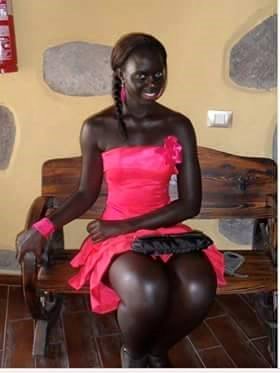
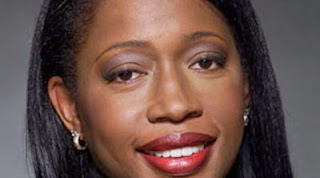
BLACK SKINNED BEAUTY SUPREME!

BLACK SKINNED BEAUTY SUPREME!

"BLACK IS BEAUTIFUL" -NEW YORK CITY STREET SAYING

"BLACK IS BEAUTIFUL!
BROWN IS HIP,
PUERTO RICAN IS OKAY
BUT white AIN'T S___T!"

BLACK SKINNED BEAUTY OOO!

BLACK SKINNED BEAUTY OOO!

BLACK SKINNED BEAUTY OOO!

BLACK SKINNED BEAUTY OOO!

BLACK SKINNED BEAUTY SUPREME

BLACK SKINNED BEAUTY SUPREME
BLACK SKINNED BEAUTY SUPREME!

BLACK SKINNED BEAUTY SUPREME

BLACK SKINNED BEAUTY SUPREME

BLACK SKINNED BEAUTY

BLACK SKINNED BEAUTY

Search This Blog

Pages

WE MUST HAVE A BLACK STANDARD OF BEAUTY BASED ON THE BLACK SKINNED BLACKEST WOMAN

Sunday, October 13, 2013

OBAMA SPEAKS ON TRAYVON! -FROM NBS NEWS

Obama: 'Trayvon Martin could have been me 35 years ago'


Larry Downing / Reuters

President Barack Obama speaks about the Trayvon Martin case in the press briefing room at the White House in Washington, July 19, 2013.

By Michael O'Brien, Political Reporter, NBC News

President Barack Obama made a surprise appearance at the White House Friday to discuss African-Americans' reaction to last weekend's verdict in the George Zimmerman case, saying that "Trayvon Martin could have been me 35 years ago."

"You know, when Trayvon Martin was first shot, I said that this could have been my son.  Another way of saying that is Trayvon Martin could have been me 35 years ago. And when you think about why, in the African- American community at least, there's a lot of pain around what happened here, I think it's important to recognize that the African- American community is looking at this issue through a set of experiences and a history that -- that doesn't go away," he said.


Obama: 'African American boys are painted with a broad brush'

Making a surprise appearance in the White House press room, President Obama discusses his views on the Trayvon Martin verdict, and how it feels as an African American to have these "inescapable" experiences.

Obama addressed the issue personally as well, saying, "There are very few African-American men in this country who haven't had the experience of being followed when they are shopping at a department store.  And that includes me."

He recalled his own experiences before becoming a nationally-recognized politician, noting, "There are very few African- American men who haven't had the experience of walking across the street and hearing the locks click on the doors of cars. That happens to me, at least before I was a senator. There are very few African-Americans who haven't had the experience of getting on an elevator and a woman clutching her purse nervously and holding her breath until she had a chance to get off." 

And he contended that these attitudes often shape perceptions in the United States. 

"I don't want to exaggerate this, but those sets of experiences inform how the African-American community interprets what happened one night in Florida and it's inescapable for people to bring those experiences to bear," he said.

Asked if the president had thoroughly contemplated his remarks, White House Press Secretary Jay Carney said, "I don't think there's any question, and you can judge by what he just said and how he said it, he knows what he thinks and he knows what he feels, and he had not just in the past week but for a good portion of his life given a lot of thought to these issues."

Obama also suggested that the outcome of the case could have been different if Martin were white. "If a white male teen would have been involved in this scenario," he said, "both the outcome and the aftermath might have been different."

The president also nodded to the Justice Department investigation which is probing whether or not to bring federal civil rights charges against Zimmerman. But Obama also urged state and local officials to review their own procedures to see how to improve their law enforcement practices.

He also called for a review of so-called "Stand Your Ground" laws, a central issue in the case.

"If Trayvon Martin was of age and was armed, could he have stood his ground on that sidewalk?" Obama asked. "If the answer to that question is at least ambiguous, then it seems to me that we should examine those laws."

Obama said he wanted to "reiterate what I said on Sunday, which is there are going to be a lot of arguments about the legal issues in the case.  I'll let all the legal analysts and talking heads address those issues."


Obama: 'Trayvon Martin could have been me 35-years ago'

In his first public remarks after the acquittal by a Florida court of Travyon Martin's shooter, George Zimmerman, President Obama says, "Trayvon Martin could have been me, 35 years ago."

The president added, "The judge conducted the trial in a professional manner. The prosecution and the defense made their arguments. The jurors were properly instructed that in a case such as this, reasonable doubt was relevant and they rendered a verdict.  And once the jury's spoken, that's how our system works."

And though Obama sidestepped the idea of demanding a new, national conversation on race -- and while he said that racism was far from eliminated -- the president ended on an upbeat moment, expressing his view that race relations are "getting better."

"I don't want us to lose sight that things are getting better. Each successive generation seems to be making progress in changing attitudes when it comes to race. I doesn't mean that we're in a post racial society. It doesn't mean that racism is eliminated," he said. "But you know, when I talk to Malia and Sasha and I listen to their friends and I see them interact, they're better than we are."

Obama added: "We have to be vigilant and we have to work on these issues, and those of us in authority should be doing everything we can to encourage the better angels of our nature as opposed to using these episodes to heighten divisions. But we should also have confidence that kids these days I think have more sense than we did back then, and certainly more than our parents did or our grandparents did, and that along this long, difficult journey, we're becoming a more perfect union -- not a perfect union, but a more perfect union."


This story was originally published on Fri Jul 19, 2013 1:46 PM EDT

14070comments

top stories

M
Sent from my BlackBerry wireless device from MTN

Wednesday, October 09, 2013

SISTERS!-COME HOME TOO! -"Back TO AFRICA" for this SISTER WiTH 5 KIDS CAUSE SHE KNOWS SHE CAN GET A GOOD HUSBAND/FATHER FOR THOSE KIDS!

Felicia Henderson: I'm More at Home in Nigeria than Anywhere Else

03 Nov 2012

Views: 3,802

Font Size: a / A


Felicia Henderson

At her first visit to the country she fell in love with Nigeria and the people. Felicia has since been back and forth for  eight years and running. Now fully resident in  Abuja the African American has featured in local TV series such as Tinsel and the likes. Now gearing to set up her own TV production, she can be easily mistaken for a Nigerian who has been in the Diaspora as she has warmed herself into her new environs perfectly. She spoke with Ada Igboanugo

Entry into television
That was about four years ago. Friends who I had grown to know and got close to kept advising me to venture into acting or voice-overs because I had such a good voice but I'm a bit of an introvert and relish my private affairs. But I challenged myself to understand Nigeria before deciding to plunge. A friend of mine eventually went ahead and got me a script insisting I take a look at it and I did. I made sure it was up to my standard and specification and would not eventually mar my image and reputation because I really just want to venture into business. I wouldn't want my status as a celebrity to change anything and also appreciate the edge it has given me.

The issue with mistaken identity
A lot of people think I'm Nigerian but I'm not. I am actually a black American. I visited the country for the first time eight years ago and fell in love. I have been to and fro the country for eight years now before I finally decided to relocate here with my family. But I love to leave people guessing. I don't normally expose it. Some people are always eager to know where I'm really from. Some have gone ahead to give me traditional names. 'Adesuwa' by the Oba of Benin, 'Kesia' was given by my first love in Nigeria, 'Omobowale' was given by my first production crew. Then in Yoruba my own name is Adepelumi, in Igbo Adanma, in Bayelsa Ebieren amongst others. I have since considered Nigeria as my home.

From Tomboy to Diva
Growing up for me was a wonderful experience. I was my Dad's baby which practically made me evolve into a tomboy because I did everything a boy would do with my father including working on cars. My father owned a car company so I know everything about cars. My dad said he never wants to see me on the road with a flat tire or out of gas or that my car is overheating. The first time I went under my car in Nigeria, people thought I had gone bonkers. I can literally change tires, jack my car, and what-have-yous. It doesn't bother me that I get messy because it reminds me of my father.


My father taught me everything I know about cars. Theoretically I started driving when I was thirteen, but got a permit when I was 15 and then licence on my birthday. Growing up for me wasn't as rosy but wasn't shabby as well. We didn't have much but were content. Personally I couldn't tell the difference because we were so loved and taken care of. Even when my father passed on though it was hard to continue the same lifestyle, we still did the same things we did when he was alive such as giving to the needy, shopping and a lot of things that I believe builds character in people which is how I became who I am today.

Leaving America
A lot of people ask why I gave up life in the States and come here to stay; truth is I don't think my life in America was half as satisfying as it is here. To me it gives me a certain satisfaction to help people even if it's just a little bit of help. I feel a lot of people just need someone to sit and tell them the truth because they have a very wrong perception of what real life is and for some reason nobody wants to talk to them to tell them the truth and I can't do that. I'd rather be the one to tell them the truth and let that truth have an impact on their lives and the lives of others.


I feel like I have a purpose to fulfil here. I already consider myself a Nigerian. When I was little I always thought all black people were from the same place. I told my mother that when I grow up, I was going to live in Africa. Every day I think, and I tell people that God allowed me to be born in America so that I can come to Nigeria and do whatever it is He has planned for my life because when I look back, everything that I have ever experienced prepared me to live here. So far I understand and can write the major languages in Nigeria but can't speak yet.

Love for camera
I never really saw myself acting so when I did it for the first time here, with my first production being a documentary for Nokia with Bimbo Manuel, I realised I enjoyed it. The camera liked me and I liked the camera. It seems like a lot of people in the industry here studied theatre arts which I didn't and that's why I believe and said that a lot of things that happened in my life prepared me to come here because I'm just using talent. From then on I featured in Tinsel as Myra, an American who ran into Chuks on her return from the states, then Spider, produced by the same company as Tasha, then Troubled Waters and Two Sides of a Coin amongst others. In the long run, I'm going to be working on my own production as well.

Family and career
I'm a full business woman and I'm always writing down my ideas. As I speak I have my notebook open and some ideas put down already and more waiting to be, the moment I get home. I have a portfolio I have had for years where I deposit ideas and I also create ideas as well. I want to leave a legacy for the youth to use as a tool in the future. I am in my late 30s and a mother of 5- two boys and 3 girls and we reside in Abuja. They are in love with Nigeria just like I am, but they didn't come with me initially when I started coming.


My kids are my work force. I thought them how to be independent. They practically earn salaries from me. I share my business ideas with them and ask of their opinion as well as give them tasks and when they carry it out, I pay them. My youngest is a lovely accountant at her age. She has been able to save enough to become a bank for her siblings.


The older girl is already a practicing designer, the youngest wants to be a lawyer while my boys want to be a chef and technical engineer respectively. They are a beautiful gift to me and I didn't have to stop anything I love because I had them. I still do all that I like such as going to the beach, singing, relaxing, driving, horse-back riding and traveling amongst others

Tags: Entertainment

Comments: 0

Rating: 
Sent from my BlackBerry wireless device from MTN

Tuesday, October 08, 2013

PETER O'NEAL and WIFE GO "BACK TO AFRICA" and FIND PEACE! -FROM uaachabari.co.tz

http://www.uaacc.habari.co.tz/history2.htm

In 1972 Peter and Charlotte O'Neal came to Tanzania . They became African American pioneers in their Ancestral homeland learning to live on the land...

Pete O'Neal founded the United African American Community
Center UAACC, a non-profit community based NGO, in 1991 for
the purpose of providing programs and projects for the
enrichment of the Arusha community, both urban and
rural and also to promote closer cultural ties to communities
in America and around the world

A Glimpse into UAACC!Living a Life of Promise and Community in Imbaseni Village


Pete O'Neal founded the United African American Community
Center UAACC, a non-profit community based NGO, in 1991 for
the purpose of providing programs and projects for the
enrichment of the Arusha community, both urban and
rural and also to promote closer cultural ties to communities
in America and around the world.
The name was later amended toUnited African Alliance Community Centerto better reflect the more global focus of the center's
concentration and outreach.


Beginnings of the Tanzania Experience...1972 onwards!


Pete and Charlotte with their children Malcolm and Stormy Ann during the early days in Arusha, Tanzania

In 1972 Pete and Charlotte came to Tanzania.  They became African American pioneers in their ancestral homeland, and built their homestead on the slopes of Mt. Meru in Imbaseni, a rural village in the heart of the traditional homeland of the Wameru tribe.-


Charlotte learned how to milk cows and make cheese, yogurt and butter!


Pete learned how to plant and harvest in the early days!


First days in Imbaseni Village when buffalo would sometimes bang on the sisal pole fence!

From the very beginning...It was always a family effort!


 Pete and Malcolm learned how to make stabilized soil bricks using a Cinvaram machine when building our first house in Imbaseni..


Stormy did chores like carrying the milk.

Pete and Malcolm added to the family coffers by hunting.


UAACC is based in Imbaseni Village in the heart of Wameru homeland outside of Arusha, Tanzania.   We are situated between two majestic mountains...Mt. Kilimanjaro , the tallest mountain in Africa and Mt. Meru, the third tallest! 

It's a place of serenity, beauty and joy!  

 Click here to see more scenes at UAACC


And yes...it's a long way from Kansas City!!


The late 60's saw a tremendous upsurge of self determination and community control in inner cities throughout America.  The  Black Panther Party was a prime example of unity and shared purpose as evidenced in the many community programs initiated by the BPP such as the Free Breakfast for Children and Free Health Clinics. 
 

Pete and Charlotte are proud to have been a part of that historic chapter of American history, Pete as founder and Chairman of the Kansas City Chapter of the Black Panther  Party and Charlotte also as a member. 


 "Our  present day community outreach service  continues to be informed by our time as Black Panthers,'" Bro Pete acknowledges.  "Our work is truly a continuation of the work  we did as members of the Black Panther Party!"


Click here for more Black Panther Party history


Sent from my BlackBerry wireless device from MTN

Sunday, October 06, 2013

BLACK LOVE!!! -THIS BLACK SKINNED BEAUTY HAS KEPT HER BLACK MAN FOR 30 YEARS! OGA O! -Denzell and Paulette ARE Very BLACK and Enduring!

FROM TheHuffingtonPost.com.

Denzel, Pauletta Ebony Cover Story Reveals The Washingtons' Secret To A 30-Year Marriage

Jul 09, 2013

Hollywood's no place for the faint of heart and neither is marriage. Yet still, Denzel and Pauletta Washington have

managed to find success at both

, and they're opening up on how they do it in the August issue of Ebony magazine.

"There's no magical mystery to [staying together] ... We go through up and downs like any couple," Denzel told Ebony writer Shirley Henderson.

But Henderson asserts that it's the couple's foundation of faith, legacy and family that's seen them through the last 30 years. (The Washingtons celebrated their 30th wedding anniversary on June 25.)

For Pauletta (and by extension, Denzel), maintaining stability is the key to success on the otherwise inconstant Hollywood scene.

"I live with this man. I see the down part. I see the sad part. I see every part. He has and knows he has that stability in me as his wife. That's gives him strength, regardless of if he misuses it. I can't dwell on that. But I do know that gives him a great platform to go and fly," Paulette says.

It's an approach that she says transcends passion and lust and one that has clearly worked for Denzel.

"We live in a time -- and it's not for me to judge anyone -- when people give up too easy," Denzel says, exhibiting the same persistent spirit that prompted him to ask Pauletta to marry him three times.
Sent from my BlackBerry wireless device from MTN

Friday, October 04, 2013

THIS BLACK PRESIDENT IS A FIGHTER!-OBAMA!-"YES,the white house is WINNING"-FROM THE NEW YORKER MAGAZINE

​⁠Comment ⁠

Yes, the White House Is 'Winning'

⁠By Jonathan Chait ⁠

0

0


The shutdown news of the day so far is that a White House official boasted to The Wall Street Journal, "We are winning ... It doesn't really matter to us" how long the shutdown lasts "because what matters is the end result." This is a sort of gaffe, partly true and partly false. The government shutdown has a non-zero-sum result, in that it hurts lots of Americans. It's also a zero-sum contest between the parties. Now, one of the ways you win the zero-sum contest is by not declaring you're winning the zero-sum contest and thus opening yourself to the charge of indifference to the negative-sum effects.

Still, it is true that the Obama administration is winning the zero-sum contest. One way to measure this is polling, which already shows movement toward the Democratic side. Another way to measure it is that Republicans, who have spent months refusing any budget deal, are suddenly desperate to make a budget deal. A flurry of Republican proposals have been leaked or floated by or to Politico, Jonathan Ward, and Republican adviser Yuval Levin.

Republicans are looking to make a budget deal now because they want to escape the political nightmare they've created for themselves. They blustered into a shutdown that corrodes their party brand and cracks the door to flip the House, which ought to be otherwise impregnable in a low-turnout midterm election. They can't figure out how to back down without winning concessions the Democrats have no incentive to give them. Then they need to lift the debt ceiling, where they've raised even loftier expectations, and where the Democrats are even more determined not to be held hostage. Their only way out is to fold everything into a negotiation, give the Democrats something, and hold up whatever they win as a trophy that made it all worthwhile.

For reasons I plan to delve into next week, I don't find any of the offers leaked so far attractive on their merits, as you'd expect from an opening bid. But the larger problem is that none of them grapple with the procedural crisis. Obama's view, which I share, is that the debt ceiling fight is far more important not only than the specific policies on the table, or even the catastrophic economic consequences of a debt breach. It's a fight to preserve the Constitutional order.

And conservatives have resolutely refused to grapple with that fact. They have floated a few half-hearted, and easily refuted, claims that Congress has previously used the debt ceiling as a threat to extract concessions. Mostly, they have just treated the debt-ceiling crisis like an ordinary budget standoff.

Now, maybe they simply have no principled objection to this method. I've seen no conservatives, anywhere, actually question the morality of debt-limit extortion. (Apparently, if Democrats in 2007 had held the debt ceiling hostage unless President Bush rescinded his tax cuts, the entire conservative world would have objected to their policy goals but defended their methods. Who knew?)

But the bigger problem here is that conservatives are not acknowledging the Democrats' belief. It's not a pose. They genuinely think, regardless of the merits of the ransom demand, they can't give in, both for the national long-term interest and on moral principle. Conservatives are acting like the problem here is that they asked for a bit too much to begin with, and want to start haggling down the price. The price isn't the issue. If the conservative goal is to create the illusion of winning something for the debt ceiling, then they'll come back next time to win more, and Democrats can't allow that.

0

.

Get more: the national interest, shutdownpocalypse
Sent from my BlackBerry wireless device from MTN

Thursday, October 03, 2013

THE JEWS ORIGINALLY WERE BLACK! -HERE'S HOW whites CHANGED THEM to white! -FROM realhistoryww.com

http://realhistoryww.com/world_history/ancient/Misc/Jesus/Jesus.htm

Ancient Man and His First Civilizations


How did Jesus and the Hebrews become WHITE?


How did the Hebrews turn White? Of course they didn't really; just in the imaginations, and then the histories of White people. Who for probably practical reasons, decided that Hebrews, and also the Blacks who originally lived in the Country's that they took over, should all become White for posterity's sake.

Seeing as how it only takes three generations to turn a Black person into a White person (and visa versa). No doubt there came a time when as Europe's formerly bi-racial populations, became more homogeneously White, White people decided that they could no longer acknowledge that all that they knew and had, was derived from the minds and labors of Black people - even down to their religious beliefs. The logic no doubt being that Whites could not progress to their full potential, if they were always looking up to Blacks, as the personification of knowledge and wisdom. So a change had to be made, and at some point, by somebody, that change began.

Of course, we have no way of knowing when this process of Whitinizing Blacks began, or who did it, or where it was first done. But we do have some materials by which we can track the process, somewhat.

But first, let us go back to see what Hebrews REALLY looked like. The earliest authentic pictures of real Hebrews that we have, date back to before Christ. They are Assyrian relief's showing Hebrews, and others that they conquered, in pictorial scenes detailing the battles fought, with associated text. These relief's decorated Assyrian palaces, and were no doubt used to gloat over their conquest of the Hebrews and others. Here we are using pictures of: Assyrian King Shalmaneser IIIs "Black Obelisk" (858 B.C.). Assyrian king Tiglath-pilesar III's relief's of his conquest of a city near the Sea of Galilee (730 B.C.). Assyrian King Sennacherib's relief's of the conquest of the Judean City of Lachish (701 B.C.). The four pictures below, are from those Assyrian relief's. (These relief's are stored in the British Museum, London England).


It is worth mentioning, that the Hebrews were just as literate, and just as artistic as the other Black civilizations around them. The reason that we have to depend on outside sources for pictures of them, is because Whites destroyed all that the Hebrews ever created. Even down to the very religious writings that they claim to worship by. That fact is that ALL Hebrew writings, even the SEPTUAGINT {the original Bible}, which was only roughly Hebrew (it was made for the Greek King of Egypt, Ptolemy II (Philadelphus) in 282-246 B.C.), has been destroyed. Everything except for the "Dead Sea Scrolls" which were found in 1947, in Qumran, a village situated about twenty miles east of Jerusalem. The Scrolls are under the joint custody of the Catholic Church and the Israelis. The translated contents of those Scrolls has never been made public, and probably never will be - no doubt the differences in teachings and facts would be irreconcilable.  (A few inconsequential snippets have been made public - the entire Scrolls is a huge work, which contains the entire old Testament plus many other works).

Why wasn't the material in these pages destroyed? Because after it's fall, Assyria came under the control of the Persian Empire, which was itself a Black Empire. It then came under the control of Greeks, who were at that time, seeking to merge with the Black Persians, not in denying that they were Black people. Then Assyria again came under Persian control, and then finally under the control of the original Black Arabs. So at the time when Whites were destroying vestiges of Black history, they had no access to the Assyrian artifacts.

But at those times when Whites did have control of an area, they seem to have been very through in destroying all vestiges of the former Black inhabitants; there is nothing left to suggest that Carthage was a Black city, Mesopotamia and the Indus Valley civilizations are some of the oldest known, yet very little is left - next to nothing in the Indus valley. Ancient Anatolia (Turkey), was home to many great and famous civilizations, but very little has been found there. The Egyptian artifacts, of which there are many, were mostly recovered in modern times, when Whites rather than simply destroy, instead modify artifacts; sometimes just by breaking the noses off, in order to make them look like White people, and then proudly display them as proof of the White mans greatness.

The Khazars, a Turkish tribe who had established a Kingdom in the Caucasus region, and converted to Judaism in the 8th century A.D. Must have seen the doings of the Romans and Greeks, and seen it as an opportunity for them to take over the Hebrew identity, and thus control of the orthodox branch of the Hebrew religion - which indeed they did. They logically thinking that if Jesus can be White, why not then, the entire Hebrew nation - which was by then a diaspora anyway. The Islamist side-stepped the entire issue by forbidding imagery of any kind.


Color struck: America's White Jesus is a global export and false product

By Wesley Muhammad, PhD.


What color was Jesus? Most American Christians—Black and White—would dismiss this question as both irrelevant and unanswerable as the Gospels fail to give us a physical description. The irony is that most of these same Americans in their heart of hearts are pretty confident any way that they know what color Jesus was. They attend churches with images of a tall, long haired, full bearded White man depicted in stained glass windows or painted on walls, and they return home to the same depictions framed in their living room or illustrating their family Bibles.

Further compounding the irony is the fact that America actually has an obsession with the (presumed) color of Christ and has exported her White Americanized Savior around the world, as recently documented by Edward J. Blum and Paul Harvey in their book, The Color of Christ: The Son of God and the Saga of Race in America (2012).

In fact, the world's most popular and recognizable image of Christ is a distinctly 19th-20th century American creation. It is true that versions of the "White Christ" appear in European art as early as the 4th century of the Christian era, but these images coexisted with other, nonwhite representations throughout European history. The popularity of the cult of the Black Madonna and Black Christ throughout Europe is evidence of the fact that the European 'White Christs' never acquired the authority and authenticity that the White Christ now has globally. This Christ and his authority are American phenomena. As a predominantly Protestant nation Early America rejected the imaging of Christ that characterized European Catholicism.

By the mid-19th century, however, in response to American expansion, splintering during the Civil War and subsequent reconstructing, "Whiteness" took on a new significance and a newly- empowered "White Jesus" rose to prominence as the sanctifying symbol of a new national unity and power. As Blum and Harvey observe:

"By wrapping itself with the alleged form of Jesus, whiteness gave itself a holy face … With Jesus as white, Americans could feel that sacred whiteness stretched back in time thousands of years and forward in sacred space to heaven and the second coming … The white Jesus promised a white past, a white present, and a future of white glory."

As America rose to superpower status in the 20th century she became the world's leading producer and global exporter of White Jesus imagery through film, art, American business, and Christian missions, and has thereby defined the world's view of the Son of God. This globally recognizable Jesus is a totally American product. Indeed, he is an American. Warner Sallman's iconic image of Jesus called Head of Christ (1941) became the most widely reproduced piece of artwork in world history and its depiction the most recognizable face of Jesus in the world. By the 1990s it had been printed over 500 million times and achieved global iconic status. With smooth white skin, long, flowing blondish-brown hair, long beard and blue eyes, this Nordic Christ consciously disguised any hint of Jesus's Semitic, oriental origin—and departed from the older European depictions. It both shaped and was shaped by emerging American ideas of whiteness. The beloved White Jesus of today's world was Made in America.

What, then, did Jesus actually look like? Despite the absence of a detailed description of Jesus's physical appearance in the Gospels (though John the Revelator saw the risen Christ apparently with wooly hair and black feet, Rev. 1:14-15), there are non-biblical evidences that actually allow us to visualize the Son of God from Nazareth.

Revelation 1:14-15 - King James Version (KJV)

14) His head and his hairs were white like wool, as white as snow; and his eyes were as a flame of fire;

15) And his feet like unto fine brass, as if they burned in a furnace; and his voice as the sound of many waters.

The first century Jewish writer Josephus (37-100 AD) penned the earliest non-biblical testimony of Jesus. He reportedly had access to official Roman records on which he based his information and in his work Halosis or the "Capture (of Jerusalem)," written around 72 A.D., Josephus discussed "the human form of Jesus and his wonderful works." Unfortunately his texts have passed through Christian hands which altered them, removing offensive material. Fortunately, however, Biblical scholar Robert Eisler in a classic 1931 study of Josephus' Testimony was able to reconstruct the unaltered testimony based on a newly-discovered Old Russian translation that preserved the original Greek text. According to Eisler's reconstruction, the oldest non-Biblical description of Jesus read as follows:

"At that time also there appeared a certain man of magic power … if it be meet to call him a man, [whose name is Jesus], whom [certain] Greeks call a son of [a] God, but his disciples [call] the true prophet … he was a man of simple appearance, mature age, black-skinned (melagchrous), short growth, three cubits tall, hunchbacked, prognathous (lit. 'with a long face' [macroprosopos]), a long nose, eyebrows meeting above the nose … with scanty [curly] hair, but having a line in the middle of the head after the fashion of the Nazaraeans, with an undeveloped beard."

This short, black-skinned, mature, hunchbacked Jesus with a unibrow, short curly hair and undeveloped beard bears no resemblance to the Jesus Christ taken for granted today by most of the Christian world: the tall, long haired, long bearded, white-skinned and blue eyed Son of God. Yet, this earliest textual record matches well the earliest iconographic evidence.

The earliest visual depiction of Jesus is a painting found in 1921 on a wall of the baptismal chamber of the house-church at Dura Europos, Syria and dated around 235 A.D. The Jesus that is "Healing the Paralytic Man" (Mark 2:1-12) is short and dark-skinned with a small curly afro - see below.

This description has now been supported by the new science of forensic anthropology. In 2002 British forensic scientists and Israeli archaeologists reconstructed what they believe is the most accurate image of Jesus based off of data obtained from the multi-disciplinary approach. In December 2002 Popular Science Magazine published a cover story on the findings which confirm that Jesus would have been short, around 5"1', hair "short with tight curls," a weather-beaten face "which would have made him appear older," dark eyes and complexion: "he probably looked a great deal more like a dark-skinned Semite than Westerners are used to seeing," they concluded. The textual, visual, and scientific evidence agrees, then: Jesus likely was a short, dark-skinned Semite with short curly hair and dark eyes.

Colossians 1:15 describes Christ as the "image of the unseen God" and in the Gospel of John (12:45; 14:9) Jesus declares that whoever sees him has seen God. What Jesus "looks like" then is not irrelevant as it is in some way a pointer to God Himself.


Let us proceed then, with our pictorial essay of how Jesus, and thus, the Hebrews TURNED WHITE!

Thanks to Religion Facts.com (Link)


The Alexamanos Graffito, dating from c.200 AD or earlier, is an interesting early parody of Christianity. This early graffito (wall-scratching; singular of graffiti) was discovered in 1857 in a guardroom on Palatine Hill near the Circus Maximus in Rome, and is now in the Palatine Antiquarian Museum.

The drawing shows a man with an ass's head being crucified, to which a youth is raising his hand as if in prayer. The text in Greek reads: ALE, XAMENOS, SEBETE, THEON. which means, "Alexamenos worships his god." Before Christianity, the Hebrews had already been charged with worshipping an ass; this was probably the basis of this accusation being directed at Christianity.


This wall painting, depicting the Healing of the Paralytic, is the earliest known representation of Jesus, dating from about 235 AD. The painting was found in 1921 on the left-hand wall of the baptismal chamber of the house-church at Dura-Europos on the Euphrates River in modern Syria. It is now part of the Dura Europos collection at the Yale University Gallery of Fine Arts.


This fresco of the Good Shepherd was found on the ceiling of the Vault of Lucina in the Catacomb of Callixtus in Rome. The construction of the vault itself has been dated to the second half of the 2nd century, but the use of the red and green lines to divide the space (similar to the chambers under San Sebastiano) has suggested the first half or middle of the 3rd century for this fresco.

The image of Jesus as the Good Shepherd was an especially popular motif in the early Christian centuries. It was based on several biblical passages, including the 23rd Psalm and sayings of Jesus, and is also an adaptation of a popular pagan image.


This fresco of the Good Shepherd was found on the ceiling of the Vault of Lucina in the Catacomb of Callixtus in Rome. The construction of the vault itself has been dated to the second half of the 2nd century, but the use of the red and green lines to divide the space (similar to the chambers under San Sebastiano) has suggested the first half or middle of the 3rd century for this fresco.

The image of Jesus as the Good Shepherd was an especially popular motif in the early Christian centuries. It was based in several biblical passages, including the 23rd Psalm and sayings of Jesus, and is also an adaptation of a popular pagan image.


This fresco of Christ Among the Apostles is in an arcosolium of the Crypt of Ampliatus in the Catacombs of St. Domitilla in Rome. The Catacombs of Domitilla date from the 2nd through 4th centuries. According to W.F. Volbach, "The extent to which the type of the apostolic group as been developed suggests a 4th-century origin" for this particular fresco.


Sent from my BlackBerry wireless device from MTN

Tuesday, October 01, 2013

BLACK CHRISTIAN SCIENCE LECTURER -THE FIRST ONE YEARS AGO-BETTIE B. THOMPSON -SPEAKS ON RACISM STILL IN THE CHURCH AND THE NEED TO HAVE TO HAVE A “PRAYER CRUSADE” TO GET BLACK AMERICANS INTO THE CHURCH TO SAVE THEM FROM THEIR MANY PROBLEMS OF SURVIVAL!

Getting beyond segregated Sundays

Bettie B. Thompson interviewed by the Journal's Roger Gordon

From the August 2013 issue of The Christian Science Journal


When I discovered that Christian Science practitioner and teacher Bettie Thompson is a black woman who witnessed the civil rights movement, immediately I knew I had to interview her for the Journal. When I first called and told her I wanted to speak with her about civil rights, she gave a vivacious, spirited reply: "My friend, I've been around a long time. I can tell you all about civil rights."

A few weeks later, I met with Bettie in her home in the southeast neighborhood of Washington, DC. I quickly learned that she is iconic in the history of African Americans in the Christian Science movement. Her honest observations about that history intrigued, inspired, and, in some cases, amazed me.


Bettie, you've lived through some turbulent times in the United States. I'd like to start our conversation by asking how you think about the civil rights era today.

Yes, I've been on this planet for more than nine decades. It's interesting, when you've grown up in a situation and watched the movements and events over the years, you are able to look back and see the difference of how things are now compared with the way they were then. A lot of people—because I've been here so long—look at me and say they're looking at history.

I'll tell you one story. My husband and I were two of four blacks who helped integrate the University of Oklahoma in the early 1950s. We also helped integrate some of the local facilities,
restaurants, and theaters. We had bonded with a Jewish couple, and one night this couple went to the movie theater and purchased tickets for us four blacks. We went into the theater, and we went all the way down and sat two rows from the front.

About half an hour later, the ticket seller must have remembered that he'd seen four blacks go down there, because he came with his flashlight and found where we were sitting. He said, "I'm sorry, but you're not supposed to be here. You'll have to leave."

My husband replied, "We're enjoying the movie, and all is well."

This colloquy went on for a little while, but rather than create a disturbance, we left. But we continued to negotiate with the owners of the facility over a period of several months, and finally we did get the agreement that integration could take place.

Now, I think about those days compared to today. Today, we have some of the greatest football stars who look like me, who are or were at the University of Oklahoma. Those guys, they don't know me—they don't even know I exist—but you see, I know the then compared to the now.

It must have taken great courage to integrate that school and theater and live through that time. What spiritual lessons did you learn to help you deal with racism?

Over the years I learned to embrace what the Bible says, "Thou shalt love thy neighbour as thyself" ( Matthew 22:39). That's one of the two commandments Christ Jesus encouraged us to live by. He taught us to love, and Mary Baker Eddy tells us we have no enemies (see Miscellaneous Writings 1883–1896, pp. 8–13).

We have to learn how to reverse hatred by focusing our thoughts on God, who is Love itself. God, Love, created us, so we must love also.

I have learned to put aside the concept that sometimes people are not all in one accord. We have to learn how to reverse hatred by focusing our thoughts on God, who is Love itself. God, Love, created us, so we must love also.

And we must love not only in thought, but also in our lives. We have to go out of our way to show love, to do things for people, smile, go to the store for someone—to demonstrate our affection, brotherhood, and love of one another.

We all belong to the same brotherhood and sisterhood. We might look different, we might talk different, but we all come from the one God. Today, I think we're getting to a place in humanity's history where we're understanding more about the relationship between God and man—that we are all one people, regardless of the color of our skin, and that we are all one with God.

Isn't it true that the more we understand and express God's love toward others, the more we are doing to heal racism? That love can help change those who might be racist?

Yes, many times we have to go out of our way. We almost have to make it our mission to love. That's a peculiar word, love. A lot of people say, "I love you," but real love embraces demonstrating love, not just saying it.

I'm sure a lot of people have heard the expression originally spoken by Martin Luther King, Jr., "It is appalling that the most segregated hour of Christian America is 11 o'clock on Sunday morning." If we truly embraced love, wouldn't we invite people of other races to our churches? The only way we're going to have a greater brotherhood and sisterhood is if we truly come together, and not be separated.

As long as you are over there, and I'm over here, then you don't know me, and I don't know you. We may talk a good game about love, but can we come together and really interact? Can I go to your house, and can we eat dinner together? Can I cook for you, and you cook for me? You know, all of those little things we do for one another are really facets of divine Love. If we can't do those things, if we can't truly accept everyone else, then we are limiting ourselves. There is so much to be learned by interacting with people of different races and backgrounds.

You mentioned the expression, "The most segregated hour of Christian America is 11 o'clock on Sunday morning." Do you think that applies to the Christian Science church? As a black woman who wasn't always a Christian Scientist, I bet you have a unique perspective on this question.

That's true. In Washington, DC, we actually have a black Christian Science church, where my membership has always been. It became a black church in 1951.

You see, I think people want to be comfortable. In my early days as a Christian Scientist, I would hear stories about black Christian Scientists. They would attend a church that had only white people, and they often were not given the opportunity to participate in church or be part of the organization.

I was the first African American on the Christian Science Board of Lectureship. I had to break the ice and encounter some prejudice, kind of like Jackie Robinson.

So, if you are connected with a group of individuals, and yet you are not really a part of that group, then you are not given the affection, smile, love, and embrace to make you feel at home. You feel out of place, and you want to go have a place where you can be comfortable. I imagine that's what happened with how our black Christian Science church got started.

I can understand the need for a black church during the civil rights era, but wouldn't it be problematic if there were still a need for such a church today? I would hope blacks and whites could come together in their church congregations. Is your church still an all black church?

Well, my church is not black by choice. There are no restrictions as to who may join. Churches, like other institutions in our society, generally reflect the demographics of their locale. However, over the years, our church has had white members, who later moved to other parts of the country. Also, periodically, whites attend and are very much welcomed.

It's amazing to me to think that in the Christian Science church, prejudice could ever have taken such a foothold as to cause a need for specifically black churches. Such prejudice seems to go entirely against the ethics of Christian Science. I've heard stories of blacks sitting on one side of the church, and whites on the other side, but you weren't even at the same church!

Well, let's move ahead a few decades. In 1980, I was appointed the first African American lecturer on the Christian Science Board of Lectureship. I was just about to go on my first lecture tour. It was a Friday, and I was leaving home on the following Monday. But then I got a call from The Mother Church, saying, "Bettie, we've got some sad news. There's a church in Oklahoma that has canceled."

Here I was all excited, and I had butterflies in my stomach as I was about to leave on my first tour. But I was just told, "A lady called and said when the church got your material in the mail, they discovered you were black."

In olden days, in the Journal, they used to put "C" behind the listing of black practitioners' names—"C" meaning "Colored." But they'd stopped doing that by now, so the lady had said, "If you had put a 'C' behind her name, we would have known she was black, and therefore we would not have selected her."

When I heard what she said, I couldn't believe it. You know, when I became a Christian Scientist, I looked at Christian Scientists as being different, as being saints. I had read in Mary Baker Eddy's Science and Health with Key to the Scriptures all about the love of humanity—all of the good qualities of man. I thought if all of that was in the writings, then the Christian Scientists must be perfect!

When I joined my branch church, after I interviewed for membership, one of the members looked at me and said, "Remember, Christian Science is perfect, but Christian Scientists may not be perfect."

We're all related to God, and we have only one Father, so we can't be different. As we develop this spiritual understanding, the healing will come with racism.

That blew my brain! It really did. I tell you, I had been on cloud nine. This pierced my bubble. But as time went on, I found that the Christian Science movement consists of human beings, and they often embody the qualities of their surrounding environment.

So, after that lady canceled, I started getting other refusals, too. I said to myself, "I wonder why?" I thought of Jackie Robinson, the first black baseball player to integrate Major League Baseball. A lot of black people think in terms of Jackie Robinson breaking the ice in baseball. I was the first African American on the Board of Lectureship. I had to break the ice and encounter some prejudice, kind of like Jackie Robinson.

Fortunately, I was able to lecture in 47 of the 48 contiguous United States. But many churches were still concerned about a black person being the lecturer, because, back in those days, they had huge churches, and they were packed. The first lecture I did, the church held 700 or 800 people. Every seat was taken, and people were lined around the walls. Yet I looked out at the audience, and the only black face I saw was my husband's.

On the other hand, I had many wonderful experiences and favorable reactions from people who welcomed me. I think this is because I lectured a little differently from most people. In our race, we have some outstanding orators. You've probably seen Martin Luther King, Jr., give his speeches. Back then, many black people who spoke were orators. I was in that range, and often when I gave a lecture, the audience was rapt. When I finished, many people were not ready to get up and leave. I would often hear about people saying, "Whenever that black lady comes to your town, be sure you go and hear her."

What you're saying makes me think how, even today, at least in the United States, you don't see too many black people in Christian Science churches—or Hispanics, for that matter. Why is that? Do you think racism and prejudice are still issues in the church, or have we moved on?

Mostly it feels like this isn't an issue anymore, and yet from what I hear from black friends, it's difficult to pinpoint sometimes, but they can tell from body language, conversation, and attitudes that sometimes some subtle form of racism still exists. Getting all of us truly to demonstrate love for everyone else does not necessarily come overnight. It's a process. Yet the truth is we're all related to God, and we have only one Father, so we can't be different. As we develop this spiritual understanding, the healing will come with racism.

Just a few years ago, I was doing some traveling, and I happened to discuss this issue with some fellow Christian Scientists. I could see the look on their faces—that they had respect for people of color, and yet there was some discomfort. That was disappointing to me because in today's world, you would think that discomfort would be all gone.

But there are not too many black people in the Christian Science movement—that's the unfortunate thing. Some people might say I need to do more to reach out. But I think the weight is on all of us who are members of The Mother Church to reach out to the blacks. We don't hear much of anything about blacks in America becoming Christian Scientists. That grieves me. What can be done to attract more blacks to Christian Science?

I would say that every black person in America should be urged to understand the fact that God is his employer, his supplier, taking care of all his needs. Because of their experience in this country, some black individuals feel burdened with limitation, but if they would overcome their ignorance of Christian Science, they could become aware of and understand that the application of the spiritual laws of God will enable them to live a healthier and more abundant life. But nobody is telling those black people that. Black people need to know that, but they need somebody to tell them.

So, I would encourage all Christian Scientists, all members of The Mother Church, to pray earnestly for black people in America to become aware of Christian Science, to join the church, and to receive the benefits that come from studying Christian Science. That sincere prayer can make a big difference. And we'd find that black people have so much to contribute to the church. But first we need to go on a kind of crusade—a prayer crusade—to welcome the idea of having more blacks involved in Christian Science.

Would you say you were one of those black people who was benefited from studying Christian Science? I know you have a powerful story about how you came into Christian Science.

Yes, when my husband and I first married, we were staunch Baptists. One day we discussed with a friend some problems we were having. This friend indicated, "Why don't you talk to a Christian Science practitioner about those problems?"

We didn't know anything about Christian Science practitioners, but we did find one. She told us to get a copy of Science and Health and to read the first chapter on "Prayer." We got the book, and that night, I was propped up in bed reading it. A few days later, I recognized a healing had taken place. It was of a lump in the breast. I had been getting ready to have an operation, but the lump just disappeared.

We need to go on a kind of crusade—
a prayer crusade—
to welcome the idea of having more blacks involved in Christian Science.
That got me on a journey. I started reading Christian Science periodicals all the time. After a while, my husband said, "Since we are reading the periodicals and studying, why don't we go to one of the Christian Science churches?" We still loved the Baptist church, but my husband said, "Why should we enjoy the loaves and the fishes without participating?" So, we decided we should join the Christian Science church.
Later, just before I went into the public practice of Christian Science, I had another healing, of a long-standing problem. I had been diagnosed by a physician years earlier with sinusitis. The doctor gave me all these pills and said I'd have to take them all my life. But I had begun to think of one of the statements that Christ Jesus gave to his disciples. He said, "Ye shall know the truth, and the truth shall make you free" ( John 8:32). I thought about that word truth. I asked myself, If the truth will make me free, what is truth?Eventually, I came to a realization. In a courtroom, the judge asks a witness, "Do you promise to tell the truth, the whole truth, and nothing but the truth?" The judge wants that witness to tell the facts.I thought about how truth means the facts about something. I was learning the facts of who I am—God's spiritual idea, made in the perfect image and likeness of God, expressing all the qualities of God.As time went on, I discovered that the sinusitis no longer plagued me. When exactly it disappeared, I do not know when
Sent from my BlackBerry wireless device from MTN

Sunday, September 29, 2013

Thursday, September 26, 2013

ISINRO FESTIVAL IN ILA-ORANGUN,OSUN STATE,NIGERIA-MAKES A BID TO BECOME BETTER KNOWN!!!-THIS IS MY TOWN WHERE AS A BLACK amerikkkan I RAISED 4 of MY 5 CHILDREN AS REAL YORUBAS HERE!


Ila Orangun community rolls out the drums to celebrate Isinro, a festival that traditionally signifies the beginning of a new year


By FOLASHADE ADEBAYO


He toured the town in an open roof vehicle, waving his horsetail in a perpetual fashion. A long line of dancing chiefs, princes, princesses and cultural groups leads his colourful train.


With the warmth of a successful politician, Oba Wahab Oyedotun, the king of Ila Orangun, a quiet town in Osun State, beamed at his people who lined the streets, waving and bowing in obeisance. Every few metres, the king's entourage pauses, collecting gifts from the cheering crowd. He returned the favour by doling out crisp naira notes.


The grand procession was not a homecoming event. It is an annual royalty parade demanded by culture during Isinro, a festival that traditionally signifies the beginning of a new year and the biggest of its type in Ila Orangun. For Oyedotun, the stakes are higher this year. It is his 10th outing as king and the royal parade is symbolic of his popularity and acceptance even after a decade. "I am here to show appreciation to the king and the queen for being nice to us. What they have achieved in this town is too numerous to count," said Olabisi Olajide, a resident of the town.


Indeed, sighting the king in Ila Oragun is a rarity. Therefore, the Isinro festival is a golden opportunity for both the old and the young to exchange smiles and prayers with their king. Oyedotun is emphatic that Isinro is a festival of thanksgiving to the people who have stood by him despite the rigour of traditional leadership. "It is an opportunity to thank the people for their cooperation at the end of the year. In Ila, we have 17 days forming a month and when you have 17 days in 17 places, it marks the end of the year in Ila. That is why we celebrate Isinro to mark the end of the year and show appreciation to our people," he said.


The king has every reason to appreciate the town. Since his coronation in 2003, Oyedotun had faced litigations challenging his selection as king. It has been a challenging decade for the king and the lingering court cases almost overwhelmed his administration. However, Adeola Faleye, a traditional chief, remarked that the people supported the king throughout the trials. "There have been so many hiccups but he is still alive to witness today. The kabiyesi is loved and valued. The huge crowd here shows that Ila Orangun has not abandoned its culture unlike some other communities who have abandoned or absconded from aspects of tradition," she said.


The Isinro was truly colourful and popular in Ila and its immediate environs. The magazine gathered that it symbolises a turn of the New Year and for the people, it is a major festival just like the way the Americans celebrate the Thanksgiving Day. Adeniyi Adeleke, a prince of the town, said Isinro usually coincides with the time new farm produce like yam and maize comes out. "It marks the beginning of a New Year also just like Muslims celebrate Hijjrah and Christians celebrate Christmas. So, it is a time of celebration when all the chiefs and people of Ila will come and pay homage to the king," Adeleke said.


The colourful Isinro is however not exclusive to Ila Orangun. It is also shared by the neighbouring Oke Ila. And this is hardly surprising since Ila Orangun and Oke Ila enjoy a mutual heritage. History has it that the two towns used to be one until a little disagreement set them apart. Nevertheless, an enduring kinship still exists between the towns. Both Oyedotun and Adedokun Abolarin, the king of Oke Ila are addressed as Orangun while all compounds and titles of chiefs are also replicated in both towns.


In spite of Isinro's larger than life status however, the festival is yet to achieve national popularity and attract sponsorship. Unlike the Ojude Oba festival in Ijebu-Ode, Ogun State and the Osun Osogbo festival, Isinro is yet to enjoy a national acclaim. Faleye who is also a lecturer at the Obafemi Awolowo University, OAU, Ile-Ife, Osun State, attributes this to religious and external influence. "There are different reasons ranging from religion, cultural exposure and interference that may make some people say they will not be part of it. But we are creating the awareness using the Internet to educate people on the essence of Isinro," she said.


Oba Oyedotun also told the magazine that he has set up a committee that will recommend how best to promote Isinro. "We are looking for sponsors all over the world to appreciate the essence of this festival. Already, it is a state festival and we are looking forward to making it a national festival," he said.


In the absence of corporate sponsors who can give the festival a national mileage, the community has resorted to self-help, raising fund to organise the festival. "My academic studies on cultural and tourism matters show that it has been challenging funding festivals like this. Some people are not interested because of religion. Some are more interested in politics than keeping tradition. But this community is interested in keeping tradition. Individual compounds tax themselves to show commitment to this festival. The state government has also given us some bright light to support us," said Faleye.


Adeleke added that Ila has started the process of rebranding Isinro. "This is an age-long festival. Initially, there was this impression that it was occultic but since the ascendance of Oba Oyedotun we have been working harder to debunk that belief. The festival has nothing to do with occult and very soon we are believing God that many people will come to that realisation," Adeleke said.
Sent from my BlackBerry wireless device from MTN

Saturday, September 21, 2013

TRAYVON!-Images #2

Sent from my BlackBerry wireless device from MTN

TRAYVON! -Images #2

Sent from my BlackBerry wireless device from MTN

TRAYVON in Ebony Magazine!

Sent from my BlackBerry wireless device from MTN

TRAYVON!I -Ebony Magazine-Dwyane Wade Talks About You!

Sent from my BlackBerry wireless device from MTN

BLACK JUSTICE FOR TRAYVON ! -EBONY MAGAZINE interview WITH Trayvon's Parents!

EBONY MAGAZINE
News & Views

News & Views  / Social Justice & Activism

JUSTICE FOR TRAYVON:
Amazing Grace

Tracy Martin and Sybrina Fulton


Fate has a way of forcing razor-sharp turns in our lives, and Sybrina Fulton and Tracy Martin, parents of slain teen Trayvon Martin, are dealing with the ultimate challenge. Within a week of the acquittal of the man who pulled the trigger on that rainy Florida evening, and though many would crumble under the weight of despair, they continued to turn their pain into a pointed argument for justice. Vaulted into a national debate over the issues of racial profiling, gun violence and "Stand Your Ground" laws, Martin and Fulton are buoyed by the wave of public empathy and rallies taking place around the country; they gain strength and conviction with each heavy step they take. 

The pair agreed to meet with EBONY, along with their attorney and advocate Benjamin L. Crump, on a sweltering morning in New York City, just days after the acquittal of George Zimmerman. Ironically, our interview and cover shoot took place in the same hotel suite where a newly elected president Barack Obama stayed at the dawn of his first term in office, and on the same day of his very personal address on race in America. In those remarks, the president poignantly identified with the plight of young African-American men when he stated, "You know, when Trayvon Martin was first shot, I said that this could have been my son. Another way of saying that is Trayvon Martin could have been me, 35 years ago. There are very few African-American men in this country who haven't had the experience of being followed when they were shopping in a department store. That includes me." 

But on this day, the room held a different energy. Obama's post-electoral elation yielded to a family's desires to make sense of a senseless tragedy.  Holding firm to their convictions, they still seek to properly honor the memory of their son and to ensure the survival of all our children.

Read more in the September issue of EBONY


© 2013 EB
Sent from my BlackBerry wireless device from MTN

Friday, September 20, 2013

Thursday, September 19, 2013

Thursday, September 12, 2013

"AMERIKKKA'S NEW SLAVERY: BLACK MEN IN PRISON!"-FROM THE FINAL CALL NEWSPAPER

Saviours' Day 2013
National News

America’s New Slavery: Black Men in Prison

By Charlene Muhammad -National Correspondent- | Last updated: Mar 20, 2008 - 4:56:00 PM

Bookmark and Share

What's your opinion on this article?
Printer Friendly Page

slavery_usa03-18-2008b.jpg
Photos: AP/Wide World Photos
Advocates note that the constitution's 13th amendment, ratified in 1865, abolished slavery in the United States, but provided an exception in cases where persons have been 'duly convicted' in the United States and territory it controls, slavery or involuntary servitude can be reimposed as a punishment.
(FinalCall.com) - A new American slave trade is booming, warn prison activists, following the release of a report that again outlines outrageous numbers of young Black men in prison and increasing numbers of adults undergoing incarceration. That slave trade is connected to money states spend to keep people locked up, profits made through cheap prison labor and for-profit prisons, excessive charges inmates and families may pay for everything from tube socks to phone calls, and lucrative cross country shipping of inmates to relieve overcrowding and rent cells in faraway states and counties. Advocates note that the constitution’s 13th amendment, ratified in 1865, abolished slavery in the United States, but provided an exception—in cases where persons have been “duly convicted” in the United States and territory it controls, slavery or involuntary servitude can be reimposed as a punishment, they add. The majority of prisoners are Black and Latino, though they are minorities in terms of their numbers in the population.
According to “One in 100: Behind Bars in America 2008,” published by the Pew Center on the States, one in nine Black men between the ages of 20-34 are incarcerated compared to one in 30 other men of the same age. Like the overall adult ratio, one in 100 Black women in their mid-to-late 30s is imprisoned.
“Everyone is feeding off of our down-trodden condition to feed their capitalism, greed and lust for money. They are buying prison stock on the market and this is why they want to silence the restorative voice of Minister Louis Farrakhan, because he is repairing those who fill and would support the prison system as slaves,” said Student Minister Abdullah Muhammad of the Nation of Islam Prison Ministry.
The report states that the rising trend stems from more than a parallel increase in crime or surge in the population at large, but it is driven by policies that put more criminals in prison, extending their stay through measures like California’s Three Strikes Law.

chain_gang03-18-2008.jpg
Prisoners from the Limestone Correctional Facility do a trash detail along I-65 in North Alabama near the Tennessee State line while working on a chain gang.
Atty. Barbara Ratliff, a L.A.-based reparations activist, said the prison industrial complex’s extension of the slave plantation plays out in a pattern of behavior that Black people must study in order to survive. “I’m not talking about behavior of the individual incarcerate, but the pattern of treatment that digs into institutional racism. Corporate profit from prisons is no different than how slave owners received benefit from their labor, and that impact remained even after slavery. For instance, freed Blacks were arrested and put on chain gangs for their labor which continued to benefit slave owners, so this is no accident,” she said. Inmates produce items or perform services for almost every major industry. They sew clothes, fight fires and build furniture, but they are paid little or no wages, somewhere between five cents and almost $2.
Phone companies charge high amounts for collect calls and inmate care packages can no longer be sent from families directly. Inmates must purchase products from companies to be sent in, which feeds capitalism, activists charge.
Although the costs of prisons is skyrocketing and consuming state budgets, money continues to be spent to push more Black youth into prison, activists assert. Many education and prison advocates charge there is a plot to populate U.S. prisons based on the dumbing down of America’s youth. Figures show those most likely to be incarcerated and to return generally have the lowest level of education. The report said, “While states don’t necessarily choose between higher education and corrections, a dollar spent in one area is unavailable for another.”
U.S. spending on prisons last year topped $49 billion, compared to $12 billion in 1987. California spent $8.8 billion on prisons last year and 13 states spend more than $1 billion a year on corrections.

chain_gain03-18-2008_2.jpg
The chain gang was re-established in 1995. Becoming one of the first convicts in perhaps a half-century to break rocks, William Crook, 28, of Gadsden, Ala., takes a swing with his 10-pound sledge hammer. Shortly after sunrise, 160 inmates at the Limestone Correction Facility marched a half-mile in leg irons from their dormitories to the rock pile.
Data from the National Association of State Budget Officers indicates: • Vermont, Michigan, Oregon, Connecticut and Delaware spent as much or more on corrections than on higher education;
• For every dollar spent on higher education, Alaska spent 77 cents on corrections;
• For every dollar spent on higher education, Georgia spent 50 cents on corrections;
• On the average, all 50 states spent 60 cents on corrections for every dollar spent on higher education; and
• For every dollar spent on higher education, Minnesota spent 17 cents on corrections.
Between 1985 and 2005, Texas’ prison population alone jumped by 300 percent.
“All we have to do is follow the logic to see this connection between prisons and enslavement. When you look at prison costs and they say it cost $45,000 to house one prisoner, where does that break down? There’s only three square meals a day. The prisoners make their clothes and bedding in sewing factories and about 90 percent of the items they use in the prisons,” said Nathaniel Ali of the National Association of Brothers and Sisters In and Out of Prison (NABSIO).
He believes the majority of prison costs support guard unions and pay enormous base and overtime salaries of prison guards and other staff.
“They receive these exorbitant wages regardless of their education and training. You don’t have an I.Q.; all you have to have is the ability to be brutal” to command these wages through this new slave system, he said.
Mr. Ali said the public school system has become the feeder to prisons and their slave populations by increasing the heavy presence of school police and sheriffs on middle school campuses and penalties students face for often trivial offenses, other activists added.
Prison watch groups note corporate-owned prisons feed job-starved communities where businesses have disappeared. By incarcerating so many people, America deals with warehousing them and not finding out why they are incarcerated in the first place, advocates said.
“The fact is, it’s a business and a readily accessible, ‘free’ workforce removes prisons’ incentive to rehabilitate, especially those that are owned by corporations,” Atty. Ratliff said.
Laini Coffee, a self-described “unity activist” said, “At current trend, we could very well see the number of so-called free Blacks rival to the same number of those that are incarcerated. The answer is simple: Unity.”
Related news:
The impact of high Black male incarceration rates (FCN, 11-07-2007)
Follow the Prison Money Trail ..to elected officials (In These Times, 09-04-2006)
Profits fuel prison growth (FCN, 03-03-2002)
Black incarceration rates tripled during Clinton Presidency (FCN, 03-06-2001)
The Prison Industrial Complex: Crisis and Control (CorpWatch, 1999)
Private Prisons for Dummies (Paul's Justice Page)

BLACK MEN IN PRISON-THE NEW SLAVERY AND ZIMMERMAN THE KILLER'S CASE-RACISM,RACISM,RACISM IN AMERIKKKA!- BY OUR GREAT BLACK WARRIOR KRISHNAISLAM !


KRISHNAISLAM .
tennersonfox.wordpress.com
tennerson_fox@yahoo.com
186.45.215.189
In America, race is an issue because it is an issue.
14 Jul
Why is race always an issue when African Americans are involved? someone asks in the wake of the Zimmerman verdict for killing Trayvon Martin.
To me, that is a question only a racist would ask or a person that is either naive or has just crawled from under a rock.
I am so mad.
You know why it’s always about race when it comes to some white people and Africans. It’s because it’s always about race. It’s always about race, it’s always about race. There still are lots of white people who believe in the superiority of their race. They hate black people.
Why? As a young black male living a normal life, not a cowardly life packaged as ‘being careful’ in the United States, I too want to know WHY.
We need to go back and answer the question of why black people are hated by these white people. Think about it, blacks did nothing to no one but was made into slaves and millions murdered up until now for absolutely nothing other than having brown to black skin. Why?
I’m black and i like everyone but living in the United States of America I am always aware that I am a target because of my skin.
Case in point. The law in Washington state and most other states in USA say one will be charged for drunken driving if their BAC is 0.080 and higher. Well, I got charged for DUI with a 0.060 BAC and I wasn’t even underage! Explain that!! Race affects judgement and judgement affects actions. It is a very real issue in America’s ‘justice system’.
Facts are facts. Blacks are 12% of the population, but 70% of the prison population. But why?
Because this society perpetuates the stereotype that blacks are violent animals. I mean if society did not believe that why all the warnings about riots and stealing in the wake of this travesty of justice in Florida?
The scales of justice are not balanced in this here country when it comes to black versus white. It wasn’t too long ago that a black person could be lynched and there would be no search or punishment for the people responsible for the crime. Nancy Grace doesn’t feature cases with missing black children on her show. There are plenty of missing and murdered black children and we never hear about it. If Natalee Holloway had been black, the fact that she was missing would not have been nationally known. If Amanda Knox had been black, Washington state and the whole federal government would not have done all in it’s powers to get her out of Italy, away from facing justice for a crime she committed. The scales are not balanced.
Nothing says racism like having sympathy for the justice system failing a black youth, yet again. Only in America does a black teen have to go to trial to prove his own murder. Trayvon had no criminal record but Zimmerman sure as hell did. Who is the thug again?
George Zimmerman, a poster boy for a gun obsessed society got the fame and time he deserved for instigating a fight and killing an unarmed young man whilst trying to claim self defense. Now Google Marissa Alexander, the black woman who claimed self defense after firing warning shots at her abuser. SHE GOT 20 YEARS.
I would not hurt a fly but everyday I get out of my apartment, I know I am at risk of being killed by a racist because of my skin and the system will do everything to justify why I had to be killed.
There are those who argue that Trayvon Martin dressed like a thug so he deserved to die. Tell me this, do the ladies who wear short skirts deserve to be raped?
Why do some people do this to us? Why is your judgment clouded by how someone looks different from you? I do nothing to anyone but try to get along yet I am confronted by hate so much in my everyday life. It’s sad. To be black in america is a struggle, stressful, depressing and torture when we try to have normal lives. Black people just want to live and be happy while our short lives are here. It’s sad. Yes it is always about race, because it is. It’s always about the same thing for hundreds of years. Blacks in America have no peace and we did nothing to deserve it.
The racists among us will not admit it openly. They have come up with stereotypical generalization that blacks depend on welfare, that the government gives blacks free passes to everything. Tired of this stupid logic, I visited the local DSHS office and believe me, there was only two black people, the rest were white; and this is a busy office. Not one moment did it enter my thought or heart to laugh at the white people there, I know they have fallen on hard times like all of us do and deserve help. That is not a position anyone wants to be in but these racist idiots make it look like black people wake up every day and head to the DSHS office for handouts. I will not even go to how they believe immigrants get free education!
Racists believe the short end of the stick is what black people should get.
It is a shame that in the United States of America, even in this year of 2013 and we still have to deal with racism. In my neighborhood I can go into a store and some white folks will look at me like they have never seen a black person before; some store attendant or surveillance camera will be designated to follow me around the store like I will steal something because I am black!!
I can only ask the racists to walk in my shoes everyday like journalist John Howard Griffin (Black like me) did and maybe they will understand. They want to give us the stupid argument that now the USA has a black president so racism is over!
I bet you, in the ongoing Paula Deen racism suit, not many people know the person suing her is white. But you should see the kind of hateful rhetoric spewed at the person suing her before they realize she’s one of their “own”. Hell, black people have come out in support of Paula Deen. This is an issue that happened years ago.
I know a lot of people who are different from me in race but I don’t make it an issue, they are super. I accord them the same respect and friendship I give those in my color of skin. Seriously, I don’t notice color when interacting with people. There are good and bad people in all races.
Africans were bought to this country in chains and tortured for hundreds of years and still are being treated like that. That’s why every time something like the Trayvon Martin case happens we pull out the race card. If the local policeman just arrests me for the heck of it and the justice system instead of looking at the alleged crime legally, finds a way to punish me, the race card has to be pulled. It is not an excuse it is the truth.
Yes it is always going to be a race issue when African-Americans are unjustly punished. I remember reading a while ago about the time when Obama, then an Illinois State Senator, tried to get a taxi to stop for him at night when he was trying to get to the airport, the taxi driver wouldn’t stop for a black man because he feared he would be picking up a criminal.
I read a lot of books and stuff online and I see Americans many times call the current President of the United States a monkey, an ape, an idiot who is being missed by his village in Kenya and “a happy-go-lucky boy who just wants to ride around on Air Force One while white people run the country”. The same posters say over and over that when a black person gets a good job or a promotion, it is just an Affirmative Action gift, if qualification or ability were the issue, a white person would have gotten the job or the promotion!
In short, race is an issue because it is an issue. And the most racist people I have ever heard speak are invariably the first to insist they are not racist, they are Christians.
Sadly, everyone has their own form of racism, regardless of what they say. It should not be but this is the United States of America we live in, where equality among the races does not exist.
I AM THAT I AM.