


 Posts




,
,
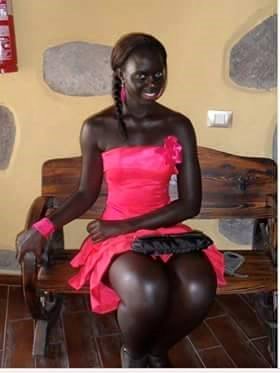
Ethnic Ko (Kolsi) woman from Southern Burkina Faso with her awesome
tribal facial marks, that identify her as Ko woman from the larger
Gurunsi ethnic group of Ghana and Burkina Faso in West Africa.
The Ko (Kolsi) people are agriculturalist Gur-speaking people that forms a subset of the larger Gurune speaking people. They live primarily in the Mouhoun province of central Burkina Faso. Their language, Ko, is a part of the Niger-Congo family. Burkina Faso consists of an extensive plateau which is slightly inclined towards the south. The climate of the country is generally dry, and the soil, infertile.
Three principal rivers can be found in Burkina Faso: the Black Volta, Red Volta, and White Volta. Converging to the south in Ghana, these three rivers form the Volta River. In the southwestern part of the country are sandstone plateaus bordered by the 500 feet high Banfora Escarpment. The majority of the population is rural and lives in some 7,700 villages.
Very little is known about the Kolsi in particular; thus, some assumptions have been made about their lifestyle, based on groups living in close proximity to them. They are thought to be similar in language and culture to the neighboring Sissala.
Burkina Faso is home to approximately 90 distinct ethnic groups. The Kolsi represent only a tiny fraction of the population. Their economy is based on farming, with households producing and consuming their own food. Their primary crops include millet, yams, peanuts, rice, and beans. Women care for the household gardens, growing okra, onions, tomatoes, and red peppers. Farming is supplemented by the gathering of nuts and wild fruits, fishing in the rivers, and hunting. Also, animals such as cattle, sheep, goats, pigs, and chickens are raised.
The Kolsi feel that being poor is a reflection on the entire kinship group as well as on the individual. Therefore, the whole household shares in the work duties. The elder men supervise and control the production and consumption of crops, while the younger men do the heavy farm work, such as clearing the land and tilling. Women may be called upon to help with planting, weeding, and carrying crops back home. Men also hunt and fish, produce medicines, and engage in wood carving and blacksmithing. Women prepare the food, care for the household and children, gather items from the bush, and make pottery.
Kolsi villages are compact and range in size from 200 to 3,000 people. A village is composed of a number of compounds. These are households which include an extended family, or janwuo. The janwuo averages about fifty people and is divided into family households. Extended families that are related paternally live close to one another, separated only by a narrow passageway. This compact organization provides for common defense and also for protection against wild animals and witches.
The birth of children brings joy to the Kolsi and ensures the continuity of the extended family. When a girl gives birth to her first child, she is then considered a woman. Additional children further cement the bond between husband and wife and increase the woman's status. An infant is always near its mother and is coddled and shown affection by other family members, including the father. Since a baby can do no evil, it is very much loved and indulged. Girls remain with their mothers until they are married. Boys, on the other hand, live with a senior male member of the janwuo from the age of six.
What are Their Beliefs?
Although some of the Kolsi have become Muslim, about three-quarters are ethnic religionists, still following their traditional religion. They believe that their own moral behavior and rituals are necessary to maintain the order of the universe. Therefore, they believe that the universe cannot exist without humans.
— with Wel Deng Atem, Shabaka Amon Ra, Asánte Herü and 45 others.The Ko (Kolsi) people are agriculturalist Gur-speaking people that forms a subset of the larger Gurune speaking people. They live primarily in the Mouhoun province of central Burkina Faso. Their language, Ko, is a part of the Niger-Congo family. Burkina Faso consists of an extensive plateau which is slightly inclined towards the south. The climate of the country is generally dry, and the soil, infertile.
Three principal rivers can be found in Burkina Faso: the Black Volta, Red Volta, and White Volta. Converging to the south in Ghana, these three rivers form the Volta River. In the southwestern part of the country are sandstone plateaus bordered by the 500 feet high Banfora Escarpment. The majority of the population is rural and lives in some 7,700 villages.
Very little is known about the Kolsi in particular; thus, some assumptions have been made about their lifestyle, based on groups living in close proximity to them. They are thought to be similar in language and culture to the neighboring Sissala.
Burkina Faso is home to approximately 90 distinct ethnic groups. The Kolsi represent only a tiny fraction of the population. Their economy is based on farming, with households producing and consuming their own food. Their primary crops include millet, yams, peanuts, rice, and beans. Women care for the household gardens, growing okra, onions, tomatoes, and red peppers. Farming is supplemented by the gathering of nuts and wild fruits, fishing in the rivers, and hunting. Also, animals such as cattle, sheep, goats, pigs, and chickens are raised.
The Kolsi feel that being poor is a reflection on the entire kinship group as well as on the individual. Therefore, the whole household shares in the work duties. The elder men supervise and control the production and consumption of crops, while the younger men do the heavy farm work, such as clearing the land and tilling. Women may be called upon to help with planting, weeding, and carrying crops back home. Men also hunt and fish, produce medicines, and engage in wood carving and blacksmithing. Women prepare the food, care for the household and children, gather items from the bush, and make pottery.
Kolsi villages are compact and range in size from 200 to 3,000 people. A village is composed of a number of compounds. These are households which include an extended family, or janwuo. The janwuo averages about fifty people and is divided into family households. Extended families that are related paternally live close to one another, separated only by a narrow passageway. This compact organization provides for common defense and also for protection against wild animals and witches.
The birth of children brings joy to the Kolsi and ensures the continuity of the extended family. When a girl gives birth to her first child, she is then considered a woman. Additional children further cement the bond between husband and wife and increase the woman's status. An infant is always near its mother and is coddled and shown affection by other family members, including the father. Since a baby can do no evil, it is very much loved and indulged. Girls remain with their mothers until they are married. Boys, on the other hand, live with a senior male member of the janwuo from the age of six.
What are Their Beliefs?
Although some of the Kolsi have become Muslim, about three-quarters are ethnic religionists, still following their traditional religion. They believe that their own moral behavior and rituals are necessary to maintain the order of the universe. Therefore, they believe that the universe cannot exist without humans.


at 5:08 am
Your comment is awaiting moderation.