
"THE BLACKER THE BERRY THE SWEETER THE JUICE/
I SAY THE DARKER THE FLESH,THEN THE DEEPER THE ROOTS!"
TUPAC SAYS

BLACK SKINNED BEAUTY SUPREME!

BLACK SKINNED BEAUTY SUPREME!

"BLACK IS BEAUTIFUL" -NEW YORK CITY STREET SAYING

"BLACK IS BEAUTIFUL!
BROWN IS HIP,
PUERTO RICAN IS OKAY
BUT white AIN'T S___T!"

BLACK SKINNED BEAUTY OOO!

BLACK SKINNED BEAUTY OOO!

BLACK SKINNED BEAUTY OOO!

BLACK SKINNED BEAUTY OOO!

BLACK SKINNED BEAUTY SUPREME

BLACK SKINNED BEAUTY SUPREME
BLACK SKINNED BEAUTY SUPREME!

BLACK SKINNED BEAUTY SUPREME

BLACK SKINNED BEAUTY SUPREME

BLACK SKINNED BEAUTY

BLACK SKINNED BEAUTY

Search This Blog

Pages

WE MUST HAVE A BLACK STANDARD OF BEAUTY BASED ON THE BLACK SKINNED BLACKEST WOMAN
Showing posts with label THE DEATH OF YORUBA LANGUAGE?. Show all posts

Monday, December 14, 2015

YORUBAS OOOO--SAVE YORUBA LANGUAGE!--"YORUBAS MUST ENSURE THE SURVIVAL OF HEIR LANGUAGE"-INTERVIEW WITH YEYE AKILIMALI FUNUA OLADE-FROM VOICE OFYORUBA.ORG-ORIGINALLY PUBLISHED IN THE NIGERIAN TRIBUNE NEWSPAPER

FROM VOICE OF YORUBA.ORG
ORIGINAL ONE FROM THE NIGERIAN TRIBUNE NEWSPAPER
 
Survival of the Yoruba Language 


“Yorubas must ensure the survival of their language”
---
Written by Adewale Oshodi Tuesday, Nigerian Tribune, 22 February 2011
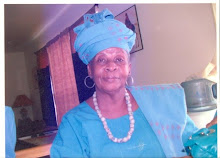
Yeye Akilimali Funua Olade, a Black American, left
the United States in 1978 for Nigeria to embrace the
Yoruba way of life. In this interv
iew with Adewale Oshodi, the Chief Libr
arian of African Heritage Research
Library (AHRC) at Adeyipo village,
Ibadan, speaks on what made her to leave the United States, why she
embraced the Yoruba culture, and why she has not vis
ited America since she left 33 years ago. Excerpts:
Yeye Akilimali Funua Olade
You are a Black American who relocated to Nigeria in 1978, but don’t you
think that it is rather ironic that you chose to come to Africa, when Africans
themselves are struggling to migrate to America?
Any black person who is in the white
man’s country is a slave to white
people, and by the time I was 19, I said my
children would never be slaves to
white people, because in reality, we were
their slaves, and that is how they
still treat black people till today. There is
no freedom for black people, and the
way they treat us is just so bad, and I decided that my children would grow up
in Africa. So, by 19, I had decided that
I was coming to Yorubaland because I
was told by Black Americans who were practising Yoruba religion that
Yoruba is the best culture in the world, as well as th
e best language. So that was when I decided that my
children were going to grow up with
the culture and speak the language, and they would never be slaves to
white people. So, in 1978, I arrived in Nigeria. Then,
my children were very young and I told them they must
stop speaking English in the house and speak only the Yo
ruba language. So they spoke Yoruba. They call me
Iya mi (my mother) because I told them I didn’t want
to hear any word of English in the house, like mummy,
and all other words that Yorubas are using to mix a
nd destroy the language. I
didn’t allow it. Now, my
children are grateful for being brought up in the Yoruba
culture. Even though they are back in America, they
said the culture has really helped them. It has given them a sense of belonging. Now, I am confident that one
day, they will also return to Yorubaland.
You are in Nigeria now, but how often do you visit America?
I have not gone back for once because I don’t want to be
anybody’s slave. I just want to be me. I love my
freedom here. The racism is still very strong in the wh
ite man’s country, especially in America. So, since
1978, I have been here. I have been enjoying Yorubala
nd. I have never suffered for once here like I suffered
while in America. I am respected by the people around me.
You speak the Yoruba language fairly well.
I don’t speak it fairly well; I must tell you the truth, and that
is the only problem I have
with Yoruba people. If
you don’t speak the language fluently, then there will be
a kind of gap between you and the people; so in that
regards, they are yet to cooperate with me.
Now, one of the problems we are having with the lang
uage is that Yoruba parents encourage their children
to speak only the English language. What do you have to say to this? 
That is how they are destroying the language, and they
will be slave to English and white people forever.
Once you take up another man’s language, you will become a slave to the real owners of the language.
What do you find interesting in the Yoruba culture?
Yoruba culture is the best in the world. Yorubas were
in Egypt. The culture is the most developed in Africa,
and that means it is the best in the world; I must te
ll you that the white culture is not developed. The Asian
culture is also developed, but nothing compares with the African culture.
Do you still maintain contacts with your friends in America despite leaving there 33 years ago?
Of course, we are still very much in contact. I tell
them everyday why they should return home to Africa.
Africa is home to blacks all over the world. I tell them I
am ready to help get them settled, and a lot of them
are ready to come now because the racism is just so
bad, and because I have coped really well here for 33
years, they say it means the place is not that terrible.
Since you came, was there a day you regretted your decision to relocate to Africa?
Not even once. The black man should be in the black
man’s land. There is no way a black person can be
happy in a white country. No matter how rich the black
man is; no matter how successful he is, he is still not
respected. They can pick him up anytime and say he robbed a bank, and then get him jailed without any
evidence of him committing any crime. Those Nigerians
who are abroad, majority of them are only working
for the money, so after a while, they will raise some m
oney, put up a structure back at home and then return
when they feel they have achieved a degree of financial success.
And you were not discouraged by the lack of infrastr
ucture, the lack of electricity, among other things,
coming from a country that has everything?
First of all, freedom is the most impor
tant thing in life. If you have never been free, like the blacks in America,
and you come to a place where you are
free, will you be talking about electricity? Although there are some
Black Americans who come here, and they dwell on the lack
of infrastructure, but th
at is not for me. I want
my children to be free. Everything is here for me. I cherish the culture, the language, and the respect people
give me. Everywhere I go, I am respect
ed. A black is not respected in America. Some people even wonder
how I can be living in the village. But for me, freedom comes first.
Vernacular Corner
--- Excerpt from “Yoruba Names & Their Meanings Plus Proverbs With English
Translations,” 4
th
and Revised Edition by Dr. Isaiah O. Adegbile
“Fìlà kò dùn bí kí á m
ọ
ọ
n dé, ki ám
ọ
ọ
n dé kó tó bi k’ó y
ẹ
ni.”
 

Wednesday, July 25, 2012

NGUGI FIGHTS TO SAVE AFRICAN LANGUAGES AND WE MUST TOO! STOP MIXING YORUBA WITH ENGLISH!-SPEAK YORUBA,YOUR AFRICAN LANGUAGES IN THE HOME TO YOUR CHILDREN ONLY!

from the PUNCH NEWSPAPER,NIGERIA
 Ngugi laments dying African indigenous languages

Ngugi laments dying African indigenous languages

Popular author, Prof. Ngugi Wa Thiong’o, has lamented the rate at which Africans are abandoning their indigenous languages for foreign languages, saying this trend is tantamount to self-enslavement.
Wa Thiong’o said this on Monday while speaking at the second edition of the Read Africa initiative of the United Bank for Africa Foundation to promote reading culture among pupils in Lagos.
According to him, most Africans are neglecting their indigenous languages in preference for foreign languages, noting that this trend was dangerous for the sustenance of Africans and their traditions.
He noted that Africans who have the mastery of other people’s languages at the expense of their own indigenous languages have subjected themselves to “second slavery.”
The Kenyan writer, who teaches at Yale University, added that those who were proficient in their indigenous languages and added mastery of other foreign languages had truly empowered themselves.
The writer of the popular Weep Not Child, warned Africans against killing their indigenous languages, noting that the consequences of this would be too much to bear.
“For me, enslavement is when you know all the languages of the world but you don’t know your own language. Empowerment is when you know your own language and you add other languages to it. We should promote our languages. We should encourage our children to speak our own language,” he said.
The author, who was accompanied to the formal inauguration of the second edition of the Read Africa by his 17-year-old son, Thiongo Ngugi, said he stopped writing in English Language about 10 years ago, to spearhead this campaign.
“I stopped writing in English Language 10 years ago because Africa is our base and we must not lose our base and our indigenous languages. Since then I have been writing in Nkiyu language and I later do translation myself or I look for somebody to do it for me,” he said.
Addressing the audience including pupils and top officials of UBA led by the Group Managing Director, Mr. Phillip Odoza, the writer called for the development of young African writers.
He, however, told the pupils that they should cultivate a robust reading culture if they hoped to become good writers.
“Reading is an integral part of imagination and without reading your imagination will shrink. It’s like food, when you don’t eat, your body will shrink and when you don’t feed your spirit with religious books, your moral value will shrink,” he said.
Wa Thiong’o, who said he wrote his first two books within his first two years in college, urged the students to start writing now.
“See yourself as a person first before you see yourself as a student and don’t think you are too small to write, start now,” he said.
Earlier, the Chief Executive Officer of the UBA Foundation, Miss Ijeoma Azo, had explained that the foundation would distribute Wa Thinog’o’s Weep Not Child freely to all secondary school pupils across Africa to promote reading.
   
Read 168 times

  • Tope July 24, 2012 at 3:53 am
    When i was in secondary school we were told not to speak yoruba in school or we will pay a fine of 10 naira, but as for me i spoke yoruba and when taking to my class teacher because i refuse to pay i will tell her jokely that does the chinese speak english in school or does italy speak yoruba or english in school and she will just laugh and realise me.
  • Chidi July 24, 2012 at 5:14 am
    And this applies also to going back to the only assurance of our daily bread – farming! Remember the age old song: Iwe kiko, lai si oko (ati ada), ko i pe o!
  • Albert July 24, 2012 at 5:30 am
    Yes it is very good to speak our native language
  • Bamigboye Ilesanmi T. July 24, 2012 at 10:24 am
    it is gud to preserve our native language, Africa is our father land not foreign country, let’s embrace our language b/4 wil think of official lang.
  • Kingsley Fergie July 24, 2012 at 9:08 pm
    An excellent Author with a well designed and narrated food-for-thought,very useful 4 some of us who are not married yet
  • Kingsley Fergie July 24, 2012 at 9:10 pm
    I am proud of James Ngugi Wa Thiongo,i read his book in my JSS3 Literature Days,where I charactered Njoroge in d school play,always close a Mwihaki;Weep Not Child,Weep Not,My Darling,With these kisses let me remove ur tears,d ravening clouds shall not yet overflow ,they shall not yet possess the sky;Nigeria must copy from this advice,not as our children do these days,by going 2 cosmopolitan cities,and 4getting their very roots dat made them.Of Course,Europeanization,Civilization,has made d afrocentric man nuts,bt its a food -for-thought especially for some of us who are not married,yet!
  • Yeye Akilimali Funua Olade July 25, 2012 at 11:56 am
    AFRICANS ARE KILLING THEIR LANGUAGES FIRST BY MIXING THEM FREELY WITH ENGLISH,AS THE YORUBAS HAVE DONE AND COMPLETELY FINISHED THE LANGUAGE,AND TWO BY NOT SPEAKING THEIR MOTHERTONGUE IN THE HOME TO THEIR CHILDREN! THIS MUST STOP! A VERY GOOD SOLUTION IS TO HAVE BEST YORUBA SPEAKER CONTESTS BY ALL SCHOOLS,CLUBS AND BUSINESSES SO THAT CASH PRIZES WILL BE GIVEN PEOPLE WHO CAN SPEAK THEIR MOTHERTONGUE WITH OUT MIXING! AS ANAMBRA STATE HAS DONE ALL AREAS MUST HAVE BILLS TO PRESERVE THEIR LANGUAGES FROM PRIVATE SCHOOL LEVEL UP!

    ^^^^^^^^^^^^^^^^^^^^^^^^^^^^^^^^^^^^^^^^^^^^^^^^^^^^^^^^^^^^^^^^^^^^^^^^^^^^^^^^^^^^^^^^^^^^^^
     FFROM ALLAFRICA.COM

    Nigeria: I Prefer Indigenous Literatures - Wa Thiong'o

    Lagos — Ngugi Wa Thiong'o is distinguished professor of English and Comparative Literature and director of the International Centre for Writing and Translation at the University of California at Irvine. A Kenyan writer of Gikuyu descent, Ngugi is the author of various novels such as Weep Not Child (1964), The River Between (1965), A Grain of Wheat (1967) and Petals of Blood (1977). In 1980, Ngugi published the first modern novel ever written in Gikuyu called Devil on the Cross. Ngugi's critical works include Homecoming (1972), Detained: A Writer's Prison Diary (1981), Decolonizing the Mind (1986) and Moving the Center (1993). As a novelist, playwright and critical thinker, Ngugi has dealt with the concerns most affecting his native Kenya including issues of colonialism, nationalism and post-colonialism.
    He has severally recommended to African writers to develop indigenous literature. His claim is that African writers need to write in African language in order to project her rich culture to the whole world. No wonder he prefers to read literatures written in his local language, Gikuyu.
    In his response to what his thoughts are about contemporary fiction in Kenya and the more recent texts in Gikuyu that have had an impact on him, he said, "There are several writers who now write in Gikuyu. Ms. Waithira Mbuthia is very prolific. But so is Gitahi Gititi, now a professor of English, but writing in Gikuyu. Mwangi Mutahi is another who has published three novels in Gikuyu. There is also Gatua wa Mbugua, a poet and a scientist. He has just completed and successfully defended a scientific thesis written entirely in Gikuyu for the Department of Crop Science at Cornell. There are many more. Most of these writers are contributors to the Gikuyu language journal, Mutiiri, originally based at New York University, but now at the University of California Irvine."
    During the late 70's, his commitment to art and community led him to form communal theatre groups in villages, which showcased some of his most indicting plays. These works portrayed the political corruption of post-colonial life in Kenya and the people's struggle to define an identity despite years of harsh political and social transitions. In 1977, Ngugi was arrested for his involvement with the communal theatres. While in prison, Ngugi reflected on the urgency in forming a truly African literature and at the same time wrote Devil on the Cross on prison- issued toilet paper. He subsequently would abandon English for his native Gikuyu for all his future novels. After being released from prison, Ngugi lost a university position and his family suffered from constant harassment. In 1982, Ngugi left Kenya and has been in exile ever since. Ngugi Wa Thiong'o is the recipient of numerous awards including the Paul Robeson Award for Artistic Excellence, Political Conscience and Integrity (1992); Gwendolyn Brooks Center Contributors Award for Significant Contribution to the Black Literary Arts (1994); Fonlon-Nichols Prize (1996); and the Distinguished Africanist Award by the New York African Studies Association (1996).


Thursday, November 10, 2011

YORUBA RUNU! -IGBOS HAVE MOVED TO SAVE THEIR LANGUAGE WITH A LAW TO ENFORCE USE OF IT! - CAN YORUBAS WHO SLAVISHLY LOVE ENGLISH DO THIS KIAKIA! SE PATAKI GANGAN! -YORUBA IS DYING DAILY!

Biko nu, onye obula jisie ike subakwa Igbo!
----- Forwarded Message ----
From: chinelo ugochukwu
To: asa-usa@yahoogroups.com
Sent: Thu, July 1, 2010 4:03:02 AM
Subject: [IgboWorldForum] When Promotion Of Igbo Language Got The Biggest Boost Ever


To: IgboEvents@yahoogro ups.com
Date: Wednesday, June 16, 2010, 11:02 PM


 When Promotion Of Igbo Language Got The Biggest Boost Ever
By Chukwujekwu Ilozue


The former Vice Chancellor of Nnamdi Azikiwe University, Awka, Professor Pita Ejiofor, has almost devoted his entire life to the promotion and survival of Igbo language. Ejiofor said he began the crusade when it became a shame that most children of Igbo extraction could neither speak, nor write their language. This is coupled with warnings from the United Nations and a study by the Oxford University which revealed that if no extra effort is made, Igbo language will go into extinction.
Thereafter, Ejiofor championed the cause for the revival and sustenance of Igbo language among Igbo people in Nigeria. This led to the formation of ‘Otu Subakwa Igbo’ (a group that champions speaking of Igbo language)  on February 14, 2006.  As his campaign spread throughout Igbo land, Subakwa Igbo soon changed to Suwakwa Igbo, which Ejiofor explained is the central Igbo spoken across the entire Igbo land and he has devoted his time and resources to the course ever since. Ejiofor has a fore-runner though, in late Chief Chidozie Ogbalu who was one of the foremost promoters of Igbo language and culture through writing of several text books in Igbo language. Also before now, the State House of Assembly passed a resolution entrenching the conduct of the House business in Igbo language on Wednesdays.
 
 
Nevertheless, the biggest boost to promotion of Igbo language and culture ever was recorded Wednesday, Afor market day, 26 May, 2010 when Otu Suwakwa Igbo was launched at the Women Development Centre, Awka by Governor Peter Obi. That day, Obi not only  threw the weight of the state government behind  Otu Sawakwa Igbo, but publicly signed into law a Bill  to Enforce the Speaking and Writing of Igbo and Wide spread Usage of Igbo Language among Ndigbo in Anambra and Diaspora. It is to be cited as ‘The Igbo Language Usage Enforcement Law 2010’, which had earlier been passed by the state House of Assembly and was supposed to have come into force on May 11..
The law provides that Principals of secondary schools in Anambra State who promote pupils from Junior Secondary School III (JSSIII) to Senior Secondary School I (SSSI) without those pupils passing Igbo language are to be removed from their positions and fined N5,000, for each of the pupils so promoted.
Also, any state or privately owned tertiary institution in the state which is found not to have established an Igbo language department or made Igbo language a mandatory general studies course by September, 2011, shall pay a fine of N100,000 for every month in which the offence continues.
Among other things, the law banned administering of corporal punishment to students who speak Igbo in schools in the State. It made Igbo Language compulsory in all the categories of educational institutions in the State just as English and Mathematics.  Also a head of the relevant department who finds a staff of that department dressed in Western attire in contravention of the provisions of a particular section of the law shall send that staff home to change into Igbo traditional attire. However, the law excludes some professional bodies like judicial officers and nurses whose dress code is bound by the law.
From the commencement of the law, every Wednesday in every week shall be observed as a week’s Igbo day. That means that every staff of the state public service shall dress in Igbo traditional attire and all business and transaction in all offices and departments of the public service, including proceedings in the legislative chamber shall be conducted in Igbo language that day.
The explanatory note of the law states that it is meant to ensure and enforce such level of fluency and vibrancy in the usage of Igbo language as befits its status as one of the three officially recognized indigenous languages of Nigeria pursuant to the constitution of the Federal Republic of Nigeria, 1999, such that the language will once more be proudly spoken and written by Ndigbo in Nigeria and Diaspora, and used for broadcasts in reputable international media.
Besides, Obi promised to send a bill to the House of Assembly to make it compulsory for job seekers on Grade Level 07 to possess at least a pass level in West African Examination Council (WAEC) examination or National Examination Council of Nigeria (NECO) or General Certificate of Education (GCE) and other qualifications for other levels. Local Government Heads of Department should organize seminars and workshops on Igbo language, while the communiqué produced by Otu Subakwa Igbo should be implemented.
At the event, Governor Obi also promised to build Chief Chidozie Ogbalu Igbo Language School that will cost the government  about N50.5million, for specialized and holiday programmes in Igbo.  Last week Obi followed up his promise to build the Language school by launching it. The Chidozie Oghbalu Igbo Language Centre, he said is a school where children who do not know how to speak the language take short courses during holidays.
In his four page address written and delivered in Igbo at the occasion, Obi told the audience that as they have themselves heard that Igbo language will go into extinction in a few years to come did not sound nice. He said that no other tribe will save Igbo language except Igbo people themselves and time is now to do that as time and tide waits for no one. After asking the audience which was chaired by the Chairman of Traditional Rulers’ Council, Igwe Alfred Nnaemeka Achebe comprised about 70 traditional rulers, Ohaneze Ndigbo chieftains  and many other dignitaries if they wanted Igbo language to survive and they chorused in the affirmative, Obi gave 12 options to promote the language.
 Among them Obi said is that when two or more Igbo people are discussing their language of communication should be Igbo and not even an admixture of Igbo and English. Parents should use Igbo to communicate to their children at home and should at all times avoid such sayings as “say hello to uncle”, or “Junior does not understand Igbo”, as that is an insult to Igbo language.
As the state has already declared Wednesdays as Igbo week’s day when traditional dresses and businesses are conducted in Igbo, government he said was adding Tuesday to it because things have spoilt a lot.
The various towns and villages should write and present their address to government officials in Igbo. They should also write programme of events, orations, citations all in Igbo in ceremonies. He asked state owned radio and television stations to emulate their counterparts in the North and in the West in promoting the use of local languages
The Igbo video cassettes produced by Otu Suwakwa Igbo are to be mass produced by government and sold at give away prices to workers to listen to with their families and apply what they learn from them. Traditional rulers as custodians of Language and Culture should strive to protect the language during ceremonies and while receiving dignitaries of other states.
Obi announced immediate offer of employment for all holders of Bachelor’s degrees, Higher National Diploma and National Diplomas of Igbo language. He also announced annual award of N250,000, N200,000, and N100,000 to the three  best Igbo students in Secondary Schools in Nigeria.  He also gave cash donations and scholarships to University level to the two best Igbo students in WAEC recently namely: Mr. Kevin Anozie of Holy Child Secondary School, Isuofia, and Mr. Chika Echeta of Bishop Onyemelukwe Secondary School Onitsha.
Obi praised Otu Suwakwa Igbo for committing their intellect, efforts and resources in sponsoring, spreading and sustaining of Igbo language. He announced that from then on, government will give the group monthly subvention and recognize the efforts it has made so far.  
Expectedly Prof. Ejiofor could not hold his joy that his dream of attracting enough attention and assistance in his struggle to keep Igbo language alive has come true. He thanked Obi for his interest in Igbo cause.  Using statistics, he sought to prove that Igbo Language is retrogressing and that only Igbo people will stop the retrogression.
 The President of Ohaneze Worldwide, Ambassador Ralph. Uwechue who was represented by the Anambra State chairman of Ohaneze Ndigbo Dr. Atamuo thanked the governor for his commitment to Igbo cause and the able way he pilots the affairs of the State and asked him to use his position as chairman of South East Governors’ Forum to follow his footstep.
Obi’s efforts in sustaining Igbo language has not passed unnoticed. A writer from Imo state, Mr. Eugene Iwuamanam described it as ‘innovative and a very sound idea of the Anambra State Governor, Peter Obi (Okwute) Obi to encourage sustenance of Igbo language and culture, it is no gain saying that he has written his name on the moon and sun”. Iwuamanam said Obi “has become an illuminating arrow that God perfected and shot directly into ala Igbo to illuminate its four corners, bringing loaves of bread of hope to the hopeless, and heal long time gaping wounds of despair”. He said he has read and heard several empirical achievements of this governor which shows that he leads even when his peers turn inwards looking into and out for their pockets. ‘Some times one feels like wishing that ala Igbo should return to the former East Central State with one Governor called Peter/ Okwute Obi”, he wrote. 
Also a community leader, Chief  Azubikes Okoye, who is also the President General of Agulu Peoples Union commended the measure and particularly Prof. Ejiofor for his committment to the project and the wonderful work he is doing through Suwakwa Igbo organisation.
Okoye lamented the gradual dying of  Igbo langauge and blamed parents who would rather make sure their children learn English and other foreign langauges than Igbo and described as scandalous, a situation where in an Igbo family,  English is the official language of communication.
He said that the signing of the law to promote the usage of Igbo in Anambra and Diaspora was a mastersroke by Governor Obi and everybody who is Igbo should be proud of the Governor, especially as he showed practical seriousness over the matter, by making Igbo language compulsory in all the schools, private and public, in the State; by making  the langaueg  a compulsory part of the General Studies in the higher institutions in the State; by offering annual cash awards in his personal capacity to the best candidates in Igbo language in all the secondary schools in Nigeria; by abolishing corporal punishments for those that speak igbo in their schools, among other measures.
He singled out the building of Ogbalu Igbo Langauge School by the Governor as one project all Igbo sons and daughters should encourage.  Like Atamuo Chief Okoye appealed to Obi to use his good offices as the Chairman of the South East Governors’ Forum to persuade other Igbo Governors   to replicate what he has done in Anambra State in their states. He also encouraged him to put on the agenda for the South East Governors forum future meetings the issue of Igbo langauge and culture#


Thu Jul 1, 2010 8:22 am

mnagomoh
Offline Offline
Send Email Send Email


Expand Messages Author Sort by Date
Fw: [IgboWorldForum] When Promotion Of Igbo Language Got The Biggest
Biko nu, onye obula jisie ike subakwa Igbo! ... From: chinelo ugochukwu To: asa-usa@yahoogroups.com Sent: Thu, July 1, 2010...
Nnanna Agomoh
mnagomoh
Offline Send Email
Jul 1, 2010
8:22 am