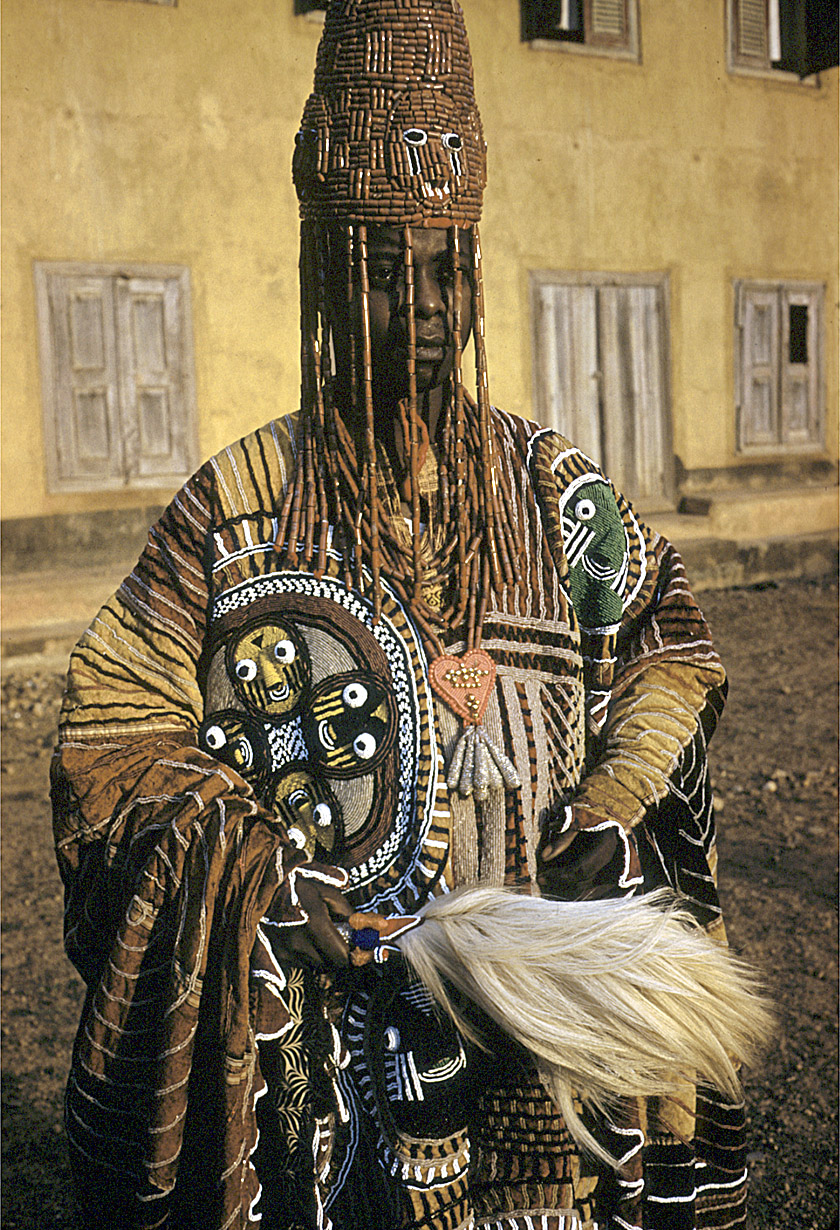
"THE BLACKER THE BERRY THE SWEETER THE JUICE/
I SAY THE DARKER THE FLESH,THEN THE DEEPER THE ROOTS!"
TUPAC SAYS

BLACK SKINNED BEAUTY SUPREME!

BLACK SKINNED BEAUTY SUPREME!

"BLACK IS BEAUTIFUL" -NEW YORK CITY STREET SAYING

"BLACK IS BEAUTIFUL!
BROWN IS HIP,
PUERTO RICAN IS OKAY
BUT white AIN'T S___T!"

BLACK SKINNED BEAUTY OOO!

BLACK SKINNED BEAUTY OOO!

BLACK SKINNED BEAUTY OOO!

BLACK SKINNED BEAUTY OOO!

BLACK SKINNED BEAUTY SUPREME

BLACK SKINNED BEAUTY SUPREME
BLACK SKINNED BEAUTY SUPREME!

BLACK SKINNED BEAUTY SUPREME

BLACK SKINNED BEAUTY SUPREME

BLACK SKINNED BEAUTY

BLACK SKINNED BEAUTY

Search This Blog

Pages

WE MUST HAVE A BLACK STANDARD OF BEAUTY BASED ON THE BLACK SKINNED BLACKEST WOMAN
Showing posts with label SAVE YORUBA LANGUAGE. Show all posts

Tuesday, August 14, 2018

YORUBA OOO!- SAVE YORUBA LANGUAGE!--BBC YORUBA IS DYING!-KEEP YOUR PHONE SET ON BBC YORUBA ALL NIGHT!


Dear Omo Yorùbà,

Please endeavour to click on BBC Yorùbà and stay on the site for at least 5 mins daily, either through Facebook on the web browser.

Why? They are collecting statistics and the current results are not pleasant. Whilst many H/F watch and stay on BBC Hausa for 15 mins on the average, we spend seconds on BBC Yorùbà.

If it persists, they'll close it down. That will be a huge loss for us - culturally, language wise and politically as global players.

*Please watch BBC Yorùbà and encourage at least 5 people. Even if it is to just leave it on, for 5 mins a day.

Https://www.bbc.com/yoruba

Tuesday, March 22, 2016

BLACK PEOPLE!!!--BE REALLY FREE IN THE BLACK MAN'S LAND!!!--BACK TO AFRICA OOO!--THIS SISTER WENT BACK AND NEVER LOOKED BACK!!!--FROM Tribune Newspaper--http://www.tribune.com.ng/ Written by Adewale Oshodi Tuesday, 22 February 2011

http://www.tribune.com.ng/index.php/arts-a-review/17856-yorubas-must-ensure-the-survival-of-their-language
Arts & Review
'Yorubas must ensure the survival of their language'

Written by Adewale Oshodi Tuesday, 22 February 2011
Yeye Akilimali Funua Olade, a Black American, left the United States in 1978 for Nigeria to embrace the Yoruba way of life. In this interview with Adewale Oshodi, the Chief Librarian of African Heritage Research Library (AHRC) at Adeyipo village, Ibadan, speaks on what made her to leave the United States, why she embraced the Yoruba culture, and why she has not visited America but once since she left 33 years ago. Excerpts:

You are a Black American who relocated to Nigeria in 1978, but don't you think that it is rather ironic that you chose to come to Africa, when Africans themselves are struggling to migrate to America?
Any black person who is in the white man's country is a slave to white people, and by the time I was 19, I said my children would never be slaves to white people, because in reality, we were their slaves, and that is how they still treat black people till today. There is no freedom for black people, and the way they treat us is just so bad, and I decided that my children would grow up in Africa. So, by 19, I had decided that I was coming to Yorubaland because I was told by Black Americans who were practising Yoruba religion that Yoruba is the best culture in the world, as well as the best language. So that was when I decided that my children were going to grow up with the culture and speak the language, and they would never be slaves to white people.
So, in 1978, I arrived in Nigeria. Then, my children were very young and I told them they must stop speaking English in the house and speak only the Yoruba language. So they spoke Yoruba. They call me Iya mi (my mother) because I told them I didn't want to hear any word of English in the house, like mummy, and all other words that Yorubas are using to mix and destroy the language. I didn't allow it. Now, my children are grateful for being brought up in the Yoruba culture. Even though they are back in America, they said the culture has really helped them. It has given them a sense of belonging. Now, I am confident that one day, they will also return to Yorubaland.
You are in Nigeria now, but how often do you visit America?
I have not gone back but once,when Iya mi was sick to pray for her, because I don't want to be anybody's slave. I just want to be me. I love my freedom here. The racism is still very strong in the white man's country, especially in America. So, since 1978, I have been here. I have been enjoying Yorubaland. I have never suffered for once here like I suffered while in America. I am respected by the people around me.
You speak the Yoruba language fairly well..
I don't speak it fairly well; I must tell you the truth, and that is the only problem I have with Yoruba people. If you don't learn to speak the languagequickly,they stop trying to teach you,say you never can learn it and speak to you in english! So in that regards, they are yet to cooperate with me but I am pledging to speak only Yoruba by
Now, one of the problems we are having with the language is that Yoruba parents encourage their children to speak only the English language. What do you have to say to this?
That is how they are destroying the language, and they will be slave to English and white people forever. Once you take up another man's language, you will become a slave to the real owners of the language.
What do you find interesting in the Yoruba culture?
Yoruba culture is the best in the world. Yorubas were in Egypt. The culture is the most developed in Africa, and that means it is the best in the world; I must tell you that the white culture is not developed. The Asian culture is also developed, but nothing compares with the African culture.
Do you still maintain contacts with your friends in America despite leaving there 33 years ago?
Of course, we are still very much in contact. I tell them everyday why they should return home to Africa. Africa is home to blacks all over the world. I tell them I am ready to help get them settled, and a lot of them are ready to come now because the racism is just so bad, and because I have coped really well here for 33 years, they say it means the place is not that terrible.Since you came, was there a day you regretted your decision to relocate to Africa?
Not even once. The black man should be in the black man's land. There is no way a black person can be happy in a white country. No matter how rich the black man is; no matter how successful he is, he is still not respected. They can pick him up anytime and say he robbed a bank, and then get him jailed without any evidence of him committing any crime. Those Nigerians who are abroad, majority of them are only working for the money, so after a while, they will raise some money, put up a structure back at home and then return when they feel they have achieved a degree of financial success.
And you were not discouraged by the lack of infrastructure, the lack of electricity, among other things, coming from a country that has everything?
First of all, freedom is the most important thing in life. If you have never been free, like the blacks in America, and you come to a place where you are free, will you be talking about electricity? Although there are some Black Americans who come here, and they dwell on the lack of infrastructure, but that is not for me. I want my children to be free. Everything is here for me. I cherish the culture, the language, and the respect people give me. Everywhere I go, I am respected. A black is not respected in America. Some people even wonder how I can be living in the village. But for me, freedom comes first.

Sent from my BlackBerry wireless device from MTN


Thursday, December 03, 2015

YORUBAS OOO!-THE DEATH OF YORUBA LANGUAGE#2-FROM CHAINSOFF'SBLOG AT WORDPRESS

from
https://chainsoff.wordpress.com/2013/04/12/the-death-of-yoruba-language/

The death of Yoruba language?

SAVE YORUBA LANGUAGE BY BRIBING YORUBAS TO SPEAK YORUBA WITHOUT MIXTURE WITH ENGLISH AS THEY ARE DOING NOW BY HAVING “BEST YORUBA SPEAKER” CONTESTS” WITH BIG MONEY PRIZES!- YES EVEN IN TRINIDAD,BRAZIL YOU TOO CAN SAVE YORUBA! -USA BLACKS CAN LEARN YORUBA AND HAVE THEIR CHILDREN TAUGHT YORUBA TOO!


FROM YORUBALAND.ORG
Sister Yeye Akilimali Funua Olade
The death of Yoruba language?
By Yeye Akilimali Funua Olade
“Kilo happen? Ma worry. Mo understand. Kosi problem. Mo sorry gan. Ma expect me. Ke e nice day” – (a GSM conversation)
Surely this is not Yoruba that this man is speaking? Definitely not! Yet everyday Yoruba speaking people are killing Yoruba like this. Is this the new (English) pidgin for Yorubaland, joining other sections of the country, who have spespamed in killing their own Nigerian language by using mainly “pidgin” in the name of “communicating” with other groups? Oyinbo culture has brought Nigerian culture to its knees in so many ways – now a foreign language seeks to kill our own God-given languages, using Nigerians as the executioners! Eewo!
That English, the ready-made weapon of British-American cultural imperialism, is not just trying to destroy African languages, but is attacking all other languages worldwide, I agree. Ojoogbon Akinwunmi Isola, the newly-appointed Chair of Oyo State Arts and Culture Board, related to me during a discussion with Ojoogbon Babatunde Fafunwa, the problem the French are having with English. He stated that the French government had recently warned all French broadcasters to stop polluting French with English, as is now popular in general French conversation, or face dismissal. But I doubt whether the French would think of slaughtering their language to the extent that Yorubas daily have begun to do.
The greatest tragedy in Yorubaland today however regarding language is the dominating trend to speak only English to their children, making it their first language, then sending them to private nursery school, who only teach in English and causing Yoruba children to value English above all other languages! (After all their WAEC will not be in Yoruba, one highly-educated Yoruba man told me!) And see the result! In effect,that child has become an Oyinbo child and no longer a Yoruba child.What are the grim onsequences of this disturbing trend? The first problem that will result is a change in that child’s behavior with respect to discipline and respect for his parents and others.. The English-speaking child will never become great in creativity nor in leadership in the Nigerian context; he or she can never become the President of Nigeria for example. Is it possible to have a Nigerian President who cannot speak his Mother-Tongue effectively? These English-speaking children will rudely use English to disrespect all and sundry (after all English does not have pronouns of respect for anybody). Hear them saying “Shut up Daddy! – Give me back my candy!” in an authoritative way. And hear this one told by Oloogbon Ishola – an semi-literate (in English)) parent says to his child, “Say hello to Daddy”. The child replies “Ye ‘llo Daddy”. Olodumare! Yoruba children now do not know proper Yoruba and even as a result of this mixture do not know the real Yoruba words for “ma worry”, “check result” etc.. Ask them or some of their parents and they will tell you they don’t know the original Yoruba for the popular phrases that many literate and non-literate leaders and followers commonly use throughout Yorubaland.
As a Black-American, who has come back to her Yoruba roots these past 26 years in Nigeria, I want to break down in tears over this “iyonu”! How can Yorubas kill their own language? What sort of curse is this? Obviously the curse of european-american imperialism/colonialism/slavery! As a result I have declared “War Against Destroying Our Nigerian Languages” from today. And it must start from Yorubaland. Are not the Yorubas the “wisest and the greatest”? As everything good seems to start from Yorubaland in Nigeria, “let it be so”.
I am appealing to all full-blooded Yoruba, as of today to consciously seek not to mix English with their Yoruba. Yoruba leaders must slowly speak, watching their tongues, not to include any English words inside their Yoruba. It has gotten to a state where such leaders cannot avoid mixing English as they speak Yoruba and their every sentence includes whole English phrases! The late Yoruba leader, Oloye Bola Ige was a pure Yoruba language speaker and other Yoruba leaders should follow his example. This is a “War Against English words entering Yoruba”!
All clubs and organisations in Yorubaland should hold bi-annual and annual Yoruba Speaking Competitions for the “Best Yoruba Speaker”, with heavy monetary prizes (N20,000 plus) to get Yorubas to consciously practice speaking Yoruba without any English mixture. Yoruba broadcasters are guilty of promoting this deadly trend. Yoruba stations must have quarterly courses in Correct Yoruba Speaking for they are one of the biggest offenders of mixing heavily English into Yoruba. In schools Yoruba teachers must stress the importance of not mixing Yoruba. All private schools in Yorubaland must be required to have classes in Yoruba language from nursery through secondary school levels. There is a “famous” private school in Lagos, owned by Lebanese (or is it Syrians), which does not teach Yoruba on the secondary school level, as required by law. Law enforcement is necessary with frequent unannounced inspections on this crucial issue. And any student who fails to pass Yoruba in Yorubaland must not be allowed to graduate!
The Yoruba Press must be commended for indeed holding the banner high and not polluting Yoruba with English, especially Alaroye.Alalaye, Ajoro, Iroyin Yoruba, Akede must also continue the struggle to save Yoruba language. More effort however must be made to eliminate “pasito”, professor ,”dokita” words as most of them have genuine Yoruba words that can be enlisted and popularised among their readers. Aworerin must be resurrected by Alaroye, for use in all schools in Yorubaland as it was in the ’50s to inculcate love of Yoruba language among children. Yoruba departments in Nigerian and foreign universities must start churning out more research on modernising Yoruba for technical, scientific and other vocabulary and making it available through special courses for the media and the general Yoruba public.
Tiwantiwa(uk.groups.yahoo.com/group/tiwantiwa),created by Sister Molara Wood in London,must be commended for keeping the purity of the Yoruba Language intact.More Yoruba websites are needed on the worldwide web.
Yoruba writers must begin to write and publish bilingual publications.For any publication they publish in English, its Yoruba equivalent must be done. In the same book (Yoruba-from the front, turn upside down, English from the back) is one way to do it or in a title simultaneously released. More books, magazines, other publications like club histories, year books must be published in Yoruba. (Do you know that Alaroye sells many more copies than English newspapers in Yorubaland?) For example why is a prominent Yoruba Club issuing their history in English? If they must have English, then it must be a bilingual edition, in Yoruba from the back. Who but Yoruba should promote publications in Yoruba? We must stop promoting a foreign language over our own God-given language.
Yoruba music too, has been assaulted by Yoruba artists, unknowingly killing Yoruba language. The mixture of English has reached a new high in Fuji. Yoruba Gospel has started mixing English inside Yoruba songs within Yoruba cassettes, adding along side complete English songs! Olodumare! Such artists must be warned – no more killing of the language in this manner. If it is English you want then put that on an English cassette. Do not replace our God-given Yoruba in a Yoruba music cassette!
Yoruba movie practitioners are perhaps the biggest offenders and must take up this challenge to save Yoruba language. English mixing should absolutely be banned in all Yoruba films. I have not researched the topic but I suspect that Hausa, is probably the most unpolluted language in Nigeria, and in all their films that I have seen there is no English there at all.
The beauty of the Yoruba language must be showcased by having more Yoruba Cultural Festivals to be held by all clubs and organisations in Yorubaland annually. Odua’s People Congress and other enforcers of law and order in Yorubaland must be in the vanguard, not only by stressing among its members that Yoruba should not be polluted but by holding bi-Annual Yoruba Speaking competitions for the “Best Yoruba Speaker”. They must lead the way in correct Yoruba speaking and have literacy classes for all their members to learn to read in Yoruba and encourage them to speak Yoruba in the home to their children: Yoruba must become again the first language of Yorubas at home and abroad.
All legislatures in Yorubaland should switch to using Yoruba as the first language of communication for their deliberations. If English has to be listed at all it can be the second language of communication!
Finally a private, Yoruba school system must be set up. These schools will teach all subjects in Yoruba from nursery up to the university eventually. If it must be like a “mushroom school”, starting with nursery school first and adding class by class this must be done. This Yoruba Academy can be supported extensively by Yorubas abroad, eventually having board houses were Yoruba children from abroad can join their counterparts here, including all “classes of children, street children etc.) This Yoruba Academy will inculcate Yoruba culture into our children also. With the help of our Yoruba scholars we can build on Ojoogbon Babatunde Fafunwa’s successful “Mother-tongue Education” project at University of Ife in the 60s. Afterall, even UNESCO has proven that Mother-tongue Education is the best for all children.
Let Yoruba Language not die! God has given the Yoruba race a language to be proud of, anywhere in the world (there are at least 60 million or more Yoruba speakers throughout the world). Let’s not destroy it with our own mouths! Let us pass it on in its richness to our children, daily in our home. Let us proudly speak it daily, read it daily, champion it daily. Yorubas cannot remain great without our language. And let us be in the vanguard of saving all Nigerian/African languages.
Biu, Ogoni, Urhorbo, Igede, Ogoja, Ebira, Idoma, Efik, Tiv, Langale, Tangale,Ikwerre,Kagona, Kutep, Oron, Legdo, Bubiaro, Esan, Afima, Itsekiri, Ijaw, Edo, Ikenne, Joba, Gwari, Ibo, Igala, Hausa, speakers are you listening?
*Mrs Olade is the Chief Librarian of African Heritage Research Library, Adeyipo Village via Ibadan.

Rate this:


1 Vote

Thursday, March 15, 2012

SAVE YORUBA LANGUAGE! AND ALL NIGERIAN AND AFRICAN LANGUAGES THIS WAY! -NOW YOU CAN SEND TEXT AND THEY WILL GET IT BY VOICE IN YORUBA AND ALL OTHER AFRICAN LANGUAGES!

Ife researchers unveil local language text-to-voice application – 234next

Move over twitter. Nigerian texters unhappy that their messages can only be accessed by people able to read in English Language can now breathe easier as local researchers have concluded work on an application that renders texts in local languages in audio.
To help secure, protect, and bring back most of the local languages that are going into extinction, Information and Communication Technology researchers at the Obafemi Awolowo University, Ile-Ife, last week unveiled the technology through which texts are converted into voice messages in Nigerian indigenous languages by the recipient’s handset.
The research work is led by Tunji Odejobi, a local computer expert in constraint satisfaction and programming and Rick Wallace, a professor at the Cork University, Ireland.
“Even if you don’t even know how to read and write in the formal sense of it, the technology can leverage that,” Mr Odejobi said.
“So technology has redefined what we call literacy now. But the key item in this is the use of language. If you want to a local language that doesn’t speak your language, then you can use technology to get your mind across to such people. That is what we have done. You can use what we are doing today to achieve such communication in various languages between the sender and receivers of a message. If we don’t do this, we are just going to kill our languages silently. It can help smoothen the culture by having common language of communication and giving other languages a place to showcase their values and culture too,” he added.
test
Source: 234next news

Monday, March 05, 2012

IGBOS HAVE BEATEN YORUBA ON THIS ONE! -PASSING LAWS TO SAVE AFRICAN LANGUAGES AND KEEPING THEM FROM DYING!- ANAMBRA STATE,GOV. OBI,BLACK ON!


Nigeria: Igbo Language Law Debuts in Anambra
By Chukwujekwu Ilozue, 7 June 2010

Onitsha — Principals of secondary schools in Anambra State who promote pupils from Junior Secondary School III (JSS III) to Senior Secondary School I (SSS I) without the pupils passing Igbo language are to be removed from their positions and fined N5,000, for each of the pupils so promoted.

Also, any state or privately owned tertiary institution in the state which is found not to have established an Igbo language department or made Igbo language a mandatory general studies course by September, 2011 shall pay a fine of N100,000 for every month in which the offence continues.

These are some of the punishments prescribed by the newly enacted law, which is cited as Igbo Language Enforcement Law, 2010, which came into force on May 11, 2010.

It would be recalled that Governor Peter Obi signed the Bill into Law on the day he launched Suwakwa Igbo (speak Igbo) designed to enhance wide usage of Igbo language to save it from extinction.

At the public signing of the Bill into Law Obi also announced the stoppage of corporal punishment to students who speak Igbo in schools in the state and announced that Igbo Language would henceforth be compulsory in all the categories of educational institution in the state just as English and Mathematics are.

Among other things, the law prescribes that Igbo language as a subject must be passed by an Igbo student before he can be promoted from JSS III to SSS I in all secondary schools in the state; every state or privately owned tertiary institution in the state must establish an Independent department of Igbo language a mandatory general studies course in the institution and that any state or privately owned tertiary institution within the state and which is found not to have established an Igbo language department, or made Igbo language a mandatory general studies course in accordance with the provisions of the relevant sections by September, shall be liable to a fine of N100,000 for every month in which the offence continues.

Also, a head of the relevant department who finds a staff of that department dressed in Western attire in contravention of the provisions of a particular section of the law shall send that staff home to change into an Igbo traditional attire.

Also, from the commencement of the law, every Wednesday in every week shall be observed as Igbo day. That means that every staff of the state public service shall dress in Igbo traditional attire and all businesses and transactions in all offices and departments of the public service, including proceedings in the legislative chamber shall be conducted in the language.

However, the law excludes some professional bodies like judicial officers and nurses which are bound by the law.

The explanatory note of the law states that it is meant to ensure and enforce such level of fluency and vibrancy in the usage of Igbo language as befits its status as one of the three officially recognized indigenous languages of Nigeria pursuant to the constitution of the Federal Republic of Nigeria, 1999 such that the language will once more be proudly spoken and written by Ndigbo in Nigeria and the Diaspora, and used for broadcasts in reputable international media.

Recently, Governor Obi also promised to build Chief Chiedozie Ogbalu Igbo Language School that will cost the government N50.5 million for specialized and holiday programmes in Igbo.

Thursday, November 10, 2011

YORUBA RUNU! -IGBOS HAVE MOVED TO SAVE THEIR LANGUAGE WITH A LAW TO ENFORCE USE OF IT! - CAN YORUBAS WHO SLAVISHLY LOVE ENGLISH DO THIS KIAKIA! SE PATAKI GANGAN! -YORUBA IS DYING DAILY!

Biko nu, onye obula jisie ike subakwa Igbo!
----- Forwarded Message ----
From: chinelo ugochukwu
To: asa-usa@yahoogroups.com
Sent: Thu, July 1, 2010 4:03:02 AM
Subject: [IgboWorldForum] When Promotion Of Igbo Language Got The Biggest Boost Ever


To: IgboEvents@yahoogro ups.com
Date: Wednesday, June 16, 2010, 11:02 PM


 When Promotion Of Igbo Language Got The Biggest Boost Ever
By Chukwujekwu Ilozue


The former Vice Chancellor of Nnamdi Azikiwe University, Awka, Professor Pita Ejiofor, has almost devoted his entire life to the promotion and survival of Igbo language. Ejiofor said he began the crusade when it became a shame that most children of Igbo extraction could neither speak, nor write their language. This is coupled with warnings from the United Nations and a study by the Oxford University which revealed that if no extra effort is made, Igbo language will go into extinction.
Thereafter, Ejiofor championed the cause for the revival and sustenance of Igbo language among Igbo people in Nigeria. This led to the formation of ‘Otu Subakwa Igbo’ (a group that champions speaking of Igbo language)  on February 14, 2006.  As his campaign spread throughout Igbo land, Subakwa Igbo soon changed to Suwakwa Igbo, which Ejiofor explained is the central Igbo spoken across the entire Igbo land and he has devoted his time and resources to the course ever since. Ejiofor has a fore-runner though, in late Chief Chidozie Ogbalu who was one of the foremost promoters of Igbo language and culture through writing of several text books in Igbo language. Also before now, the State House of Assembly passed a resolution entrenching the conduct of the House business in Igbo language on Wednesdays.
 
 
Nevertheless, the biggest boost to promotion of Igbo language and culture ever was recorded Wednesday, Afor market day, 26 May, 2010 when Otu Suwakwa Igbo was launched at the Women Development Centre, Awka by Governor Peter Obi. That day, Obi not only  threw the weight of the state government behind  Otu Sawakwa Igbo, but publicly signed into law a Bill  to Enforce the Speaking and Writing of Igbo and Wide spread Usage of Igbo Language among Ndigbo in Anambra and Diaspora. It is to be cited as ‘The Igbo Language Usage Enforcement Law 2010’, which had earlier been passed by the state House of Assembly and was supposed to have come into force on May 11..
The law provides that Principals of secondary schools in Anambra State who promote pupils from Junior Secondary School III (JSSIII) to Senior Secondary School I (SSSI) without those pupils passing Igbo language are to be removed from their positions and fined N5,000, for each of the pupils so promoted.
Also, any state or privately owned tertiary institution in the state which is found not to have established an Igbo language department or made Igbo language a mandatory general studies course by September, 2011, shall pay a fine of N100,000 for every month in which the offence continues.
Among other things, the law banned administering of corporal punishment to students who speak Igbo in schools in the State. It made Igbo Language compulsory in all the categories of educational institutions in the State just as English and Mathematics.  Also a head of the relevant department who finds a staff of that department dressed in Western attire in contravention of the provisions of a particular section of the law shall send that staff home to change into Igbo traditional attire. However, the law excludes some professional bodies like judicial officers and nurses whose dress code is bound by the law.
From the commencement of the law, every Wednesday in every week shall be observed as a week’s Igbo day. That means that every staff of the state public service shall dress in Igbo traditional attire and all business and transaction in all offices and departments of the public service, including proceedings in the legislative chamber shall be conducted in Igbo language that day.
The explanatory note of the law states that it is meant to ensure and enforce such level of fluency and vibrancy in the usage of Igbo language as befits its status as one of the three officially recognized indigenous languages of Nigeria pursuant to the constitution of the Federal Republic of Nigeria, 1999, such that the language will once more be proudly spoken and written by Ndigbo in Nigeria and Diaspora, and used for broadcasts in reputable international media.
Besides, Obi promised to send a bill to the House of Assembly to make it compulsory for job seekers on Grade Level 07 to possess at least a pass level in West African Examination Council (WAEC) examination or National Examination Council of Nigeria (NECO) or General Certificate of Education (GCE) and other qualifications for other levels. Local Government Heads of Department should organize seminars and workshops on Igbo language, while the communiqué produced by Otu Subakwa Igbo should be implemented.
At the event, Governor Obi also promised to build Chief Chidozie Ogbalu Igbo Language School that will cost the government  about N50.5million, for specialized and holiday programmes in Igbo.  Last week Obi followed up his promise to build the Language school by launching it. The Chidozie Oghbalu Igbo Language Centre, he said is a school where children who do not know how to speak the language take short courses during holidays.
In his four page address written and delivered in Igbo at the occasion, Obi told the audience that as they have themselves heard that Igbo language will go into extinction in a few years to come did not sound nice. He said that no other tribe will save Igbo language except Igbo people themselves and time is now to do that as time and tide waits for no one. After asking the audience which was chaired by the Chairman of Traditional Rulers’ Council, Igwe Alfred Nnaemeka Achebe comprised about 70 traditional rulers, Ohaneze Ndigbo chieftains  and many other dignitaries if they wanted Igbo language to survive and they chorused in the affirmative, Obi gave 12 options to promote the language.
 Among them Obi said is that when two or more Igbo people are discussing their language of communication should be Igbo and not even an admixture of Igbo and English. Parents should use Igbo to communicate to their children at home and should at all times avoid such sayings as “say hello to uncle”, or “Junior does not understand Igbo”, as that is an insult to Igbo language.
As the state has already declared Wednesdays as Igbo week’s day when traditional dresses and businesses are conducted in Igbo, government he said was adding Tuesday to it because things have spoilt a lot.
The various towns and villages should write and present their address to government officials in Igbo. They should also write programme of events, orations, citations all in Igbo in ceremonies. He asked state owned radio and television stations to emulate their counterparts in the North and in the West in promoting the use of local languages
The Igbo video cassettes produced by Otu Suwakwa Igbo are to be mass produced by government and sold at give away prices to workers to listen to with their families and apply what they learn from them. Traditional rulers as custodians of Language and Culture should strive to protect the language during ceremonies and while receiving dignitaries of other states.
Obi announced immediate offer of employment for all holders of Bachelor’s degrees, Higher National Diploma and National Diplomas of Igbo language. He also announced annual award of N250,000, N200,000, and N100,000 to the three  best Igbo students in Secondary Schools in Nigeria.  He also gave cash donations and scholarships to University level to the two best Igbo students in WAEC recently namely: Mr. Kevin Anozie of Holy Child Secondary School, Isuofia, and Mr. Chika Echeta of Bishop Onyemelukwe Secondary School Onitsha.
Obi praised Otu Suwakwa Igbo for committing their intellect, efforts and resources in sponsoring, spreading and sustaining of Igbo language. He announced that from then on, government will give the group monthly subvention and recognize the efforts it has made so far.  
Expectedly Prof. Ejiofor could not hold his joy that his dream of attracting enough attention and assistance in his struggle to keep Igbo language alive has come true. He thanked Obi for his interest in Igbo cause.  Using statistics, he sought to prove that Igbo Language is retrogressing and that only Igbo people will stop the retrogression.
 The President of Ohaneze Worldwide, Ambassador Ralph. Uwechue who was represented by the Anambra State chairman of Ohaneze Ndigbo Dr. Atamuo thanked the governor for his commitment to Igbo cause and the able way he pilots the affairs of the State and asked him to use his position as chairman of South East Governors’ Forum to follow his footstep.
Obi’s efforts in sustaining Igbo language has not passed unnoticed. A writer from Imo state, Mr. Eugene Iwuamanam described it as ‘innovative and a very sound idea of the Anambra State Governor, Peter Obi (Okwute) Obi to encourage sustenance of Igbo language and culture, it is no gain saying that he has written his name on the moon and sun”. Iwuamanam said Obi “has become an illuminating arrow that God perfected and shot directly into ala Igbo to illuminate its four corners, bringing loaves of bread of hope to the hopeless, and heal long time gaping wounds of despair”. He said he has read and heard several empirical achievements of this governor which shows that he leads even when his peers turn inwards looking into and out for their pockets. ‘Some times one feels like wishing that ala Igbo should return to the former East Central State with one Governor called Peter/ Okwute Obi”, he wrote. 
Also a community leader, Chief  Azubikes Okoye, who is also the President General of Agulu Peoples Union commended the measure and particularly Prof. Ejiofor for his committment to the project and the wonderful work he is doing through Suwakwa Igbo organisation.
Okoye lamented the gradual dying of  Igbo langauge and blamed parents who would rather make sure their children learn English and other foreign langauges than Igbo and described as scandalous, a situation where in an Igbo family,  English is the official language of communication.
He said that the signing of the law to promote the usage of Igbo in Anambra and Diaspora was a mastersroke by Governor Obi and everybody who is Igbo should be proud of the Governor, especially as he showed practical seriousness over the matter, by making Igbo language compulsory in all the schools, private and public, in the State; by making  the langaueg  a compulsory part of the General Studies in the higher institutions in the State; by offering annual cash awards in his personal capacity to the best candidates in Igbo language in all the secondary schools in Nigeria; by abolishing corporal punishments for those that speak igbo in their schools, among other measures.
He singled out the building of Ogbalu Igbo Langauge School by the Governor as one project all Igbo sons and daughters should encourage.  Like Atamuo Chief Okoye appealed to Obi to use his good offices as the Chairman of the South East Governors’ Forum to persuade other Igbo Governors   to replicate what he has done in Anambra State in their states. He also encouraged him to put on the agenda for the South East Governors forum future meetings the issue of Igbo langauge and culture#


Thu Jul 1, 2010 8:22 am

mnagomoh
Offline Offline
Send Email Send Email


Expand Messages Author Sort by Date
Fw: [IgboWorldForum] When Promotion Of Igbo Language Got The Biggest
Biko nu, onye obula jisie ike subakwa Igbo! ... From: chinelo ugochukwu To: asa-usa@yahoogroups.com Sent: Thu, July 1, 2010...
Nnanna Agomoh
mnagomoh
Offline Send Email
Jul 1, 2010
8:22 am

Monday, September 26, 2011

SAVE YORUBA LANGUAGE!- OJOGBON ADEBOYE BABALOLA(LATE) GIVES US THE BEST WAY WE EACH CAN SAVE IT!-EACH ONE CORRECT ONE-EVERYTIME A PERSON MIXES YOU SUPPLY THE CORRECT YORUBA PHRASE SO THAT THEY KNOW NOT TO MIX!

That the Yoruba language may not die
SIR: The article of Yeye Olade published in your issue of August 8, 2005, treads on familiar ground. Her suggestions are most welcome. It will surprise her to hear that as far back as 1926 (when I was born) letters and articles have appeared in the Yoruba weekly AKEDE EKO on the pollution of the Yoruba language through admixture with English words. Past copies of AKEDE EKO available in the African Section of the University of Lagos Library are my source of information on this.


advertisement
I hold that the Inspectorate Divisions of Federal and State Ministries of Education are to blame for the non-implementation of the decreed government policy on the use of the mother tongue or local language as the medium of instruction at the very start of primary school education. We continue to give kudos to Prof. Babs Fafunwa for the research on mother tongue education done at the University of Ife in the 1960s. One thing those who turn up their noses upon this research fail to note is that the students taught other subjects in Yoruba were taught the English language in English by specialist teachers, in view of the importance of English language in the Nigerian political, social and economic system.
Yeye Olade's appeal to all Yoruba parents to speak undiluted Yoruba at home in bringing up the children as lovers of the mother tongue is well taken. For her information I go down memory lane and recall that in 1957, a society named Egbe Ijinle Yoruba was founded in London by Yoruba students studying and living in London. The motive force was their desire to keep their secret . All meetings of the society were conducted in Yoruba and a standing rule was that undiluted Yoruba should be spoken. Should any member admix his contribution with an English word or phrase, someone else present would supply the correct Yoruba equivalent in correction.
As the students successfully completed their studies and brought home to Nigeria the golden fleece, an Ibadan branch of the society was inaugurated. Dr. Esan and Dr. (now Prof. Emeritus) Akinjogbin were in the vanguard of the inauguration. My humble self and the late Chief Folahan Odunjo among others became members of the society. When I moved from the University of Ife at Ibadan to the University of Lagos, I spoke with the late Pa Sobande, Mr. Oladipupo Yemiitan and others with a view to starting the Lagos branch of the society which was launched in 1965.
Our desire is to see a branch or more than one branch of the society flourishing in every Yoruba town or village. However, this desire is yet to be achieved. We declared over and over again that Egbe Ijinle Yoruba is not a secret society. What 'Ijinle' refers to in its name is deep Yoruba, idiomatic Yoruba.
Prof. Olugboyega Alaba of the University of Lagos, in his article on the Yoruba language published in the March 1995 issue of the B.B.C. Focus on Africa magazine, merely regards the admixture of English words with the spoken Yoruba of many a Yoruba person as interesting. Says he: "Another interesting by-product of the contact between English and Yoruba is code-mixing. To show that they speak some English, which is the more prestigious language, many speakers of Yoruba often put English lexical terms into Yoruba phrases".
Yeye Olade calls for research on modernising Yoruba. Inadequate supply of funding for such research has been a bane, but in the 1980-1983 period, the Yoruba Studies Association of Nigeria spearheaded a research project funded by the Nigerian Educational and Research Council for the production of suitable terminology for legislative purposes in the three major Nigerian languages. An outcome is A Quadrilingual Glossary of Legislative Terms (English, Hausa, Igbo, Yoruba) published by the Council in 1991. The onus is on the National Assembly and the state Houses of Assembly to make use of this Glossary after the production of a core of trained, simultaneous interpretation experts for each language.
Prior to this research on legislative terms, the Yoruba Studies Association of Nigeria had succeeded in reaching consensus on appropriate meta language for teaching Yoruba language and literature in Yoruba at the tertiary level of education. The terms were published in two volumes to start with.
To round off this response of mine, I want to bring to Yeye Olade's attention the laudable enterprise commenced by Dr. & Mrs. Onayemi in Canada starting a Yoruba literacy (reading and writing) club with well-illustrated bilingual publications: Mo on ko, mo on ka primarily to acculturate their own children as Omo Oduduwa. I believe there is a web-site for the club on the Internet.
Adeboye Babalola, Lagos


© 2003 - 2005 @ Guardian Newspapers Limited (All Rights Reserved).
 Powered by dnetsystems


7&&&&&&&&&&&&&&&&&&&&&&&&&&&&&&&&&&&&&&&&&&&&&&&&&&&&&&&&&&&&&&&&&&&&&&&&&&&&&&&&&&&&&&&

LETTER TO THE EDITOR:
SAVING YORUBA LANGUAGE
Oloogbon Adeboye Babalola's response to my article "The Death of Yoruba Language?" in Guardian,August 8th,was enlightening. It is the tiredless efforts of such Yoruba Scholars that has academically placed Yoruba on the World map. Now we have Google in Yoruba as a result of such hardworking scholars! We want to build on this solid foundation that Oloogbon Babalola,Akinwunmi Isola, Oladipupo Yemitan, Adebayo Faleti and so many others have laid. In an ammended version of the same article I have advanced that all State legislatures in Yorubaland must declare Yoruba as their lst language of discourse. Here the legislative terms already worked out in Yoruba,Ibo and Hausa will come into use! Also it should be noted that Yoruba on the World Wide Web is booming. Tiwantiwa,(uk.groups.yahoo.com/group/tiwantiwa), created by Sister Molara Wood in London is protecting the purity of the Yoruba Language and should be supported by clicking on and joining its growing membership.
The response to the article has been tremendous from all over the Yoruba World, so look forward to a soon to be announced Conference on "Saving Yoruba Language" to be held both in Nigeria and the USA. I have talked on the web and in workplaces where I go in Nigeria to many people as a result and have received many suggestions on how we will save Yoruba and other Nigerian languages. One female security guard, after reading the article prompltly declared that from that day forward all Yoruba speakers on the staff would be corrected and fined by her to make sure they stopped polluting Yoruba! The she proudly correct herself and addressed me as "Iya" instead of the "Mama" she had minutes before been calling me! One large Lagos company I visited and took time to pass copies of my articles around to read, had the Female receptionist orgtanizing staff there to a meeting where"ogas" of each section would be convinced to stop mixing and to issue fines for any mixture to be collected and used for charitable donations!
On the Net I was written to about the heavy assault of "born-again" churches on Yoruba speaking in the church and outside. I replied ,as a Christian myself that "righteous " members should organize "Yoruba Services" and evangelize so much in the community that these services would become the most attended, a feat which I am embarking on in my own church.
Keep the suggestions flowing and act on solutions that occur to you O Great Nigerians and Yoruba, Urohbo, Ogoja,Ibo,Gwari and all other endanged Nigerian languages will be saved!
 ^^^^^^^^^^^^^^^^^^^^^^^^^^^^^^^^^^^^^^^^^^^^^^^^^^^^^^^^^^^^^^^^^^^^^^^^^^^^^^^^^^^^^^^^^^^^^^^^^^^^^^^^^^^^^^^^

EDITORIAL/OPINION
Monday, August 08, 2005                        HOME       ABOUT US       SUBSCRIBE       MEMBERS       CONTACT US  
NEWS
National
Metro
Africa
World
Business
OPINION
Editorial
Columnists
Contributors
Letters
Cartoons
Discussions
Outlook
SPORTS
Home
Abroad
Golf Weekly
Results
FEATURES
Focus
Policy & Politics
Arts
Media
Science
Natural Health
Law
Education
Weekend
Friday Review
Executive Briefs
Fashion
Food & Drink
Auto Wheels
Friday Worship
Saturday Magazine
Sunday Magazine
Ibru Ecumenical Centre
Agro Care

The death of Yoruba language?
By Yeye Akilimali Olade "Kilo happen? Ma worry. Mo understand. Kosi problem. Mo sorry gan. Ma expect me. Ke e nice day" - (a GSM conversation)
Surely this is not Yoruba that this man is speaking? Definitely not! Yet everyday Yoruba speaking people are killing Yoruba like this. Is this the new (English) pidgin for Yorubaland, joining other sections of the country, who have specialised in killing their own Nigerian language by using mainly "pidgin" in the name of "communicating" with other groups? Oyibo culture has brought Nigerian culture to its knees in so many ways - now a foreign language seeks to kill our own God-given languages, using Nigerians as the executioners! Eewo!
That English, the ready-made weapon of British-American cultural imperialism, is not just trying to destroy African languages, but is attacking all other languages worldwide, I agree. Ojoogbon Akinwunmi Isola, the newly-appointed Chair of Oyo State Arts and Culture Board, related to me during a discussion with Ojoogbon Babatunde Fafunwa, the problem the French are having with English. He stated that the French government had recently warned all French broadcasters to stop polluting French with English, as is now popular in general French conversation, or face dismissal. But I doubt whether the French would think of slaughtering their language to the extent that Yorubas daily have begun to do.
The greatest tragedy in Yorubaland today however regarding language is the dominating trend to speak only English to their children, making it their first language, then sending them to private nursery school, who only teach in English and causing Yoruba children to value English above all other languages! (After all their WAEC will not be in Yoruba, one highly-educated Yoruba man told me!) And see the result! These English-speaking children will rudely use English to disrespect all and sundry (after all English does not have pronouns of respect for anybody). Hear them saying "Shut up Daddy! - Give me back my candy!" in an authoritative way. And hear this one told by Oloogbon Ishola - an semi-literate (in English)) parent says to his child, "Say hello to Daddy". The child replies "Ye 'llo Daddy". Olodumare! Yoruba children now do not know proper Yoruba and even as a result of this mixture do not know the real Yoruba words for "ma worry", "check result" etc.. Ask them or some of their parents and they will tell you they don't know the original Yoruba for the popular phrases that many literate and non-literate leaders and followers commonly use throughout Yorubaland.
As a Black-American, who has come back to her Yoruba roots these past 26 years in Nigeria, I want to break down in tears over this "iyonu"! How can Yorubas kill their own language? What sort of curse is this? Obviously the curse of european-american imperialism/colonialism/slavery! As a result I have declared "War Against Destroying Our Nigerian Languages" from today. And it must start from Yorubaland. Are not the Yorubas the "wisest and the greatest"? As everything good seems to start from Yorubaland in Nigeria, "let it be so".
I am appealing to all full-blooded Yoruba, as of today to consciously seek not to mix English with their Yoruba. Yoruba leaders must slowly speak, watching their tongues, not to include any English words inside their Yoruba. It has gotten to a state where such leaders cannot avoid mixing English as they speak Yoruba and their every sentence includes whole English phrases! The late Yoruba leader, Oloye Bola Ige was a pure Yoruba language speaker and other Yoruba leaders should follow his example. This is a "War Against English words entering Yoruba"!
All clubs and organisations in Yorubaland should hold bi-annual and annual Yoruba Speaking Competitions for the "Best Yoruba Speaker", with heavy monetary prizes (N20,000 plus) to get Yorubas to consciously practice speaking Yoruba without any English mixture. Yoruba broadcasters are guilty of promoting this deadly trend. Yoruba stations must have quarterly courses in Correct Yoruba Speaking for they are one of the biggest offenders of mixing heavily English into Yoruba. In schools Yoruba teachers must stress the importance of not mixing Yoruba. All private schools in Yorubaland must be required to have classes in Yoruba language from nursery through secondary school levels. There is a "famous" private school in Lagos, owned by Lebanese (or is it Syrians), which does not teach Yoruba on the secondary school level, as required by law. Law enforcement is necessary with frequent unannounced inspections on this crucial issue. And any student who fails to pass Yoruba in Yorubaland must not be allowed to graduate!
The Yoruba Press must be commended for indeed holding the banner high and not polluting Yoruba with English, especially Alaroye, Alalaye, Ajoro, Iroyin Yoruba, Akede must also continue the struggle to save Yoruba language. More effort however must be made to eliminate "pasito", professor "dokita" words as most of them have genuine Yoruba words that can be enlisted and popularised among their readers. Aworen must be resurrected by Alaroye, for use in all schools in Yorubaland as it was in the '50s to inculcate love of Yoruba language among children. Yoruba departments in Nigerian and foreign universities must start churning out more research on modernising Yoruba for technical, scientific and other vocabulary and making it available through special courses for the media and the general Yoruba public.
Yoruba writers must begin to write and publish bilingual publications. For any publication they publish in English, its Yoruba equivalent must be done. In the same book (Yoruba-from the front, turn upside down, English from the back) is one way to do it or in a title simultaneously released. More books, magazines, other publications like club histories, year books must be published in Yoruba. (Do you know that Alaroye sells many more copies than English newspapers in Yorubaland?) For example why is a prominent Yoruba Club issuing their history in English? If they must have English, then it must be a bilingual edition, in Yoruba from the back. Who but Yoruba should promote publications in Yoruba? We must stop promoting a foreign language over our own God-given language.
Yoruba music too, has been assaulted by Yoruba artists, unknowingly killing Yoruba language. The mixture of English has reached a new high in Fuji, Yoruba Gospel has started mixing English inside Yoruba songs within Yoruba cassettes, adding along side complete English songs! Olodumare! Such artists must be warned - no more killing of the language in this manner. If it is English you want then put that on an English cassette. Do not replace our God-given Yoruba in a Yoruba music cassette!
Yoruba movie practitioners are perhaps the biggest offenders and must take up this challenge to save Yoruba language. English mixing should absolutely be banned in all Yoruba films. I have not researched the topic but I suspect that Hausa, is probably the most unpolluted language in Nigeria, and in all their films that I have seen no English there at all.
The beauty of the Yoruba language must be showcased by having more Yoruba Cultural Festivals to be held by all clubs and organisations in Yorubaland annually. Odua's People Congress and other enforcers of law and order in Yorubaland must be in the vanguard, not only by stressing among its members that Yoruba should not be polluted but by holding bi-Annual Yoruba Speaking competitions for the "Best Yoruba Speaker". They must lead the way in correct Yoruba speaking and have literacy classes for all their members to learn to read in Yoruba and encourage them to speak Yoruba in the home to their children: Yoruba must become again the first language of Yorubas at home and abroad.
Finally a private, Yoruba school system must be set up. These schools will teach all subjects in Yoruba from nursery up to the university eventually. If it must be like a "mushroom school", starting with nursery school first and adding class by class this must be done. This Yoruba Academy can be supported extensively by Yorubas abroad, eventually having board houses were Yoruba children from abroad can join their counterparts here, including all "classes of children, street children etc.) This Yoruba Academy will inculcate Yoruba culture into our children also. With the help of our Yoruba scholars we can build on Ojoogbon Babatunde Fafunwa's successful "Mother-tongue Education" at University of Ife in the 60s. Afterall, even UNESCO has proven that Mother-tongue Education is the best for all children.
Let Yoruba Language not die! God has given the Yoruba race a language to be proud of, anywhere in the world (there are at least 60 million or more Yoruba speakers throughout the world). Let's not destroy it with our own mouths! Let us pass it on in its richness to our children, daily in our home. Let us proudly speak it daily, read it daily, champion it daily. Yorubas cannot remain great without our language. And let us be in the vanguard of saving all Nigerian/African languages.
Biu, Ogoni, Urhorbo, Igele, Ogoja, Ebira, Idoma, Efik, Tiv, Langale, Tangale, Kagona, Kutep, Oron, Legdo, Bubiaro, Esan, Afima, Isekiri, Ijaw, Edo, Ikenne, Joba, Gwari, Ibo, Igala, Hausa, speakers are you listening?
*Mrs Olade is the Chief Librarian of African Heritage Research Library, Adeyipo Village via Ibadan.

 
BUSINESS SERVICES
Property
Appointments
Money Watch
Market Report
Capital Market
Business Travels
Maritime Watch
Industry Watch
Energy Report
Insurance
Compulife
© 2003 - 2005 @ Guardian Newspapers Limited (All Rights Reserved).
 Powereddnetsystems.net dnet®

Thursday, March 03, 2011

SPEAK YORUBA TO YOUR CHILDREN AND SAVE YORUBA LANGUAGE!


http://www.nigeriavillagesquare.com/articles/guest-articles/where-is-tunde-adegbola-our-linguistic-heritage-is-dying.html

05
Jan
2011
Where is Tunde Adegbola? Our linguistic heritage is dying!

I had my first child in 1999. The little boy was growing up in an English speaking Yoruba family. My elder brother one day said to me: e je ki omo yin gbo Yoruba a. His message was quite clear, but the vogue then in Lagos was (and still is) English language and it was a pride even if your child cannot say a word in Yoruba or any other mother tongue. I did not see anything wrong in that until sometimes back around 2003 (I do not remember precisely), a fine gentleman, Tunde Adegbola, was at the Science Lecture Theatre of our university (of Ilorin) with a campaign for the resurgence of African languages and their integration into modern ICTs. I cannot recall from his talk but have culled from his webpage that the “core objectives of the African Languages Technology Initiative (Alt-i) encompass the need to make modern ICTs relevant to African Languages. As we go further into the information age, more and more human communication will be mediated by machines, and this will raise the demand, not only for humans to communicate through machines but also to communicate with machines. There is no reason whatsoever why we should be made to do this in English. In order to achieve these modes of communication in African languages however, there is a need to supplement the present objectives of the study of linguistics in African universities. Within the contexts of the linguistics of African languages, we need to develop frameworks and theories that can be passed on to and used by practitioners in Human Language Technology (HLT). To this end, Alt-i is involved in developing the relevant human and other intellectual resources to facilitate this process.”
I however recall that Tunde noted that regrettably many African languages are creeping into extinction and are being replaced by the Oyinbo language of the poorest and most disgusting standards. While appreciating Tunde’s efforts and initiatives on the ICT issues, it is the possibility of the African languages going into extinction that is of great concern in this piece. Let me be particular about the Yoruba elites of today. These are a people gradually consigning their language to dustbin of history. Many homes, even at home in Nigeria, no longer know Yoruba as a medium of communication. In fact they do not feel anything wrong with saying “my son does not speak Yoruba”. Some of them will say “he understands but cannot speak it”. They pride not only in speaking English language but in not being able to speak Yoruba. Sad and indeed very sad! Pathetic and too damn shameful! I have patiently studied issues about this unwholesome trend. I have asked questions: why the drift towards English language (and consequent abandonment of the local language even at homes) and what gains there are (if any) in the drift. The objective is not to advocate a change of our lingua franca, but to call attention to issues needing awareness: the fact that our local languages must necessarily be preserved and valued.
I have discovered that the people’s thinking is that since English is our official language as a nation and that it must be passed at credit level at the WASCE/SSCE before admission into any higher institution in the country, then the better if parents begin to speak it to their children right from home, nay right from birth. I do not know and have not found any better justification for the trend. Maybe some others may think speaking English language makes you fashionable, I do not know. But the thinking that speaking a language affords an opportunity for a pass in an examination is too damn shallow, only driven by zeal and never by knowledge. Think about it: a language spoken to a growing child is acquired by the child as indigenous language. He does not understand the technicalities of the language – just like our forefathers speak their various dialects and were unable to even read their “i” if stood before them like the (Nigerian) electric pole. It is for this reason that village school children who never heard English language spoken in their homes but have the rare opportunity of being well trained in its structures, may often do well and better than their city counterparts, whose adopted first language is the Queen’s. And needless to say there is not any good result from this approach to learning our national language. And how can there be? When, unspeakably laughable, the English language being spoken in many Yoruba homes today is not the type that can pass anyone in any examination, not even the school leaving certificate examination as it is evident in our nation’s educational system today.
I remember Tunde seized the audience when he started reeling out versions of English language of his own tribe - the Yoruba people of Nigeria. The large theatre was rent with crackling laughter as he mentioned something like (I do not remember precisely): “go and open the door down”, “don’t play rough play o”, “it is two, two naira”, “be going o” and “go and work your work”. Even the uneducated are convinced they have to try. They are encouraged not to feel shy, to just try and speak English language even if heavens will fall. What about the half-educated? Ha! It is real drama if you have an opportunity to listen. Isn’t it funny how our people think? Should you have a chance to see the written English language of our students in the tertiary institutions, you would definitely wonder if anything has been achieved via this approach to learning, nay if more harm than good has not been done. Many can no longer write formal letters or what used to be known as “application letters”. In fact asking them to write a report is close to asking them to climb up the firmaments. This is in spite of the fact some of them speak the Queen’s language almost naturally, having been nurtured in an elite home.
That everyone is in so much romance with a foreign language (or English, in particular) has its connotations. One, we are losing our native language and, two; we may not be gaining any as a people. Maybe we are inventing a new English language is the best that can be said of us. And there shall be no thanks for that – not from the Queen, whose language is being bastardized by a people ashamed of their identity, nor the identity-conscious people of Yoruba origin. Even if perfection is attained in a foreign language, it shall not suffice for us to reduce our mother tongue to mere figments of history. So where is Tunde Adegbola? Let him speak out loud against this drift. Let him seize every opportunity to tell the people to identify with their own. Let him make use of all media and concerned individuals to carry on the campaign for the renaissance of the Yoruba language. Let the government support this cause. Let individuals also lend their hands in their little ways – speaking the language and encouraging it at least. I have joined in the cause. I talk to people about it. I speak it except when otherwise necessary – maybe officially. I remember particularly mentioning it in a mosque class, emphasizing that there should not be so much preference for a language over the other to the extent of almost strangulating one. The Qur’an mentions that difference in tongues of humankind is a sign from their Lord. So let no one language submerge or consume the other. A people whose language is lost is a people whose identity is lost.
For the sake of information, we must know that the mother-tongue preservation campaign transcends any race. Peoples of the world are becoming conscious of the danger of losing a heritage as important as the tongue. I had a privilege of visiting the Republic of Ireland and found the Irish complaining of losing their Irish language to the English during the colonial era – I never knew the Irish were also colonized by the English. They are also making serious effort at bringing back to life their lost heritage. We must also know that the many nations of the world which pass on knowledge by the medium of the native languages are not made backward by that. Or what can anyone say of China, Germany, Japan, Korea, Russia and others, who do scientific researches and communicate their results in their languages. These nations have not lagged a bit due to their choice of medium of communication. Rather, doing this has facilitated their processes of learning. We can do same if given proper consideration. I had a rare opportunity of seeing that there are scripts (the Japanese for example) that run vertically, top to down, simply because they are not lost. The diversity enables much more appreciation of our make as humans and the nature. I must repeat, however, that changing our national language is not what is being advocated in this article. Rather the advocacy is that, at the least, our local tongues must not be allowed to give way. We must encourage learning them in every way we can. I have however heard people complain about the content of Yoruba language as a discipline in our tertiary institutions – that those fetishes of the Yoruba culture are being taught as part of language training! I have seen students rejecting studies in Yoruba language for this singular reason. I think this should be discouraged to enable more and more individuals to pick interest in learning the language. Our policy makers should leave fetish to the its people and allow our language to be studied by all interested.
The Hausa people of northern Nigeria here deserve a commendation for their tenacity with their linguistic heritage. They demonstrate real affection for their language every place and every time.  How marvelous a people! They go even a step further, extending love and affection to aliens who speak their language. I am not sure, but I am disposed to believing the Hausa people will speak their native tongue, at least, in their homes even in foreign lands. This is an attitude that is commendable and preserving of the Hausa culture and tradition. It is in sharp contrast with the attitude of the Yoruba people to their own. They show grave disdain to tribesman who chooses to communicate with them in Yoruba! Sometimes they bully: “speak in English, please!” Sometimes you don’t need to be told you have to speak English language before them, their countenances tell you straight you have to change your language to English especially when you visit their offices. I remember a school friend said to me he cannot marry a woman whose English is not sound. Why? Everyone in his family speak English, even the grandparents, so could not imagine his woman not being able to communicate with family members (who are Yoruba) in fine English! What a people!
I should mention on the last note that the day Tunde gave his talk, I got home and said to my wife: “kosi oyinbo siso ninu ile yi mo”. She thought I was joking until I told her about Tunde’s campaign and reminded her of her own “don’t play rough play o”. She then surrendered. I made it a point of duty not to speak English language except officially so much so that people ordinarily assume, with my choice of language and cultural appearance, I am not likely to be educated. I am happy with that and I feel fulfilled, rather than wearing the emblem of a different people. Unfortunately, I must confess, I have not fully recovered from the loss of many years (until 2003) as I still struggle to find the choice words in my rich Yoruba language. As for “owe” (proverbs) and “asayan oro”, the creams of the Yoruba language, many would really need deliverance as the Pentecostals would say. This is the extent of the damage to our linguistic heritage! Yoruba ro o nu o.
Luqmaan K. O. Babalola teaches Pure Mathematics at the University of Ilorin, Ilorin, Nigeria.
kobabalola@gmail.com This e-mail address is being protected from spambots. You need JavaScript enabled to view it , babalola.ko@unilorin.edu.ng This e-mail address is being protected from spambots. You need JavaScript enabled to view it
070 5807 9297


1
posted on 01-07-2011, 11:58:39 AM
Prof penkelemess
Re: Where is Tunde Adegbola? Our linguistic heritage is dying!
Prof,

thought-provoking.

I hope we get a lively debate going on this.

will try to contribute my little bit later.

THANKS

gerd meuer
posted on 01-07-2011, 22:38:05 PM
Nigeria on my mind
Re: Where is Tunde Adegbola? Our linguistic heritage is dying!
The fact that English is a mandatory requirement for admission into institutions of higher learning is a travesty in our academic philosophy. I remember a school mate who was an engineering major in my school days decades ago, before the explosion of cultism, before the degradation of scholastic standards, whose inadequate score in English prevented him from securing admission to a University. His situation was noteworthy because he had passed the subjects most pertinent to his major (physics, chemistry and maths) with flying colors. Many other brilliant scholars of the time were equally victimized.
1
Please register before you can make new comment