Posts
Posts



Showing posts with label YORUBA. Show all posts
Showing posts with label YORUBA. Show all posts
Wednesday, December 11, 2019
Aso Oke ooo!- The MOST Beautiful Cloth in the World!
https://thenationonlineng.net/glamour-with-aso-oke-attire/

Tuesday, February 12, 2019
Yoruba OOOO!
https://face2faceafrica.com/article/nigerias-yoruba-language-is-second-most-spoken-foreign-language-in-baltimore-schools
Tuesday, October 23, 2018
YORUBA OOOO!-"IRINSE AGBEDE"-LEARN YORUBA LANGUAGE!
https://www.linkedin.com/feed/update/urn:li:activity:6460545117869740032
Thursday, September 20, 2018
YORUBA MADE ONE OF THE OFFICIAL LANGUAGES IN BRAZIL OOO!

http://www.newsmakersng.com/brazil-gives-yoruba-language-official-status-nobel-laureate-says-ifa-is-alive/ Brazil Gives Yoruba Language Official Status …Nobel Laureate Says IFA is Alive
From Oriwoegbe Ilori, Sao Paulo/

The Brazilian government has given Yoruba a pride of place among foreign languages spoken in the country.
NewsmakersNG was told in an exclusive interview with the Brazilian minister of culture, Dr Sérgio Sá leitão at the weekend in Brazil that the government has introduced the compulsory study of African History and Yoruba language into the primary and secondary schools curriculum.
The minister spoke at an event where the Institute of African Studies, University of Sao Paulo, in Brazil paraded important dignitaries including Nigerian artists and historians, as well as professors of arts and African studies at a lecture on the importance of Yoruba language in the Brazilian culture and tradition.
According to him, the inclusion of African History and Yoruba Language in the curriculum would help bring the closeness of the African Brazilian people to their roots and thus encourage the understandings of the language among other important languages in Brazil apart from Portuguese which is the official language.
The minister also mentioned the role played by Brazil during the festival of arts and culture, ‘FESTAC 77’, held in Lagos, Nigeria in 1977; the constant intercultural programmes between Nigeria and Brazil; the annual carnival of Arts, music and cultural displays featuring prominent African artists and Yoruba writers such as Yinka Shonibare, Adeyinka Olaiya, El Anatsui among many others, including the highly respected Yoruba writer, Professor Wande Abimbola.
Books of African writers present at the event.
Nobel Laureate, Prof Llosa
Speaking at the event, Peruvian Nobel laureate, Prof. Mário Vargas Llosa also made mention of the African community in Peru where the African Peruvians are settled till date.
Vargas Llosa, who won the Nobel Prize in Literature in 2010, is known as one of Latin America’s most significant novelists and essayists, and one of the leading writers of his generation.
According to Vargas Llosa, Yoruba people and their culture have helped the universe, IFA has proven his existence in the beings of mankind right from the inception and IFA is still very much alive and needs to be recognized even more than it is today.
According to Prof Mário Vargas, the Yoruba language should no longer be approached as an ethnic language but a universal language that is alive in culture and tradition of the Africans and her roots around the universe.
Speaking in Yoruba and Portuguese, Prof Katiuscia Ribeiro of the Institute of African Studies drew attention to the African philosophical practices introducing the constant representation of the Yoruba culture and religion in the Brazilian traditional beliefs.
NewsmakersNG learnt that the Yoruba traditional religion today comes after the Catholic practices as the most improving religious practices in the South American country. Several houses of worships called “ILE ASE” are having the Yoruba culture, tradition and language as official, whenever the cults are declared open for the day. Babalawo, Iyalawo, Omo Awo, and Aborisa are all common Yoruba usages in the practice of the Yoruba religion called Candomblé in Brazil.
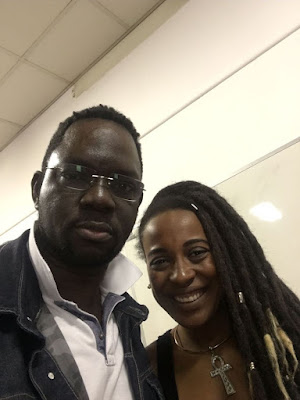
Prof Kanyitus, USP, Sao Paulo and Olaiya at the event.
A Nigerian carnival artist, painter and illustrator, Adeyinka Olaiya, also expressed the benefits the Yoruba language would bring to the Brazilian culture if fully integrated into the Brazilian educational curriculum.
According to Olaiya, living in Salvador, Brazil, is like living in any of the western states of Nigeria where the Yoruba are predominantly located.
He said, “Most of the cultures and traditions in evidence in Brazil are all of the heritages brought along to the Latin American country by the majority Yoruba families, victims of the BARCO NEGREIROS, the NEGRO BOAT that forcefully brought the enslaved West Africans to Brazil in the 13th century. The Yoruba heritage that represents the majority of the African cultural practices in Brazil today is having several words in Yoruba roots. Akara, Dendê, Iyalode, Babalawo, Iyalawo and lots more are all derived from the Yoruba roots.”
posted from Bloggeroid
Saturday, September 15, 2018


Tuesday, September 11, 2018


Friday, September 07, 2018
YORUBA LANGUAGE GIVEN OFFICIAL STATUS BY BRAZIL OOOO!
http://www.newsmakersng.com/brazil-gives-yoruba-language-official-status-nobel-laureate-says-ifa-is-alive/ Brazil Gives Yoruba Language Official Status …Nobel Laureate Says IFA is Alive
From Oriwoegbe Ilori, Sao Paulo/

The Brazilian government has given Yoruba a pride of place among foreign languages spoken in the country.
NewsmakersNG was told in an exclusive interview with the Brazilian minister of culture, Dr Sérgio Sá leitão at the weekend in Brazil that the government has introduced the compulsory study of African History and Yoruba language into the primary and secondary schools curriculum.
The minister spoke at an event where the Institute of African Studies, University of Sao Paulo, in Brazil paraded important dignitaries including Nigerian artists and historians, as well as professors of arts and African studies at a lecture on the importance of Yoruba language in the Brazilian culture and tradition.
According to him, the inclusion of African History and Yoruba Language in the curriculum would help bring the closeness of the African Brazilian people to their roots and thus encourage the understandings of the language among other important languages in Brazil apart from Portuguese which is the official language.
The minister also mentioned the role played by Brazil during the festival of arts and culture, ‘FESTAC 77’, held in Lagos, Nigeria in 1977; the constant intercultural programmes between Nigeria and Brazil; the annual carnival of Arts, music and cultural displays featuring prominent African artists and Yoruba writers such as Yinka Shonibare, Adeyinka Olaiya, El Anatsui among many others, including the highly respected Yoruba writer, Professor Wande Abimbola.
Books of African writers present at the event.
Nobel Laureate, Prof Llosa
Speaking at the event, Peruvian Nobel laureate, Prof. Mário Vargas Llosa also made mention of the African community in Peru where the African Peruvians are settled till date.
Vargas Llosa, who won the Nobel Prize in Literature in 2010, is known as one of Latin America’s most significant novelists and essayists, and one of the leading writers of his generation.
According to Vargas Llosa, Yoruba people and their culture have helped the universe, IFA has proven his existence in the beings of mankind right from the inception and IFA is still very much alive and needs to be recognized even more than it is today.
According to Prof Mário Vargas, the Yoruba language should no longer be approached as an ethnic language but a universal language that is alive in culture and tradition of the Africans and her roots around the universe.
Speaking in Yoruba and Portuguese, Prof Katiuscia Ribeiro of the Institute of African Studies drew attention to the African philosophical practices introducing the constant representation of the Yoruba culture and religion in the Brazilian traditional beliefs.
NewsmakersNG learnt that the Yoruba traditional religion today comes after the Catholic practices as the most improving religious practices in the South American country. Several houses of worships called “ILE ASE” are having the Yoruba culture, tradition and language as official, whenever the cults are declared open for the day. Babalawo, Iyalawo, Omo Awo, and Aborisa are all common Yoruba usages in the practice of the Yoruba religion called Candomblé in Brazil.
Prof Kanyitus, USP, Sao Paulo and Olaiya at the event.
A Nigerian carnival artist, painter and illustrator, Adeyinka Olaiya, also expressed the benefits the Yoruba language would bring to the Brazilian culture if fully integrated into the Brazilian educational curriculum.
According to Olaiya, living in Salvador, Brazil, is like living in any of the western states of Nigeria where the Yoruba are predominantly located.
He said, “Most of the cultures and traditions in evidence in Brazil are all of the heritages brought along to the Latin American country by the majority Yoruba families, victims of the BARCO NEGREIROS, the NEGRO BOAT that forcefully brought the enslaved West Africans to Brazil in the 13th century. The Yoruba heritage that represents the majority of the African cultural practices in Brazil today is having several words in Yoruba roots. Akara, Dendê, Iyalode, Babalawo, Iyalawo and lots more are all derived from the Yoruba roots.”
From Oriwoegbe Ilori, Sao Paulo/
The Brazilian government has given Yoruba a pride of place among foreign languages spoken in the country.
NewsmakersNG was told in an exclusive interview with the Brazilian minister of culture, Dr Sérgio Sá leitão at the weekend in Brazil that the government has introduced the compulsory study of African History and Yoruba language into the primary and secondary schools curriculum.
The minister spoke at an event where the Institute of African Studies, University of Sao Paulo, in Brazil paraded important dignitaries including Nigerian artists and historians, as well as professors of arts and African studies at a lecture on the importance of Yoruba language in the Brazilian culture and tradition.
According to him, the inclusion of African History and Yoruba Language in the curriculum would help bring the closeness of the African Brazilian people to their roots and thus encourage the understandings of the language among other important languages in Brazil apart from Portuguese which is the official language.
The minister also mentioned the role played by Brazil during the festival of arts and culture, ‘FESTAC 77’, held in Lagos, Nigeria in 1977; the constant intercultural programmes between Nigeria and Brazil; the annual carnival of Arts, music and cultural displays featuring prominent African artists and Yoruba writers such as Yinka Shonibare, Adeyinka Olaiya, El Anatsui among many others, including the highly respected Yoruba writer, Professor Wande Abimbola.
Books of African writers present at the event.
Nobel Laureate, Prof Llosa
Speaking at the event, Peruvian Nobel laureate, Prof. Mário Vargas Llosa also made mention of the African community in Peru where the African Peruvians are settled till date.
Vargas Llosa, who won the Nobel Prize in Literature in 2010, is known as one of Latin America’s most significant novelists and essayists, and one of the leading writers of his generation.
According to Vargas Llosa, Yoruba people and their culture have helped the universe, IFA has proven his existence in the beings of mankind right from the inception and IFA is still very much alive and needs to be recognized even more than it is today.
According to Prof Mário Vargas, the Yoruba language should no longer be approached as an ethnic language but a universal language that is alive in culture and tradition of the Africans and her roots around the universe.
Speaking in Yoruba and Portuguese, Prof Katiuscia Ribeiro of the Institute of African Studies drew attention to the African philosophical practices introducing the constant representation of the Yoruba culture and religion in the Brazilian traditional beliefs.
NewsmakersNG learnt that the Yoruba traditional religion today comes after the Catholic practices as the most improving religious practices in the South American country. Several houses of worships called “ILE ASE” are having the Yoruba culture, tradition and language as official, whenever the cults are declared open for the day. Babalawo, Iyalawo, Omo Awo, and Aborisa are all common Yoruba usages in the practice of the Yoruba religion called Candomblé in Brazil.
Prof Kanyitus, USP, Sao Paulo and Olaiya at the event.
A Nigerian carnival artist, painter and illustrator, Adeyinka Olaiya, also expressed the benefits the Yoruba language would bring to the Brazilian culture if fully integrated into the Brazilian educational curriculum.
According to Olaiya, living in Salvador, Brazil, is like living in any of the western states of Nigeria where the Yoruba are predominantly located.
He said, “Most of the cultures and traditions in evidence in Brazil are all of the heritages brought along to the Latin American country by the majority Yoruba families, victims of the BARCO NEGREIROS, the NEGRO BOAT that forcefully brought the enslaved West Africans to Brazil in the 13th century. The Yoruba heritage that represents the majority of the African cultural practices in Brazil today is having several words in Yoruba roots. Akara, Dendê, Iyalode, Babalawo, Iyalawo and lots more are all derived from the Yoruba roots.”
posted from Bloggeroid
Tuesday, August 14, 2018
YORUBA OOO!- SAVE YORUBA LANGUAGE!--BBC YORUBA IS DYING!-KEEP YOUR PHONE SET ON BBC YORUBA ALL NIGHT!
Dear Omo Yorùbà,Please endeavour to click on BBC Yorùbà and stay on the site for at least 5 mins daily, either through Facebook on the web browser.Why? They are collecting statistics and the current results are not pleasant. Whilst many H/F watch and stay on BBC Hausa for 15 mins on the average, we spend seconds on BBC Yorùbà.If it persists, they'll close it down. That will be a huge loss for us - culturally, language wise and politically as global players.*Please watch BBC Yorùbà and encourage at least 5 people. Even if it is to just leave it on, for 5 mins a day.Https://www.bbc.com/yoruba
Monday, December 28, 2015
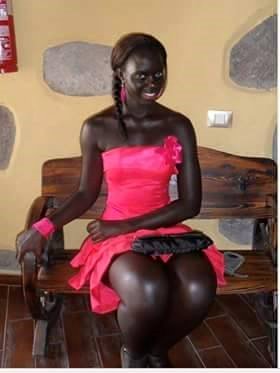
Obirin Yoruba !-FROM PuahBebo Nagatrogtaboapan's Photos on Facebook
FROM PuahBebo Nagatrogtaboapan's Photos on Facebook
https://scontent-ams2-1.xx.fbcdn.net/hphotos-xfp1/v/t1.0-0/p280x280/988773_1505274373107465_486803267333306672_n.jpg?efg=eyJpIjoiYiJ9&oh=61e91cec2fe37b60000068e7b41e16ed&oe=57185B6D
Sent from my BlackBerry wireless device from MTN

https://scontent-ams2-1.xx.fbcdn.net/hphotos-xfp1/v/t1.0-0/p280x280/988773_1505274373107465_486803267333306672_n.jpg?efg=eyJpIjoiYiJ9&oh=61e91cec2fe37b60000068e7b41e16ed&oe=57185B6D
Sent from my BlackBerry wireless device from MTN

Sunday, August 02, 2015
OYOTUNJI 000000!--A YORUBA VILLAGE IN SOUTH CAROLINA!-FROM VICE.COM
from vice.com

More than four decades later, Oyotunji persists, providing a pleasant setting for converts to the Yoruba religion to live out their spiritual lives. According to a 1995 Essence article, the village had about 120 inhabitants during its mid-70s peak. Today there are around 25, and leadership has passed on to one of its founder's 22 children, Oba Adejuyigbe Adefunmi II.
Tourists are welcome to stop by the village, which sits about 50 miles outside of Charleston, near Sheldon, South Carolina. Its atmosphere of inclusiveness and cultural education stands in stark contrast to the recent church shooting and the intense fallout that resulted nearby. By all accounts, Oyotunji is not just a place to live, but a way of life: Its inhabitants construct temples to the pantheon of spirits called Orishas and pray to them every day. Curious about the life and perspectives of these traditionalist back-to-the-landers, I traveled to Sheldon, South Carolina, to learn a bit about Yoruba culture and gain some insight into Southern life in 2015. This is what they said:


Olayatan: Technology came in. We got electricity. We got running water. But somewhere between Nixon and Reagan, somewhere in there was a kind of turnaround. The economy started getting tougher. Folks were struggling for money. Then the oracle says, OK, things are going to get really tough. And we didn't know what it meant at that time, but [he was predicting] the onslaught of drugs and crime in the city.


Topics: Oyotunji, South Carolina, Yoruba, Oba Oseijem
An Oral History of the West African Village That Has Been in South Carolina for Four Decades
By Christopher Kilbourn
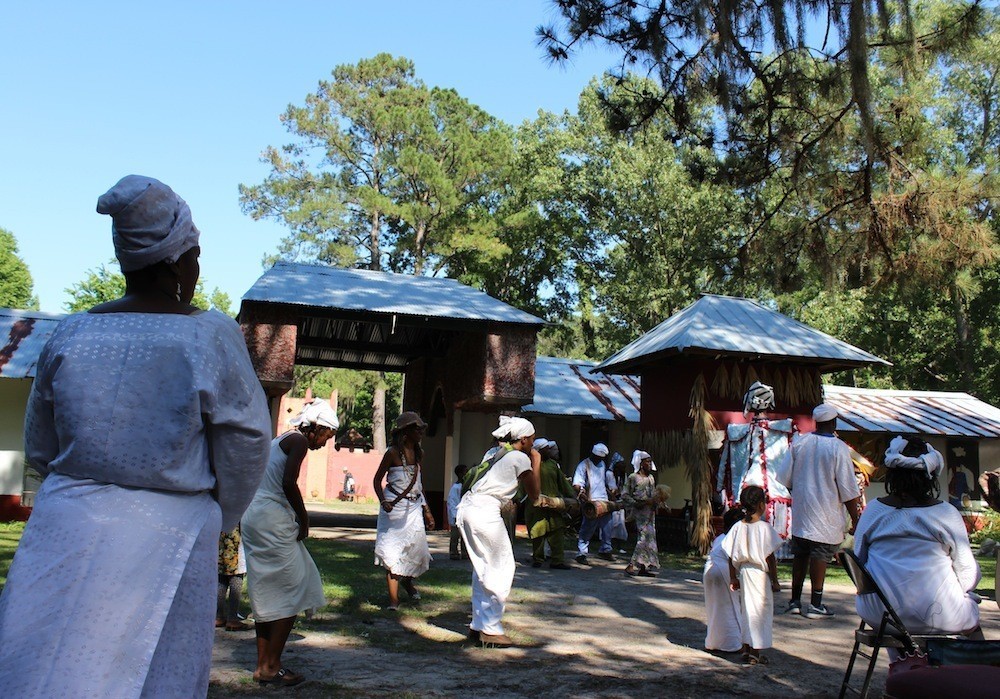
The king on his throne. All photos of an ancestor worship ceremony at Oyotunji by the author
At the tail end of the 1960s, elements within the Civil Rights Movement were having a debate about how the African-American community
at large should confront the hostile and ignorant society in which it resided. Some
advocated peaceful assimilation; others raised the idea of a violent,
apocalyptic insurrection. And a few suggested moving to rural South Carolina, establishing
a polygamous religious commune, and creating an outpost of West African culture
through regular acts of ancestor worship, animal sacrifice, and other rituals.
On VICE News: Road-Tripping to South Carolina With the 'New' KKKThis outpost is the Oyotunji African Village, founded by a man known as His Royal Highness Oba Oseijeman Adefunmi I, who in the late 60s was inspired to leave New York, purchase land in the Deep South, and establish a community born from the idea that black empowerment needed to focus on culture, not just economic independence.
More than four decades later, Oyotunji persists, providing a pleasant setting for converts to the Yoruba religion to live out their spiritual lives. According to a 1995 Essence article, the village had about 120 inhabitants during its mid-70s peak. Today there are around 25, and leadership has passed on to one of its founder's 22 children, Oba Adejuyigbe Adefunmi II.
Tourists are welcome to stop by the village, which sits about 50 miles outside of Charleston, near Sheldon, South Carolina. Its atmosphere of inclusiveness and cultural education stands in stark contrast to the recent church shooting and the intense fallout that resulted nearby. By all accounts, Oyotunji is not just a place to live, but a way of life: Its inhabitants construct temples to the pantheon of spirits called Orishas and pray to them every day. Curious about the life and perspectives of these traditionalist back-to-the-landers, I traveled to Sheldon, South Carolina, to learn a bit about Yoruba culture and gain some insight into Southern life in 2015. This is what they said:
COMING TO OYOTUNJI
Olayatan: I came for a two-week visit on
August 6, 1978. So I guess that's coming up on 37 years.
Olapeju, wife of the king: It's been about a year [since I
moved here]. My aunt was married to the first
kabiyesi ("king"—literally, "the one who no one opposes"), so my
family's been familiar with the culture for a while. I started coming down with
her a couple years back, and I fell in love with the culture, my daughter fell
in love with the culture. So we decided last year to go ahead and make the
plunge. I don't know if I'll be here forever, but I definitely am enjoying the
time that I'm here right now.
Akintobe: I heard about it in Germany. I saw
a little article in the military newspaper about a voodoo village in Beaufort [County],
South Carolina, and it showed the king sitting on a throne that perhaps he made
himself. I cut that picture out and placed it above my bed, and that's where it
stayed until I left, 30 months later. I don't know why I did it. I was
compelled by a spiritual force that I couldn't resist. And I came here in
December of '74.
Ofalaya: I met the Oba in 2003 in Key West,
Florida, when he was a prince. He came to Key West to declare one of the
beaches there an African burial ground. And I met him there. And I did some
volunteering at the African museum in Key West that he helped start. My sister's
a
Shango priest, so I wasn't
unfamiliar with the culture.
Oba Adejuyigbe
Adefunmi II
: I was born in Oyotunji in 1976, right here on the
property during a storm. And the house blew over. I remember my dad telling me
the story. And he came over there to rush and see if my mother was OK, and he
said she came crawling out holding me from under some boards.
Olpeju
Olapeju: It's
not so much a religion as it is a culture or a lifestyle. We're here to honor
our ancestors. That means I honor yours. That means you honor mine. It's a
different dynamic than just going to church on Sunday and praying.
Akintobe: This
is not part-time. Full-time. Twenty-five hours, daily. Sleeping, wake up, it's
part of you. Go to bed saying certain things, wake up saying certain things. God,
God. To the Orishas, to the ancestors, daily. All day long. Praising. Giving
thanks.
Ofalaya: After
you go through your initiation, you spend three weeks with your
Iyalosa. She would be your godparent who
helps you go through the transition of becoming initiated, becoming a priest or
a priestess. You have your physical parent or your biological parent, and then
you have your spiritual parents. One of the Orisha will be your father and one
of them will be your mother.
I have done things that I never
thought I would ever do. Like chopping wood, and not using a cell phone.
You get up at 5 AM and spend your
time with yourself, really. Because after that, until the time you go to bed,
your time belongs to everyone, and whatever needs to be done in the nation. The
farming is a big thing that we work together on. Someone weeds, someone waters,
someone plants.
Olapeju: I
have a job outside, so I also have to take into account my work schedule. But I
assist with the raking.
Olayatan: Tours
come. They invite us out for lectures and presentations. We do cultural events.
We have priests who do consultations for people. They read them and give them
counseling.
Akintobe: I'm
a priest. I've been initiated into the secret mysteries of Obatala, who is my
father. That was 1978. And then I went to the high priest of Ifa in West
Africa in 1992. And I went back again in 2000 to finish it up. So I'm
Babaaláwo, "father
of secrets."
HOW OYOTUNJI WAS FOUNDED
Oba: My dad, he was born in '28. He was
about 41, 42 [when Oyotunji was built.] He had two temples in New York, and he
was the first African American to tell black people that,
Look, not only are you African, you have a culture and a religion, and
here it is.
He said he was nothing until he ran into African culture. He
was bumping in the dark.
Akintobe: He was a man
who loved art; he was
a commercial artist. And he was a dancer with the Katherine Dunham dance
troupe. That's when he toured Egypt and Cuba, and that's when he really
got
into African culture. His mother and father came up under Marcus Garvey,
so he
came up early.
Oba: He married a European woman, a Dutch woman in
Greenwich Village. It was with [her] that he became radicalized as this African
traditionalist. And he said it was because he noticed she had a culture: They
had holidays and pageantry and all these sorts of things, and my dad was very
interested in it.
And he asked her one time, and she
said, "You don't have a culture. You don't have a religion. Because you have
not been taught it." And she opened him up. And she introduced him to a black nationalist,
Harvey. And Harvey started taking him from Greenwich Village to Harlem, and
that's when it all started. He got fired up at those rallies and speeches. Malcolm
X and Stokely Carmichael and Martin Luther King.
He said, "We've got to get out of
the city. We've got to do like they're doing in Africa. If we're nationalists,
we've got to have a land, at least." And so he started to design it. They
chipped in and bought this property here for about $500. They began to build
temples and institutions first. This is back in the 60s.
Akintobe: We
didn't have any electricity, we didn't have any indoor plumbing. [This was]
back in the 70s to '85. We were so into studying, the initiations, learning as
much as we could get our hands on, and trying to absorb and prepare ourselves
as custodians of the culture. This place was like a university.
Olayatan: Kerosene
lamps, outhouses. Wood stoves for cooking and heating. I loved the energy then.
And I love the energy now, but it's—that's the way it was then.
Oba: The
early people who came here were not builders. They were PhDs and doctors and
stuff. So they were building [houses] out of cover sheets and pallets. Not that
you can't build out of pallets, but you've got to do it right. And so the
houses leaked, and they got blown over by storms.
Watch: 'Triple Hate,' our documentary on the KKK
Olayatan: Technology came in. We got electricity. We got running water. But somewhere between Nixon and Reagan, somewhere in there was a kind of turnaround. The economy started getting tougher. Folks were struggling for money. Then the oracle says, OK, things are going to get really tough. And we didn't know what it meant at that time, but [he was predicting] the onslaught of drugs and crime in the city.
So he says, "OK, the priests have to
go out and form other communities like this." So [since the 80s,] they
have [established] shrines and temples in various parts of the country
and priests that administer
to the community. To try and let them know you can reconnect with your
ancestors and your ancestors' culture.
Oba Adejuyigbe Adefunmi II
THE NEW KING
Oba: [In
2005], I was traveling across Seven Mile Bridge [in Florida] one day and I got
a call from one of the elders. He said, "I've got to tell you something. Where
are you?" I said, "I'm over the water, the best time. Going over a long
bridge." He said, "Oh, perfect." And then he told me: "Your father passed away
this morning."
I couldn't even hear what he was
saying before my mind was racing. And I came back to Oyotunji, and I went
through three months of traditional preparation for coronation. It was the
second time that we had done it on North American soil. For three months, we
had to wear black and be secluded in the room. And we had to serve all of the
chiefs.
They would ask the spirits, How are we doing? Each day, they would
check in with the divinities, with the oracle, to find out exactly what's
needed. How's my spirit? How's my character? And so I had to feed them and cook
for them every time. Basically, they had to demean my character all the way
down from whatever I had picked up in my life.
I remember the day after
coronation, people were saying, "That didn't even look like you out there!" It
had really changed me.
And so I remember what I always
said to myself was,
I want to be able to
build Oyotunji. I want to be able to build it standard, nice.
So we've remodeled this temple
here. We did the Oshun temple down the road. We built the bathroom, the shower
house, the media center. All of these buildings here, we remodeled them. Redid
the palace. We redo the road twice a year. We've been able to just continue to
just build and build and build. The only thing we didn't redo is my house.
RACE IN THE SOUTH
Akintobe: That
young man [Dylann Roof, the Charleston shooter] just turned 21. To have such
hate. And why? Not once did he say that he was discriminated against. Nothing
of that sort. [It was] something that he just felt. That he could do it, get
away with it.
Can the stroke of a pen change the
heart of our enemy? That's the question I always ask. Passing a law? Taking
down the Confederate flag? How do you change the heart of our enemy?
Oba: America
never went into repair mode. It's always been, put a new tablecloth on the
dirty table because we've got guests. And over time, you're going to smell it
coming through the cloth.
After the Civil War was won, the Klan
would still carry the Confederate flag. So our ancestors got used to seeing the
Confederate flag not as a symbol of culture and heritage. Fuck no. They rode in
and burned your house down. That was your visual. If they came in and grew
gardens to help poor black people, it'd be a different thing. But they didn't. It
was always segregation.
If you steal a person's culture, then you stole the most precious thing that they have. –Olayatan
WHY CULTURE MATTERS
Olayatan: It's
important for us as Africans in America to know who we are, so we can know what
we have brought to the world, and what we can bring to the world in the future.
If you steal a person's culture,
then you stole the most precious thing that they have. Because that culture
talks about history, contribution, and all of those things that we as a species
stick our chests out about. What my people have done. What my ancestors have
done. And basically, Africans in America have been told,
You ain't done nothing. You ain't nothing, you ain't done nothing,
you're not gonna do nothing. Because you never did anything.
And so many of
our people have bought into that. And that's a tragedy and it's a sickness.
Oba: Europeans have to know this
culture, especially in America. You're talking about healing. Taking the flag
down and all these superficial things are not healing. Understanding each other's
culture is healing.
Akintobe: Oyotunji
is the solution. Something was missing, but I found it here. When you know
thyself, nobody can say anything to you. Once you know thyself, if you know
your historical past, your ancestral past, what your people were, what they did
before captivity... You walk with your shoulders and your head high. You've got
nothing to be ashamed about and everything to be proud of. Everything.
Christopher Kilbourn is a freelancer in New Orleans. Follow him on Twitter.Monday, December 09, 2013
MANDELA O ! -SUN RE O -BABA RERE!

MAA J'EKOLO !
Josuha P. Olatunde SO-
"Ohun tán bá ñ je l'órun ni kóo máa báwon je o"
ADELEYE OLUJIDE SO-
"KI ELEDUMARE TE MADIBU SI AFEFE !
ODIGBA Ooooo!'
Sent from my BlackBerry wireless device from MTN
Monday, February 06, 2012
9ICE LOVES YORUBA LANGUAGE AND USES IT IN HIS SONGS AND SPEAKS YORUBA TO HIS CHILDREN AND WEARS YORUBA CLOTHES OFTEN--UNUSUAL FOR A NIGERIAN HIP HOP ACT!- FROM THE NATION NEWSPAPER,NIGERIA,FEB. 2012 INTERVIEW

FROM THE NATION NEWSPAPER,NIGERIA,FEB. 5,2012
Day fellow man kissed me for five minutes —9ice
By
05/02/2012 00:00:00
Abolore
Adegbola Akande attained nation-wide acclaim in 2009 with the release of
his hit single, Gongo Aso. Hitting the top came with its storm. 9ice,
as his alias goes, talks to OVWE MEDEME on his career as a singer and
of other issues.
YOUR current album is a double; what inspired this idea of yours?
The first half album entitled Versus, is my own way of trying to bridge the gap between having a mix tape where they put my vocals alongside that of other artistes. It doesn't sound right, but people still buy them. I am doing that for all my fans who want to hear me sing alongside other artistes like P Square, Timaya, Wizkid, Tiwa Savage and the likes. The other half, Bashorun Gaa is another album entirely that talks about me and the stake that I hold in the industry.
Do you think releasing multiple albums within a year tallies with what the hip hop culture represents?
I don't even think we have anything like the hip-hop culture in Nigeria. What we have is Afro hip-hop. Hip-hop as it is varies from country to country. When we say hip hop culture in Nigeria, it is either you are rapping or you are singing which is quite different from the native music that we have in Nigeria. What we are doing here is afro hip hop which carries our own culture.
What does Bashorun Gaa connote?
Bashorun Gaa was a historical warlord in the Oyo Empire in the 13th century. And I am saying that I am a warlord in the music industry and I have a stake in the industry which lies in my use of the Yoruba language and people will forever like me for that.
What informed the choice of artistes for the Versus album?
I worked with Timaya because though he has a stake in Lagos, he is bigger in Port Harcourt and the eastern part of Nigeria. I used 80% of Yoruba in my music and if I want to get across to those from the East, the best thing for me to do is a song with one of their own. Through that, I can get into their hearts. It is a strategy. I just want to make sure that the album is accepted nationwide.
How true is it that you have a feud with your friends from Akoka, especially given their absence at your birthday celebration recently?
There was never a point in time where I had any quarrel with Cabassa. Cabasa stays in Akoka; Ajasa stays in Ikorodu, some other members of Coded Tunes (his record label) stay elsewhere. Some are even out of the country. So, you can't expect the same connectivity or association that existed then to exist now. I wasn't a family man then, now I am a family man. Cabasa wasn't married then, now he is married. He didn't have any project he was doing then, but now he has a project he is doing. He is signing on artistes and he is working well. Now we have different challenges and we have different dreams and aspirations. We established Coded Tunes because we were all together then and we lived in the same vicinity. Then we didn't have money. What we had was the talent, and so collectively, we promoted ourselves as one. Today, individually, everybody is doing well. That is why people think we are quarreling now. There is nothing like that.
But in your first and second albums, you had all the input of Cabasa. Why is the case different with this one?
That was never the case. If you get my first album, you will see that I used Puffy T and about four other producers. In my second album, I used about four producers also. The only thing is that Cabasa produces most of them. Out of about 15 songs, he produced up to 10 of them.
How much of his influence is on these albums?
He produced about two songs in the album
How would you react to the insinuations that your popularity began to wane when you stopped working with Cabasa?
I am someone that is not affected by what other people say. What affects me is what I do. If it is going to affect this album, then maybe someone should grab a copy and listen to it to know whether the songs cannot fly because Cabasa's influence is not on it. Then if you tell me now that the songs are not pure, I will go back and redo all the songs with Cabasa so that they will become hits. We need to give upcoming producers a chance too. In the past, we had about four major producers. Today, we have about 5000 producers.
How much of a family man are you?
When I say I am a family man, you should know what I am talking about. I pay school fees, I take my kids out. I know what they are feeling. If their legs ache, I will be there for them. That makes me a family man. They give me another reason to stay on earth.
Don't you think it goes beyond catering for your kids?
Tell me the other things it involves.
Living as a family for instance
That is not what it all entails. The essence of having a family is to raise children; so with or without a woman being there, you have a family. Whether you are divorced or separated, you are still a family. I am from a broken home, but here I am standing with you today. We have people that grew up with their parents together but they are nobody. It is not about a woman being in the house, you have to be responsible. Being there for your family is being responsible.
Sometime last year, you had a brush with Ruggedman; did you have to take it as far as releasing the song Talk I Am Listening?
If you had asked me that question two months ago, I would have answered but now, I am beyond that. You all know what happened. If someone abuses you or slaps you, maybe if you are Jesus you will not reply. We are all different?
In that case are you saying we should expect a reply from Chinaydu who came out to sing some nasty things about you?
No comments.
What is your relationship with Ruggedman as it is?
I am sure he is doing well where he is.
As an established artiste, what challenges do you face?
I can't do all I used to do. I can't go to places I normally went before. Besides, people now expect more from me. Now, the industry is becoming more challenging. Before, we made money from shows, now the trend is changing. Money comes more from record sales these days. So a whole lot of things are changing. My kind of music might not be played on radio but it sells on the streets.
How would you describe your style of music?
I call it one fusion because it has elements of different kinds of music in Nigeria but people tend to mistake my music for Fuji. If they call me a Fuji artiste, I am happy. There is no Fuji artiste that has not made it, so I'm happy because it is my language. At least people of all tribes are buying my records. I was once a Fuji artiste, I was once a hip-hop artiste, I was once a Juju artiste. I have Fuji and Juju background. I am someone that loves music generally and music to me goes beyond the language you sing with. It is spiritual. If you sing in Hausa and the rhythm touches me, I will so love it.
It is said that you were raised by your step mother. When she listens to your music, how does she feel?
She feels very happy. One important lesson I learnt from her is that no matter where we are, we should teach our children our language. English is not our language; we should be ashamed to use it as a major form of expression. We are supposed to be conducting this interview in our indigenous language.
With that belief and in a multicultural state like Nigeria, how do you hope to communicate with other tribes?
My fans are spread across all tribes and culture. That means I am communicating. Some of them, through me, started learning the Yoruba language. Nigeria is a diverse country but we cannot run away from each other. Through music we can learn other languages. That is the beauty of it.
Have you ever been embarrassed by fame?
Fame has embarrassed me so many times. A guy held on to my head one day and kissed me for five minutes. He is not gay but he said he loves me. That is insane. There was nothing I could do about it. Fame brings about so many things. There is the joy part of it.
What are your plans for the year?
This year, we intend shooting about 30 videos from the 35 songs that we released into the market just to promote the album. From this point, we will be doing double albums every two years, instead of one album every year. My next album release will be in 2013 and it will be another double album.
Friday, October 29, 2010
YORUBA WAIST BEADS-WORN THRU OUT BLACK EGYPT/AFRICA!

.jpg)


.jpg)
.jpg)
.jpg)
.jpg)
.jpg)
.jpg)
.jpg)
FROM THE GUARDIAN NEWSPAPER,NIGERIA- Saturday, April 25, 2009
Waist bead among the Yoruba
By Alloysius Nduka Duru
THE usage of beads especially waist bead in Nigeria is wide spread across the various nationalities that make up the nation. There are similarities and peculiarities in their usage.
However, the Yorubas developed the most varying and peculiar uses for the waist beads. The Yorubas have developed a culture of bead usage that cuts across both material and spiritual aspects of the life of the people. In addition, they have also the capacity to produce the beads for varying purposes ranging from royalty, body adornment, deification and decoration.
The Yorubas are found in the South Western geo-political delineation of present day Nigeria. They are a vibrant and social people that accentuate their ways of life in their day-to-day activities.
Beads are usually small round piece of glass, wood, metal or nut, pierced for stringing. They are either used for adornment such as the waist, neck or ankle beads or as decorative ornament in art works or even for royalty purposes.
The art of beading is serial in process and serrated in composition. It has a step by step or one by one approach in stringing when traded together, beads stands for unity, togetherness and solidarity.
Beads of the waist is said to posses the power to attract and evoke deep emotional responses, they are a sign of success and affluence as well as spiritual well being.
The Origin of the Nigerian beads is still speculative due to its fragility portability and popularity.
Beads have been traded and used since time immemorial. However, the earliest known African beads is traced to Libya and Sudan. In Nigeria the Nok terracottes and Igbo Ukwu arts display some element of the usage of beads in those societies as early as 500BC, however there is no concrete statement of origin to the beads.
A common usage of the item is for adornment especially on the waist. There is however varying purpose for which people adorn the waist beads.
The common users of the waist beads are mostly the women folk, only in exceptional theatrical perform as will a man adorn a waist bead to symbolize feminism. The waist bead is synonymous with feminism.
The Yorubas have esteemed usage attached to the waist beads. They refer to the waist bead as Ileke, "Lagidigba" the term lagidigba means something big, thick or massive. The Lagidigba is made of palm nut shells string together, while the bebe is made of glass.
The Yorubas have a belief that the waist beads posses some erotic appeal, they have the power to provoke desire or deep emotional response on the opposite sex.
Waist beads in Yoruba are also used for birth control, the beads are laced with charms and worn by the women to prevent conception.
Beads are a precious ornaments to the Yorubas, hence when adorned by a women, accentuates her feminism or beauty. Beads also helps to portray the chastity of a maiden or women sensuality. Parent show their love for their girl child through gifts of waist beads that are colourful and expensive.
The lagidigba or palm nut shell beads is used for fecundity purposes. The nuts signify multiple births as they are in clusters, thus one can infer the high incidence of multiple births in Yoruba land to the usage of the lagidigba bead.
Brides seduce their spouses with the beads they adorn, some women are said to lace their beads with charm to make them irresistible to the male folks. The Yoruba's can easily comment on a women's moral standing in those days by interpretation of the movement of the waist bead adorned by a women. The way she moves her buttocks can depict her morals either seductive or reserve.
The Yorubas have a popular saying that "it is the beads that makes the buttocks to shake".
Other users of the waist beads in Yoruba land are the Orisas or devotes of water deities and other priestesses, they adorn the waist beads for protection against spiritual attacks as well as part of their dress regalia.
The waist bead is also used to adorn the Ere-Ibeji figurine on the death of a twin, there is the belief that when treated well the spirit of the spirit of the dead twin will not harm the living twin and will return to the family to stay.
Waist beads are also adorned and laced with charms to ward away the Abiku spirit (mermaid Spirit) from a woman.
Because of the regard on the waist beads, some erotic songs have been composed and sang by the Yorubas based on its usages.
A Song Says
"She goes up
She goes down
Like buttocks beads.
Another song says;
Don't flirt with me
Don't flirt with me as you do with your husband.
Don't wriggle your waist beads at me
Don't lock the door on me and throw
Away the key.
Apart from the Yorubas, other groups in Nigeria also have similar usages of the waist beads in their culture the Ogonis in Rivers State refer to beads as Loo, its uses range from covering the private parts of a women to adornment as a sign of affluence. The beads is a measure of value to the Ogonis and are also worn by bride as part of her bridal rites. The Igbos called it Mgbaji, also for adornment and a sign of social status.
The Hausas refer to it as Jigida. To the Kalabaris, the waist bead has the potency of transforming an ugly woman into a beautiful maiden once it is worn. The Ibibios see it as Nkwa-Isin, they adorn it on a female baby to help give her a good waist line, as she grows, beads of her size are adorned on her.
Priestesses of deities also wear the beads that are always colourful as part of their regalia. They also use the waist beads laced with charm s for birth control. The maiden dances (Aban) also wear the beads doing dance to give a graceful hip movement when they dance.
Waist bead in today's fashion is relegated, ladies have a preference for western costumes such as belts, chains, g-strings to the waist beads. The culture of waist bead is going down rapidly to extinction. Religion and other spiritual reasons have been adduced for the neglect, however it must be pointed out that waist bead usage as practiced in the past is an essential element of African body adornment that is harmless and meaningful a pride and precious item which should be encourage to day.
Nduka Duru discussed this topic with National Museum Study Group, Port Harcourt recently
© 2003 - 2009 @ Guardian Newspapers Limited (All Rights Reserved).
Powered by dnetsystems.netdnet®
77777777777777777777777777777777777777777777777777777777
FROM wazobaa.info
GIRLS GO NAKED TO SHOWCASE BEADS
She is a pretty young girl with a slim graceful figure. Her elegant movement attracted the attention of passersby as she jiggled across to the other side of the road. Her waist beads were well revealed between her skimpy top and skirt. Mindful of the attention she had generated in the ever-busy Ketu Bus-Stop, Lagos State, Nigeria, she quickly climbed a commercial bike popularly called okada, trying in the process to pull her top and miniskirt together as they went further apart between the beads. A male petty trader beside her shouted, “Wetin you dey hide? Why you no go naked make we see your ‘thing’ well well?” Vividly embarrassed she tapped the bike rider and said, “Please get me out of this place.”
The above ‘drama’ and similar ones are common scenes today in Nigerian cities as well as towns particularly where higher institutions are located, particularly in southern parts of the country. This re-emergence of beads has added a new dimension into the craze for Western oriented fashion among our ladies particularly young ones. This trend is more pronounced among female students, particularly those in higher institutions. In addition to waist adornment, ladies also use beads as necklace, for hair tie, and handbag decoration. Some also wear beads on their wrists as hand bangles, as well as using them as earrings. The popularity of beads today is enhanced by the cost of acquiring them. A survey conducted by this reporter shows that beads averagely cost between one hundred and fifty naira to two thousand naira, depending on the quality, size, length and quality of string used in making them.
Madam Grace Benson, the proprietor of a fashion shop with inscription “MAMA ONOME BEAUTY PALACE” at Balogun Stret, Lagos Island, Lagos, was busy attending to her clients when this reporter visited her shop. When she was asked how ladies patronize her beads she simply said, “Fine, as you can see beads are in vogue now, so we are selling well well.” When asked to comment on why young ladies go for beads, she said, “Beads make ladies look fine, beads bring out the natural beauty in women. It is good, not just because of beauty, but a way of introducing our culture into the modern fashion.” On the moral implications of the manner in which some ladies expose the sensitive parts of their bodies to show-off beads, she refused to comment, saying, “I am busy, you can see my customers are waiting for me, I have to attend to them.”
However, 62-year-old community leader and retired civil servant, Mr. Idowu Bakare, described the trend as unfortunate, “This shows the level of moral decadence in our society. I can’t imagine seeing these small girls going about almost naked in the name of displaying beads worn around exclusive areas of their bodies. I blame the parents because I can tolerate such in my house,” he said. “It is a curse for any one to link our culture to this madness. Various cultures in Nigeria used beads to dignify womanhood. No time did our culture led women naked in the name of displaying beads,” he added.
“When I put on beads I look more beautiful”, a student of Lagos State University, Funke Ekerin, said. When asked the fun she drives from the beads on her waist she simply replied, “It is in vogue now, ladies fancy waist beads much, and even men who want to be truthful will tell you that they admire ladies with beads on their waists.”
A teenage girl who simply identified herself as Cynthia, said, “A correct Chic cannot wear beads without wearing it on her waist; that is the one that makes us more beautiful.” On the moral implications, she said, “Well, if any man feels that it is seductive he should remove his eyes from it; after all, it is my body, nobody will tell me what I should do with it.”
Tuesday, October 19, 2010
YORUBA!-LET'S SAVE IT BY USING IT-IN OUR PLAYS,WRITINGS,SPEAKING,SPEAKING IT TO OUR CHILDREN ONLY AS THE LANGUAGE AT HOME!-FEMI OSOFISAN HAS TRANSLATED THIS PLAY INTO YORUBA SO THAT THE LANGUAGE WILL NOT DIE!
FROM speakyoruba.blogspot.com
originally published at
thenationonlineng.net

originally published at
thenationonlineng.net
Tuesday, October 19, 2010
YORUBA LANGUAGE IS DYING SO WE MUST ALL USE IT EVERYTIME WE CAN,SPEAK IT TO OUR CHILDREN AT HOME ONLY,WRITE IT,TRANSLATE PLAYS INTO IT,CLEAN UP OUR YORUBA FILMS WITH NO MIXTURE OF ENGLISH IN THEM!-FEMI OSOFISAN HAS TRANSLATED THIS PLAY INTO YORUBA AND THAT IS WHAT WE MUST DO TO BRING BACK THE MOTHER TONGUE AS NUMBER ONE IN OUR LIVES!
from thenationonlineng.net

Old play, new language
Font size: Edozie Udeze 17/10/2010 00:00:00
Who is Afraid of Solarin? a play by Professor Femi Osofisan, has always been a symbolic one. It is so because it is a comic treatise on what makes Nigeria and Nigerians unique. In the play, Osofisan uses plenty of comic scenes and statements to portray the story of a society where things work upside down. The name Solarin is used symbolically because of his role in trying to give a better direction to Nigerians and to the Nigerian state. The play chronicles Nigeria’s many socio-political problems in such a way that the audience are made to feel the impact while the play is on stage. You can’t help but laugh and hiss and then wonder the sort of society Nigeria is and why the people are what they are.
This was why it was selected as the independence play this year by the trio of Mufu Onifade, Tunde Kelani and the Lagos State government. However, the play which was translated into the Yoruba language by Dotun Ogundeji as Yeepa! Solaarin Nbo!!, is meant to send home the message to the larger Yoruba theatre audience.
In this new experiment, the message is supposed to sink deeper, so that people who love to see the lighter side of Nigerian myriad of problems dramatized on stage, would have a better view of it. The few days the play was on stage in Lagos last week proved that a lot of people were really eager to laugh away the problems of the society. Not only that the artistes led by Ropo Ewenla were on top of their game on stage, the large turnout of theatre lovers showed that the choice of the play was apt and appropriate.
To make the play appeal more to the audience, the producers introduced an opening glee. This marriage of convenience between opening glee and full-length drama presentation was Mainframe and National Association of Nigerian Theatre Arts Practitioners (NANTAP) Lagos chapter’s synergetic way of joining the Lagos State government in celebrating the 50th independence anniversary of Nigeria. This way, there was no moment of boredom. The artistes were able to appeal to the audience to wake up to the realities of the moment; to make Nigeria great.
Is this Nigeria of our dreams in 1960? That seemed to be the question raised on stage by the actors. Ewenla, the lead character was able to convince the audience that we need to do more; we need to work harder and be more honest to make Nigeria a better place for all and sundry.
Yeepa! Is an exclamation that something hilarious or ominous is about to happen and that people should sit up to welcome it. This situation calls for an acclaim, calling the Nigerian people that there are more than meet the eye. Solarin was an enigma of some sort when he was alive. Although the name is hyperbolic in a way, it goes to portray a visionary leader who saw long before now what the Nigerian society portended. Now the play in his name says it all.
Anywhere this play goes on stage, the euphoric appeal it gives leaves much to be desired. The Yoruba version of it also did much more; the message seeped deeper into the fabric of the audience whose laughter and hisses tore deep into the night. And so, it is kudos to Onifade for his sense of humour and wisdom. The play truly helped to embellish the mood of the moment and bring Nigerians back to that moment of reflection.
Share this Article: del.icio.us Digg Technorati Facebook
Comments (0 posted):
MY COMMENT I AM TRYING TO POST BUT IT'S NOT GOING!
Your name: Your e-mail address: Your website: Add your comments: YORUBA LANGUAGE IS DYING ALONG WITH OTHER NIGERIAN/AFRICAN LANGUAGES SO WE MUST DO AS MUCH OF THIS AS POSSIBLE-USE THE MOTHER TONGUE FOR ALL PLAYS,EVENTS,PUBLICATIONS THAT YOU CAN AND SAVE AFRICAN LANGUAGES! TAKE CARE OF YOUR MOTHER TONGUE LIKE OTHER SELF-RESPECTING PEOPLE IN THE WORLD DO-IT IS YOUR FIRST LANGUAGE, NOT YOUR SECOND AND GOD GAVE IT TO YOU SO CHERISH IT,SPEAK IT ONLY IN YOUR HOME TO YOUR CHILDREN AND LET OUR MOTHER TONGUE LIVE!
Old play, new language
Font size: Edozie Udeze 17/10/2010 00:00:00
Who is Afraid of Solarin? a play by Professor Femi Osofisan, has always been a symbolic one. It is so because it is a comic treatise on what makes Nigeria and Nigerians unique. In the play, Osofisan uses plenty of comic scenes and statements to portray the story of a society where things work upside down. The name Solarin is used symbolically because of his role in trying to give a better direction to Nigerians and to the Nigerian state. The play chronicles Nigeria’s many socio-political problems in such a way that the audience are made to feel the impact while the play is on stage. You can’t help but laugh and hiss and then wonder the sort of society Nigeria is and why the people are what they are.
This was why it was selected as the independence play this year by the trio of Mufu Onifade, Tunde Kelani and the Lagos State government. However, the play which was translated into the Yoruba language by Dotun Ogundeji as Yeepa! Solaarin Nbo!!, is meant to send home the message to the larger Yoruba theatre audience.
In this new experiment, the message is supposed to sink deeper, so that people who love to see the lighter side of Nigerian myriad of problems dramatized on stage, would have a better view of it. The few days the play was on stage in Lagos last week proved that a lot of people were really eager to laugh away the problems of the society. Not only that the artistes led by Ropo Ewenla were on top of their game on stage, the large turnout of theatre lovers showed that the choice of the play was apt and appropriate.
To make the play appeal more to the audience, the producers introduced an opening glee. This marriage of convenience between opening glee and full-length drama presentation was Mainframe and National Association of Nigerian Theatre Arts Practitioners (NANTAP) Lagos chapter’s synergetic way of joining the Lagos State government in celebrating the 50th independence anniversary of Nigeria. This way, there was no moment of boredom. The artistes were able to appeal to the audience to wake up to the realities of the moment; to make Nigeria great.
Is this Nigeria of our dreams in 1960? That seemed to be the question raised on stage by the actors. Ewenla, the lead character was able to convince the audience that we need to do more; we need to work harder and be more honest to make Nigeria a better place for all and sundry.
Yeepa! Is an exclamation that something hilarious or ominous is about to happen and that people should sit up to welcome it. This situation calls for an acclaim, calling the Nigerian people that there are more than meet the eye. Solarin was an enigma of some sort when he was alive. Although the name is hyperbolic in a way, it goes to portray a visionary leader who saw long before now what the Nigerian society portended. Now the play in his name says it all.
Anywhere this play goes on stage, the euphoric appeal it gives leaves much to be desired. The Yoruba version of it also did much more; the message seeped deeper into the fabric of the audience whose laughter and hisses tore deep into the night. And so, it is kudos to Onifade for his sense of humour and wisdom. The play truly helped to embellish the mood of the moment and bring Nigerians back to that moment of reflection.
Share this Article: del.icio.us Digg Technorati Facebook
Comments (0 posted):
MY COMMENT I AM TRYING TO POST BUT IT'S NOT GOING!
Your name: Your e-mail address: Your website: Add your comments: YORUBA LANGUAGE IS DYING ALONG WITH OTHER NIGERIAN/AFRICAN LANGUAGES SO WE MUST DO AS MUCH OF THIS AS POSSIBLE-USE THE MOTHER TONGUE FOR ALL PLAYS,EVENTS,PUBLICATIONS THAT YOU CAN AND SAVE AFRICAN LANGUAGES! TAKE CARE OF YOUR MOTHER TONGUE LIKE OTHER SELF-RESPECTING PEOPLE IN THE WORLD DO-IT IS YOUR FIRST LANGUAGE, NOT YOUR SECOND AND GOD GAVE IT TO YOU SO CHERISH IT,SPEAK IT ONLY IN YOUR HOME TO YOUR CHILDREN AND LET OUR MOTHER TONGUE LIVE!
Subscribe to:
Posts (Atom)