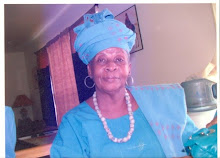
"THE BLACKER THE BERRY THE SWEETER THE JUICE/
I SAY THE DARKER THE FLESH,THEN THE DEEPER THE ROOTS!"
TUPAC SAYS

BLACK SKINNED BEAUTY SUPREME!

BLACK SKINNED BEAUTY SUPREME!

"BLACK IS BEAUTIFUL" -NEW YORK CITY STREET SAYING

"BLACK IS BEAUTIFUL!
BROWN IS HIP,
PUERTO RICAN IS OKAY
BUT white AIN'T S___T!"

BLACK SKINNED BEAUTY OOO!

BLACK SKINNED BEAUTY OOO!

BLACK SKINNED BEAUTY OOO!

BLACK SKINNED BEAUTY OOO!

BLACK SKINNED BEAUTY SUPREME

BLACK SKINNED BEAUTY SUPREME
BLACK SKINNED BEAUTY SUPREME!

BLACK SKINNED BEAUTY SUPREME

BLACK SKINNED BEAUTY SUPREME

BLACK SKINNED BEAUTY

BLACK SKINNED BEAUTY

Search This Blog

Pages

WE MUST HAVE A BLACK STANDARD OF BEAUTY BASED ON THE BLACK SKINNED BLACKEST WOMAN

Tuesday, July 31, 2012

OGBENI RAUF AREGBESOLA IS A PEOPLE'S GOVERNOR!-HOLDING A MEDIA CHAT/TOWN HALL MEETING/INTERNET/TV/RADIO/CALL IN PROGRAMME FOR 7 HOURS UNTIL DAYBREAK HAS NEVER IN THE WHOLE WORLD BEEN DONE AND THIS GOMINA RERE HAS DONE IT! -FROM THE GUARDIAN NEWSPAPER,NIGERIA


Ogbeni Till Day Break… media chat from another lens


MEDIA chat, a live interactive session between those in government and the citizens, indeed started in Nigeria with the administration of former President Olusegun Obasanjo. It was an innovation in governance, especially in this part of the world, where the gap between the government and the governed is as wide as the Atlantic Ocean.
It was no wonder that people welcomed it with unlimited enthusiasm and high hope that it could, to a large extent, bridge this gulf and offer them a pseudo-direct participation in governance by asking critical questions as to how their lives are being affected through the policies and programmes of the government.
Indeed, Media chat is supposed to be a mini-Village Square meeting or mini-people’s parliament where issues of common interest are raised and discussed passionately without any fear or hindrance. During chief Obasanjo’s reign (1999 – 2007), a number of such sessions gave very few privilege Nigerians access to their president.
In the last 14 months of serving duly elected president of Nigeria, Dr. Goodluck Jonathan has had two media chat sessions.
From Obasanjo to Jonathan, the media chat were nothing but a monologue. Participation by Nigerians was highly restricted, questions were not only evaded, the language, at times, was contemptuous and laced with disdain for ordinary Nigerians who the forum was supposed to have been arranged for. If from the definition of the presidency, a people-oriented Media Chat is not possible, Osun State Governor, Ogbeni Rauf Adesoji Aregbesola has put a lie to this in a recent media chat he organized in the state capital Osogbo, which was televised all over the world.
Tagged, Ogbeni Till Day Break, the session was was not only unique, but it has given birth to a new template of bonding with the electorate. Besides, it has also placed the governor as a new phenomenon in governance. This is because the conceptualization of the forum was not just un-paralleled, not just in Nigeria, but probably in Africa, glaring was the scientific approach adopted ensuring that everybody that was so interested could easily participate; where you had no intention to participate, you could be hooked on un-consciously. All the state’s three television stations (OSBC TV, Osogbo; New Dawn TV, Ibokun; and Reality TV, Iwo) and its two radio outfits gave a live broadcast of the show.
In effect, what it means is that if you were in Osun State that day, and you tuned to any of the state broadcasting stations, what you were going to get was the media chat. If you could escape it on the state’s broadcasting station, you might not likely to be able to totally escape it as some broadcasting stations outside Osun, hooked on to the show throughout the duration.
These stations were Lagos State Television, which now has a global reach and the privately owned Television Continental. As if that was not enough to make most people conscious and un-conscious participant, the show was also run live on DStv.
With the programme, which he promised would be quarterly, the governor did not only set the pace, he had indeed raised the template, he had set probably a world record of staging a Media Chat that lasted for seven hours and 12 minutes. The programme started at exactly 10.10 p.m. and ended at 5.22 a.m. the following day. There was only 30 minutes of cultural-musical interlude, where the governor danced and broke a record that would have in the old Oyo Empire earned him an instant wife.
From Obasanjo to Jonathan, the record never exceeded two hours. The Ogbeni media chat had another record of receiving 40 telephone participation-calls, 500 e-mail of questions and 2,185 missed calls. This was no doubt a record that is incomparable with the record of number of callers in all the Presidential Media Chats staged from 1999 till date. The last and recent one by President Jonathan had an abysmal record of less than three callers.
The significance of the over seven hours duration was that those who had slept before the commencement of the show indeed woke up the following day to still meet it, just as those who came in late in the night met it. Another feature of the Osogbo package is that it was not a close-panel show, where less than five selected journalists, including the anchor-man dominated the presidential show for more than 95 per cent.
In the Ogbeni’s show, there were three categories of journalist-participants. There were journalists who were based in the state, correspondents representing the various media houses in the country. There were journalists invited from outside Osun State, particularly from Lagos, where majority of newspapers are based.
There were also correspondents of some international media houses. Among these were BBC and a South African-based TV station. Talking about openness of the show, it was held at the main auditorium of the Centre for Black Culture and International Understanding (CBCIU) in Osogbo, which has capacity for over 1,500 seated-participants. The seats were fully occupied while so many others had to find places to stand. It was a People Assembly, not just a Media Chat.
Apart from the journalists, who numbered over 30, a sizeable number of the listener-participant audience asked various questions. Indeed, it was not only Ogbeni that was awake, the state was literally awake from dusk till dawn reflecting its title, … till day break.
And the credibility of the programme could be deduced from the governor’s refrain: “ask me question, probe me, judge me.”
Author of this article: By Biodun Fanoro

Monday, July 30, 2012

FEMI KUTI IS A BLACK TRUTH TALKER LIKE HIS BABA FELA!- BLEW THIS BBC REPORTER AWAY WITH HER IGNORANCE OF AFRICAN ECONOMICS-FROM TELL MAGAZINE NIGERIAS

FROM TELL MAGAZINE

The BBC Shooting Itself in the Foot

By BEN LAWRENCE


Musician Femi Ransome-Kuti avoided being trapped by Bretton Wood’s agents in his recent conversation with Zeinab Badawi on BBC’s “Hard Talk” slot. He acquitted himself creditably and did not collapse to singing the tune of those zombies – IMF’s professors – who parade the corridors of power in Nigeria, as he dealt with misleading questions by the BBC’s interviewer. Badawi asserted that President Goodluck Jonathan was improving the people’s lot as certified by the IMF and that the removal of subsidy from petrol was for the general good. How uninformed those foreign-based African journalists, welfare cases, who serve the interests of their principals unreasonably! Should she have made such a categorical statement without facts about growth in Nigeria? Well, Elizabeth Ohene who got into favour with the British by deriding Osagyefo Dr Kwame Nkrumah at every turn in Ghana, rose to be BBC’s deputy editor of Network Africa which has been steadily deteriorating in the last 10 years that Robin White quit the stage. It now presents the worst types of news of readers and of presenters. One could pardon errors of possible inflexion in reading news in English but not that of phonetics and phonology. The grammar of presenters, like Akwasi Sarpong’s is awful.   Peter Okwoche is not better.

The issue is the subtle support BBC’s staff give to capitalism a la Margaret Thatcher and Ronald Reagan, which has plunged the world into economic chaos, except for some eight years that Bill Clinton reversed it until a worse apostle, George W. Bush, came on the scene to take the world deep into depression. It is now worse than the one suffered under his father’s watch.

Femi Ransome-Kuti gave pride to the memory of his grandfather, Israel Oludotun Ransome-Kuti, as he demolished all attempts by Badawi to justify that things were now rosy in Nigeria. How gratuitously can one sell one’s ignorance as Badawi displayed on the subject!

Femi said that in the 1970s, to be deprived of electricity in Nigeria for two hours was treasonable. Now, Nigerians, even in their new capital, Abuja, do without electric power for days.

Up till the late 1980s, Nigeria was an industrial power in Africa, serving the region’s needs in producing secondary goods. That has collapsed. Until the mid-1990s, Nigeria produced all the petroleum products for local use and for neighbours. It now imports petrol and other products from Benin, Togo and Ivory Coast. What has Jonathan done to alleviate this scourge of scarcity though Nigeria has four mighty refineries that now produce nothing?

Has he repaired the refineries to meet our needs? Must we import petrol? Who are these beneficiaries of the subsidy regime? Were they not the supporters of his campaign? Aliko Dangote opened one mighty cement factory manned mainly by Chinese workers. What has happened to Nkalagu, Ukpilla, Gboko and others that have been rendered moribund by bad government policy of the wholesale privatisation that the likes of Badawi are made to canvass for their principals?

Millions of Nigerian young men and women are estimated to be jobless. What has Jonathan done to scratch the surface on the subject of full and gainful employment with all the industries in Nigeria lying fallow, also from bad government policy? Visit Ikeja, Iganmu, Ogba, and Otta in the South-west kand see the damage the IMF and World Bank’s agents have done to Africa. Madam Badawi does not know that the names of the World Bank and IMF stink in Nigeria. Justifiably, Nigerians regard them as enemies as Dennis Healey, Britain’s Chancellor of Exchequer under Harold Wilson, once described them. Mrs Ngozi Okonjo-Iwealla, Jonathan’s economic miracle worker, is treated as a national youth service corps intern by those who planned the fortune Nigeria enjoyed in the 1960s, 1970s and part of the 1980s, that period of old that was egalitarian  paradise. No policy can work without the mobilisation of the people. Nigerians do not know what Jonathan stands for, except that he still pursues the rot left behind by Olusegun Obasanjo and Atiku Abubakar, two agents of the IMF’s privatisation project that set Nigeria back. It is gratifying that the court has just reversed the swindle   of the sale of the Aluminum Smelting Company that the government spent billions of dollars to establish. It was one grievous bodily harm done to Nigeria to have sold a company worth $2 billion for $245 million! It was Ibrahim Babangida, earning $8 per barrel of oil, who established that company. How many were built under Obasanjo’s laisez faire regime? He sold it when Nigeria earned $100 per barrel from crude. It will be repeating oneself to speak of the illegalities of the sales of corporations established by acts of parliament and decrees for a song.

The National Assembly should take further steps to return the Nigeria Airways and other affected corporations to their old status. How can there be growth when Nigeria’s industrial life is comatose? The only thing Nigeria sells today is crude oil. She does not even enjoy the benefit of its derivatives. If we must ask, what is the octane rating of imported petrol from Ivory Coast and Benin? The Dana airline’s crash was said to have been caused by corrosion of its engine by impure fuel. Vehicles, machines and other plants that use imported fuel, have suffered from government incompetence. BBC has shot itself in the leg.

Femi really made his grandfather proud in his face-off with with Badawi, – a grandfather, who disagreed with the British in 1934 and caused the Yaba Higher College to be founded and in 1948 forced the University of Ibadan to be established.  Nigeria must terminate this one-line chorus of “no government in business’’ because China, a command economy, has disproved that crazy talk. Germany is not laisez faire and it leads Europe.

Latest from Ben Lawrence

Wednesday, July 25, 2012

NGUGI FIGHTS TO SAVE AFRICAN LANGUAGES AND WE MUST TOO! STOP MIXING YORUBA WITH ENGLISH!-SPEAK YORUBA,YOUR AFRICAN LANGUAGES IN THE HOME TO YOUR CHILDREN ONLY!

from the PUNCH NEWSPAPER,NIGERIA
 Ngugi laments dying African indigenous languages

Ngugi laments dying African indigenous languages

Popular author, Prof. Ngugi Wa Thiong’o, has lamented the rate at which Africans are abandoning their indigenous languages for foreign languages, saying this trend is tantamount to self-enslavement.
Wa Thiong’o said this on Monday while speaking at the second edition of the Read Africa initiative of the United Bank for Africa Foundation to promote reading culture among pupils in Lagos.
According to him, most Africans are neglecting their indigenous languages in preference for foreign languages, noting that this trend was dangerous for the sustenance of Africans and their traditions.
He noted that Africans who have the mastery of other people’s languages at the expense of their own indigenous languages have subjected themselves to “second slavery.”
The Kenyan writer, who teaches at Yale University, added that those who were proficient in their indigenous languages and added mastery of other foreign languages had truly empowered themselves.
The writer of the popular Weep Not Child, warned Africans against killing their indigenous languages, noting that the consequences of this would be too much to bear.
“For me, enslavement is when you know all the languages of the world but you don’t know your own language. Empowerment is when you know your own language and you add other languages to it. We should promote our languages. We should encourage our children to speak our own language,” he said.
The author, who was accompanied to the formal inauguration of the second edition of the Read Africa by his 17-year-old son, Thiongo Ngugi, said he stopped writing in English Language about 10 years ago, to spearhead this campaign.
“I stopped writing in English Language 10 years ago because Africa is our base and we must not lose our base and our indigenous languages. Since then I have been writing in Nkiyu language and I later do translation myself or I look for somebody to do it for me,” he said.
Addressing the audience including pupils and top officials of UBA led by the Group Managing Director, Mr. Phillip Odoza, the writer called for the development of young African writers.
He, however, told the pupils that they should cultivate a robust reading culture if they hoped to become good writers.
“Reading is an integral part of imagination and without reading your imagination will shrink. It’s like food, when you don’t eat, your body will shrink and when you don’t feed your spirit with religious books, your moral value will shrink,” he said.
Wa Thiong’o, who said he wrote his first two books within his first two years in college, urged the students to start writing now.
“See yourself as a person first before you see yourself as a student and don’t think you are too small to write, start now,” he said.
Earlier, the Chief Executive Officer of the UBA Foundation, Miss Ijeoma Azo, had explained that the foundation would distribute Wa Thinog’o’s Weep Not Child freely to all secondary school pupils across Africa to promote reading.
   
Read 168 times

  • Tope July 24, 2012 at 3:53 am
    When i was in secondary school we were told not to speak yoruba in school or we will pay a fine of 10 naira, but as for me i spoke yoruba and when taking to my class teacher because i refuse to pay i will tell her jokely that does the chinese speak english in school or does italy speak yoruba or english in school and she will just laugh and realise me.
  • Chidi July 24, 2012 at 5:14 am
    And this applies also to going back to the only assurance of our daily bread – farming! Remember the age old song: Iwe kiko, lai si oko (ati ada), ko i pe o!
  • Albert July 24, 2012 at 5:30 am
    Yes it is very good to speak our native language
  • Bamigboye Ilesanmi T. July 24, 2012 at 10:24 am
    it is gud to preserve our native language, Africa is our father land not foreign country, let’s embrace our language b/4 wil think of official lang.
  • Kingsley Fergie July 24, 2012 at 9:08 pm
    An excellent Author with a well designed and narrated food-for-thought,very useful 4 some of us who are not married yet
  • Kingsley Fergie July 24, 2012 at 9:10 pm
    I am proud of James Ngugi Wa Thiongo,i read his book in my JSS3 Literature Days,where I charactered Njoroge in d school play,always close a Mwihaki;Weep Not Child,Weep Not,My Darling,With these kisses let me remove ur tears,d ravening clouds shall not yet overflow ,they shall not yet possess the sky;Nigeria must copy from this advice,not as our children do these days,by going 2 cosmopolitan cities,and 4getting their very roots dat made them.Of Course,Europeanization,Civilization,has made d afrocentric man nuts,bt its a food -for-thought especially for some of us who are not married,yet!
  • Yeye Akilimali Funua Olade July 25, 2012 at 11:56 am
    AFRICANS ARE KILLING THEIR LANGUAGES FIRST BY MIXING THEM FREELY WITH ENGLISH,AS THE YORUBAS HAVE DONE AND COMPLETELY FINISHED THE LANGUAGE,AND TWO BY NOT SPEAKING THEIR MOTHERTONGUE IN THE HOME TO THEIR CHILDREN! THIS MUST STOP! A VERY GOOD SOLUTION IS TO HAVE BEST YORUBA SPEAKER CONTESTS BY ALL SCHOOLS,CLUBS AND BUSINESSES SO THAT CASH PRIZES WILL BE GIVEN PEOPLE WHO CAN SPEAK THEIR MOTHERTONGUE WITH OUT MIXING! AS ANAMBRA STATE HAS DONE ALL AREAS MUST HAVE BILLS TO PRESERVE THEIR LANGUAGES FROM PRIVATE SCHOOL LEVEL UP!

    ^^^^^^^^^^^^^^^^^^^^^^^^^^^^^^^^^^^^^^^^^^^^^^^^^^^^^^^^^^^^^^^^^^^^^^^^^^^^^^^^^^^^^^^^^^^^^^
     FFROM ALLAFRICA.COM

    Nigeria: I Prefer Indigenous Literatures - Wa Thiong'o

    Lagos — Ngugi Wa Thiong'o is distinguished professor of English and Comparative Literature and director of the International Centre for Writing and Translation at the University of California at Irvine. A Kenyan writer of Gikuyu descent, Ngugi is the author of various novels such as Weep Not Child (1964), The River Between (1965), A Grain of Wheat (1967) and Petals of Blood (1977). In 1980, Ngugi published the first modern novel ever written in Gikuyu called Devil on the Cross. Ngugi's critical works include Homecoming (1972), Detained: A Writer's Prison Diary (1981), Decolonizing the Mind (1986) and Moving the Center (1993). As a novelist, playwright and critical thinker, Ngugi has dealt with the concerns most affecting his native Kenya including issues of colonialism, nationalism and post-colonialism.
    He has severally recommended to African writers to develop indigenous literature. His claim is that African writers need to write in African language in order to project her rich culture to the whole world. No wonder he prefers to read literatures written in his local language, Gikuyu.
    In his response to what his thoughts are about contemporary fiction in Kenya and the more recent texts in Gikuyu that have had an impact on him, he said, "There are several writers who now write in Gikuyu. Ms. Waithira Mbuthia is very prolific. But so is Gitahi Gititi, now a professor of English, but writing in Gikuyu. Mwangi Mutahi is another who has published three novels in Gikuyu. There is also Gatua wa Mbugua, a poet and a scientist. He has just completed and successfully defended a scientific thesis written entirely in Gikuyu for the Department of Crop Science at Cornell. There are many more. Most of these writers are contributors to the Gikuyu language journal, Mutiiri, originally based at New York University, but now at the University of California Irvine."
    During the late 70's, his commitment to art and community led him to form communal theatre groups in villages, which showcased some of his most indicting plays. These works portrayed the political corruption of post-colonial life in Kenya and the people's struggle to define an identity despite years of harsh political and social transitions. In 1977, Ngugi was arrested for his involvement with the communal theatres. While in prison, Ngugi reflected on the urgency in forming a truly African literature and at the same time wrote Devil on the Cross on prison- issued toilet paper. He subsequently would abandon English for his native Gikuyu for all his future novels. After being released from prison, Ngugi lost a university position and his family suffered from constant harassment. In 1982, Ngugi left Kenya and has been in exile ever since. Ngugi Wa Thiong'o is the recipient of numerous awards including the Paul Robeson Award for Artistic Excellence, Political Conscience and Integrity (1992); Gwendolyn Brooks Center Contributors Award for Significant Contribution to the Black Literary Arts (1994); Fonlon-Nichols Prize (1996); and the Distinguished Africanist Award by the New York African Studies Association (1996).


Friday, July 20, 2012

AZEEZAT IS A BLACK SKINNED BEAUTY WHO SINGS HER HEART OUT IN NIGERIA!-THE NATION NEWSPAPER,NIGERIA

FROM THE NATION NEWSPAPER

I bought a copy of my first album from a pirate —Azeezat


By AHMED BOULOR. 01/07/2012 00:00:00

Font size:


Azeezat Niniola Allen Azeezat Niniola Allen popularly referred to as Azeezat in music circles is one musician who believes so much in love. She is regarded as one of the pioneers of present day Nigerian music and she not only stands out among her peers but she is equally admired for her sonorous voice. The creative artiste opens up on her love life, marriage while also reflecting on her style among other issues in this interview with AHMED BOULOR.


WHAT has it been like thus far having a career spanning over 10 years?


My journey on the music scene actually started 13 years ago to be precise. It has been a long journey with a lot of ups and down; it has also been mixed with a lot of fulfilment and blessings. There have also been a lot of challenges and triumphs; it is a long story filled with lots of experiences which has made me who I am today.


What has been your highest point in the last 13 years?


I cannot really place a finger on a particular high point in my career for now because I have received a lot of awards and recognition over the years. I have also gotten commendation from a lot of people too; what you sometimes call your high point may vary because the definition of my high-point may vary from yours. All I can say is that, I have had so many high points in my career and it would be unfair to just mention one of my high moments.


Are you a satisfied artiste?


The truth is that I cannot sit back and analyse and make it seem as if my career has ended. I am still trying to muscle my way into the industry after the short break I had; I still have a lot of things that I am working towards. There have been lots of achievements in 13 years; there have been open doors and the perks that come with being an artiste in the Nigerian music industry.


How would you describe your evolution as an artiste in the last 13 years?


I was a small girl when I started and besides the career, I have also grown in stature and experience. I had dreams which have been fulfilled and I have also experienced situations which I never thought will take place. It has been a long change process which has overtime made me evolve into the artiste that I am today. I have been able to put smiles on the faces of music lovers over a period of time especially at a time when young girls who did music were considered as never-do-wells. I was an undergraduate when I started doing music and ensured I finished school before plunging headlong into the world of music. People like me are considered as the pioneers of modern day Nigerian music and I am glad to be part of that golden generation.


What are the challenges you are faced with in trying to catch up with today's music?


I am more about the message; I am more about getting an important message across to music lovers. But today's music is all about dance and trying to infuse that into my songs has been a challenge on its own. Being able to understand the music terrain and the dynamics of music promotion, and learning tricks of what makes a song a hit is another challenge on its own too. Sometimes, it is not the rave that is the in thing; it is the make-up of the artiste that really matters. The blend of certain things in your psyche is the basic work; it is what you have in your bag of tricks you can produce. Being able to blurt out the fact that people see you as old school and the ability to adapt to present day musical trends is really challenging.


Should we expect an infusion of dance and current music trends in your works?


Yes! I have tried my best and I have come to discover that I cannot do music that I do not believe in. I cannot do music that people cannot vouch for because people have come to discover that my music is all about my message. My current efforts are a blend of the old and new; my fans should expect dance songs on my forthcoming album.


Would it be okay to sum up that your style was influenced by your upbringing?


Definitely! You know girls will be girls and when you are younger, you come across a lot of things and you are tempted to try some things as a young girl just because you want to blend in. You later learn your lessons in the process of growing until you discover yourself and your personality. My upbringing and training did not require me to be flamboyant and catchy to the eye in the manner in which I present myself. There is one person I really admire on the movie scene because of her simplicity in appearance and that is Genevieve Nnaji. She has redefined her style; she is very simple any yet classy and she always comes out on point. I learn a lot from a lot of people and what I learn from them informs what I do because I want to add value to my trade and personality.


What informs your style, especially your hairdo?


I was trying to find an outstanding identity that would not be imitated by anybody. That was why I initially settled for the long thread hairstyle which is known as shuku andkiko. I initially saw a sample that inspired that hairstyle and I discovered that it really made me look African. It wasn't something that was easy to achieve and sustain over the years because I went through a lot of pains to achieve it. There was a time I stopped and decided to start all over again because people had come to know me by that hairstyle. My hairdo works for me at the moment; it defines me and it is a blend of me of old and in present times. My new looks aptly explains what I have had in my head all this while.


What past mistake would you not want to repeat again?


That would be trying to force an idea that would always come out wrong because it was by force. I have learnt to allow things to flow more naturally; I have also learnt to move with the tides and times. I have also learnt to listen more to the counsel of people who know me better so they can add more value to my career. I have come to understand that it is better to allow specialists to handle some aspects of your career. I have a stylist and make-up artiste that takes care of my looks; I just want to concentrate on doing good music while other personnel concentrate on other parts of my music career.


How many albums do you have in all?


Technically, I would say I have four albums because my fourth album is a repackaged version of my third album.


So give or take you have four albums?


Yeah! Give or take, I have four albums…


How have you been able to cope on the music scene which is predominantly dominated by hip hop artistes?


The truth is some certain things are determined by certain people and situations; I recently had a collaboration with Mode 9 and that tells you that I have decided to infuse a bit of hip hop in my music. International artistes like Rihanna, Beyonce and Kelly Rowland all infuse different genres of music in their personal albums and I am not an exception. I predominantly do soulful songs and you can't take that part of me away from the kind of music that I do. Everything else is an addition…


Which of your four albums would you say is the most successful?


It will be very difficult for someone like me to say that this album or that album is my most successful. I started music before songs became commercial and for instance my first album made headway but it was released in an era when people weren't really crazy about the kind of music that people like me were doing at the time. It was an era when the industry was waking up from the slumber caused by the military rule. So if I say that there is any other album that was more commercially viable than my first album then I will be doing my debut album a great disservice. People still remember my first single titled 'Hold On' and that song was in my first album. Funny enough, I bought that album from a pirate…


Talking about pirates, how much have you lost to them in your years of music?


It's unquantifiable! I just don't go there all the time and that is why I am happy that I was recently appointed as a board member of the copyright society of Nigeria (COSON). A whole lot of solutions have been proferred for the advancement of the music industry and it is time to start making changes. There is still so much work to be done and I am a part of COSON to effectively eradicate piracy as much as possible. It is time to allow the Nigerian artiste to go home with something. Last week, we sued WAZOBIA FM for copyright infringement and that is the first time ever that such an action would be taken. At least, that will serve as a deterrent to others.


Would you say you are a fulfilled artiste?


Yes and no! I read a lot of interviews of other people and I have learnt from some of the things they have said like I said earlier it depends on your definition as a person. It varies for individuals but in certain areas of my life and career I would say that I am fulfilled especially when I get positive comments from my admirers. I cannot really say that I am fulfilled because I am young and I have a whole lot to achieve ahead of me.


Would you be more fulfilled when you start having babies?


When I start having babies? (Laughs coyly) I am sorry I wouldn't want to answer that question…


How supportive has your husband been all these years without a child?


He has really been supportive and I want to thank him for all that he has done. I can't do anything without him. He is a strong pillar of support and I cannot ask for a better partner.


What about your in-laws? Are they not pressuring you in any way?


My in-laws are really supportive and I have posted it on social media several times. They are the best in-laws I can ever get; there are certain things I cannot talk about but all I can say is that I have the best in-laws in the world.


How did you meet your husband?


We met at a talent hunt competition and that was 13 years ago; it was through my husband that I got into music. The competition was a winner-takes-all affair and was so distraught when I didn't win. After the competition, he walked up to me and told me we can work together and take my career to the next level and the rest like they say is history.


What made you fall in love with your husband?


I can't really tell why I fell in love with him, but I can say that I have a lot of respect and admiration for him. We recently celebrated 10 years in marriage and my life started the day that I met him. In a lot of ways he has helped to make my career a success and what people see on the outside today is as a result of his hard work.


10 years in marriage; what's your greatest wish?


(Pauses and laughs) Nice one! (Laughs really loud again) That's a nice one but if you ask me, that's between me and my creator…

Thursday, July 12, 2012

OUR BLACK SKINNED BEAUTY SERENA WILLIAMS DESTROYED THAT SORRY WHITE GIRL!- FROM THE GUARDIAN NEWSPAPER,NIGERIA


FROM GUARDIAN NEWSPAPER,NIGERIA

Serena...The Glorious Comeback


Serena-2
AT 30, American Serena Williams became the oldest woman to win a Grand Slam Ladies Singles title since Czech-turned American Martina Navratilova some 22 years ago, when the sixth seeded but four times former champion defeated third seeded 22 year-old Agnieszka Radwanska of Poland in a truly thrilling Ladies Singles final yesterday on the fabled Centre Court of Wimbledon.
It was Serena’s fifth Singles title at the All-England Lawn Tennis and Croquet Club, SW19, London, which tied her older sister’s (Venus’s) feat of five Wimbledon Ladies Singles titles.
If the Ladies Doubles partnership of Serena and Venus is successful in its ninth Ladies Doubles final, which was scheduled to follow the Gentlemen’s Doubles yesterday, it would be the amazing African-American sisters’ sixth Ladies Doubles title.
With elder sister Venus, who has been struggling with the diagnosed auto-immune ailment, a disease which has prevented her from being at her best, having exited the tournament in the first round, but was the leading cheerleader in the Players’ Box rooting for their own, Serena, whose form had got better with each round’s match, won the opening set easily at 6-1 in just 36 minutes.
With the American having raced to a 5-0 lead in the first set after breaking the Pole’s serve in the second and fourth games, the sympathetic Centre Court crowd erupted with a thunderous ovation when the badly outplayed Radwanska managed to get into the scoreboard to trail 5-1.You would have thought the Pole had won the match after ending the game with an ace.
In the next game, as if to say to her support team in the stands “no shaking,” Serena clinched the set with a crushing service winner down the T, a weapon which had been a constant feature of her thrashing of one opponent after another en route to yesterday’s final.
When the American, who had thoroughly dominated her seemingly overawed opponent in every aspect of the first set, broke the Pole again in the third game to take a 2-1 lead, every indication pointed towards the match ending as one of the most embarrassingly one-sided finals in Wimbledon history.
The pole had a different idea, as she kept on fighting, until her efforts were rewarded in the eighth game, when she created her very first breakpoint of the biting and dreaded Serena serve after all of 59 minutes of play to level up 4-4. It was only the seventh time the American lost his serve throughout the fortnight.
You know what? Serena appeared to be rattled as a match which had been thoroughly under her control seemed to be slipping away.
And alas! It actually did slip away, when the reinvigorated Radwanska broke the American in the twelfth game to win the set 7-5. Lo and behold! The match had extended to an unlikely third and deciding.
The look on the faces of Team Serena, particularly her older sister Venus, in the stands, said it all. It was nail-biting time.
But then, as it appeared from the body language of Serena, it was just a temporary set back. After breaking the Pole for a 3-2 lead, there was no stopping the American from cruising to a well-deserved victory.
It was a complete turnaround for a player who went into last month’s French Open as a firm favourite to win the title, but who lost in the very first round to French woman Virginie Razzano.
A heart-warming turnaround for a woman, who only a year ago was fighting for her life when she had what doctors call pulmonary embolism, and a resulting surgery.

Serena, The ‘Queen’ Of Aces
Did You Know…

That the tennisworld may not have seen a better serve than that of American Serena Williams, whose serve today is still as intimidating as it was in 1999 when she won the first of her 14 Grand Slam Ladies Singles titles at the US Open in New York?
Thirteen years on, the American’s dreaded serve, like French wine, keeps getting better and better, and it is sometimes not just the number of aces (free points) she serves, but when she serves them.
Against the fourth seeded defending champion Petra Kvitova of the Czech Republic in the quarter-final, and world number two Victoria Azarenka of Belarus in the semi-final, Serena literally delivered a free ‘clinic’ on how to win matches with your serve.
She served 37 aces against those two heavy hitters of the ball and two of the best returners of opponents’ serves, 13 against the Czech and a new Wimbledon record 24 against Azarenka. But that is not the point.
Just as when she served the 23 aces (then a new record of aces in one match at Wimbledon) to fend off a stubborn Jie Zheng of China in three tough sets, Serena served a majority of her aces and outright service winners when she needed them the most. She used the aces to save at least 20 breakpoints in these matches, and even more aces which enabled her to come back from many 0-30 situations, not to talk about the numerous game points to finally win very tight service games.
Not satisfied serving a new Wimbledon record of 23 aces against Jie Zheng, she broke her own new record, to hit 24 to brush aside the determined Azarenka’s fierce second set fight back to win 6-3, 7-6 (8-6) to reach her seventh final at Wimbledon, having won four of her previous finals, the latest in 2010.
In six matches before yesterday’s final, Williams had recorded 86 aces and numerous service winners, which in itself is already another new Wimbledon record of aces in one Wimbledon tournament. But even that latest addition to her ever-bulging pedigree did not prevent her from putting up another stunning display of serving ‘bullets’ out there on the Centre Court, a cherished edifice she and her sister Venus have made their own all these years.
In yesterday’s thrilling final, Serena added 18 aces to her record toll, and how she needed all of those morale-shattering aces, especially against a fit-fighting 22 year-old Agnieszka Radwanska, the first Pole since 1939 to make a Grand Slam final, who showed admirable resolve by rallying back from losing the first set 6-1 and was a service break down in the second to extend the match to a deciding third set.
At a point in the third set, Serena served trailing 1-2 in the third set. How did she respond? She served four consecutive breathtaking aces to hold serve to love, which in tennis is called a “golden game,” a rarity at that level of competitive tennis.
Asked to comment on Serena’s serve, tennis legend American John McEnroe, a many times Grand Slam champion – turned influential Tennis TV commentator and analyst said: “I have never seen serving like that before… It was not just the quality and the power, with the fastest of those serves measured at 120 miles per hour, but also the uncanny timing… It is surely the greatest shot the Women’s game has ever seen.”
How would Serena herself describe it (her serve), as a weapon? “Mean,” responded Williams, with a wry smile. “The older I get, the better I feel I serve, and the more I like to hit aces,” she added.
ayo– ositelu@yahoo.com
Author of this article: By Ayo Ositelu


Friday, June 22, 2012

DANA AIR PLANE CRASH-NIGERIA! -WHITE RACISM KILLED THESE NIGERIANS AND THE WHITE PILOT TOO!- NIGERIA NEEDS ITS OWN AIRLINE AGAIN!- AARE GOODLUCK GOD WILL HELP YOU DO IT AND CLEAN UP THIS MESS THAT THE PAST HAS DELT YOU- WE ARE PRAYING FOR YOU TO DO IT!

FROM TELL MAGAZINE,NIGERIA

Plane Crash: Why DANA Is Culpable


Font size: Decrease font Enlarge font
0
Comments
American Pilot That Flew Plane That Crashed In Lagos Was Flying His Last Time In Nigeria
IF THIS whiteamerikkkan pilot had swallowed his white racism and told the control tower that his engine was out they would have had him land at a close safe place but no his white/superman mentality told him that he didn't need any n===gers help and now NIGERIANS ARE DEAD AND himself too!
Experts accuse DANA AIR of wilful negligence and sharp practices over its recent plane crash, and that the mishap also raises fundamental questions on the state of regulatory agencies, the airlines and the industry at large


After seeming relief from air mishaps in the country, another disaster struck in the nation’s aviation industry on Sunday, June 3. And in its wake, 153 passengers and crew members of DANA AIR Flight 9J 992, operated with a McDonnell Douglas, MD, 83, aircraft with registration number 5N-RAM lost their lives, including unidentified number of people on ground where the aircraft crashed into residential buildings in Iju Ishaga, a Lagos suburb, barely three minutes to landing.

Nigerians were quick to lay the blame of the air mishap at the doorsteps of DANA AIR. The feeling in many quarters, indeed, is that the plane crash was avoidable if the airline had kept to the rules of safe aviation. Sources at the airline told the magazine that since the aircraft was acquired in 2008, it had never been in good condition, requiring regular repairs locally and internationally. In fact, it was said to be a disaster waiting to happen. For instance, it was said that for every two days the aircraft spent in the sky, it had to go back for repairs where it spent a minimum of three days. “These are facts, not lies; the records are there except they want to misinform the public,” said the source.

An aircraft engineer with a regulatory agency recalled that sometime in October 2009, the ill-fated plane had a malfunctioning air conditioning system and had to be grounded for two days by the Nigeria Civil Aviation Authority, NCAA. At some point, some pilots were said to have refused to fly another aircraft, MD 83 registered as the 5N-JAI, in the fleet of DANA AIR, because it was also in a bad state after it was brought back from Spain where it was taken for repair.

Although several aviation experts, including pilots and aeronautical engineers spoken to, agreed that the age of an aircraft does not count so much in aviation circles so long as it is well maintained, DANA AIR is said to have a reputation for not servicing and maintaining its aircraft adequately. This brings to mind the accusation of Nsikak Eduok, a former aviation minister, who in 1995 took a swipe at the country’s domestic carriers, accusing them of operating “flying coffins” as aircraft. “Since the aircraft was not meant to have flown in the first place, it has a maintenance problem. DANA AIR is more into making profit than safe flying; they have not taken safety into consideration. The aircraft was not fit to fly – period! The aircraft has been jinxed from day one because the original owners, Air Alaska, had series of problems with that aircraft. The aircraft has not successfully operated one week without going in for maintenance, and it is not the regular online maintenance. DANA AIR is also in the habit of not doing maintenance properly because they like cutting corners,” said the same source.

Yet, there is said to be an anomaly in the process of training personnel of the airline; one of this is the periodic training of pilots. The source recalls that several times, Clifford Wardally, the airline’s chief pilot, took pilots to Miami, United States, US, for training, even though this does not fall within his purview since he is not a trained instructor, thereby breaching the acceptable standard in the industry. Each time Wardally returned from such training trips, he was said to have given papers to Oscar Wason, director of operations, DANA AIR, to sign as if he was the one that took the pilots for the training.

DANA AIR is also said to be notorious for maltreating its staff. The structure of the airline is said not to give room for professionalism and the growth of the airline. Staff morale is reportedly very low owing to the high-handedness of the Indian owners. Less experienced pilots or other critical personnel are allegedly brought in as expatriates ahead of more experienced Nigerians, and this has led to the exodus of some of their best indigenous hands. For instance, a certain Nigerian pilot with the airline was said to have failed simulator training, whereas he never did any simulator test. According to a pilot, who preferred anonymity, the pilot and co-pilot of the ill-fated flight may have done their best to avoid the accident, but said if they had more knowledge of the Nigerian airspace, perhaps they would have avoided the crash.

Peter Waxtan, the 55-year-old American pilot of the flight, joined the services of DANA AIR on March 26, 2012, and was on his last flight schedule in the country as he planned to travel that night to his home country, US. A source said that though Waxtan may have been flying for over 20 years, his lack of adequate knowledge of the Nigerian airspace made him not to know the best option for him to take. “I heard he (Waxtan) declared an emergency and was hovering seven miles away from the airport; he had no business doing this. He should have landed the plane on the street and probably saved some of the 153 people that died. Or he should have used Ibadan Airport, or used the premises of Grail Land, Iju. DANA should be thoroughly investigated for its negligence and what I term as manslaughter of Nigerians,” the pilot said. Other top Nigerian pilots agreed that for the aircraft to have crashed with barely three minutes to landing, it means that the problem must have started at or around Ibadan. Therefore, the Ibadan Airport should have been the alternative for the pilot to land and he should not have stretched his luck further.

Given all these allegations, experts are wondering why the owners of DANA AIR are in the aviation business, knowing that it is a highly regulated industry. The belief is that the Indian owners of the airline are mainly using it for human and capital flight. They are said to employ mainly expatriates, thus creating employment for foreigners and also remit their wages to their foreign accounts. “It is a clean way of doing money laundering,” said an insider with the airline.

DANA AIR’s business plan has also come under scrutiny, further fuelling the speculation of money laundering. The airline, which started business in 2008 with two MD 83 aircraft between 17.6 and 17.7 years respectively, soon increased the number of aircraft in its fleet to four by 2011, using aircraft of 20.9 years average. This is said to connote that it has no plans of staying in the business for long, knowing that once the aircraft clocked 22 years, they would not be allowed to fly in the country’s airspace again. Another pilot who spoke on condition of anonymity, likened the use of MD 83 aircraft by DANA AIR to a new car leasing firm using Peugeot 404 in 2012 for its business.

But, the question agitating the minds of stakeholders in this unfolding drama is the role of the regulatory agencies, especially, the NCAA, which is responsible for certification of airlines in the country. Shortly after the certification of the country as a Category One nation, the NCAA announced that all airlines in the country would have to go through a recertification exercise in line with the new status of the country, using the Federal Aviation Administration, FAA, standard. Except for Arik Air, which was audited by the FAA and rightly got recertified by NCAA, nearly two years on, no airline seems to have been audited using the new standard. Arik Air spent over $10 million preparing itself for the Category One certification.

Experts, therefore, believe that the regulators are also culpable with regards to the DANA plane crash. Who did the verification on the aircraft, even at the point of purchase before it was brought into the country? Were the documents falsified to say the aircraft was in tip-top conditon or did somebody just sign off to say the aircraft was okay? While no official answer could be obtained from the NCAA on these salient questions, some close sources in the agency agreed that the safety standard of DANA AIR has been a source of concern for sometime. A staff of the airline told the magazine that “the management is always boasting that forget NCAA, we know how to settle them.” If this is true, then, the sector may be returning to its old ways. Already, the Senate committee has advised Harold Demuren, director-general, DG, NCAA, to step aside pending the outcome of investigation of the crash. Eduok, in 1996, disclosed that domestic carriers bribe aircraft inspection officials to give their aircraft Certificate of Airworthiness when they knew that their planes were not airworthy.

Worrisome also is the problem of accident investigation report being held in secrecy. If the past experiences of air crash investigations in the country are anything to go by, then the families and friends of the victims of the crash may have to wait for eternity to get the actual cause of what was responsible for the untimely departure of their loved ones. This is because previous accidents involving other domestic airlines have not yet been released. John Obakpolor, a retired Air Force officer and now head of the investigation panel of Flight 9J 992 set up by government, disclosed in 1996 that he had not set his eyes on any accident report within the nation’s airspace in the 10 years preceding 1996.

Olumide Ohunayo, an aviation consultant, says pointing accusing fingers at the NCAA at this point will not be appropriate. According to him, the Accident Investigation Bureau, AIB, as the agency charged with the responsibility of looking into air mishaps in the country, has not shown enough guts to indict NCAA when it errs, as is the norm in other climes. AIB, Ohunayo says, has failed to make accident reports public. “This organisation’s (AIB) interim report takes years while the final reports hardly get published. We only get snippets from foreign websites. If they don’t release reports quickly, how do we learn and prevent a reoccurrence? Let AIB put an official seal on all these talks about the airline, then we can chop off the head of NCAA,” Ohunayo argued.

The latest plane crash has further drawn attention to the state of domestic carriers. With a crushing interest rate of about 26 per cent, domestic carriers have remained financially incapacitated to deliver quality service using state-of-the-art equipment. This is in spite of the Cape Town convention, which liberalised the purchase of new or relatively new aircraft. In other countries, airlines have access to single digit interest rates and that accounts for why they are able to place orders, even on long-term basis, for aircraft. And to remain in business, domestic carriers in the country opt for very old aircraft. Another pilot with vast experience of over 35 years told the magazine that because government set the maximum age of aircraft in the country at 22 years is not a reason for our airlines to buy aircraft of 17 years. “This is being penny wise and pound foolish, because the older the plane, the more expensive the cost of maintenance,” the pilot revealed. The federal government, under the Ibrahim Babangida administration, provided a platform for domestic airlines to purchase foreign exchange at a lower rate in a bid to assist them, but sadly, the privilege was abused by the same operators.

The pilot attributed the accident-free years the country experienced before the latest plane crash to luck, because the quality of personnel in the industry has declined, while the personnel required in some critical areas are in short supply. He disclosed that the influx of expatriate pilots into the country has its own demerits since no country would allow its best hands to go abroad in search of employment as there are ready jobs for them in their home countries. And for all the ills of the industry, many blame the liquidation of the defunct national carrier for the crisis in the industry. Were Nigeria Airways alive, our source contended, there would have been a benchmark for other airlines interested in coming to the country.

Many Nigerians are convinced that DANA AIR will never be the same again, at least, going by past experiences of airlines involved in plane crash. Aviation Development Company, ADC, Bellview, Sosoliso, EAS, and others never made it back to business after recording plane crash. This is because the compensation to be paid are always enormous, insurance premium gets very high and, importantly, the public perception changes and the flying public usually does not want to go near such airlines anymore.

While the country awaits the report of the panel and the AIB, if it will ever be made public, aviation stakeholders expect the federal government to crack down on the management of DANA AIR as a deterrent to others. It is also expected that the federal government will truly transform the aviation sector to spare Nigerians the sordid tales of air mishaps.
Share
Muyiwa Lucas

Muyiwa Lucas

I am a Senior Assistant Editor at TELL. I specialise in aviation, automobile, and general transport.
Professional awards won include: The Nigeria Media Merit Award as:
*Industry Reporter of the Year 2007
*Maritime Reporter of the Year 2008
*Aviation Reporter of the Year 2009
*Maritime Reporter of the Year 2009
*Oil & Gas Reporter of the Year 2009

2 Comments

  • Comment Link Bruce Friday, 15 June 2012 05:26 posted by Bruce ALL of the above comments and accusations are one hundred percent correct and truthful as I should know becauase I work for Dana and know how those two operate!!!! Too bad the NCAA would not take enforcement having been informed many many times!!!!
  • Comment Link jonny Tuesday, 12 June 2012 01:00 posted by jonny Dana Airline is guilty of murder and the Nigerian government must treat them as such.
.