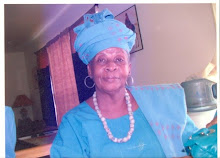
"THE BLACKER THE BERRY THE SWEETER THE JUICE/
I SAY THE DARKER THE FLESH,THEN THE DEEPER THE ROOTS!"
TUPAC SAYS

BLACK SKINNED BEAUTY SUPREME!

BLACK SKINNED BEAUTY SUPREME!

"BLACK IS BEAUTIFUL" -NEW YORK CITY STREET SAYING

"BLACK IS BEAUTIFUL!
BROWN IS HIP,
PUERTO RICAN IS OKAY
BUT white AIN'T S___T!"

BLACK SKINNED BEAUTY OOO!

BLACK SKINNED BEAUTY OOO!

BLACK SKINNED BEAUTY OOO!

BLACK SKINNED BEAUTY OOO!

BLACK SKINNED BEAUTY SUPREME

BLACK SKINNED BEAUTY SUPREME
BLACK SKINNED BEAUTY SUPREME!

BLACK SKINNED BEAUTY SUPREME

BLACK SKINNED BEAUTY SUPREME

BLACK SKINNED BEAUTY

BLACK SKINNED BEAUTY

Search This Blog

Pages

WE MUST HAVE A BLACK STANDARD OF BEAUTY BASED ON THE BLACK SKINNED BLACKEST WOMAN

Wednesday, March 13, 2019

Chicago Reparations Won for Police Torture ooo!--From The Guardian Newpaper(UK)

https://www.theguardian.com/news/2019/mar/08/chicago-reparations-won-police-torture-school-curriculum?CMP=share_btn_tw

In Chicago, reparations aren’t just an idea. They’re the law
For decades, a gang of Chicago police tortured and forced confessions from people in custody. Now, in a historic move, the city is teaching this shameful history in schools – but not everyone thinks it should. By Peter C Baker

Fri 8 Mar 2019 06.00 GMT

“What do you know about Jon Burge?” On the morning of 16 April 2018, Juanita Douglas was asking her students a question she’d never asked in a classroom before, not in 24 years of teaching in Chicago’s public schools. She’d been preparing to ask the question for over a year, and she knew that for many of her students the conversation that followed would be painful. Disorienting. She didn’t like the idea of causing them pain. She didn’t want to make them feel overwhelmed or lost. But she thought, or at least hoped, that in the end the difficulty would be worth the trouble.

Lose yourself in a great story: Sign up for the long read email
Read more
It was only second period. Several of Douglas’s students were visibly tired. A few slumped forward, heads on their desks. Some were stealthily texting or scrolling through Snapchat. Others were openly texting or scrolling through Snapchat.

Advertisement

After a few seconds, Douglas repeated the question: “Do you know Jon Burge?”

A ragged chorus of noes and nopes and nahs.

“Tell me again what year you were born in,” said Douglas, who is 54 and likes to playfully remind her students that they don’t know everything about the world.

2000. 2001. 1999.

“OK,” she said. “Well … welcome to Chicago.”

Douglas switched off the lights and played a video. Who was Jon Burge? The video supplied the answer. Burge was a former Chicago police department detective and area commander. Between 1972 and 1991 he either directly participated in or implicitly approved the torture of at least – and this is an extremely conservative estimate – 118 Chicagoans. Burge and his subordinates – known variously as the Midnight Crew, Burge’s Ass Kickers, and the A-Team – beat their suspects, suffocated them, subjected them to mock executions at gunpoint, raped them with sex toys, and hooked electroshock machines up to their genitals, their gums, their fingers, their earlobes, overwhelming their bodies with live voltage until they agreed: yes, they’d done it, whatever they’d been accused of, they’d sign the confession.

Advertisement

The members of the Midnight Crew were predominately white men. Almost all of their victims were black men from Chicago’s South and West Sides. Some had committed the crimes to which they were forced to confess; many had not. The cops in question called the electroshock machines “nigger boxes”.

The video cut to Darrell Cannon, one of the Midnight Crew’s victims. He spoke about getting hauled by cops into a basement: “I wasn’t a human being to them. I was just simply another subject of theirs. They had did this to many others. But to them it was fun and games. You know, I was just, quote, a nigger to them, that’s it. They kept using that word like that was my name.”

Text on the screen explained that Burge was fired in 1993, following a lawsuit that forced the Chicago police to produce a report on his involvement in “systematic torture”, written by its own office of professional standards. After his firing, Burge moved to Apollo Beach, Florida, where he ran a fishing business. In 2006, another internally commissioned report concluded that he’d been a torture ringleader, but still no charges were brought; Illinois’ five-year statute of limitations for police brutality charges had by then expired. In 2008, FBI agents arrested Burge at his home, and creative federal prosecutors charged him – not with torture, but with perjury. In a 2003 civil case, Burge had submitted a sworn statement in which he denied ever taking part in torture. In 2010 a jury found him guilty.

Advertisement

As soon as the video ended and Douglas flipped the lights back on, her students – most of whom were, like her, black – started talking. Their confusion ricocheted around the room.

“How long did he get?”

“Four-and-a-half years.”

“He only got four-and-a-half years?”

“That’s what I’m saying.”

“I really feel some type of way about this.”

“Is he still alive?”

“I’ve got it on my phone.”

“He didn’t torture them alone. Why didn’t anyone else get charged?”

“I’ve got it on my phone. He’s still alive.”

“I’m just … angry.”

“He lives in Florida!”

“Didn’t no one hear the screams?”

Douglas’s students didn’t yet know it, but they were not the only Chicago students wrestling with Jon Burge and the Midnight Crew last spring. In fact, teachers and students at each of the city’s 644 public schools were figuring out how to talk about the cops of the Midnight Crew. Teachers were going down this path whether they wanted to or not. There was no choice: it was an official requirement, codified in city law.

This classroom initiative is part of a historic, novel and perplexingly under-covered development in the ever-more urgent search for solutions to the cumulative harm inflicted on Americans – especially black Americans – in the name of law and order. On 6 May 2015, in response to decades of local activism, Chicago’s city council passed a resolution officially recognising that Burge and his subordinates had engaged in torture, condemning that torture, and offering his victims (or at least some of them) compensation for their suffering.

The resolution is a singular document in American history. Torture accountability – even basic torture honesty – has been a perennial nonstarter in US politics. Reparations, especially those with a racial component, have long been treated as, alternately: an incoherent absurdity; a frightening threat; a nice-sounding but impractical rallying cry; or, more recently, in the wake of the National Magazine Award-nominated essay in the Atlantic by Ta-Nehisi Coates, as a worthy but still essentially utopian demand. But within Chicago city limits, reparations for police torture isn’t just a thought exercise, a rhetorical expression about what should exist in a better world. It’s Chicago city council resolution SR2015-256: an official political promise.

Jon Burge, the former Chicago police commander who led the ‘Midnight Crew’. Photograph: Charles Rex Arbogast/AP
If this is the first you’ve heard of all this, you are hardly alone. Among locals of all races, and even among national experts on torture and torture accountability, remarkably few are familiar with the experiment unfolding right now in Chicago. If people know anything about it, they likely know that it involved some money: a pool of $5.5m from which certain victims of the Midnight Crew could receive up to $100,000 each, regardless of whether their coerced confessions had been false or not – regardless, that is, of whether, in the eyes of the law, they had ultimately been judged guilty or innocent.

In addition to the cash payouts, SR2015-256 contained a handful of other benefits for the victims, including free tuition at the city’s community colleges and free access to a new psychological counselling centre. In recognition of the fact that torture’s effects reach beyond the lives of individual victims, these services were made available to all members of survivors’ immediate families, and in some cases to their grandchildren.

The resolution also pledged the city to take two concrete steps to counteract its decades-long tradition of trying to make the Burge story disappear. First, Chicago officials would work with activists to erect a memorial to the city’s police-torture survivors. Second, the city’s public schools would henceforth be required to add “a lesson about the Burge case and its legacy” to the official history curriculum for teenagers. To many of the activists who fought for the reparations package, the curriculum was its most meaningful component, precisely because of what it asked from the city: not money, but time and talk, however awkward or uncomfortable that talk might be.

The memorial design and site selection process is still under way. But last August, city officials held a press conference to announce that, after two years of development, the new curriculum – titled Reparations Won – was ready for the children of Chicago.

Chicago is one of America’s most racially diverse cities, but also one of its most racially segregated: a patchwork of different social and economic worlds that know relatively little about each other. For this reason, my original hope was to watch the curriculum being taught in schools all across the city. What would lessons about the Midnight Crew look like in resource-starved black schools on the South and West Sides? How would the same curriculum be taught in predominantly Latino classrooms? (There are more Latino students than students of any other racial background in Chicago schools.) What about schools in the almost-suburbs – just inside the city line – that are disproportionately populated by cops, firefighters and other city workers, in classrooms full of their children and nephews and nieces?

Douglas was the only teacher out of dozens I asked who opened the doors of her classroom to me. The curriculum was too important, she said, for its rollout to go completely undocumented. Last spring, I spent 18 mornings in her classroom at Lincoln Park high school, observing two back-to-back sections of her black-history class as they worked through Reparations Won.

Chicago police detained thousands of black Americans at interrogation facility
Read more
Before my first day, reading over the curriculum and imagining myself in Douglas’s shoes, I felt overwhelmed by the visceral intensity of the material alone. Once I was in her classroom, though, I quickly realised the presence of another challenge, one that will surely be obvious to any teacher. It was the problem of shared knowledge, and how little of it Douglas could presume.

Most of her students were black, and some were Latino, Asian-American, biracial, multiracial. Just one was white. Though Lincoln Park is a prosperous North Side neighbourhood, most of them lived on the South or West Side, where Chicago’s black population has historically been concentrated, and came north every morning because the high school that used to be in their neighbourhood is now closed. Some students had been to Black Lives Matter protests. Others had never been to any protest of any kind in their lives. Some students came to class wide awake, visibly enthusiastic, caffeinated. Others showed up looking exhausted, or like they were counting down the hours until the end of class, until lunch, until prom, until graduation. Some came to school every day, and were already thinking about college. Some came now and then, and were not sure they would graduate. Some had family members whose lives had been deeply marked by interactions with Chicago’s cops and courts and jails and prisons. Some had family members who were cops, or used to be. It was Douglas’s job to teach them all.

The first few days were heavy on context: on white Chicago’s long history of resistance to its black population; on Burge’s upbringing in the all-white South Side neighbourhood of Deering, which, during his lifetime, became an all-black neighbourhood; on the city’s intentional overcrowding of black neighbourhoods and schools; on the escalation of the police “war on crime” in black neighbourhoods; and, finally, on the first allegations against the Midnight Crew, and how they were ignored by the very man with the most immediate power to investigate the charges and punish the perpetrators, then-Cook county state’s attorney Richard M Daley, who would go on to become mayor.

On the fourth day, the class watched another video, this one detailing the case of Ronald Kitchen, a Midnight Crew victim who, largely on the basis of his tortured confession, was found guilty of murdering two women and three children and sent to death row. Beginning in 1990, he spent 21 years before his conviction was quashed and a judge declared him innocent.

The video featured footage from the 2011 deposition of Detective Michael Kill, one of Kitchen’s torturers. In this footage, Kill is 70 and long retired. (Kill died in 2018.) Wiry and full of contempt, he leans back in his chair, as if keeping his distance from something that smells bad. Offscreen, Kitchen’s lawyer asks Kill whether he made a practice of using the n-word in his interrogations.

“Sure I did,” says Kill.

How often?

“I would say I used it as many times as I had to.”

But why?

“Well,” Kill says, his grimace intensifying, “how many inches of tape are in your recorder?”

Kitchen’s lawyer asks him why he used the N-word so much.

Kill shakes his head, still grimacing. “Trying to explain police work to you,” he says to the lawyer, “is like trying to explain physics to my grandson – who is three years old.” He used the word, he explains, to make suspects feel comfortable. To show them he understood their world, knew their language. “You’re not there,” he says. “You haven’t been there. You don’t understand it, OK? You have to live it.”

No, Kill says, he never beat Kitchen. Never tortured Kitchen. Why would he do something like that, he asks rhetorically, and risk getting fired, losing his pension? No, he knew nothing about anyone beating or torturing Ronald Kitchen. Jon Burge was his boss, sure. But he hardly knew the guy. Couldn’t really tell you anything about him.

A rally for victims of police torture in Chicago in 2006. Photograph: Tim Boyle/Getty Images
Many of Douglas’s students were visibly upset by Kill: by what he was saying, by how casually he was saying it, by his apparent disdain for the very idea that anyone might think anything he’d done would require an explanation. “Can we turn it off?” asked a boy seated next to me, quietly and plaintively. But the longer the video went on, the more the kids started making fun of Kill: they knew, after all, that the old man’s denials hadn’t carried the day; that the state had set Kitchen free, that the city had settled his civil case for $6.15m. They started laughing at Kill’s clipped speech, his old Chicago accent, his pissy evasions. A Latina girl, one of Douglas’s most reliable participants in class discussions, snickered and mimed taking a picture of Kill’s scowling face on her phone, suggesting what a good meme it would make. “When you know you got caught,” she said, laughing.

The next day, the class watched footage of Kitchen himself, filmed after he was released from jail but before he won his settlement. Someone off-camera asks him to describe his post-release life. Kitchen tells them he hardly sleeps. That the mere sight of a Chicago police car sends him into a full-body terror, which is why he’s had to leave Chicago, the only city he ever knew. “It’s hard,” he says. “It’s hard, it’s hard. It’s like a dream to me, sitting up here with you. It’s like, at any moment, this could get taken away from me all over again.”

It had been easy, perhaps, to joke about Michael Kill: a caricature of an old white villain on the wrong side of history. But there were no jokes to tell about Ronald Kitchen. “Do you know how many of the police went to jail?” asked a black girl toward the front of the class, referring to all the other Midnight Crew members besides Burge. It wasn’t the first time one of Douglas’s students had posed the question, and it wouldn’t be the last. Each time, the answer was the same: zero.

After class that day, I stayed behind to look at what everyone had written on their reflection sheets. Douglas collected these almost every day, and she often let me look at them, wanting me to understand that the reactions I saw during class were only part of the story. Many of her students rarely spoke unless forced to. On their reflection sheets, however, freed from their worry about how a roomful of their fellow teenagers would respond, these same students would often write searching, poignant reflections, and pose deep questions. On the day of the Kitchen video, their comments were particularly painful to read:

“That could be me!”

“This affects how my life will be, because when I decide to create a family I will constantly be in fear if my husband is safe or my children if I have a son I have to fear he may get stopped by the police.”

“It could be my boyfriend, dad, cousins, etc.”

“This is stuff that I see in movies and may encourage if I don’t like the bad guy, but it’s unimaginable to think about in real life.”

“This was like being a slave, but in the 90s.”

“My dad just got pulled over recently and he wasn’t tortured, but what if this did happen to him?”

“My father was also framed with something he didn’t do. (He’s been in there since I was 3 and is getting out in 2027.)”

The longer I spent in Douglas’s class, the more I came to feel that the atmosphere in the room, as a group of young people made contact with the Burge saga, was history itself – not the professional academic enterprise, not the subject of polished books and articles, but the living tangle of connections between past and present that is always available to us, sometimes as inspiration or solace, sometimes a burden, most often both at once. This sense of history, of course, will be central to any serious attempt at reparations in America. At Lincoln Park high, I was watching students dive into the living tangle – watching them pull out this strand, that strand, and ask what they meant, where they belonged.

On 14 September 2017 – less than a month after the curriculum was unveiled – the now-defunct local news site DNAinfo ran a story about a meeting between parents, faculty and staff at Edison Park elementary, a school on Chicago’s Northwest Side, where many cops live. All of the parents quoted in the article were opposed to Reparations Won.

“You’re taking eighth graders and trying to mould their minds with material that is highly confrontational and controversial,” said Angela McMillin, who described herself as “infuriated, appalled and disgusted” by the curriculum. McMillin wanted to opt her daughter, an eighth grader, out of the curriculum.

The school’s principal, Jeffrey Finelli, informed her that this would not be possible. “It would be a little like saying, ‘I don’t like quadratic equations, so I’m going to opt out of algebra,’” Finelli said.

Emily Skowronek, a social-studies teacher who would be teaching the curriculum, was also present at the meeting. She promised, in the paraphrase of Alex Nitkin, the DNAinfo reporter, to “leave the Burge episode squarely in the past”. “There are a lot of bad apples in every profession,” Skowronek said. “And we’ll try to portray that to our kids.”

I contacted McMillin and several other attendees of the Edison Park meeting, hoping to learn more about their objections. Most people did not write or call me back; of those who did, all refused to speak to me, even anonymously. One person, explaining their refusal, wrote: “After the article came out from DNA, the reaction was kind of like a lynch mob … people from other parts of the city were really nasty and mean and not at all considerate of the huge amount of parents that work for the police department in our area and parents of students that attend our school. It was actually said how racist we were that we were even questioning the curriculum.”

This, too, was history.

Between two different takeaways from the material at hand. Takeaway One stressed the horror of it all, and the deeply systemic nature of that horror: all the cops and prosecutors and judges and city officials (mayors!) who had turned a deaf ear to the complaints of torture for so long, afraid of what they would mean, if true, about their professions, their jobs, the convictions they’d won, the sentences they’d passed down, the city they’d made.

Douglas pushed Takeaway One because she wanted her students to understand the truth of the world they lived in – but also, it was clear, because she wanted them to be safe. More than once, she drew her students’ attention to the case of Marcus Wiggins, a black 13-year-old tortured by the Midnight Crew. “Why would they torture a 13-year-old? Why are they torturing a 13-year-old? I need an answer.”

A Latino boy in the front row began to venture a response. “For suspected … ”

Douglas cut him off. “But why? I want you to look at everybody in this room.”

He hesitated. “Maybe … because they can. They’re using their authority.”

Douglas nodded, then pushed the point a step further. You might think of yourself as kids, she told them, but that didn’t mean “they” would see you that way too. This was why it was important for them to be careful. Important not to joke around – not to act like kids – in the presence of cops. Important not to assume that things work the way they’re supposed to work.

Of course, if Takeaway One was all there was, the curriculum would be an extended meditation on the intolerable harshness of the world. No one involved in its creation or implementation wanted that to be its only message to Chicago’s teenagers. And so, Takeaway Two stressed the importance of individual choices, even in the face of systemic injustice.

Celebrations outside a courthouse in Chicago after Jon Burge was convicted of perjury and obstruction of justice in 2010. Photograph: Chicago Tribune/MCT via Getty Images
This was why the curriculum was called Reparations Won: it was meant to be more than a catalogue of woe. It was also a testament to the possibility of pushing back and changing the world. There were all the activist groups who kept showing up, year after year, decade after decade, asking for torture accountability. One of these groups, We Charge Genocide, even sent a delegation of young Chicagoans to Switzerland in 2014 to talk about Chicago police in front of the United Nations committee against torture. (One member of that delegation, Douglas told them, was a Lincoln Park alumnus – one of her former students.) There were the lawyers who took the victims’ cases long before anyone had even heard of the Midnight Crew. There was the county medical examiner who insisted, despite police pressure, on making a formal record of the injuries sustained by Andrew Wilson, Burge’s first accuser to get any traction in court. There was the cop, or the multiple cops, who when they heard about the lawyers bringing torture cases against the CPD, started anonymously mailing them notes, feeding them names to dig into.

So many people deciding to do nothing – to keep their heads down and not cause trouble, to not risk the danger of upsetting the system. So many people deciding to do something – to insist on things being different.

Near the end of my time in Douglas’s class I was sent a recording of a recent meeting about Reparations Won at Wildwood elementary, a predominantly white school on the Northwest Side. The person who sent me the recording told me I could use it however I wanted, as long as I didn’t identify them. Wildwood is the neighbourhood immediately to the east of Edison Park. I’d heard of it for the first time from Douglas, who, in a classroom discussion of Chicago segregation, had recalled her first and only trip to Wildwood. One day in the 90s she drove her son there for a high school football training clinic. She told her students how surprised she was by the leafy, suburban feel of the neighbourhood. This was Chicago? But most shocking of all was the sight of local teenagers showing up to the clinic on bikes – and leaving them on the ground. Unlocked!

The recording I received starts with Mary Beth Cunat, the Wildwood principal, laying out the evening’s format to the audience, which is obviously made up of parents of her students. “I’m just nervous,” she says, and she sounds it. There are multiple speakers, she explains; each will have their turn, and then parents will have a chance to write their remaining questions and concerns on Post-it notes. “We didn’t leave time for open-ended questions and answers,” she says, but promises that the Post-it notes will be read.

A Wildwood history teacher reads a prepared statement about the value of teaching difficult histories. Then he leaves, explaining that he has another obligation to get to.

“There’s no police-bashing going on here,” says Cunat. “It’s focusing on a very discrete episode in history.”

A representative of the Chicago Committee on Human Relations gives a bizarre speech in which he explains the committee’s mandate to investigate discrimination of all kinds in the city. He makes no mention of Jon Burge, the Midnight Crew or Reparations Won.

Then a local police commander expresses his fundamental concern about the curriculum: “You know, I think anyone who has been around children probably realises that they don’t hear everything that we say. So that’s probably our biggest concern. Even though they’re going to teach a curriculum – [the kids] are going to hear what they want to hear. And I’m just afraid that some of them might feel themselves empowered that maybe they don’t have to listen to the police. You know, in a stressful situation. And maybe they should run from the police. And they’d be endangering themselves … ”

His advice to Wildwood parents, however, is to accept that the curriculum is happening, and do their best to make sure it is being implemented responsibly.

The fourth speaker is explaining the meaning of “restorative justice”, when a man in the audience interrupts. Won’t the curriculum, the man wonders, “be teaching a false narrative? [Burge] hasn’t been convicted of anything in our courts. So how can you teach that?”

Principal Cunat reassures the man that the curriculum does not say Burge was convicted of torturing anyone – just perjury and obstruction of justice.

“And then all the ones that supposedly were victims – are they going to have their rap sheets?” the same man asks. “Are they going to show these kids that? Are they going to have both sides of the conversation?”

Cunat tells the man that, if he has a question, he should write it down.

“I’d rather sit here and we can all ask our questions and we can all know the answers,” the man says. “Does anyone else agree with that?”

“If you want that kind of meeting,” says Cunat, “you are free to let me know.”

“OK,” says the man. “We want that kind of meeting. We would rather have an open discussion.”

“One of the reasons we don’t have an open conversation,” says Cunat, “is because it ends up getting derailed … I really respect you. I care about you a lot. I really feel like it could just become … this ad hoc stuff is not very safe, in terms of my staff and in terms of what we’re trying to accomplish.”

“But what are we trying to accomplish?” asks the man.

On 30 April, Douglas reminded her students that on the following day they were not to come to the classroom, as usual, but instead to go to the library, where they would have the chance to hear from Ronald Kitchen, who had flown in from Philadelphia. In 24 hours they would be in the same room as the man from the video. The man they’d heard Michael Kill lie about. Someone for whom thinking about torture required no imagination at all, because he’d lived it.

Douglas had recruited a few students to give Kitchen’s visit an air of ceremony. They’d printed up programmes. One boy played some welcome music on his guitar: an acoustic rendition of a song by Death, the black band from Detroit that played punk before punk was really a thing. A girl read a poem she’d written called What They Don’t Tell You about Black Boys. Another girl read an introduction: “Mrs Douglas has been teaching us about the agonising tortures of African American men. We welcome one to speak with us today.” She turned away from her classmates and toward Kitchen, who was sitting on a chair behind her. “I just want to say to you personally that your story will never be forgotten.”

Kitchen nodded, taking in the scene in front of him. “I’m really touched,” he said. “Sometimes I’m at a loss for words when I see a lot of young people actually taking heed of what’s happened.”

He took a breath, then spoke for almost 20 minutes without notes. He talked about how bogus the charges against him had been. He talked about co-founding, with other Midnight Crew survivors, the Illinois Death Row 10, the campaign that eventually won a moratorium on all Illinois executions, since expanded into full abolition. He talked about completely losing touch with his son, who was three when he was arrested. About how, whenever it was time for someone to be executed, a guard would bring that person down the hall, letting him stop at each cell along the way to say goodbye. He talked about how, whenever he heard them coming, he would lie on his bed and pretend to be asleep, because he couldn’t bear to face them. He talked about how ashamed this made him feel, looking back. He talked about his mother, who developed dementia while he was in prison and did not recognise him when he was released.

Ronald Kitchen in 2009. Photograph: Richard A Chapman/AP
It wasn’t a practised speech. It wasn’t shaped to build to a certain point or lesson or revelation. Kitchen talked about having been a drug dealer. “It was never a secret,” he said. “Never has been: that was my living.” That was true – Kitchen has always been upfront about his past – but I could not remember Douglas’s class discussing it. I thought I could feel a shift in the nature of the room’s collective attention, the cumulative effect of several dozen teenage minds simultaneously switching gears to process the same new variable. Kitchen didn’t dwell on it. He urged students to get involved with activism – urged them to avoid the delusion that change was impossible.

“I want to thank you all for allowing me to come sit here and talk to you all,” he said, again looking almost dumbfounded by where he was – in a Chicago history classroom – and what he was doing there. “I’m trying not to tear up. I’m good at it. I’m good at holding my stuff in. I love that you gave me so much attention. I never had this much attention. I really do appreciate it. Thank you.”

There was a short Q&A session. The students sounded more formal than usual, like they were trying to be their most mature, respectful, adult selves – which, as often happens with children trying not to sound like children, had the primary effect of evoking how young they remained.

“Are you able to sleep any better now?” a student asked. “I know that sleep is, like, a big thing.”

“Actually, I don’t sleep,” said Kitchen, looking like he regretted having to be the bearer of this bad news. “I’m still on penitentiary time, for real. I eat like” – he mimed shovelling food into his mouth as fast as he could – “I choke some food down. I’m still on penitentiary time. I have to catch myself, when I’m at home: I hear the clink of them rattling the bars … I can’t really sleep. I’ll get up and I’ll walk around my house. I’ll check the doors, peek out of the curtains. Or I’ll sit up, listen to the radio, watch TV for hours. I really don’t sleep.”

At Wildwood elementary, the new curriculum continued to prove contentious. Then, in June, two weeks before the end of the school year, Mary Beth Cunat stepped down as principal – the result, according to reports, of outrage from parents following her decision to invite an “anti-police” speaker to a Wildwood career day. I assumed, when I saw the headline, that the speaker in question had to be a Midnight Crew survivor. I was wrong: it was a young Chicago activist and musician named Ethan Viets-VanLear, whom Cunat had asked to participate in the event at Wildwood. Viets-VanLear had been part of the delegation that travelled to Geneva to talk about Chicago police brutality in front of the UN. Asked by Wildwood students to explain his motivation, he talked about the 2014 death of his friend Dominique “Damo” Franklin, Jr at the hands of a Chicago police officer. Word of Viets-VanLear’s visit spread to Wildwood parents, some of whom quickly scoured his social media pages for anti-police sentiments and called for Cunat to be replaced. Both Viets-VanLear and Cunat reported receiving numerous death threats.

Cunat wrote an apology to the entire school, saying she regretted inviting Viets-VanLear. A few days later, an impromptu school-wide meeting was held for students to receive a presentation on policing from Martin Preib, vice-president of the Chicago Fraternal Order of Police – the local law enforcement union – and Adrian Garcia, a detective with a child at Wildwood. That afternoon, Cunat resigned. Fox News ran a story commemorating her downfall. She is now a principal in Rockford, Illinois, a city 90 miles west of Chicago.

In September, Jon Burge died. After being released from federal prison in 2014, he had moved back to Florida, where he lived off his police pension. In 2015, when SR2015-256 was signed, he was interviewed by Martin Preib for a now-defunct blog called The Conviction Project. “I find it hard to believe,” he said, “that the city’s political leadership could even contemplate giving ‘reparations’ to human vermin.”

After Burge’s death, Chicago’s Fraternal Order of Police issued a statement saying that the organisation did “not believe the full story about the Burge cases has ever been told … Hopefully, that story will be told in the coming years.”

A few months earlier, during the summer, I stopped by the Humboldt Park office of Joe Moreno, the Chicago city council representative who, working with a coalition of activists and lawyers, first put the reparations ordinance before the city council in 2013. I asked Moreno why he thought the resolution had passed in the end – and not just passed but passed without a single “nay” vote from any of the historic white ethnic enclaves (or “the more autonomous Caucasian wards”, as Moreno referred to them). How had the official legislative body of a city that had never been able to admit to torture now swung all the way to reparations?

Moreno wanted to recognise that some council members had likely undergone a genuine change of heart. Midnight Crew survivors had met with many of them one-on-one, explaining what they wanted and why. Their lawyers had compiled the facts, and the facts were simply too overwhelming.

But Moreno also suggested a more cynical theory. There was still plenty of opposition – still plenty of people at city hall who thought, in his paraphrase, “I don’t want to be for this, this is ridiculous, these guys are all guilty and just want money”. But, he said, it had over time become “much harder for them to be vocal on it that way”. It wasn’t that every alderperson stopped doubting Burge’s victims, he said – but that some of them had made the decision to just move on: to pass the ordinance “rather than fight”.

This dynamic had shaped how the ordinance was covered, Moreno argued. “Every journalist, they savour so much the fight,” he said. Had there been a protracted legislative battle between different Chicago constituencies, it might have been covered more prominently. Instead, the ordinance – which, in the scheme of city budgeting, cost relatively little – passed, and the story lost much of its oxygen for the city’s journalists.

The simple idea that could transform US criminal justice
Read more
To the extent this was anyone’s goal – and of course they would never say so if it was – it may look as if their wish has been granted. All spring, I made sure to check my “Chicago torture” and “Chicago torture curriculum” Google Alerts daily, eager to see the stories that appeared. Now and then, Burge was mentioned in yet another story about bad Chicago cops using torture or blackmail to frame suspects, or about more potential Midnight Crew victims getting their claims heard in court. But the school year ended, the summer dragged on, and no stories about the curriculum appeared. (At least until Burge’s death, when the New Yorker ran a story about the curriculum on its website, and many of Burge’s obituaries also mentioned its existence.) I kept telling people I met about reparations in Chicago, and they kept being shocked that they didn’t already know about it.

In the short term, SR2015-256 has not made Chicago as a whole appreciably more conscious of its own history. But not every major development in a city’s (or a nation’s) consciousness of itself gets noticed as such upon its arrival. Thousands of children all over Chicago have now talked about the city in a new way, and thousands more will again next year, and again the year after that. The impact of this is impossible to predict with any specificity: there is no such thing as a utilitarian cost-benefit analysis of starting to tell the truth, together, about what happened.

This is an abridged version of an essay from the latest issue of The Point, a Chicago-based my journal of ideas

• 

Monday, March 04, 2019

NIGERIA OOO!- NEW ABUJA INTERNATIONAL AIRPORT TERMINAL IS "MIND BLOWING"!

Dr. Joe Abah (@DrJoeAbah) tweeted at 2:04 PM on Sun, Mar 03, 2019:
Good afternoon. I have some good news. The new Abuja International Airport terminal is...mind blowing! As we alighted from the aircraft into the glass tunnel, you know that smell that usually hits you when you land in Nigeria? It wasn’t there. The AC in the tunnel worked.

https://twitter.com/DrJoeAbah/status/1102192922206916608?s=03

Muhammad Ali on mixing up the Black Race oooo!

Check out @KingElijah4_20’s Tweet: https://twitter.com/KingElijah4_20/status/1102099745047281672?s=09

Tuesday, February 26, 2019

BACK TO AFRICA OOOO!-YEAR OF RETURN TO GHANA OOO!

https://www.un.org/africarenewal/magazine/december-2018-march-2019/2019-year-return-african-diaspora

Let's move to AFRICA

Check out @YeyeOlade’s Tweet: https://twitter.com/YeyeOlade/status/1097205846868705280?s=09

NIGERIA Oooo!- Sawoide Film Shoe How atiku will act in Power!

Check out @beejaygreen’s Tweet: https://twitter.com/beejaygreen/status/1098523622732292096?s=09

ORIKI!-BAYO ADEBOWALE'S LATEST GREAT POETRY BOOK IS OUT OOOO!-FROMpunchng.com

https://punchng.com/bayo-adebowales-moving-lines-for-african-heroes/

IDIBO OOOO!-NIGERIA IDIBO OOOO!- BUHARI IS WINNING O!

tolu ogunlesi (@toluogunlesi) tweeted at 10:52 AM on Mon, Feb 25, 2019:
So far, for @MBuhari:

Solid, solid performance in NW and NE

Better-than-projected performance in NC, SE, SS (SE and SS losing-margins less than 2015)

Tight race in SW - but PMB winning overall. 

The path to victory is now very very clear 🙌🏾

#NigeriaDecides
https://twitter.com/toluogunlesi/status/1099970296793178112?s=03

Sunday, February 24, 2019

BLACK PEOPLE OOOO!-NATURAL HAIR IS CAUSING WHITE TROUBLE IN AMERIKKKA O!-FROM NBC NEWS

When hair breaks rules: Some black children are getting in trouble for natural hairstyles In the past, "African-Americans often conformed through haircuts, wigs and relaxers," one lawyer said. "Now, more of us are choosing not to conform."

By Janelle Griffith A high school wrestler was forced to cut his hair or forfeit a wrestling match in New Jersey. A 6-year-old boy in Florida was turned away from a private Christian academy on his first day of school because his hair extended below his ears. And a New Orleans-area girl was sent home at the start of the school year from a Catholic school for wearing braids. All three of the children are black. All wore natural, chemical-free hairstyles. All three incidents were caught on video, drawing widespread attention and condemnation. These are just a few instances of what civil rights advocates say is a growing problem of discrimination against African-Americans — adults at work as well as children at school — due to their hair. 'CHOOSING NOT TO CONFORM' Rules on hair at work and school are not new, but more black people are coming up against them now than in the past due to the popularity of leaving hair natural, said Ama Karikari-Yawson, a lawyer and diversity trainer on Long Island, New York. "In the past, the regulations existed, but African-Americans often conformed through haircuts, wigs and relaxers," Karikari-Yawson said. "Now, more of us are choosing not to conform, and so the conflicts are coming to light." Natural hair is intimately associated with racial identity for African-Americans, she said. The natural hair movement, which encourages black people to wear their hair in its normal, coiled, coarse or curly state, started when more people began shunning chemical relaxers and embracing their Afro-textured hair for health and cosmetic reasons. Recent studies have linked the ingredients in relaxers, which chemically straighten hair, to uterine fibroids, cancer, and other illnesses. Mintel, a market research firm, estimates that retail sales of at-home relaxers declined 22.7 percent from 2016 to 2018. Natural hairstyles, such as braids and dreadlocks, are also appealing because they can require minimal upkeep, although dreadlocks are often started on short hair and must be regularly maintained. Moreover, celebrities such as Viola Davis, Lupita Nyong’o, Ava DuVernay, and rising political star Stacey Abrams have sported natural hairstyles, inspiring other black people to wear cornrows or braids, dreadlocks and twists, Karikari-Yawson said. THE RIGHT TO KEEP HAIR NATURAL The growing prevalence of natural hairstyles among blacks does not always mean growing acceptance. The New York City Commission on Human Rights recognized a problem of discrimination based on hair or hairstyle with new guidance this week that classifies such restrictions in workplaces, schools and public places as racial discrimination. The guidelines point specifically to the rights of people to maintain their “natural hair, treated or untreated hairstyles such as locs, cornrows, twists, braids, Bantu knots, fades, Afros, and/or the right to keep hair in an uncut or untrimmed state.” Schools around the country, with their widely varying rules on appearance and dress, can sometimes be particularly rigid about hair. VIEW THIS GRAPHIC ON NBCNEWS.COM “In recent years, there has been a troubling uptick of stories surrounding children being targeted for natural hair textures and styles prohibited in school dress codes,” said Patricia Okonta, a legal fellow at the NAACP Legal Defense and Educational Fund. That can cause students to lose out educationally, if they are suspended or forced to transfer to another school because of hair policies, she said. “Students are having educational opportunities disrupted for simply being themselves,” Okonta said. “For embracing their blackness." 'IF THAT'S NOT BIAS, I DON'T KNOW WHAT IS' Clinton Stanley Jr. wore his excitement on the first day of school. Dressed in navy pants, a button-down shirt and tie — the uniform for his new school — his pride showed in a video of the occasion filmed by his dad in August 2018. But the excitement turned to hurt when the school, A Book’s Christian Academy in Apopka, Florida, north of Orlando, turned him away, saying his hairstyle — dreadlocks — was not allowed. "My son just got told he cannot attend this school with his hair," his father, Clinton Stanley Sr., said in the video. "If that's not bias, I don't know what is." Dreadlocks hang like individual braids and are sectioned, twisted and often in rope-like pieces. The incident prompted the NAACP Legal Defense Fund and the national American Civil Liberties Union and its Florida chapter to file an administrative complaint with the Florida Department of Education. The complaint argues that because the tiny private school — which has 33 students — receives public funding in the form of state school-choice scholarships for students, its policy on hairstyles violates the Civil Rights Act of 1964. "The contributions are voluntary from Florida residents," Okonta said of the state scholarship program. "However, the creation, designation, and management of the scholarship program is governed by Florida law, which is cited in the complaint." The state Education Department responded by opening an inquiry into the incident that is ongoing. Sue Book, the school’s administrator, told NBC News in a recent phone interview that the academy’s hairstyle rules have been in place since she founded the school in 1971 and that the regulations are similar to those at nearby private schools. Boys are prohibited from wearing “dreads” and required to keep their hair in a “tapered cut, off the collar and ears,” the school's handbook says. Book says the policy has nothing to do with racial bias, pointing out that the student body is 95 percent black. She also maintains that because the state scholarships are funded through donations, she can set rules as she sees fit. "If they’re going to tell me that I have to have standards I don’t want, then I will close tomorrow," Book said. "I like standards and rules. I don’t intend to change the standards at all." Stanley, the father of the boy who was not allowed to attend the school, said he was unaware of the policy on hair when he enrolled his son through Florida's Tax Credit Scholarship Program. "It’s not right for a school to take taxpayer dollars while singling out and shaming black natural hair," Stanley said. Andrew Johnson wrestling on February 5, 2018 in a match for his school Buena HS.David Gard for NJ Advance Media 'A VERY VISCERAL VIDEO' A video of Andrew Johnson, a black varsity high school wrestler in New Jersey, having to get his dreadlocks cut right before an after-school match, has been viewed more than 15.3 million times. VIEW THIS GRAPHIC ON NBCNEWS.COM The state's Civil Rights Division and its interscholastic athletic association started separate investigations into the incident that occurred in December 2018, when a white referee ruled that Andrew, a student at Buena Regional High School in Atlantic County, either had to cut his dreads or forfeit the match. The Johnson family's lawyer, Dominic Speziali, told NBC News this week that some good has come from a painful situation. "One thing that’s so important here in this case is that there was a very visceral video here," Speziali said. "You could see Andrew. You could see what it did to him. You could see his teammates coming up to him." That forced haircut brought attention to the indignities faced by some children for nothing more than a natural hairstyle, Speziali said. He believes the incident may also have contributed to the new guidelines in New York City against discrimination based on hair. "I think people are aware now of the improprieties of the event that took place that night," Speziali said. A DISPROPORTIONATE IMPACT Faith Fennedy was 11 and in sixth grade when she was asked to leave class at a Catholic school outside of New Orleans in August 2018 because administrators said her braided hair extensions violated school rules. A video that went viral captured her crying as she packed up her belongings. A day later, the school asked another student, Tyrielle Davis, to leave class for the same reason. Faith's mother, Montrelle Fennidy, and Tyrielle's mother, Toyonita Parquet, sued the Christ the King Parish School in Terrytown, Louisiana, its principal and the Archdiocese of New Orleans, claiming that the ban on hair extensions unfairly and disproportionately affected black students. A state judge in August 2018 blocked the school from enforcing its policy forbidding hair extensions, and in September 2018, the mothers dropped their lawsuit, according to court documents. Some social justice advocates are hopeful that New York City's new guidelines will help to shift the tide and raise awareness of the unfairness of policies banning natural hairstyles. "Hopefully this will serve as a guidance in Florida and other jurisdictions to protect the rights of those harmed by these practices and ensure that anti-black biases have no place in our society," Okonta said.
Janelle Griffith Janelle Griffith is a breaking news reporter for NBC News.  © 2019 NBC UNIVERSAL

Monday, February 18, 2019

Wednesday, February 13, 2019

MALCOLM X SPEAKS 9DAYS BEFORE HE WAS KILLED !

Check out @Fresh_Flames1’s Tweet: https://twitter.com/Fresh_Flames1/status/830905862747205633?s=09

Tuesday, February 12, 2019

Yoruba OOOO!

https://face2faceafrica.com/article/nigerias-yoruba-language-is-second-most-spoken-foreign-language-in-baltimore-schools

Friday, January 25, 2019

BACK TO AFRICA OOO!-Dynast Amir (@searchforuhuru) tweeted at 6:00 PM on Sat, Jan 19, 2019: This is video of James Speights being welcomed home to Africa as a prince. James is a Black American who recently traced his roots back to the Kingdom of Allada in Benin-THEN THEY MADE HIM A PRINCE OOO!

Check out @searchforuhuru’s Tweet: https://twitter.com/searchforuhuru/status/1086669749822676992?s=09

Dynast Amir (@searchforuhuru) tweeted at 6:00 PM on Sat, Jan 19, 2019:
This is video of James Speights being welcomed home to Africa as a prince. James is a Black American who recently traced his roots back to the Kingdom of Allada in Benin. He then was able… https://t.co/VuFwoSRHS4
(https://twitter.com/searchforuhuru/status/1086669749822676992?s=03)

Get the official Twitter app at https://twitter.com/download?s=13

Wednesday, January 16, 2019

OBAMA OOOO!- Immortalized Outside United States in 3 Places!

https://face2faceafrica.com/article/barack-obamas-name-has-been-immortalized-in-these-places-outside-the-u-s

Tuesday, January 01, 2019

SPECIAL 2019 NEW YEAR GIFT FOR YOU!


SPECIAL 2019 NEW YEAR GIFT FOR YOU!

Take time off this New Year 2019, and add to your knowledge and cultural experience by visiting a Nigerian rural destination filled with bliss, rapture and ecstasy.  .  .  Our New Year gift is to invite you to mingle with nature, in its perfect form at  the AFRICAN HERITAGE RESEARCH LIBRARY AND CULTURAL CENTRE, Adeyipo, Ibadan, Oyo State,  NIGERIA,  and relate with the friendly people  of our little African Village. . .

Book for palmwine, pounded yam, fresh fruits, amala with abula, bushmeat plus other food varieties.
Accommodation is available and security is guaranteed. . . 

At Adeyipo, you'll get to see one hundred thousand volumes of books in all branches of African studies, six separate libraries; the African Orchard and Courtyard; Music of Africa Auditorium; the Community Services Centre; the ebu; forest pathways etc. . .
You'll meet face to face with Nollywood film stars, traditional drummers, artistes; the  Black American Woman Activist who lives permanently in the Village; and the Author of The Virgin,  Out of His Mind  and Lonely Days. 

Come individually and in groups: on excursions and goodwill visits . . . Give us just a week, or two-day notice, calling or texting us on phone number (+234)8034495485. You can even jump on us! A period of adventure, complete  relaxation and enjoyment awaits you here at ADEYIPO VILLAGE this New Year 2019, Hold this gift firmly-- and contact us. . . 

Management (AHRLC)

Tuesday, December 25, 2018

THE EUROPEAN PAGAN ORIGIN OF CHRISTMAS-FROM THE HUMAN TRUTH FOUNDATION

The Human Truth Foundation The True Meaning of Christmas Paganism, Sun Worship and Commercialism By Vexen Crabtree #christianity #christmas #history #paganism #sun_worship Christmas is the celebration of the time when the days start to lengthen, which in the Northern Hemisphere, is in the middle of winter. Many religions in history have claimed the winter solstice as a holy day. The "reason of the season" is a combination of different traditions. It includes sun worship and pagan nature religions who have venerated the natural cycle for many thousands of years. Many traditional elements of Christmas pre-date Christianity1. Nowadays it is laid upon by various Christian stories, and Christians even say, quite wrongly, that they invented Christmas. In combination with these religious sources is a heavy dose of commercialism - many "traditions" are in fact invented by commercial companies trying to find nifty ways of selling goods. A sensible and modern refrain is that Christmas is simply a secular midwinter holiday season; it is important to all families as one of the three holiday seasons in between children's school terms. Christmas is a multicultural festival with a long pagan history, and can be celebrated by anyone. Pagan Religions and Sun Worship A General Pagan History of Christmas Sun Worship (the Reason for the Season) The Date of the 25th The Commercial Takeover of Christmas The Origin of Christmas Cards Father Christmas, Santa Claus: The Personification of Christmas Commercial Christmas Christianity Versus Christmas Christmas Was Always Largely Secular Early Christians Celebrated Christmas in April and May Anti-Christmas Christians Case Study: The United Kingdom Statistics on Church Christmas Attendance in England and Wales Winterval: The UK Controversy Invented by Cheap Newspapers Such as The Daily Mail Conclusion: Christmas is Multicultural Links 1. Pagan Religions and Sun Worship 1.1. A General Pagan History of Christmas Many traditional elements of Christmas pre-date Christianity1. In other words, Christmas was pagan before it was adopted (and renamed) by Christians. The Catholic Encyclopedia of 1908 states that "Christmas was not among the earliest festivals of the Church. Irenaeus and Tertullian omit it from their lists of feasts"2 - those authors lived into the 3rd century. The CE article concludes that when later Christians adopted the date of the 25th of December for Jesus' birth, "the abundance of analogous midwinter festivals may indefinitely have helped the choice of the December date, the same instinct which set Natalis Invicti at the winter solstice will have sufficed, apart from deliberate adaptation or curious calculation, to set the Christian feast there too". Prof. Hutton, a respected and careful primary-sources historian, mentions Christmas in his valuable book on the history of modern Paganism. “It is also absolutely correct that some British folk customs have descended directly from pagan rituals, such [...] the giving of presents and decoration of homes with greenery at midwinter.” "The Triumph of the Moon: A History of Modern Pagan Witchcraft" by Ronald Hutton (1999)3 “Most Christmas customs are, in fact, based on old pagan festivals, the Roman Saturnalia and the Scandinavian and Teutonic Yule. Christians adopted these during the earliest period of Church history. The Church, however, has given this recognition and incorporates it into the Church year without too many misgivings. Only the more radical fundamentalist elements in some churches protest from time to time about this mixing of 'pagan' elements into the religion.” "The Phenomenon Of Religion: A Thematic Approach" Moojan Momen (1999) [Book Review]4 And Hutton, from an earlier book, agrees: “The habit of a midwinter festivity had come by the dawn of history (and probably very long before) to seem a natural one to the British, and not one to be eradicated by changes of political or religious fashion. [...] It was general custom in pagan Europe to decorate spaces with greenery and flowers for festivals, attested wherever records have survived.” "The Stations of the Sun: A History of the Ritual Year in Britain" by Ronald Hutton (1996)5 1.2. Sun Worship (the Reason for the Season) #mithraism #zoroastrianism Sun worship formed the basis of Mithraism, Zoroastrianism, other Roman religions and many other pagan traditions. It is the reason Sun-day is a holy day in many religions, and why major festivals are held at spring and at the Solstices. The real meaning of Christmas is sun worship; a reminder to all life on Earth that we owe everything to the Sun. Sun worship is one of the main pillars of all religion, especially older religions. Sun worshippers and nature religions held major celebrations at the Winter Solstice the victory of the strength of the Sun over the forces of darkness that try to suppress it. Osiris-Dionysus represented and was represented by the sun, as was Jesus, whom the Church father Clement of Alexander calls 'The Sun of Righteousness'6. When old relics and religious symbols (such as Human faces) are given a light backdrop of rays of light or a corolla it means they represent the sun. “Sir James Frazer says, "The largest pagan religious cult which fostered the celebration of December 25 as a holiday . . . was the pagan sun- worship, Mithraism . . . This winter festival was called . . . 'the Nativity of the SUN.' [...] Franz Cumont, perhaps the greatest scholar of Mithraism, wrote, quoting Minucius Felix, "The Mithraists also observed Sun-day and kept sacred the 25th of December as the birthday of the Sun. Many scholars have pointed out how the Sun- worshipping Mithraists, the Sun-worshipping Manicheans and the Christians were all syncretised and reconciled when Constantine led the take-over by Christianity[...]" However, other Sun-worshipping groups were included too, because of the general importance and popularity of Sol Invictus, the Invincible Sun-deity. Mario Righetti, a renowned Catholic liturgist, writes, "the Church of Rome, to facilitate the acceptance of the faith by the pagan masses, found it convenient to institute the 25th December as the feast of the temporal birth of Christ, to divert them from the pagan feast, celebrated on the same day in honour of the 'Invincible Sun', Mithras. [...] The mixing of pagan Sun-worship and Christianity is exemplified by the testimony of a Syrian scholiast on Bar Salibi, who said, "It was a custom of the heathen to celebrate on the same 25th of December the birthday of the Sun, at which they kindled lights in token of festivity. In these solemnities and festivities the Christians also took part." Practically all the known Sun-deities were born on the 25th December. In S.E. Titcomb, Aryan Sun myths, the Origin of Religions, we find it cited, quoted from primary sources, that the following Sun-deities were all born on 25 December, according to their legends: Crishna (Vishnu), Mithra (Mithras), Osiris, Horus, Hercules, Dionysus (Bacchus), Tammuz, Indra, Buddha. Therein we also read of the Scandinavian goddess Frigga in whose honour a "Mother-night" festival was held at the winter solstice (+ - 25 December), as well as a similar great feast of Yule, where a boar was offered at the winter solstice in honour of Frey.” www.iahushua.com/ST-RP/xmas.htm, accessed 2005 Dec 06 Hutton highlights the role that the celebration of light has had through all the threads of history that combined to become part of the symbols of modern Christmas. “What the Scots did emphasize, in common with many of the English, was light. In 1725 Henry Bourne, a Newcastle clergyman, commented that many people in the North of England lit huge 'Christmas candles' on Christmas Eve. [...] The Scots and] the Irish were also fond of them. [...] Yule candles were also common in Scandinavia, a region which had strong contacts with those parts of Britain which maintained them.” "The Stations of the Sun: A History of the Ritual Year in Britain" by Ronald Hutton (1996)5 It must also be clear that many Christmas customs are, as we heard from Moojan Momen and Prof. Hutton, very ancient. But they have in present centuries been combined with the very modern phenomenon of commercialism. 1.3. The Date of the 25th #christianity #mithraism Christmas day, by other names, "was the ancient feast-day of the Sun, in the depths of winter", pre-dating Christianity1. But the exact date of the Winter Solstice changes slowly over time. "So, although the solstice moved progressively from 6 January to 25 December, some traditions continued to celebrate it on the familiar night. Today it falls around 22 December"6. The Roman religion of Mithraism, which existed for hundreds of years before Christians started celebrating Christmas, holds that the birth of Mithras was on the 25th of December. In another coincidence, the birth of Mithras was also said 'to have been witnessed by three shepherds'7. 2. The Commercial Takeover of Christmas The most skeptical view of modern Christmas is that the fads, decorations, festive goods and all the paraphernalia are a commercial scam to make us spend money on over-priced useless goods. However true this is, it has also become a secular social festival much akin to the American thanksgiving. Families come together at Christmas even if they do not for the rest of the year. It probably helps that Christmas and New Year's celebrations have become institutionally intertwined. These make Christmas in essence a meaningful family celebration, even if on top of that there is a thick cover of shallow commercialism. The festivities are largely led by commerce and retail outlets: The relevant decorations, cards, food and goods are all marketed for Christmas, and it is the High Streets that press Christmas upon the populace way before the populace itself is ready. It is a frequent complaint that stores start Christmas "too early" and too aggressively. Several elements of Christmas are the invention purely of commercial advertisements. 2.1. The Origin of Christmas Cards Take the example of the commercial invention of the Christmas card; with corporate effort, these would have remained an expensive privilege of the rich. “The Christmas card represented a convenient and sophisticated evolution of the ancient custom of giving blessings or good wishes for the New Year. By 1840 it was often carried on among the wealthier classes by sending a short poem engraved within an ornamental framework. [...] This, and some imitations, proved to be commercial failures because they were too expensive. In 1862, therefore, a fresh start was made by the stationers Messrs Charles Goodall, which printed cheap plain greetings. By the end of the decade they were becoming decorated, and other firms were producing them. [...] In 1878 the volume sent was sufficient for the Post Office to commence a separate record of Christmas mail, and in the 1890s the cards became a popular craze, and continued to expand their market over the next century. In 1992 1,560 million were sent, and the commercial value of the Christmas card trade was £250 million.” "The Stations of the Sun: A History of the Ritual Year in Britain" Ronald Hutton (1996)8 2.2. Father Christmas, Santa Claus: The Personification of Christmas The human figurehead of the festive season is a modern creation; before the seventeenth century such a figure has no history. “Nobody seems to have thought of personifying Christmas until the early seventeenth century. It was done then partly because of the general taste of the age for allegory and partly because the criticism of observation of the feast by radical Protestants made a representation of it convenient to writers determined to defend it. Thus in 1616 Ben Jonson introduced to the world, Christmas His Masque, presented a figure 'in a round hose, long stockings, a close doublet, a high-crowned hat with a brooch, a long thin beard, a truncheon, little ruffs, white shoes, his scarfs, and garters tied cross.' [...] Over the next 250 years this sort of character was to feature repeatedly in pictures, stage plays, and folk-drama, known variously as Sir Christmas, Lord Christmas, or (increasingly) as Father Christmas. He was essentially concerned with the adult world, personifying feasting and games, he had no connection with presents, and he was not treated with much respect, being generally a burlesque figure of fun. Then Santa Claus turned up. In origins he was, of course, the medieval patron of children, St Nicholas, who remained a favourite popular figure amongst the Dutch.” "The Stations of the Sun: A History of the Ritual Year in Britain" Ronald Hutton (1996)9 This figure gradually moved from St Nicholas Eve to Christmas Eve. “In 1809 Washington Irving, whose sentimental interest in traditional Christmases has been mentioned, drew attention to the old tradition in his Knickerbocker's History of New York, rescheduling it from St Nicholas's Eve to Christmas Eve. Irving's portrait was repeated in an 1821 issue of the Children's Friend, published in the same city, and that may have been the direct inspiration to another New Yorker, Clement Clark Moore, to create the modern Santa. [...] His saint was not the traditional, sentimental, figure of the Dutch, but a magical sprit of the northern midwinter. He wore fur cloths, had a bushy white beard, traveled through the sky merrily in a sleigh drawn by reindeer, and came down chimneys with a sack of gifts. [...] Soon after 1863, he was frequently depicted wearing a red suit, trimmed with white fur.” "The Stations of the Sun: A History of the Ritual Year in Britain" Ronald Hutton (1996)8 From 1931, Haddon Sundblom the illustrator for Coca Cola "drew a series of Santa images in their Christmas advertisements until 1964"10, which is where the tradition of a Santa Claus wearing red comes from. The colours red and green had always been prominent in Christmas card greetings, however. 2.3. Commercial Christmas Prominent elements of Christmas are commercial inventions, from Father Christmas (and his suit) to Christmas Cards. The history of commercialist Christmas is older still than those creations. From the 1870s onwards, The Times broadsheet could be relied upon to attack the commercialism of Christmas11. Clearly, its commercialisation has not destroyed it and since the nineteenth century, it has become even more popular than ever. To remove the commercial aspects of Christmas would be largely to destroy it; religious activists would create in its place a series of historically-challenged myths and break it into a sectarian event. Without commercialism the general populace, Protestant Christians, secularists and evangelical Christians would all cease to have anything in common during the festive season. 3. Christianity Versus Christmas 3.1. Christmas Was Always Largely Secular Despite the nature-reveration, pagan festivals and sun-worship that formed the basis of the Christmas period, Christians sometimes complain that the 'original' Christian message is ignored at Christmas. Such modern Christians do not know its history. Christian Churches have themselves led long and bitter campaigns against the observance of Christmas and in various times and places banned it completely. The religious content was always very small, with most celebrations and rituals being secular (i.e., organized by the people, not by clerics). Major elements of Christmas are simply commercial inventions based on themes of nature, such as Christmas cards: “From the beginning, the proportion of religious themes in [Christmas card] designs was small. Examples from before 1890 (of which the Jonathan King collection has 163,000) show an overwhelming concentration upon the natural world and upon jollity. [...] The choice of imagery has remained more or less constant ever since; an evocation of survival, rejoicing, and the resilience of nature, usually constructed around the (literally) vivacious colours red and green.” "The Stations of the Sun: A History of the Ritual Year in Britain" Ronald Hutton (1996)8 Modern-day Christmas frequently contains modern Christian elements. Not least of all, in English, the word 'Christmas' is the one we are all familiar with, moreso than Yule or Winter Solstice. Nativity stories are taken from the Christian tradition - even though the ideas of shepherds, wise men and the like were all originally pagan, the stories are now told with Christian overtones at Christmas. 3.2. Early Christians Celebrated Christmas in April and May 44% of English children think Christmas is about Jesus12 “Mostly derived from pagan myths, Jesus' birth stories are very dubious, and it very likely that all such beliefs were written retrospectively by the Roman gospel writers, or were assumed from the outset. There is no evidence or reason to believe that they actually occurred.” "The Birth of Jesus and the Christmas Story: Pagan and Unhistorical" by Vexen Crabtree (2014) Christians of the first few centuries did not know for certain where Jesus was born, where he died, or where he was buried. This fact is bemoaned by early Christian leaders. When they did celebrate Christmas, they generally did so in April and May. "Pope Julius I, in the fourth century commanded a committee of bishops to establish the date of the nativity of Jesus. December 25 (the day of Sol Invictus, the invincible sun) was decided upon. Not coincidentally, that is the day when the "pagan world celebrated the birth of their Sun Gods -- Egyptian Osiris, Greek Apollo and Bacchus, Chaldean Adonis, Persian Mithra -- when the Zodiacal sign of Virgo (the sun is born of a virgin) rose on the horizon. Thus the ancient festival of the Winter Solstice, the pagan festival of the birth of the Sun, came to be adopted by the Christian Church as the nativity of Jesus, and was called Christmas"13. The reasons that the Christians annexed the Winter Solstice, and chose to celebrate Christmas in December instead of Spring, was that influential Roman religions celebrated the birth of the sun-of-the-sun on the Winter Solstice, and the first Christian emperor fused paganism and early Christianity, to create the Pauline Christianity that we know today14. 3.3. Anti-Christmas Christians #christianity #judaism #paganism The rhetoric that Christians have used against the celebration of Christmas pre-dates Christianity and originated with Jewish mores against the celebration of birthdays plus their wish to avoid pagan practices. In the book of Jeremiah, 7th century BCE15, it warns Jews and Christians not to "learn the ways" of pagans who bring trees into their homes and decorate them with silver and gold: “This is what the LORD says: Do not learn the ways of the nations or be terrified by signs in the sky, though the nations are terrified by them. For the customs of the peoples are worthless; they cut a tree out of the forest, and a craftsman shapes it with his chisel. They adorn it with silver and gold; they fasten it with hammer and nails so it will not totter.” Jeremiah 10:2-4 (NIV) The first Christians were Jewish converts such as the Nazarenes and Ebionites. Such early Christians and Jews did not celebrate birthdays because they considered it a pagan practice. There are no Christian birthday celebrations in the Bible. It was related, said early Christians, to pagan representation of sun cycles. For these reasons, Biblical fundamentalists do not celebrate birthdays, including Christmas. One such group is the Jehovah's Witnesses. “There is no evidence that the first-century disciples of Jesus observed such a holiday. [...] Even if Jesus' disciples had known the exact date of his birth, they would not have celebrated it. [...] The only birthday observances mentioned in the Bible are those of two rulers who did not worship Jehovah. (Genesis 40:20; Mark 6:21). [...] Those who want to please God do not celebrate it or any other holiday that has its roots in pagan worship.” "What Does the Bible Really Teach" by The Jehovah's Witnesses (2005)16 The suspicion of birthdays and the fact that there are no written first-hand records of Jesus or his life, mean that it has long been impossible to work out when he was born. Modern Christian fundamentalists and evangelicals tell Christians not to celebrate Christmas. "Three and a half centuries ago the English Puritans used their influence within the Cromwellian Republic (Protectorate) to ban Christmas celebrations. [...] They asserted (quite correctly by their own lights) that the 25 December had no biblical connection with the birth of their messiah and that the Christmas festival was therefore essentially pagan"13. The Scottish reformers of the sixteenth, seventeenth and eighteenth centuries, for example, claimed that the "Papists" (Catholics) had invented all the rites of Christmas so they abolished the lot of them. “A literary debate [...] broke out in December 1643 and was to continue intermittently [...] until 1656. Despite a few desperate efforts upon both sides to find some scriptural indication of the true date of Christ's birth, a common ground was established almost at once; that as there was indeed no objective evidence of when Christ was born, the feast of the Nativity was wholly a creation of later authorities and supported by tradition and not the Bible.” "The Stations of the Sun: A History of the Ritual Year in Britain" Ronald Hutton (1996)17 “In 1647 the English Parliament ordered that Christmas, along with other pagan holidays, should cease to be observed. A 1652 Parliamentary act repeated [the ban on Christmas]18. In New England, where celebrating Christmas was considered a criminal offense and remained forbidden until the second half of the nineteenth century... [...] as late as 1870 in Boston, students who failed to attend public schools on Christmas were punished by public dismissal.19” "The Dark Side of Christian History" by Helen Ellerbe (1995)20 Christians nowadays who proclaim that we should "remember the reason for the reason" are ignorant of their own religion and of the history of paganism. 4. Case Study: The United Kingdom21 4.1. Statistics on Church Christmas Attendance in England and Wales21 These graphs are from data published by the Church of England which show the percent of the total population of England and Wales involved. The marriages graph has "Anglican" mean "Church of England" or "Church of Wales", and also shows the % as the total population of England and Wales (excluding the Isle of Man and Channel Islands).22 You might expect that the National Secular Society would have found statistics that show lower attendance, therefore supporting their cause that organized religion should not be an official part of public politics. However in 2011 they commented on Christmas attendance and state higher values23. They mention that surveys before Christmas in 2010 saw about a quarter of respondents say that they were going to go to Church over Christmas, but, actual counts of attendance shows that only 11% did, which is less than half of those who said they would. This is very similar to the phenomenon by which in official polls, about twice as many say they are religious as actually are. See "Institutionalized Religions Have Their Numbers Inflated by National Polls" by Vexen Crabtree (2009). The Church of England think that just over 2% of the population attended Christmas or Easter in Church in 2010. Links: "Religion in the United Kingdom: Diversity, Trends and Decline" by Vexen Crabtree (2012) "Institutionalized Religions Have Their Numbers Inflated by National Polls" by Vexen Crabtree (2009) 4.2. Winterval: The UK Controversy Invented by Cheap Newspapers Such as The Daily Mail21 #atheism #christianity #islam See: "The Worst of the Modern Mass Media" by Vexen Crabtree (2009) for an analysis of UK news outlets. Some low-brow newspaper outlets pushed the idea for many years that the 'political-correctness-gone-mad' idea of Winterval was officialdom's replacement for Christmas. The sensationalist idea was that because Christmas has the word 'Christ' in it, then, modern secular governments and councils could not support it. So, the types of newspapers that peddle anti-foreigner positions took up the story with gusto. The Guardian blogger Kevin Ascott reported that the Daily Mail repeated the myth the most between 1998 and 2011, a total of 44 times. The Times and The Sunday Times together repeated it 40 times, The Sun 31 times, The Express 26 times and The Daily Telegraph 22 times. The Guardian even mentioned it a few times however, it also ran several articles debunking the myth and in 2011, the Daily Mail eventually faced its critics and admitted that it was wrong. “After years of perpetuating the Winterval myth, the Daily Mail Corrections and Clarifications column this week admitted it was all made up. It said: 'We stated in an article on 26 September that Christmas has been renamed in various places Winterval. Winterval was the collective name for a season of public events, both religious and secular, which took place in Birmingham in 1997 and 1998. We are happy to make clear that Winterval did not rename or replace Christmas.” National Secular Society24 Newsline (2011 Nov 11) The true source of the story is that of one event promoter who combined several winter events (including Christmas) into one Winterval event in order to simplify marketing. From the Guardian: The myth was not just repeated, either. It was also gradually distorted to become ever more removed from the original misconception. What started as a myth that one council had rebranded or renamed Christmas became a pluralised, open-ended narrative that 'councils' and 'authorities' were rebranding or renaming Christmas as 'Winterval'. It then mutated from a simple rebranding to a calculated attack on Christianity by 'atheists', 'Muslims', or the 'PC brigade' who feared offending 'other faiths' or 'ethnic minorities'. In one extreme example, the South Wales Echo claimed that Winterval was the result of 'virulent attacks on religion by atheists', which had led to 'new rules such as Christmas being renamed as 'Winterval'. [...] In all, at least 15 articles directly claim that Christmas was renamed Winterval because of a fear of offending 'other faiths'. At least a further 10 articles directly claim that Winterval was used to avoid offending 'ethnic minorities'. So now, thanks to perhaps one repetition too far, the Daily Mail has finally admitted that Winterval is a media fiction. But what impact will those few lines of correction have compared with the huge body of journalism that has been repeating it for so long as fact? And, more important, will Melanie Phillips offer her own apology for repeating the myth? www.guardian.co.uk (2011 Nov 08) When I first heard the story, I thought 'ridiculous' and didn't believe it was true. I spent a few minutes researching it, and found out that I was right to doubt. Therefore, my world-view was not distorted. Journalists broadcast their opinions to others, and it is downright criminal that failures in basic fact-checking can be so endemic amongst them. 5. Conclusion: Christmas is Multicultural #christianity #christmas #history #paganism #polytheism #sun_worship Christmas is a multicultural, multi-religious festival. It combines sun worship, polytheism, pagan nature religions who have venerated the natural cycle for many thousands of years, Christianity and other myths and traditions. When Christians complain it is too pagan, or when lay folk complain it is too religious, or when both groups complain it is too commercial, then they are all in need of realizing that Christmas is a commercial fusion of diverse nature-based festivals. The date of the 25th accords with Sun Worship thousands of years old, the Christmas tree and some of the decorations are pagan, even the Nativity stories are originally pagan, Mithraistic, Roman and Christian. The main outstanding issue in the West is the Christian assertion that Christmas has something to do with the Christian figure of Christ or his birthday. These elements should be disclaimed. Firstly, the paganism inherent in Christmas, such as decorating trees, is warned against in the Bible (Jeremiah 10:2-4). Second, there are no Christian birthday celebrations in the Bible. Thirdly, early Christians celebrated Christ's birthday in April or May - it was only changed to match with 25th of December, a major pagan holiday, by Emperor Constantine, in order to harmonize Christianity with paganism. It is certain that Christians should not attempt to celebrate Jesus' birthday, and they certainly shouldn't do so at Christmas. In addition to its rich history, Christmas has now become largely a secular holiday, a social festival based on the family, and a commercial enterprise. Critics largely concentrate of the portions of Christmas they don't like, and claim that those portions ruin the rest of it. As long as no-one tries to "capture the flag" and exclude others, then there need be no modern conflict over the nature of Christmas. The non-religious can celebrate the commercial and social event, Christians can pretend Christmas has something to do with Christ, pagans can celebrate nature, and all can be happy. There are even alternative and well-known names for Christmas, such as Yuletide, which can be used according to taste. Whether or not one choses to celebrate Christmas is mostly a matter of mood! Current edition: 2008 May 24 Last Modified: 2014 Dec 13 http://www.humanreligions.info/christmas.html Parent page: Human Religions Links DMOZ links for category dmoztools.net/Society/Holidays/Christmas/Opinions/ Religion in the United Kingdom: Diversity, Trends and Decline The Birth of Jesus and the Christmas Story: Pagan and Unhistorical Christianity Modern Paganism (Neopaganism) "We asked Satanists to describe their perfect Christmas" by Mike Rampton (2017) All #tags used on this page - click for more: #atheism #christianity #christmas #history #islam #judaism #mithraism #paganism #polytheism #sun_worship #zoroastrianism Social Media References: (What's this?) The Guardian. UK newspaper. See Which are the Best and Worst Newspapers in the UK?. Respectable and generally well researched UK broadsheet newspaper. The Bible (NIV). The NIV is the best translation for accuracy whilst maintaining readability. Multiple authors, a compendium of multiple previously published books. I prefer to take quotes from the NIV but where I quote the Bible en masse I must quote from the KJV because it is not copyrighted, whilst the NIV is. Book Review. The Catholic Encyclopedia. 15 volumes were produced between 1907 and 1912. Updates occurred in 1914 (an index) and 1914 (supplementary volumes). Published by the Robert Appleton Company, New York, USA (later renamed to The Encyclopedia Press). Reproduced on newadvent.org. Breuilly, O'Brien & Palmer (1997) Religions of the World. Subtitled: "The Illustrated Guide to Origins, Beliefs, Traditions, & Festivals". Published by Lionheart Books. By Elizabeth Breuilly, Joanne O'Brien & Martin Palmer. Published for Transedition Limited and Fernleigh Books. A hardback book. Crabtree, Vexen (1998) "Christianity" (1998). Accessed 2018 Apr 23. (2014) "The Birth of Jesus and the Christmas Story: Pagan and Unhistorical" (2014). Accessed 2018 Apr 23. Ellerbe, Helen (1995) The Dark Side of Christian History. Published by Morningstar & Lark, Windermere, FL, USA. A paperback book. Freke, Timothy & Gandy, Peter (1999) The Jesus Mysteries. 2000 edition. Published by Thorsons, London, UK. A paperback book. Book Review. Hutton, Ronald (1996) The Stations of the Sun: A History of the Ritual Year in Britain. 2001 re-issue. Published by Oxford University Press, Oxford, UK. A paperback book. (1999) The Triumph of the Moon: A History of Modern Pagan Witchcraft. 2001 edition. Published by Oxford University Press, Oxford, UK. A paperback book. Martindale, C.C. (1908) Christmas. Date last accessed 2014 Dec 11. An Entry in The Catholic Encyclopedia. 15 volumes were produced between 1907 and 1912. Updates occurred in 1914 (an index) and 1914 (supplementary volumes). Published by the Robert Appleton Company, New York, USA (later renamed to The Encyclopedia Press). Reproduced on newadvent.org. Momen, Moojan (1999) The Phenomenon Of Religion: A Thematic Approach. Published by Oneworld Publications, Oxford, UK. A paperback book. Book Review. NSS. The National Secular Society, London, UK. Newsline. Weekly news letter. See: "Secularism" by Vexen Crabtree (2011). Roberts, Jenny (1997) Bible Facts. Originally published 1990. Current version published by Grange Books, London. A hardback book. Weiser, Francis X. Handbook of Christian Feasts and Customs (1983) 64-65. Published by Random House, New York, USA. In Ellerbe (1995) P153.. Footnotes Breuilly, O'Brien & Palmer (1997). Chapter "Introduction" p21. Added to this page on 2014 Aug 31.^^^ Martindale (1908) .^ Hutton (1999). P122.^ Momen (1999) .^ Hutton (1996). P34,38.^^ Freke & Gandy (1999). P41-42.^^ Freke & Gandy (1999). P40.^ Hutton (1996). P115-116.^^^ Hutton (1996). P177-178.^ Ontario Consultants for Religious Tolerance (OCRT), www.religioustolerance.org website accessed 2005 Dec.^ Hutton (1996). P122-123.^ BBC Newsround survey of 1,063 children aged from 7-11. 44% thought Christmas was about the birth of Jesus. The figures were similar for most of the UK, apart from Northern Ireland, where 71% of children said so. Source: National Secular Society 2006 Dec 22 newsline.^ National Secular Society 2006 Dec 15 newsline. Letter submitted by Steve Radford.^^ "How Modern Christianity Began: The Cappadocian-Nicene-Pauline Roman Amalgamation" by Vexen Crabtree (2008)^ Roberts (1997) .^ Jehovah's Witnesses, The (2005). Ch.16 "Take Your Stand for True Worship".^ Hutton (1996). P28.^ Ellerbe (1995). P153. . Refers to Weiser (1983).^ Weiser (1983) in Ellerbe (1995) p153^ Ellerbe (1995). P153. Added to this page on 2011 Oct 20.^ Added to this page on 2013 Apr 03.^^^ Church of England Archbishop's Council "Church Statistics 2010/11" on chuchofengland.org, accessed 2013 Feb 13.^ Newsline (2011 Dec 09) .^ NSS .^ 2008 Sep 30: Page moved from the Bane of Monotheism website to here. ©2018 Vexen Crabtree all rights reserved. This site uses the HTF Disclaimer (as linked here)

THE EUROPEAN PAGAN ORIGIN OF CHRISTMAS-FROM THE HUMAN TRUTH FOUNDATION

The Human Truth Foundation The True Meaning of Christmas Paganism, Sun Worship and Commercialism By Vexen Crabtree #christianity #christmas #history #paganism #sun_worship Christmas is the celebration of the time when the days start to lengthen, which in the Northern Hemisphere, is in the middle of winter. Many religions in history have claimed the winter solstice as a holy day. The "reason of the season" is a combination of different traditions. It includes sun worship and pagan nature religions who have venerated the natural cycle for many thousands of years. Many traditional elements of Christmas pre-date Christianity1. Nowadays it is laid upon by various Christian stories, and Christians even say, quite wrongly, that they invented Christmas. In combination with these religious sources is a heavy dose of commercialism - many "traditions" are in fact invented by commercial companies trying to find nifty ways of selling goods. A sensible and modern refrain is that Christmas is simply a secular midwinter holiday season; it is important to all families as one of the three holiday seasons in between children's school terms. Christmas is a multicultural festival with a long pagan history, and can be celebrated by anyone. Pagan Religions and Sun Worship A General Pagan History of Christmas Sun Worship (the Reason for the Season) The Date of the 25th The Commercial Takeover of Christmas The Origin of Christmas Cards Father Christmas, Santa Claus: The Personification of Christmas Commercial Christmas Christianity Versus Christmas Christmas Was Always Largely Secular Early Christians Celebrated Christmas in April and May Anti-Christmas Christians Case Study: The United Kingdom Statistics on Church Christmas Attendance in England and Wales Winterval: The UK Controversy Invented by Cheap Newspapers Such as The Daily Mail Conclusion: Christmas is Multicultural Links 1. Pagan Religions and Sun Worship 1.1. A General Pagan History of Christmas Many traditional elements of Christmas pre-date Christianity1. In other words, Christmas was pagan before it was adopted (and renamed) by Christians. The Catholic Encyclopedia of 1908 states that "Christmas was not among the earliest festivals of the Church. Irenaeus and Tertullian omit it from their lists of feasts"2 - those authors lived into the 3rd century. The CE article concludes that when later Christians adopted the date of the 25th of December for Jesus' birth, "the abundance of analogous midwinter festivals may indefinitely have helped the choice of the December date, the same instinct which set Natalis Invicti at the winter solstice will have sufficed, apart from deliberate adaptation or curious calculation, to set the Christian feast there too". Prof. Hutton, a respected and careful primary-sources historian, mentions Christmas in his valuable book on the history of modern Paganism. “It is also absolutely correct that some British folk customs have descended directly from pagan rituals, such [...] the giving of presents and decoration of homes with greenery at midwinter.” "The Triumph of the Moon: A History of Modern Pagan Witchcraft" by Ronald Hutton (1999)3 “Most Christmas customs are, in fact, based on old pagan festivals, the Roman Saturnalia and the Scandinavian and Teutonic Yule. Christians adopted these during the earliest period of Church history. The Church, however, has given this recognition and incorporates it into the Church year without too many misgivings. Only the more radical fundamentalist elements in some churches protest from time to time about this mixing of 'pagan' elements into the religion.” "The Phenomenon Of Religion: A Thematic Approach" Moojan Momen (1999) [Book Review]4 And Hutton, from an earlier book, agrees: “The habit of a midwinter festivity had come by the dawn of history (and probably very long before) to seem a natural one to the British, and not one to be eradicated by changes of political or religious fashion. [...] It was general custom in pagan Europe to decorate spaces with greenery and flowers for festivals, attested wherever records have survived.” "The Stations of the Sun: A History of the Ritual Year in Britain" by Ronald Hutton (1996)5 1.2. Sun Worship (the Reason for the Season) #mithraism #zoroastrianism Sun worship formed the basis of Mithraism, Zoroastrianism, other Roman religions and many other pagan traditions. It is the reason Sun-day is a holy day in many religions, and why major festivals are held at spring and at the Solstices. The real meaning of Christmas is sun worship; a reminder to all life on Earth that we owe everything to the Sun. Sun worship is one of the main pillars of all religion, especially older religions. Sun worshippers and nature religions held major celebrations at the Winter Solstice the victory of the strength of the Sun over the forces of darkness that try to suppress it. Osiris-Dionysus represented and was represented by the sun, as was Jesus, whom the Church father Clement of Alexander calls 'The Sun of Righteousness'6. When old relics and religious symbols (such as Human faces) are given a light backdrop of rays of light or a corolla it means they represent the sun. “Sir James Frazer says, "The largest pagan religious cult which fostered the celebration of December 25 as a holiday . . . was the pagan sun- worship, Mithraism . . . This winter festival was called . . . 'the Nativity of the SUN.' [...] Franz Cumont, perhaps the greatest scholar of Mithraism, wrote, quoting Minucius Felix, "The Mithraists also observed Sun-day and kept sacred the 25th of December as the birthday of the Sun. Many scholars have pointed out how the Sun- worshipping Mithraists, the Sun-worshipping Manicheans and the Christians were all syncretised and reconciled when Constantine led the take-over by Christianity[...]" However, other Sun-worshipping groups were included too, because of the general importance and popularity of Sol Invictus, the Invincible Sun-deity. Mario Righetti, a renowned Catholic liturgist, writes, "the Church of Rome, to facilitate the acceptance of the faith by the pagan masses, found it convenient to institute the 25th December as the feast of the temporal birth of Christ, to divert them from the pagan feast, celebrated on the same day in honour of the 'Invincible Sun', Mithras. [...] The mixing of pagan Sun-worship and Christianity is exemplified by the testimony of a Syrian scholiast on Bar Salibi, who said, "It was a custom of the heathen to celebrate on the same 25th of December the birthday of the Sun, at which they kindled lights in token of festivity. In these solemnities and festivities the Christians also took part." Practically all the known Sun-deities were born on the 25th December. In S.E. Titcomb, Aryan Sun myths, the Origin of Religions, we find it cited, quoted from primary sources, that the following Sun-deities were all born on 25 December, according to their legends: Crishna (Vishnu), Mithra (Mithras), Osiris, Horus, Hercules, Dionysus (Bacchus), Tammuz, Indra, Buddha. Therein we also read of the Scandinavian goddess Frigga in whose honour a "Mother-night" festival was held at the winter solstice (+ - 25 December), as well as a similar great feast of Yule, where a boar was offered at the winter solstice in honour of Frey.” www.iahushua.com/ST-RP/xmas.htm, accessed 2005 Dec 06 Hutton highlights the role that the celebration of light has had through all the threads of history that combined to become part of the symbols of modern Christmas. “What the Scots did emphasize, in common with many of the English, was light. In 1725 Henry Bourne, a Newcastle clergyman, commented that many people in the North of England lit huge 'Christmas candles' on Christmas Eve. [...] The Scots and] the Irish were also fond of them. [...] Yule candles were also common in Scandinavia, a region which had strong contacts with those parts of Britain which maintained them.” "The Stations of the Sun: A History of the Ritual Year in Britain" by Ronald Hutton (1996)5 It must also be clear that many Christmas customs are, as we heard from Moojan Momen and Prof. Hutton, very ancient. But they have in present centuries been combined with the very modern phenomenon of commercialism. 1.3. The Date of the 25th #christianity #mithraism Christmas day, by other names, "was the ancient feast-day of the Sun, in the depths of winter", pre-dating Christianity1. But the exact date of the Winter Solstice changes slowly over time. "So, although the solstice moved progressively from 6 January to 25 December, some traditions continued to celebrate it on the familiar night. Today it falls around 22 December"6. The Roman religion of Mithraism, which existed for hundreds of years before Christians started celebrating Christmas, holds that the birth of Mithras was on the 25th of December. In another coincidence, the birth of Mithras was also said 'to have been witnessed by three shepherds'7. 2. The Commercial Takeover of Christmas The most skeptical view of modern Christmas is that the fads, decorations, festive goods and all the paraphernalia are a commercial scam to make us spend money on over-priced useless goods. However true this is, it has also become a secular social festival much akin to the American thanksgiving. Families come together at Christmas even if they do not for the rest of the year. It probably helps that Christmas and New Year's celebrations have become institutionally intertwined. These make Christmas in essence a meaningful family celebration, even if on top of that there is a thick cover of shallow commercialism. The festivities are largely led by commerce and retail outlets: The relevant decorations, cards, food and goods are all marketed for Christmas, and it is the High Streets that press Christmas upon the populace way before the populace itself is ready. It is a frequent complaint that stores start Christmas "too early" and too aggressively. Several elements of Christmas are the invention purely of commercial advertisements. 2.1. The Origin of Christmas Cards Take the example of the commercial invention of the Christmas card; with corporate effort, these would have remained an expensive privilege of the rich. “The Christmas card represented a convenient and sophisticated evolution of the ancient custom of giving blessings or good wishes for the New Year. By 1840 it was often carried on among the wealthier classes by sending a short poem engraved within an ornamental framework. [...] This, and some imitations, proved to be commercial failures because they were too expensive. In 1862, therefore, a fresh start was made by the stationers Messrs Charles Goodall, which printed cheap plain greetings. By the end of the decade they were becoming decorated, and other firms were producing them. [...] In 1878 the volume sent was sufficient for the Post Office to commence a separate record of Christmas mail, and in the 1890s the cards became a popular craze, and continued to expand their market over the next century. In 1992 1,560 million were sent, and the commercial value of the Christmas card trade was £250 million.” "The Stations of the Sun: A History of the Ritual Year in Britain" Ronald Hutton (1996)8 2.2. Father Christmas, Santa Claus: The Personification of Christmas The human figurehead of the festive season is a modern creation; before the seventeenth century such a figure has no history. “Nobody seems to have thought of personifying Christmas until the early seventeenth century. It was done then partly because of the general taste of the age for allegory and partly because the criticism of observation of the feast by radical Protestants made a representation of it convenient to writers determined to defend it. Thus in 1616 Ben Jonson introduced to the world, Christmas His Masque, presented a figure 'in a round hose, long stockings, a close doublet, a high-crowned hat with a brooch, a long thin beard, a truncheon, little ruffs, white shoes, his scarfs, and garters tied cross.' [...] Over the next 250 years this sort of character was to feature repeatedly in pictures, stage plays, and folk-drama, known variously as Sir Christmas, Lord Christmas, or (increasingly) as Father Christmas. He was essentially concerned with the adult world, personifying feasting and games, he had no connection with presents, and he was not treated with much respect, being generally a burlesque figure of fun. Then Santa Claus turned up. In origins he was, of course, the medieval patron of children, St Nicholas, who remained a favourite popular figure amongst the Dutch.” "The Stations of the Sun: A History of the Ritual Year in Britain" Ronald Hutton (1996)9 This figure gradually moved from St Nicholas Eve to Christmas Eve. “In 1809 Washington Irving, whose sentimental interest in traditional Christmases has been mentioned, drew attention to the old tradition in his Knickerbocker's History of New York, rescheduling it from St Nicholas's Eve to Christmas Eve. Irving's portrait was repeated in an 1821 issue of the Children's Friend, published in the same city, and that may have been the direct inspiration to another New Yorker, Clement Clark Moore, to create the modern Santa. [...] His saint was not the traditional, sentimental, figure of the Dutch, but a magical sprit of the northern midwinter. He wore fur cloths, had a bushy white beard, traveled through the sky merrily in a sleigh drawn by reindeer, and came down chimneys with a sack of gifts. [...] Soon after 1863, he was frequently depicted wearing a red suit, trimmed with white fur.” "The Stations of the Sun: A History of the Ritual Year in Britain" Ronald Hutton (1996)8 From 1931, Haddon Sundblom the illustrator for Coca Cola "drew a series of Santa images in their Christmas advertisements until 1964"10, which is where the tradition of a Santa Claus wearing red comes from. The colours red and green had always been prominent in Christmas card greetings, however. 2.3. Commercial Christmas Prominent elements of Christmas are commercial inventions, from Father Christmas (and his suit) to Christmas Cards. The history of commercialist Christmas is older still than those creations. From the 1870s onwards, The Times broadsheet could be relied upon to attack the commercialism of Christmas11. Clearly, its commercialisation has not destroyed it and since the nineteenth century, it has become even more popular than ever. To remove the commercial aspects of Christmas would be largely to destroy it; religious activists would create in its place a series of historically-challenged myths and break it into a sectarian event. Without commercialism the general populace, Protestant Christians, secularists and evangelical Christians would all cease to have anything in common during the festive season. 3. Christianity Versus Christmas 3.1. Christmas Was Always Largely Secular Despite the nature-reveration, pagan festivals and sun-worship that formed the basis of the Christmas period, Christians sometimes complain that the 'original' Christian message is ignored at Christmas. Such modern Christians do not know its history. Christian Churches have themselves led long and bitter campaigns against the observance of Christmas and in various times and places banned it completely. The religious content was always very small, with most celebrations and rituals being secular (i.e., organized by the people, not by clerics). Major elements of Christmas are simply commercial inventions based on themes of nature, such as Christmas cards: “From the beginning, the proportion of religious themes in [Christmas card] designs was small. Examples from before 1890 (of which the Jonathan King collection has 163,000) show an overwhelming concentration upon the natural world and upon jollity. [...] The choice of imagery has remained more or less constant ever since; an evocation of survival, rejoicing, and the resilience of nature, usually constructed around the (literally) vivacious colours red and green.” "The Stations of the Sun: A History of the Ritual Year in Britain" Ronald Hutton (1996)8 Modern-day Christmas frequently contains modern Christian elements. Not least of all, in English, the word 'Christmas' is the one we are all familiar with, moreso than Yule or Winter Solstice. Nativity stories are taken from the Christian tradition - even though the ideas of shepherds, wise men and the like were all originally pagan, the stories are now told with Christian overtones at Christmas. 3.2. Early Christians Celebrated Christmas in April and May 44% of English children think Christmas is about Jesus12 “Mostly derived from pagan myths, Jesus' birth stories are very dubious, and it very likely that all such beliefs were written retrospectively by the Roman gospel writers, or were assumed from the outset. There is no evidence or reason to believe that they actually occurred.” "The Birth of Jesus and the Christmas Story: Pagan and Unhistorical" by Vexen Crabtree (2014) Christians of the first few centuries did not know for certain where Jesus was born, where he died, or where he was buried. This fact is bemoaned by early Christian leaders. When they did celebrate Christmas, they generally did so in April and May. "Pope Julius I, in the fourth century commanded a committee of bishops to establish the date of the nativity of Jesus. December 25 (the day of Sol Invictus, the invincible sun) was decided upon. Not coincidentally, that is the day when the "pagan world celebrated the birth of their Sun Gods -- Egyptian Osiris, Greek Apollo and Bacchus, Chaldean Adonis, Persian Mithra -- when the Zodiacal sign of Virgo (the sun is born of a virgin) rose on the horizon. Thus the ancient festival of the Winter Solstice, the pagan festival of the birth of the Sun, came to be adopted by the Christian Church as the nativity of Jesus, and was called Christmas"13. The reasons that the Christians annexed the Winter Solstice, and chose to celebrate Christmas in December instead of Spring, was that influential Roman religions celebrated the birth of the sun-of-the-sun on the Winter Solstice, and the first Christian emperor fused paganism and early Christianity, to create the Pauline Christianity that we know today14. 3.3. Anti-Christmas Christians #christianity #judaism #paganism The rhetoric that Christians have used against the celebration of Christmas pre-dates Christianity and originated with Jewish mores against the celebration of birthdays plus their wish to avoid pagan practices. In the book of Jeremiah, 7th century BCE15, it warns Jews and Christians not to "learn the ways" of pagans who bring trees into their homes and decorate them with silver and gold: “This is what the LORD says: Do not learn the ways of the nations or be terrified by signs in the sky, though the nations are terrified by them. For the customs of the peoples are worthless; they cut a tree out of the forest, and a craftsman shapes it with his chisel. They adorn it with silver and gold; they fasten it with hammer and nails so it will not totter.” Jeremiah 10:2-4 (NIV) The first Christians were Jewish converts such as the Nazarenes and Ebionites. Such early Christians and Jews did not celebrate birthdays because they considered it a pagan practice. There are no Christian birthday celebrations in the Bible. It was related, said early Christians, to pagan representation of sun cycles. For these reasons, Biblical fundamentalists do not celebrate birthdays, including Christmas. One such group is the Jehovah's Witnesses. “There is no evidence that the first-century disciples of Jesus observed such a holiday. [...] Even if Jesus' disciples had known the exact date of his birth, they would not have celebrated it. [...] The only birthday observances mentioned in the Bible are those of two rulers who did not worship Jehovah. (Genesis 40:20; Mark 6:21). [...] Those who want to please God do not celebrate it or any other holiday that has its roots in pagan worship.” "What Does the Bible Really Teach" by The Jehovah's Witnesses (2005)16 The suspicion of birthdays and the fact that there are no written first-hand records of Jesus or his life, mean that it has long been impossible to work out when he was born. Modern Christian fundamentalists and evangelicals tell Christians not to celebrate Christmas. "Three and a half centuries ago the English Puritans used their influence within the Cromwellian Republic (Protectorate) to ban Christmas celebrations. [...] They asserted (quite correctly by their own lights) that the 25 December had no biblical connection with the birth of their messiah and that the Christmas festival was therefore essentially pagan"13. The Scottish reformers of the sixteenth, seventeenth and eighteenth centuries, for example, claimed that the "Papists" (Catholics) had invented all the rites of Christmas so they abolished the lot of them. “A literary debate [...] broke out in December 1643 and was to continue intermittently [...] until 1656. Despite a few desperate efforts upon both sides to find some scriptural indication of the true date of Christ's birth, a common ground was established almost at once; that as there was indeed no objective evidence of when Christ was born, the feast of the Nativity was wholly a creation of later authorities and supported by tradition and not the Bible.” "The Stations of the Sun: A History of the Ritual Year in Britain" Ronald Hutton (1996)17 “In 1647 the English Parliament ordered that Christmas, along with other pagan holidays, should cease to be observed. A 1652 Parliamentary act repeated [the ban on Christmas]18. In New England, where celebrating Christmas was considered a criminal offense and remained forbidden until the second half of the nineteenth century... [...] as late as 1870 in Boston, students who failed to attend public schools on Christmas were punished by public dismissal.19” "The Dark Side of Christian History" by Helen Ellerbe (1995)20 Christians nowadays who proclaim that we should "remember the reason for the reason" are ignorant of their own religion and of the history of paganism. 4. Case Study: The United Kingdom21 4.1. Statistics on Church Christmas Attendance in England and Wales21 These graphs are from data published by the Church of England which show the percent of the total population of England and Wales involved. The marriages graph has "Anglican" mean "Church of England" or "Church of Wales", and also shows the % as the total population of England and Wales (excluding the Isle of Man and Channel Islands).22 You might expect that the National Secular Society would have found statistics that show lower attendance, therefore supporting their cause that organized religion should not be an official part of public politics. However in 2011 they commented on Christmas attendance and state higher values23. They mention that surveys before Christmas in 2010 saw about a quarter of respondents say that they were going to go to Church over Christmas, but, actual counts of attendance shows that only 11% did, which is less than half of those who said they would. This is very similar to the phenomenon by which in official polls, about twice as many say they are religious as actually are. See "Institutionalized Religions Have Their Numbers Inflated by National Polls" by Vexen Crabtree (2009). The Church of England think that just over 2% of the population attended Christmas or Easter in Church in 2010. Links: "Religion in the United Kingdom: Diversity, Trends and Decline" by Vexen Crabtree (2012) "Institutionalized Religions Have Their Numbers Inflated by National Polls" by Vexen Crabtree (2009) 4.2. Winterval: The UK Controversy Invented by Cheap Newspapers Such as The Daily Mail21 #atheism #christianity #islam See: "The Worst of the Modern Mass Media" by Vexen Crabtree (2009) for an analysis of UK news outlets. Some low-brow newspaper outlets pushed the idea for many years that the 'political-correctness-gone-mad' idea of Winterval was officialdom's replacement for Christmas. The sensationalist idea was that because Christmas has the word 'Christ' in it, then, modern secular governments and councils could not support it. So, the types of newspapers that peddle anti-foreigner positions took up the story with gusto. The Guardian blogger Kevin Ascott reported that the Daily Mail repeated the myth the most between 1998 and 2011, a total of 44 times. The Times and The Sunday Times together repeated it 40 times, The Sun 31 times, The Express 26 times and The Daily Telegraph 22 times. The Guardian even mentioned it a few times however, it also ran several articles debunking the myth and in 2011, the Daily Mail eventually faced its critics and admitted that it was wrong. “After years of perpetuating the Winterval myth, the Daily Mail Corrections and Clarifications column this week admitted it was all made up. It said: 'We stated in an article on 26 September that Christmas has been renamed in various places Winterval. Winterval was the collective name for a season of public events, both religious and secular, which took place in Birmingham in 1997 and 1998. We are happy to make clear that Winterval did not rename or replace Christmas.” National Secular Society24 Newsline (2011 Nov 11) The true source of the story is that of one event promoter who combined several winter events (including Christmas) into one Winterval event in order to simplify marketing. From the Guardian: The myth was not just repeated, either. It was also gradually distorted to become ever more removed from the original misconception. What started as a myth that one council had rebranded or renamed Christmas became a pluralised, open-ended narrative that 'councils' and 'authorities' were rebranding or renaming Christmas as 'Winterval'. It then mutated from a simple rebranding to a calculated attack on Christianity by 'atheists', 'Muslims', or the 'PC brigade' who feared offending 'other faiths' or 'ethnic minorities'. In one extreme example, the South Wales Echo claimed that Winterval was the result of 'virulent attacks on religion by atheists', which had led to 'new rules such as Christmas being renamed as 'Winterval'. [...] In all, at least 15 articles directly claim that Christmas was renamed Winterval because of a fear of offending 'other faiths'. At least a further 10 articles directly claim that Winterval was used to avoid offending 'ethnic minorities'. So now, thanks to perhaps one repetition too far, the Daily Mail has finally admitted that Winterval is a media fiction. But what impact will those few lines of correction have compared with the huge body of journalism that has been repeating it for so long as fact? And, more important, will Melanie Phillips offer her own apology for repeating the myth? www.guardian.co.uk (2011 Nov 08) When I first heard the story, I thought 'ridiculous' and didn't believe it was true. I spent a few minutes researching it, and found out that I was right to doubt. Therefore, my world-view was not distorted. Journalists broadcast their opinions to others, and it is downright criminal that failures in basic fact-checking can be so endemic amongst them. 5. Conclusion: Christmas is Multicultural #christianity #christmas #history #paganism #polytheism #sun_worship Christmas is a multicultural, multi-religious festival. It combines sun worship, polytheism, pagan nature religions who have venerated the natural cycle for many thousands of years, Christianity and other myths and traditions. When Christians complain it is too pagan, or when lay folk complain it is too religious, or when both groups complain it is too commercial, then they are all in need of realizing that Christmas is a commercial fusion of diverse nature-based festivals. The date of the 25th accords with Sun Worship thousands of years old, the Christmas tree and some of the decorations are pagan, even the Nativity stories are originally pagan, Mithraistic, Roman and Christian. The main outstanding issue in the West is the Christian assertion that Christmas has something to do with the Christian figure of Christ or his birthday. These elements should be disclaimed. Firstly, the paganism inherent in Christmas, such as decorating trees, is warned against in the Bible (Jeremiah 10:2-4). Second, there are no Christian birthday celebrations in the Bible. Thirdly, early Christians celebrated Christ's birthday in April or May - it was only changed to match with 25th of December, a major pagan holiday, by Emperor Constantine, in order to harmonize Christianity with paganism. It is certain that Christians should not attempt to celebrate Jesus' birthday, and they certainly shouldn't do so at Christmas. In addition to its rich history, Christmas has now become largely a secular holiday, a social festival based on the family, and a commercial enterprise. Critics largely concentrate of the portions of Christmas they don't like, and claim that those portions ruin the rest of it. As long as no-one tries to "capture the flag" and exclude others, then there need be no modern conflict over the nature of Christmas. The non-religious can celebrate the commercial and social event, Christians can pretend Christmas has something to do with Christ, pagans can celebrate nature, and all can be happy. There are even alternative and well-known names for Christmas, such as Yuletide, which can be used according to taste. Whether or not one choses to celebrate Christmas is mostly a matter of mood! Current edition: 2008 May 24 Last Modified: 2014 Dec 13 http://www.humanreligions.info/christmas.html Parent page: Human Religions Links DMOZ links for category dmoztools.net/Society/Holidays/Christmas/Opinions/ Religion in the United Kingdom: Diversity, Trends and Decline The Birth of Jesus and the Christmas Story: Pagan and Unhistorical Christianity Modern Paganism (Neopaganism) "We asked Satanists to describe their perfect Christmas" by Mike Rampton (2017) All #tags used on this page - click for more: #atheism #christianity #christmas #history #islam #judaism #mithraism #paganism #polytheism #sun_worship #zoroastrianism Social Media References: (What's this?) The Guardian. UK newspaper. See Which are the Best and Worst Newspapers in the UK?. Respectable and generally well researched UK broadsheet newspaper. The Bible (NIV). The NIV is the best translation for accuracy whilst maintaining readability. Multiple authors, a compendium of multiple previously published books. I prefer to take quotes from the NIV but where I quote the Bible en masse I must quote from the KJV because it is not copyrighted, whilst the NIV is. Book Review. The Catholic Encyclopedia. 15 volumes were produced between 1907 and 1912. Updates occurred in 1914 (an index) and 1914 (supplementary volumes). Published by the Robert Appleton Company, New York, USA (later renamed to The Encyclopedia Press). Reproduced on newadvent.org. Breuilly, O'Brien & Palmer (1997) Religions of the World. Subtitled: "The Illustrated Guide to Origins, Beliefs, Traditions, & Festivals". Published by Lionheart Books. By Elizabeth Breuilly, Joanne O'Brien & Martin Palmer. Published for Transedition Limited and Fernleigh Books. A hardback book. Crabtree, Vexen (1998) "Christianity" (1998). Accessed 2018 Apr 23. (2014) "The Birth of Jesus and the Christmas Story: Pagan and Unhistorical" (2014). Accessed 2018 Apr 23. Ellerbe, Helen (1995) The Dark Side of Christian History. Published by Morningstar & Lark, Windermere, FL, USA. A paperback book. Freke, Timothy & Gandy, Peter (1999) The Jesus Mysteries. 2000 edition. Published by Thorsons, London, UK. A paperback book. Book Review. Hutton, Ronald (1996) The Stations of the Sun: A History of the Ritual Year in Britain. 2001 re-issue. Published by Oxford University Press, Oxford, UK. A paperback book. (1999) The Triumph of the Moon: A History of Modern Pagan Witchcraft. 2001 edition. Published by Oxford University Press, Oxford, UK. A paperback book. Martindale, C.C. (1908) Christmas. Date last accessed 2014 Dec 11. An Entry in The Catholic Encyclopedia. 15 volumes were produced between 1907 and 1912. Updates occurred in 1914 (an index) and 1914 (supplementary volumes). Published by the Robert Appleton Company, New York, USA (later renamed to The Encyclopedia Press). Reproduced on newadvent.org. Momen, Moojan (1999) The Phenomenon Of Religion: A Thematic Approach. Published by Oneworld Publications, Oxford, UK. A paperback book. Book Review. NSS. The National Secular Society, London, UK. Newsline. Weekly news letter. See: "Secularism" by Vexen Crabtree (2011). Roberts, Jenny (1997) Bible Facts. Originally published 1990. Current version published by Grange Books, London. A hardback book. Weiser, Francis X. Handbook of Christian Feasts and Customs (1983) 64-65. Published by Random House, New York, USA. In Ellerbe (1995) P153.. Footnotes Breuilly, O'Brien & Palmer (1997). Chapter "Introduction" p21. Added to this page on 2014 Aug 31.^^^ Martindale (1908) .^ Hutton (1999). P122.^ Momen (1999) .^ Hutton (1996). P34,38.^^ Freke & Gandy (1999). P41-42.^^ Freke & Gandy (1999). P40.^ Hutton (1996). P115-116.^^^ Hutton (1996). P177-178.^ Ontario Consultants for Religious Tolerance (OCRT), www.religioustolerance.org website accessed 2005 Dec.^ Hutton (1996). P122-123.^ BBC Newsround survey of 1,063 children aged from 7-11. 44% thought Christmas was about the birth of Jesus. The figures were similar for most of the UK, apart from Northern Ireland, where 71% of children said so. Source: National Secular Society 2006 Dec 22 newsline.^ National Secular Society 2006 Dec 15 newsline. Letter submitted by Steve Radford.^^ "How Modern Christianity Began: The Cappadocian-Nicene-Pauline Roman Amalgamation" by Vexen Crabtree (2008)^ Roberts (1997) .^ Jehovah's Witnesses, The (2005). Ch.16 "Take Your Stand for True Worship".^ Hutton (1996). P28.^ Ellerbe (1995). P153. . Refers to Weiser (1983).^ Weiser (1983) in Ellerbe (1995) p153^ Ellerbe (1995). P153. Added to this page on 2011 Oct 20.^ Added to this page on 2013 Apr 03.^^^ Church of England Archbishop's Council "Church Statistics 2010/11" on chuchofengland.org, accessed 2013 Feb 13.^ Newsline (2011 Dec 09) .^ NSS .^ 2008 Sep 30: Page moved from the Bane of Monotheism website to here. ©2018 Vexen Crabtree all rights reserved. This site uses the HTF Disclaimer (as linked here)