"THE BLACKER THE BERRY THE SWEETER THE JUICE/
I SAY THE DARKER THE FLESH,THEN THE DEEPER THE ROOTS!"
TUPAC SAYS

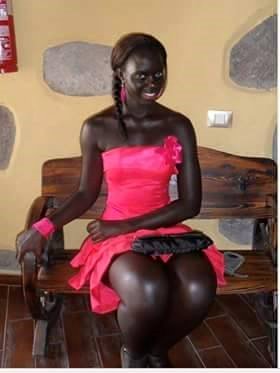
BLACK SKINNED BEAUTY SUPREME!

BLACK SKINNED BEAUTY SUPREME!

"BLACK IS BEAUTIFUL" -NEW YORK CITY STREET SAYING

"BLACK IS BEAUTIFUL!
BROWN IS HIP,
PUERTO RICAN IS OKAY
BUT white AIN'T S___T!"

BLACK SKINNED BEAUTY OOO!

BLACK SKINNED BEAUTY OOO!

BLACK SKINNED BEAUTY OOO!

BLACK SKINNED BEAUTY OOO!

BLACK SKINNED BEAUTY SUPREME

BLACK SKINNED BEAUTY SUPREME
BLACK SKINNED BEAUTY SUPREME!

BLACK SKINNED BEAUTY SUPREME

BLACK SKINNED BEAUTY SUPREME

BLACK SKINNED BEAUTY

BLACK SKINNED BEAUTY

Search This Blog

Pages

WE MUST HAVE A BLACK STANDARD OF BEAUTY BASED ON THE BLACK SKINNED BLACKEST WOMAN
Showing posts with label BLEACH AND DIE. Show all posts

Thursday, November 15, 2018

BLEACH AND DIE OOO- OMOTOLA WILL NOT DIE CAUSE SHE HAS STOPPED BLEACHING ATI RETURNED TO HER ORIGINAL BEAUTIFUL BLACKNESS OOO!- FROM 9JAHYPER.COM


Bleaching Lady Revert To Her Real Black Colour (Before And After Photos) A lady who was formerly bleaching have come online to share her before and after photos, after she quit bleaching. She shared the photos with the caption ” I love the way I am now. I don’t care about you what people say about me. Isn’t because I don’t have money, is because black is beautiful. and is my pride Omotola black… change of colour is a sin”. 


Saturday, June 10, 2017

BLEACHING OOOO!-BLACKS DON'T BLEACH AND DIE BEFORE YOUR TIME!-"GET LIGHT OR DIE TRYING"-BY DR.YABA BLAY ON YABABLAY.COM


FROM YABABLAY.COM


Last week’s post “Skin Bleaching, Self-Hatred and Colonial Mentality” generated LOTS of conversation on the web. What is surprising to me is the fact that many people have never heard of skin bleaching. Borrowing from my research on skin bleaching in Ghana, this week’s post “Get Light or Die Trying” is a brief introduction of sorts to the global phenomenon…

In November 1997, a 58-year old retired female clerical worker presented to the Dermatology Outpatient Clinic of Korle Bu Teaching Hospital in Accra, Ghana “with complaints of dark patches on light-exposed areas of the face, arms, neck, hands, legs and feet of about 10 years duration” as well as a large fungating ulcer on the right side of her neck. Despite a continuous regime of treatment spanning the course of 14 months, her condition failed to improve. In February 1999, the patient died. The cause of death — sun-related squamous cell carcinoma with pulmonary metastasis precipitated by the habitual application of hydroquinone and later steroid-containing creams. Translated – this Ghanaian woman’s death was caused by a type of skin cancer, which later spread to her lungs, and was attributed to her ritual practice of skin bleaching for more than 20 years of her adult life.
female clerical worker2
(Addo, 2000, 144)

In May 2001, Ghanaian boxing fans watched as veteran boxer Percy Oblitei Commey’s skin literally fell apart. The Ghana Review International reported that early in the fourth round, his opponent, Smith Odoom, delivered a series of punches to Commey’s face, opening a deep cut on his right cheek.  As the fight progressed, Commey suffered similar cuts in both nostrils and his right ear, causing him to bleed profusely. By the seventh round, Commey’s cornermen and ringside doctors attempted to give the boxer medical attention but found that they could not suture the wounds – his skin was disastrously thin. Not only did Commey lose his national super-featherweight belt, but his “dark” secret had been exposed: Commey had habitually bleached his skin. Twice a day, he followed a regimen that included steroid soap, a lightening shampoo, and two hydroquinone creams.  The once popular 6’4” boxer was booed by fans and subsequently became the object of media ridicule, reportedly because of his “feminine look.” Commey would enter the ring only once more, three years later.

percy3
(Chisholm, 2002)

While the death of the retired female clerical worker and the imagery conjured by the mention of Commey’s injuries are indeed disturbing to say the least, theirs are not isolated incidents. According to a 2005 Ghana Health Service report, approximately 30% of Ghanaian women and 5% of Ghanaian men are “currently actively bleaching.”
The incidence of skin bleaching – the intentional alteration of one’s natural skin color to one relatively, if not substantially, lighter in color, through the use of chemical skin lightening agents, either manufactured, homemade, or any combination of the two – has been well documented in Africa. In some parts of the continent, bleaching is nothing less than a way of life. An estimated:
  • Seventy five percent of traders in Lagos, Nigeria (2002)
  • 52% of the population in Dakar, Senegal, 35% in Pretoria, South Africa (2004)
  • 50% of the female population in Bamako, Mali (2000)
  • 8 out of 10 seemingly light-skinned women in Cote d’Ivoire (1998)
  • 60% of Zambian women ages 30 – 39 (2005)
  • 50 -60% of adult Ghanaian women
currently or have at one time or other actively used skin bleaching agents. Nigeria now holds the title of “Number 1 for Skin Bleaching Products” by the World Health Organization.
Though my research focuses on skin bleaching in Africa, the practice is not specific to Africa or people of African descent for that matter. In fact, wherever we find people of color, so too do we find the practice of skin bleaching. And throughout the world, the practice disproportionately affects female populations.
In parts of South Asia, where many parents advise their children to avoid sunlight because flawlessly milky white skin is coveted, cosmetic whiteners are indispensable in everyday skincare.  According to a 2003 report, 38% of women in Hong Kong, Korea, Malaysia, Taiwan and the Philippines use whitening products, and 43% of the women surveyed “believed a fair complexion would make them more attractive to men.” Asian women reportedly spend exorbitant amounts of money to buy high-end bleaching products such as those manufactured by L’oreal, the largest cosmetics company in the world, and the leading European manufacturer of skin whitening products.

White-Perfect-BLOGGER-CAMPAIGN-VISUAL-copy

Similarly, in India, where “60 percent of all beauty products sold are skin lightening agents,” skin tone impacts both marriage marketability and the ability to gain white-collar employment. All-purpose skin bleaching products are marketed frequently and aggressively…


…but so are products geared for specific areas, like the underarms…


…and more ‘intimate’ areas…


What’s interesting about India is that it is one of the few places where men’s bleaching does not hold the same stigma as it does elsewhere in the world. In many other places, men who bleach are regarded effeminate for taking part in something that is regarded a woman’s practice. But in India, skin bleaching is practiced openly by both men and women. To preserve their masculinity, however, Indian men are expected to use their own products, and not those made for women; at least that’s way that Fair and Handsome, is India’s #1 whitening cream designed specifically for men, spins it. In addition to print advertisements, it broadcasts a number of television commercials not only in India, but in the UK as well.


Interestingly enough, in 2010, when Vaseline launched a skin whitening app for Facebook, specifically for India, it was the image of a man that was used. Using this application, Facebookers can manipulate their photos so that they can appear whiter than they actually are. According to Vaseline, the response has been “pretty phenomenal.”

vaseline_skinwhite_e__oPt vaseline-e1279204421864

Despite the global presence of regulatory boards comparable to the U.S. Food and Drug Administration (FDA), the skin lightening products marketed, sold, and used across the world are more chemically potent than those marketed, sold, and used here in the United States. In the U.S., hydroquinone, one of the active agents found in skin-bleaching creams, cannot be obtained in percentages above 2% without a prescription; and by prescription, the highest percentage legally available is 4%. The manufactured skin bleaches found in many parts of Africa contain potentially lethal doses of substances like hydroquinone (between 4% and 25%), corticosteroids, mercury iodide, and various additional caustic agents. When exposed to sunlight, a staple in most parts of Africa, these chemicals prove even more hazardous.
Contact with these agents can cause a wide array of opportunistic infections and skin disorders, including allergies, ulcers and ultimately skin cancer or leukemia in some cases…..people who bleach become so thin-skinned they’re unable to receive injections and other routine medical procedures including stitching following surgery or accidents. In extreme cases, mercury and metals are absorbed at such a level that brain and kidney damage occurs, sometimes resulting in death. Withdrawal from the corticosteroids can lead to shock, which can be fatal (emphasis mine, McKinley, 2001, 96).
In the absence of manufactured products, many people use homemade admixtures. Some mix both manufactured and homemade products for a more potent brew. And yet despite the ravaging effects of both homemade and manufactured products, many people continue to bleach, some to the point of death. Governmental and medical authorities’ attempts to abolish skin bleaching by controlling the dosage and availability of manufactured bleaching agents fail to address people’s continued need to use the products. Even if legislative bans on bleaching agents were to be fully enforced, such efforts would only serve to minimize the incidence or more likely force it underground, not eradicate it. For in the minds of many, the privileges assigned to light skin, whether actual or assumed, are worth dying for.

Sources:
Addo, H.A. (2000). Squamous Cell Carcinoma Associated with Prolonged Bleaching. Ghana Medical Journal, 34, 144-146.
Chisholm, N.J. (2002, January 22). Fade to White: Skin Bleaching and the Rejection of Blackness.
McKinley, C. (2001, May).Yellow Fever. Honey Magazine, 96-99.

See also:
Skin Bleaching and Global White Supremacy: By Way of Introduction

Bookmark and Share

Comments

14 Comments
Post a comment
  1. Tina #
    January 11, 2013
    Very enlightening. It’s rather unfortunate how the opinion of others etc push people to such ends.
    • Yaba #
      January 11, 2013
      Indeed! White supremacy is the biggest ‘opinion-pusher’ of them all. Thank you for reading, Tina!
  2. April 25, 2013
    Thanks Dr. Yaba
    • Yaba #
      April 25, 2013
      Thank you for reading, Fatou!
  3. April 26, 2013
    informative! You should see what’s happening in The Gambia…maybe you should look into that too Dr. Yaba. I saw the statistics about Senegal, I wonder what are the numbers for Gambia?
    • Yaba #
      April 29, 2013
      It’s everywhere! I haven’t seen the numbers in Gambia and I’m not sure who is doing that research. Will keep my eyes open. Thank you for reading, Aisha!
  4. Richard Henry #
    May 19, 2013
    Thanks for the info and data on skin bleaching in Africa. I have been following your work and needed data and literature on skin bleaching in Africa for my Lit Review. Completing my Masters thesis on skin bleaching in Jamaica. Its a qualitative study entitled “The Browning Phenomenon”
    • Yaba #
      May 20, 2013
      Thanks for reading, Richard! Please let me know if I can share any resources with you. You must of course be familiar with Christopher Charles’ work. I look forward to reading your thesis soon!
  5. marie sanders #
    July 29, 2013
    I found these articles very interesting. I was born very light skin & was teased throughout school. Only other races would play with me. So I tried to suntan myself black. Confusion set in. I messed skin up trying to be “black” and last year I was using bleach crime to over correct the damage I did. I would try to change my color by friends, jobs, advantages. Now all I want to be is me no matter what color. I would very much like to read more on the subject. I feel society makes us choose what color we should be at times. I hate that. But most of my life I have battled this. Thank you for writing on this project. It really made me mad at myself.
  6. September 5, 2013
    Everyone has their own reasons for having white skin, smooth, clean. Certainly have been described in the article above, that it skin disease is not come by itself but because of the wrong skin care.
    There is also damage to the skin caused by cosmetic skin itself. Therefore, if you want to pick look at the measure of beauty products use ingredients that beauty, so that we remain untreated skin.
  7. January 15, 2014
    Harrowing and heartwrenching: I am a dark chocolate brown (similiar to the First Lady Michelle Obama’s shade) and cannot imagine being fueled by such societal pressures and such self-loathing that I would sabotage my own skin tone. I take pride in it and also convey that message to my children, I hope future generations learn from those who suffered and died needlessly and love what they are naturally endowed with: melanin-rich and beautifully brown skin.
  8. Aisha Ellis #
    January 17, 2014
    Colonization has been a devastating cancer all over the world, it’s time to unlearn what we have learned and put truth in it’s place.

Trackbacks & Pingbacks

  1. Maafanta.com | Women of Substance » Get Light or Die Trying
  2. Talking Her Out of Skin Bleaching Won’t Work | Afrocentric Confessions


Leave a Reply

Friday, June 09, 2017

BLEACHING IS RACIAL SUICIDE OOO!-- BLACKS–FIGHT BLEACHING LIKE THIS SISTER OOOO!-FROM MENAYE IDEAS ON WORDPRESS

FROM MENAYE IDEAS ON WORDPRESS

BLACKS–FIGHT BLEACHING LIKE THIS SISTER OOOO!-FROM MENAYE IDEAS ON WORDPRESS


BLACK IS LIT

A poem to support Sarah Nana Adwoa Safowaa, face of kasu 2016, in her campaign against skin bleaching

She’s bold
She’s beautiful
She can hold
She’s not shameful
She’s neither fearful

He’s not white
Yet he’s bright
He signifies authenticity
And portrays purity
A great masterpiece

He and she
Are you and me
True beauty tree
Africans, be proud to be
The never ordinary we

Others made us feel inferior
Telling us we are dark
Trying to supress us from being superior
Supremacy, always our hallmark
We’re the originals

We’re bold as letter B
Simple as letter L
We always come first like A
We’re conquerers, ask letter C
We’re royals from the great King K

We’re blacks
The originals
God’s own people
Always capable
Of the impossible

Don’t change your skin
You may regret you did
It gives you protection
And unique identification
Keep it pure, no denaturation

They always said the sun was too hot
Blacks have the most of it
But It makes us glow bright
The world, we illuminate
Because we occupy the best part of it

To the world, we’re the light
We won’t claim it with a fight
We’ve got that dignity since our birth night
Black is not white
Black is lit

Black is lit
Do not bleach
Black is lit
With varying intensities
Black is lit

By Akua Menaye Safo
Photocredit :pinterest.com & nkdesigns


Wednesday, May 31, 2017

BLEACHING BLACK PEOPLE OOO!--HOW TO STOP BLEACHING FROM MJMAGAZINE.COM


FROM MJMAGAZINE.COM

Reader Wants to Stop Bleaching – Needs Your Advice Urgently


I need your advice..I want to stop bleaching.
I’m 22, been beaching for the past 2 years now. If you see me, you wouldn’t know I bleach, you will think I’m naturally fair. I use a very expensive cream my cousin in Paris sends it for me. It’s very good – no hydroquinin, no mercury. I dont have dark knuckle from head to toe am flawless. I shine. If I get uncladd, even my friends admire me.


I have been asked a number of time by strangers about the kind of cream I use. But not everyone can afford it. Thé reason I bleach is because I admiréd my cousin’s skin and she introduced me to what I use now.
However, I am tired because my skin is getting thin and I am scared of thé future. Secondly, my dad has been complaining that he doesn’t know why I want to be fair. Yesterday he took me out and showed me à woman in her 50’s that has been bleaching for a very long time.
She looked like à ghost I swear. I was so scared. He said that was what long time bleaching causes to thé skin. He said I was never black I should please go back to my natural colour.
Please guys, I need to know if there is à good cream I can use to return to my chocolaté colour. I browsed online and the only one which seems ok was the cocoa butter cream and aloe vera and I want my chocolate colour to be flawless.
Again, is it true that people who bleached before get darker than before when they stop? Please I need honest advice. Thank you.

One Response


  1. comfort godwin

Thursday, January 12, 2017

BLEACH AND DIE-A GAMBIAN DOCTOR TELLS HOW CANCER CAN BE THE RESULT OF BLEACHING!-FROM THEPOINT.GM


The shocking cancer effects of Skin Bleaching

Tuesday, January 26, 2016
The black skin colour is healthy and very beautiful; do not bleach it ugly to skin cancer
Ivory Coast banned lightening creams by law why not in the GAMBIA
The shocking number of women in The Gambia now is bleaching their skin. Why do they want does that? Is fairer skin really more appealing than beautiful black skin?
Skin whitening, skin lightening, and skin bleaching refer to the practice of using chemical substances in an attempt to lighten skin tone or provide an even skin complexion by reducing the melanin concentration in the skin. Several chemicals have been shown to be effective in skin whitening, while some have proven to be toxic or have questionable safety profiles, adding to the controversy surrounding their use and impacts on certain ethnic groups.
People have been known to use lightening creams to ‘bleach’/lighten their skin complexions for years.
Celebrities and everyday folks alike have resorted to these measures without knowing the long term effects of these creams. In late April, Ivory Coast banned lightening creams (also referred to as “whitening” creams) because of the negative health effects associated with them – ranging from something as light as acne to devastating repercussions such as cancer.
Lightening creams reduce the amount of melanin in the skin. Melanin is the pigment that gives human skin, hair, and eyes their colour. Dark-skinned people have more melanin in their skin compared to light/fair-skinned people.
Harmful Effects of skin Bleaching
Harmful effects of bleaching include mainly two substances which are present in these are hydroquinone and mercury. Hydroquinone is very harsh chemical present in the bleach which makes the cell of your skin completely dead and this if once happens cannot ever be repaired. Also the Harmful effects of bleaching are also seen if you start bleaching your skin at a very young age that is may be below the age of twenty. As this is a young age your skin is very tender and delicate and thus the chemicals present in the bleach have many harmful effects on the skin.
To start with, variety is the spice of our life, such as variety in food, clothes, hairstyles, etc. Variety also abounds in nature. That is why all people on Earth belong to different types of skin colours, from white to yellow and to black. Our living environment accounts for the different skin colours we have. For example, in cold climatic regions such as Europe, inhabitants tend to have a lighter complex due to the cold weather, whereas in Africa, darker skin is better suited in the hot and humid climate.
Actually many beauticians and doctors advise us that by eating healthily, exercising and using body cream rich in Vitamin E, Aloe Vera and Collagen Elastin will produce more fascinating effects than applying mere bleaching creams.
All skin bleaching products contain one of the two active ingredients -- hydroquinone and mercury.
1. Hydroquinone lightens the colour of the skin areas to which it is applied by killing off the melanin-making cells - the melanolyte. It is also the active ingredient in ‘fade-off’ creams for freckles, age spots, etc.
Historical background: Hydroquinone was first use in the thirties. Some of the African-American employees found that spots of discolouration appeared on their skin.
The terms skin whitening, skin lightening, and skin bleaching covers a variety of cosmetic methods used in an attempt to whiten or lighten the skin.
Skin lightening or whitening is extremely controversial topic as it is closely intertwined with the detrimental effects on health, identity, self-image, racier supremacy and colonial mentality.
There is evidence to prove that most types of skin-whitening products use active ingredients (such as mercurous chloride) and hydroquinone which are certainly extremely harmful and caused skin cancer. Hydroquinone has now been banned in Europe and in many other countries can only be prescribed by a doctor for certain skin conditions.
In Asian and African countries including The Gambia, banned chemicals are still being used in skin lightening creams and can buy them in every corner in this country and even at Banjul and Serekunda Marked as cheap as D15.
Skin lightening/ bleaching is now a big deal in the Gambian society. It is such a big deal that the Medical professionals see it important to embrace a campaign geared at its discouragement in The Gambia. The practice is very serious because it addresses common concerns about the yearning for beauty.
The association with beauty, skin bleaching has become extremely popular. Every human have a desire to feel and be perceived as beautiful, and as such my concerns as medical professional about how to discourage people from it.
It seems like an uphill battle to me–trying to convince the women in my every day’s clinic to stop destroying their beautiful black skin when the colour cards are staked up against them.
Skin cancer is reported as one of the major causes of death amongst bleachers and therefore it is just a matter of time before we have a full blown epidemic on our hands. We must therefore strive to change behaviour by addressing physical, mental, and symbolic remnants of light-skinned superiority and dark-skinned inferiority which contributes to low self-esteem and confidence.
The solution to the problem lies in need to examine what is being done nationally to increase and inspire confidence about the beauty of the black skin and denounce the age old belief/ saying, “Nutten Black nuhGood !”
Skin-lightening creams are heavily promoted by many dermatologists and skin care experts to even out cosmetic conditions like vitiligo, liver spots, and other superficial blemishes.
What are the risks
The risk with these creams is that many of them contain a substance called hydroquinone, which a variety of studies have linked to:
Increased risk of cancer
Increased risk of adrenal gland problems
Increased risk of all health
Conditions associated with mercury
Increased risk of developing a rare metabolic disorder called ochronosis, which can cause physical changes to the skin and tissues surrounding the eyes, ears, and joints
Citing these and other potential dangers of using creams that contain hydroquinone, this past Tuesday, the Food and Drug Administration in the U.S.put forth a proposal to ban over-the-counter sales of skin-lightening products.
Don’t expect dermatologists and the many companies who sell hundreds of different skin-lightening products that contain hydroquinone to remain silent about the FDA’s proposal.
According to the L.A. Times, in the United States, approximately two-thirds of all skin-lightening products are available over-the-counter without a prescription. Who knows how many millions of dollars this translates to each month for companies that produce these products?
If you’re not convinced that skin-lightening products that contain hydroquinone are best avoided, consider that hydroquinone has already been banned for sale in the European Union, Australia, and Japan.
Perhaps the real issue here is the lack of encouragement that our society offers to people who feel badly about their physical appearances. There never seems to be a shortage of plastic surgeons, dermatologists, and other sales people who encourage people to change or hide what they don’t like about their looks.
Melanin and pigmentation
Uneven pigmentation affects most people, regardless of ethnic background or skin colour. Skin may either appear lighter or darker than normal; there may be blotchy, uneven areas, patches of brown to gray discoloration or freckling. Skin pigmentation disorders occur because the body produces either too much or too little melanin. Melanin is the pigment produced by skin cells. It is triggered, which creates the colour of skin, eyes, and hair shades.
Melanin has two major forms that combine to create varying skin tones. Eumelanin produces a range of brown skin and hair colour, while pheomelanin imparts a yellow to reddish hue.
Melanin provides some amount of sun protection for the skin by absorbing ultraviolet light. Darker skin collars are less susceptible to sunburn and the overall effects of sun damage.
The most popular bleaching creams contain 4% hydroquinone, a severely toxic and very powerful chemical also used in photo-processing and rubber production that can destroy the outer layer of the skin. However, cosmetic creams or treatments contain hydroquinone have been completely banned in the UK since 2001 and are illegal to supply, offer to supply or poses to supply.
Other dangerous ingredients include Colic acid (also used to preserve pink and red colours in seafood, has been linked to systemic toxicity and liver cancer); alpha hydroxyl acid (also used in chemical skin peels, causes increased sensitivity to the sun and UV light); and sodium hydroxide (also used in the manufacture of pulp, paper textiles and detergents, can cause burns, scarring and blindness).
Legal in the Gambia, Despite Cancer Potential
Hydroquinone, a product used in some skin bleaching agents, could have dangerous health consequences. The toxic substance is banned in the UK, but in The Gambia use of hydroquinone in over-the-counter allowed. In the United States Food and Drug Administration (FDA) says that testing cannot rule out hydroquinone’s potential cancer risk in humans.
Skin bleaching-using chemical or natural products to lighten skin colour-is common in the US and other countries and some psychologists say consumer demand can be traced to the belief that lighter-skinned or white people are more successful, intelligent, and sexually desirable.
Cosmetics industry experts feel that as Asian, African, and African-Caribbean communities grow, so too will ethnic spending power for products marketed to lighten skin tone, some containing hydroquinone. Cosmetics industry analysts say cosmetics companies realize there’s money to be made here and claim minority communities are an underserved market with a long tradition of buying bleaching products, legal or otherwise. There has been a perceptible increase in skin creams, soaps, and deodorants containing whitening and bleaching agents. Some experts blame consumer demand on the media cantering on fair-skinned celebrities, claiming the media promotes an image that those who are light-skinned are successful and attractive.
Colourism isn’t limited to any one ethnic group. Many in Africa are using bleaching cream to lighten their skin because they associate lighter skin with beauty. Despite attempts by the Ghanaian government to ban it, skin bleaching is on the rise.
Dermatologists (Skin specialist) say bleaching creams with hydroquinone are safe to reduce the appearance of age spots or smaller blemishes, but only if used as directed. But other skin specialists say abusing products, for example by rubbing the product on the entire face, neck, or body can be dangerous over time, saying that there is no safe way to bleach skin beyond its natural colour. Other experts say that skin bleaching, while very popular, contains toxic chemicals that are linked to weakened immune systems, organ failure, and even death.
Initially, the bleaching cream will appear to lighten the skin, but oxidation between the sun and chemicals starts darkening the skin. At this point, increased use of the cream tends to occur, causing the skin to break and chemicals to penetrate into the bloodstream and reach major organs where serious damage can occur.
The trend of skin bleaching in Africa is similar to that of tanning in the US. People tan their skin because they think tanned skin is more beautiful. As with skin bleaching, there are many risks involved with tanning. Evidence links UVA rays to malignant melanoma, the deadliest form of skin cancer. Overexposure to any Ultra violate rays can cause loss of skin elasticity, premature aging, and cancer; damage to the skin is irreversible.
Despite all the risks, people continue to try to make them more beautiful with dangerous methods like skin bleaching and tanning.
Finally I certainly join many Doctors and beauticians who advise us that by eating healthily, exercising and using body cream rich in Vitamin E, Aloe Vera and Collagen Elastin will produce more fascinating effects than applying mere bleaching creams to black skin colour.
For further information see Health Professionals in various Clinics, E-Mail to azadehhassan@yahoo.co.uk or text only to DR AZADEH on 7774469/3774469 during the working hours between 3-6pm
Author: DR AZADEH Senior Lecturer at the Medical School University of the Gambia, Senior Consultant in Obstetrics & Gynaecology, Clinical Director of Medicare Health Services
Author: DR AZADEH

Thursday, July 21, 2016

BLEACHING OOO!--JENNIFER HUDSON IS BLEACHING---BLACK PEOPLE OOO!--BLEACHING IS RACIAL SUICIDE! --IT IS A SIN AGAINST GOD!--YOU ARE BREAKING THE 10COMMANDMENTS BY COVERTING ANOTHER MANS SKIN COLOR!--THE CHEMICALS WILL KILL YOU LIKE IT HAPPENED TO MICHAEL JACKSON,--Jennifer you are bleaching! Shame on Black you! DAPADA O! (Restore your Beautiful God given Black skin! It's possible cause Ciceley Tyson did it ,to do her latest role with Obama!Jennifer you are bleaching! Shame on Black you! DAPADA O! (Restore your Beautiful God given Black skin! It's possible cause Ciceley Tyson did it ,to do her latest role with Obama!


K
Sent from my iPad


https://www.google.com.ng/search?tbm=isch&tbs=rimg%3ACa4eWjffAHbwIqAByyDrdEHCZ9vMSzZ2L9V_1YC2bgSBznb8WSO4ab-gD9s4fPhPEBYpq96QAZxWT9CNCtWkE_1hLdZTFnu3vnvKqwLyAptInISuM3rzcaoQ63cKcnyAQ7qNABOwLs2qt07s2Tpk_1c6VcYKXvJwuzd3CHumuJW9vAMcOwKSVXljnfF2-Rjp-YxSGE_1UfT9TWPfeVdHPAusRe2L6KrBpQgX_1cFv9yoSCcsg63RBwmfbEX7DIfGlD8GnKhIJzEs2di_1Vf2ARH4ODIWe0JbcqEgktm4Egc52_1FhEhFRhStLflqioSCUjuGm_1oA_1bOETe9M1OgEFj8KhIJHz4TxAWKavcRd7320sveOM4qEgmkAGcVk_1QjQhE1w4lw_1sEa6SoSCbVpBP4S3WUxEXhrzDZ2gFiUKhIJZ7t757yqsC8RQTYUkCnINpEqEgkgKbSJyErjNxHqp9J4tohI3CoSCa83GqEOt3CnEXe99tLL3jjOKhIJJ8gEO6jQATsRfsMh8aUPwacqEgkC7NqrdO7NkxF-wyHxpQ_1BpyoSCaZP3OlXGCl7EX7DIfGlD8GnKhIJycLs3dwh7poRReGULz7L8x4qEgniVvbwDHDsChGtfCr93uCWJyoSCUlV5Y53xdvkEYwmKN4AsQOCKhIJY6fmMUhhP1ERrREXD4UwESkqEgn0_1U1j33lXRxFJw_1oYb4ZoSCoSCTwLrEXti-iqEfwBSc72RXSRKhIJwaUIF_13Bb_1cRfVqBtjJ7aEU%3D&q=images%20of%20jennifer%20hudson%20bleaching&client=safari&bih=729&biw=704&ved=0ahUKEwjEvJuSg4bOAhVgFMAKHSuqCVcQuIIBCAM#imgrc=TZsAvk8j5yDkJM%3A


Sent from my iPad

Thursday, June 23, 2016

BLEACHING OOO!-BLACK PEOPLE!--AFRICANS-SOUTH SUDANESE MODEL LAUNCHES CAMPAIGN AGAINST SKIN LIGHTENING-FROM EYERADIO.ORG


FROM EYERADIO.ORG

Enquiry

Model launches campaign against skin lightening

Tatiana Ruai Kuol, Former Miss Malaika, at Eye Radio - July 20, 2015. Photo: Obaj Okuj
A former winner of the Miss Malaika beauty contest has started campaign against bleaching.
Skin lightening is common amongst South Sudan women.
Miss Tatiana Ruei, who won the title in 2013, says the aim is to educate women about the dangers of skin lightening to the health of the individuals.
Miss Ruei, who was crowned Miss Malaika 2013, told Eye Radio that the campaign will create awareness through workshops and seminars.
“It is good to be proud of who you are. If you use to do it by then when we were under northern Sudan and we really needed to feel like in that northern society, why not leave it right now?” Ms Ruei asked.
“We are South Sudanese and we should be proud of who we are! You should be proud of your own skin if your men are not bleaching. How would you feel later when you marry and give birth to dark kids?”
A survey carried out by the British Skin Foundation found 16% of dermatologists believe lightening creams are completely unsafe, and 80% feel they are only safe when prescribed by a dermatologist.
Skin-lightening creams can cause: permanent skin bleaching, thinning of skin, uneven color loss, leading to a blotchy appearance, redness, and intense irritation.